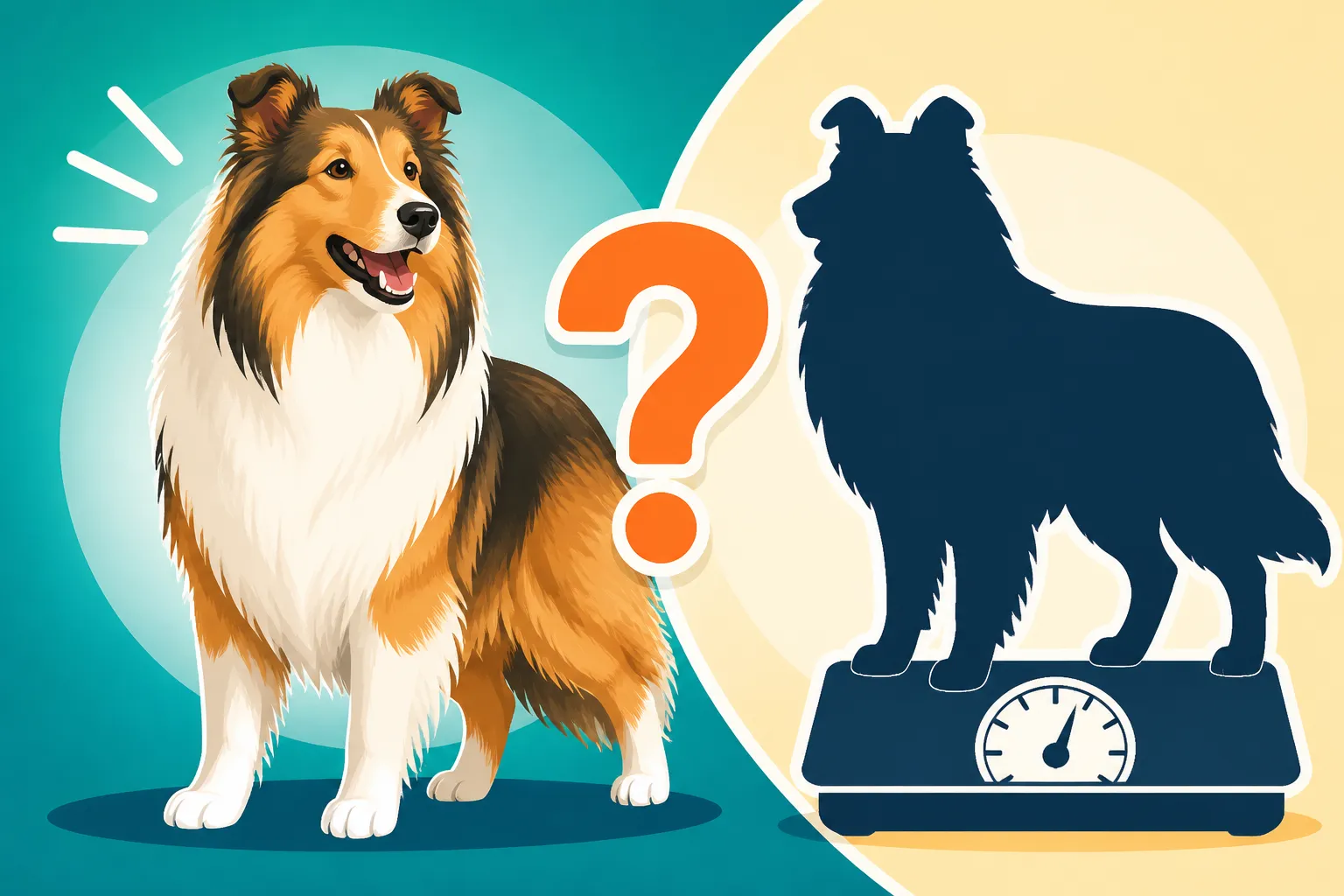
Whether Any Collie Reaches a Hundred Pounds
A Collie reaching 100 pounds is possible, but it is far outside the usual range for the breed. If your dog’s scale reading is close to that number, the important question is not only whether Collies can get that big; it is whether your dog is unusually large, carrying excess weight, or being weighed inaccurately. Here’s how to tell the difference and what to do next.
Can a Collie weigh 100 pounds
What is a normal adult Collie weight
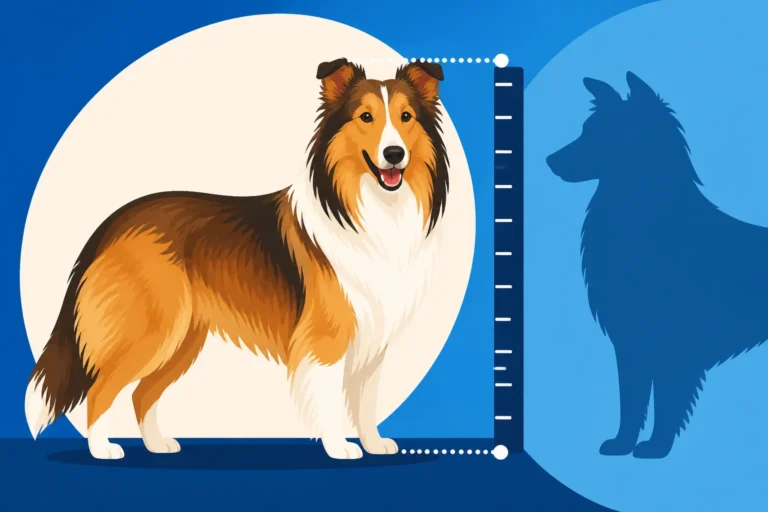
A typical adult Collie is a medium-to-large dog, not a giant breed. Adult males commonly weigh around 60 to 75 pounds, while females often fall around 50 to 65 pounds. Individual dogs can land outside those ranges, but 100 pounds is well above what most people would expect for a healthy Collie.
Those figures are useful reference points, not a verdict on an individual dog. Height, build, age, muscle, and overall body condition all matter. A tall, substantial male may weigh more than a smaller female without being unhealthy, but a number on the scale cannot tell you by itself whether a dog is in good shape.
For a broader look at adult size and proportions, see What a Collie Weighs and How Tall It Stands and How Much a Collie Weighs. Comparing your dog with a general breed range can help you spot a question worth asking, but your veterinarian can assess whether that weight suits your particular dog.
Could an unusually large purebred Collie weigh 100 pounds
It is not impossible for a Collie to approach or reach 100 pounds. A dog might be unusually tall or broad, have a large frame, or carry more muscle than the average pet. But an exceptionally large Collie is not the same thing as a typical Collie, and reaching 100 pounds should prompt a closer look rather than an assumption that the dog is simply “big boned.”
Breed standards describe the desired size and structure of a breed; they do not establish a hard biological limit for every dog. Still, a 100-pound reading is so far beyond the common adult range that it is sensible to check both the measurement and the dog’s body condition. A dog can be large-framed and overweight at the same time.
If a breeder, shelter, or previous owner described a dog as a “giant Collie,” treat that as a description to investigate, not a health assessment. Ask for veterinary records and, if relevant, registration information. A Collie-like dog may also be a mix, and appearance alone cannot confirm ancestry. For a comparison with two breeds people often confuse, see The Collie Against the Border Collie and the Sheltie.
Why might a Collie reach 100 pounds
Excess weight can hide under a thick coat
A Rough Collie’s coat can make it surprisingly difficult to judge its shape. The frill, feathering, and thick body coat add visual bulk, so a dog may look broad and fluffy even when its body condition is healthy. The reverse can happen too: the coat can disguise a waist that has gradually disappeared or ribs that are difficult to feel.
That’s why grooming-table impressions and photos can be misleading. A dog seen from the front may look enormous because of its coat, while a side view or a hands-on check gives a more useful picture. Weight gain often happens slowly, too. A family may not notice the change until the dog is lifted into a car, measured at a clinic, or weighed after a routine visit.
Rather than relying on appearance alone, learn how to check body shape and feel for the ribs through the coat. Signs a Collie Is Overweight Under All That Coat and How to Feel a Collie's Ribs Through the Coat explain practical clues to discuss with your veterinarian.
Food, treats, and activity can add up
A Collie’s needs change with age, activity, reproductive status, and health. A dog that once spent hours moving around may gain weight after a change in routine, an injury, or retirement from regular activity. Meanwhile, meals, training treats, chews, and scraps from the table can add more calories than owners realize.
Portions can also become inaccurate when food is measured by eye or when several people feed the dog. A scoop that looks “about right” may be generous, and one family member may not know that another has already given a snack. This is not a reason to feel guilty; it is simply a common household pattern that can be corrected with a written feeding plan.
When comparing foods in a store or on Chewy, check the calorie information on the specific product label rather than comparing serving sizes alone. Different foods can contain different amounts of energy per cup. Chewy can be one place to read product details, but the feeding amount should be chosen with your veterinarian’s advice, especially if your dog has a medical condition or needs to lose weight.
Age and body composition matter
Puppies and adolescent Collies are still growing, so their weight should be considered alongside age and development. Some dogs continue filling out after they reach much of their adult height. That does not mean a young dog should be pushed to gain weight; steady growth and an appropriate body condition matter more than trying to reach a particular adult number. See Whether a Collie Fills Out Until Three for more about how development can affect a Collie’s build.
Older dogs may become less active while maintaining the same food portions they had when younger. Some lose muscle as they age, while others gain fat. Because muscle and fat do not have the same implications for health, a senior dog’s weight is best interpreted in context, not judged by the scale alone.
A Collie’s body composition can also be affected by illness, medication, or changes in appetite. If the weight increase is sudden, unexplained, or accompanied by changes in thirst, energy, breathing, mobility, or appetite, make a veterinary appointment rather than assuming the dog simply needs less food.
How to tell whether 100 pounds is a problem
Check the scale and the dog’s body condition
First, confirm the number. Veterinary scales are generally more suitable for weighing a large dog than a household bathroom scale. If you weigh your dog at home, one method is to weigh yourself alone, then weigh yourself while holding the dog if it is safe and manageable, and subtract the first reading. This method can be imprecise, especially with a restless dog, so treat it as an estimate.
Next, look at the dog from above and from the side, then feel gently along the body. A healthy dog usually has a visible waist behind the ribs when viewed from above and an abdominal tuck when viewed from the side. You should generally be able to feel the ribs with light pressure, though the coat may make the outline harder to see. Your veterinarian can show you how to assess body condition on your own dog.
| What you notice | What it may suggest | Useful next step |
|---|---|---|
| A verified weight near 100 pounds | An unusually large dog, excess weight, or both | Ask your veterinarian to assess body condition and ideal weight |
| Ribs are difficult to feel through light pressure | Possible excess body fat, though the coat can complicate the check | Have a veterinarian demonstrate a hands-on assessment |
| No visible waist from above | Possible weight gain | Review food, treats, activity, and body condition with the clinic |
| Sudden weight change or new symptoms | A possible health issue, not just a feeding problem | Arrange a veterinary evaluation |
| A large reading that changes between scales | Possible measurement inconsistency | Reweigh on a reliable veterinary scale |
A 100-pound reading is a reason to investigate, not a reason to start a drastic diet. Dogs can lose muscle when weight loss is too rapid or feeding is restricted without a plan. Your vet can estimate an appropriate target based on the dog’s frame and condition.
Ask a veterinarian to assess the whole dog
At an appointment, share the dog’s age, current food, portion size, treats, activity, recent weight history, and any changes in health or medication. If you have old records, bring them. A gradual increase over a couple of years suggests a different situation from a sudden jump over a short period.
The veterinarian can weigh your Collie, assess body condition, check muscle, and decide whether further examination is warranted. If weight loss is appropriate, ask for a specific feeding and activity plan and a schedule for rechecks. Small, consistent adjustments are generally easier to sustain than a sudden cut to meals or an ambitious exercise routine.
If you buy food through Chewy, keep the package or a clear photo of its label available for the appointment. The calorie content and feeding directions can help your veterinarian discuss portions, but package recommendations are starting points, not a personalized prescription. If your dog eats food from multiple sources, bring details for each one.
What to do if your Collie needs to lose weight
Make a gradual, trackable plan
If your veterinarian confirms that your Collie is overweight, ask what the dog should weigh and how quickly weight loss should happen. Avoid guessing at an ideal weight from breed averages alone. A tall or unusually built dog may have a different healthy target from a shorter dog, even if both are purebred Collies.
Measure food consistently rather than pouring it into the bowl by eye. Include treats and chews in the daily plan, and decide in advance how the household will handle snacks. Some owners set aside part of the dog’s regular food for training rewards, which can make it easier to avoid adding uncounted treats throughout the day.
Keep a simple record of weight, portions, treats, and activity. Weigh-ins at the same clinic or on the same scale make trends easier to interpret. If the dog is not losing weight despite following the plan, do not keep cutting food without guidance; the clinic can review the plan and check whether another factor is involved. Getting Weight Off a Collie offers more on making weight loss manageable.
Add activity that suits the dog
More movement can support weight management, but it should be appropriate for your dog’s age, fitness, and health. A comfortable walk, gentle play, or short training sessions may be better starting points than suddenly taking an overweight dog on long hikes. If your Collie is older, stiff, recovering from an injury, or breathing harder than usual, ask your veterinarian what activity is safe.
Mental activity can also make the day more engaging without relying only on strenuous exercise. Short training sessions, sniffing games, and food puzzles can provide variety. If using a puzzle feeder, measure the food that goes into it and count it as part of the daily ration rather than an extra meal.
The goal is not to make a Collie as light as possible. It is to support comfortable movement, good muscle condition, and a healthy body shape. Extra weight can put more strain on joints and make activity less appealing, creating a frustrating cycle. Your veterinarian can help you set a realistic plan and adjust it as your dog responds. For the bigger picture, see Whether a Collie's Weight Shortens Its Life and Whether a Collie Needs a Large Breed Formula.
Disclaimer
This article is for general informational purposes only and does not constitute professional advice. Laws, prices and regulations vary by location and change over time. Consult a qualified professional for guidance on your specific situation.