A Collie’s Coat Is the Bill That Arrives Every Eight Weeks
You’ve just brought home that beautiful, majestic Collie, perhaps inspired by timeless tales of loyalty and grace. But as the days turn into weeks, you start to notice something truly monumental about your new family member: that incredible coat, while stunning, is a living, breathing, and quite demanding entity all its own. What many new Collie owners quickly discover is that maintaining this glorious mane isn't just a casual brush once a week; it's a significant commitment that often translates into a regular, unavoidable expense that feels like a bill arriving every eight weeks. This guide is here to shed light on the financial realities and ongoing effort required to keep your Collie's coat healthy, beautiful, and tangle-free.
Understanding the Collie Coat: More Than Just Fluff
The Collie's coat is undeniably one of its most striking features. Whether you have a Rough Collie with its flowing mane and abundant feathering or a sleek Smooth Collie, you're dealing with a coat designed by centuries of working in harsh Scottish weather. It's not just hair; it's a complex, multi-layered system that serves a purpose, but also demands a particular kind of attention. Understanding this structure is the first step in appreciating why the grooming bill can feel like a recurring charge.
The Sheer Volume: What You're Up Against
When you look at a Rough Collie, especially one in full coat, you're looking at a dog that seems to defy physics with how much hair it possesses. This isn't an optical illusion; it's genuine volume. From the magnificent ruff around their neck, often called a mane, to the abundant feathering on their legs and tail, every inch seems to carry an impressive density of fur. This sheer volume means that when you brush, you're not just doing a quick once-over; you're embarking on a thorough expedition through layers of hair.
Imagine trying to brush a very thick, long rug, but the rug is attached to a living, breathing, sometimes squirming creature. That's a bit what it's like. The coat is designed to protect them from the elements, but it also creates numerous places for debris, burrs, and, most importantly, mats, to form. Every walk, every romp in the yard, every roll on the carpet can contribute to the glorious chaos, making regular and diligent care an absolute must.
This isn't just about aesthetics, either. A heavily matted coat can pull at the skin, causing discomfort, pain, and even skin infections beneath the dense fur. It can restrict movement and even impact their body temperature regulation. So, while the volume is beautiful, it comes with a serious responsibility to keep it well-maintained for your Collie's comfort and health.
The Double Coat: Nature's Insulator and Groomer's Challenge
The secret to the Collie's impressive coat, and much of the grooming challenge, lies in its double-layered structure. Beneath that long, flowing topcoat, or "guard hairs," lies a soft, dense, and incredibly insulating undercoat. These two layers work together beautifully to protect the dog from both cold and heat, rain and snow. The longer, coarser guard hairs repel water and dirt, while the woolly undercoat provides thermal regulation.
However, this wonderful natural insulation also means that brushing is more complex than it appears. You can't just brush the surface; you need to get all the way down to the skin, through both layers. If you only brush the topcoat, you'll leave the shedding undercoat trapped underneath, leading to dense, felt-like mats that can be incredibly difficult, if not impossible, to remove without professional intervention. This trapped undercoat is also what contributes to that distinct "doggie odor" when it gets damp and can’t breathe.
Understanding the double coat highlights why specific tools are needed, and why methods like "line brushing" are critical. It's not just about making your Collie look good; it's about preserving the natural function of their coat and preventing serious welfare issues. Without proper care that addresses both layers, you're essentially setting yourself up for a struggle and potentially expensive visits to the groomer.
Rough vs. Smooth: Different Coats, Different Care Needs
When we talk about Collie coats, it's important to remember there are two distinct varieties: the Rough Collie and the Smooth Collie. While they are essentially the same breed in temperament and structure, their coats present very different grooming demands and, consequently, different costs.
The Rough Collie, as you might guess, is the one with the iconic long, abundant coat that most people picture when they hear "Collie." This is the coat that requires extensive brushing, regular professional grooming, and is responsible for most of the recurring "bill that arrives every eight weeks." Their guard hairs are long, straight, and harsh, with a dense, soft undercoat. This magnificent coat is prone to matting, especially behind the ears, under the elbows, and in the "petticoat" (the long hair on the hindquarters).
In contrast, the Smooth Collie has a short, dense, flat coat, with a softer undercoat. While they don't have the flowing mane or feathering of their rough-coated cousins, they absolutely still shed and require grooming. Many people assume a Smooth Collie needs no grooming at all, which couldn't be further from the truth. They shed less dramatically than a Rough Collie, perhaps, but their shedding is a year-round affair, and their short coat can still mat if neglected, particularly during seasonal coat blows. While Whether a Smooth Collie Costs Less to Groom is a fair question, it's more accurate to say the type of grooming cost changes, not that it disappears entirely.
The Constant Cycle: Shedding Seasons and Their Impact
No matter if your Collie is rough or smooth, one truth remains: they shed. Oh, how they shed. This isn't a small, manageable amount of hair that occasionally floats by. It's an ongoing, sometimes overwhelming, part of Collie ownership, culminating in spectacular "coat blows" twice a year. If you're not prepared for it, it can feel like your house has sprouted its own fur coat.
Twice a Year Tsunami: The Coat Blow Experience
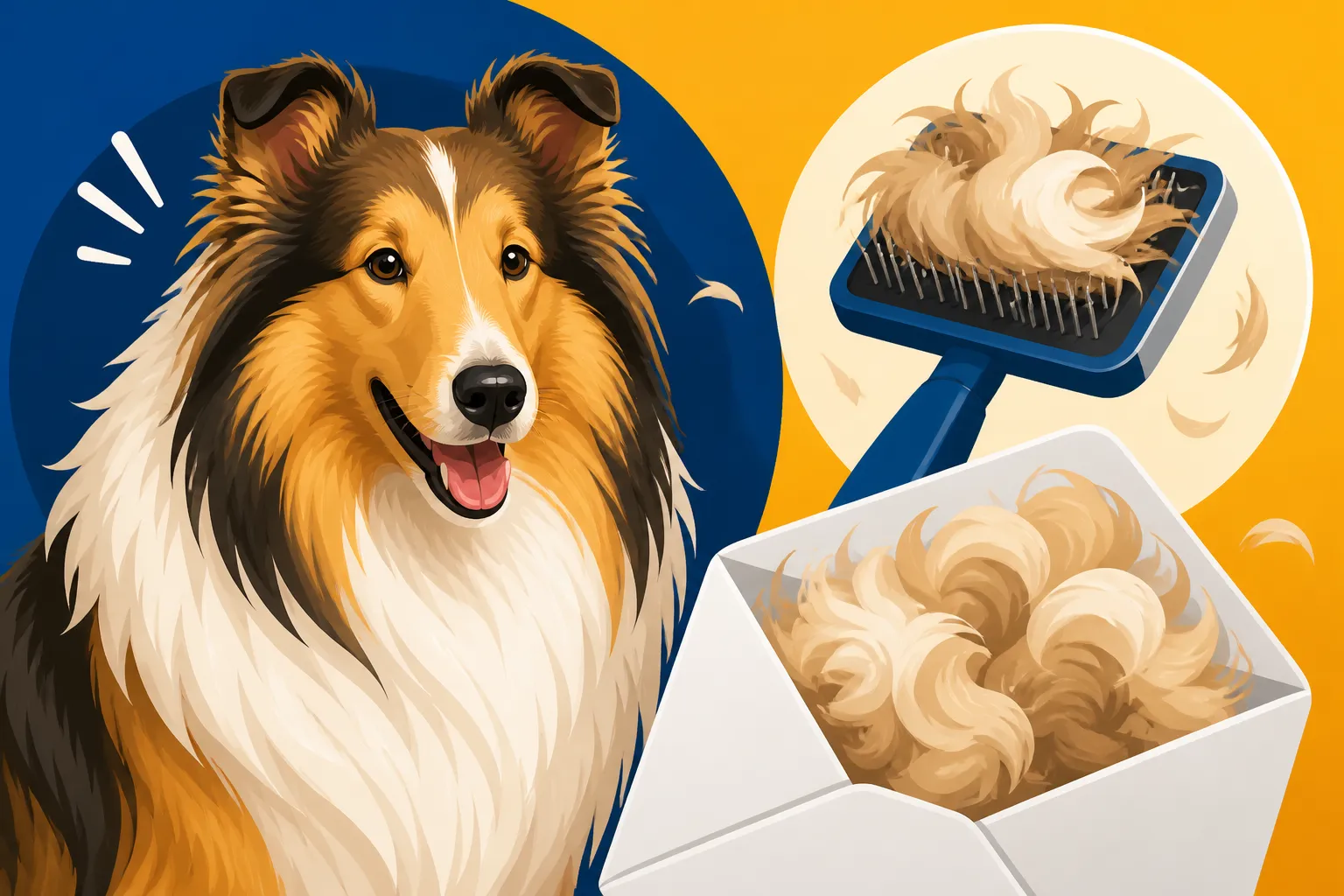
Twice a year, typically in spring and fall, your Collie will undergo what's known as a "coat blow." This is when they shed their entire undercoat to prepare for the upcoming season – a heavier coat for winter, a lighter one for summer. This isn't just increased shedding; it's a veritable fur tsunami. For a period of about three weeks, you'll feel like you're living in a snow globe, but with dog hair instead of snow. Seriously, When a Collie Blows Its Coat can feel like an unending blizzard of fur.
During these periods, the amount of hair coming off your dog can be shocking. It will be on your clothes, your furniture, your food, and seemingly everywhere you look. This is the time when regular brushing, sometimes even daily, isn't just recommended; it's absolutely essential. If you don't get that dead undercoat out, it will quickly clump and mat, creating huge problems. This is also when many owners consider professional deshedding treatments to help manage the sheer volume.
Be prepared for this. Mentally, physically, and with the right tools, you can navigate it. But don't underestimate it. Many first-time Collie owners are genuinely taken aback by the sheer volume of fur. It's a natural process, but one that demands significant owner involvement to prevent discomfort for your dog and a house taken over by tumbleweeds of fur.
Year-Round Shedding: The Indoor Collie Reality
Even outside of the dramatic bi-annual coat blows, Collies are constant shedders, especially if they live indoors. Our modern homes, with their regulated temperatures, mean that a Collie's coat doesn't experience the drastic seasonal changes it once did when dogs lived primarily outdoors. This can lead to a more continuous, albeit less intense, shedding cycle throughout the year.
What this means for you is that you'll always find Collie hair. A quick sweep of the kitchen floor will yield some fur. That dark pair of pants? Guaranteed to have a few light hairs on them. Your Collie's bed? A fluffy nest of their own making. While it's not the "tsunami" of a coat blow, it's a persistent, daily reality. How Much Undercoat a Collie Drops throughout the year is enough to keep your vacuum cleaner working overtime.
For many owners, this steady shedding influences everything from clothing choices to furniture fabrics. Investing in washable couch covers, quality pet hair vacuums, and lint rollers becomes a part of the household budget. It's a small price to pay for the joy of a Collie, but it's a cost that never truly goes away and requires ongoing management to maintain a semblance of cleanliness.
Managing the Fallout: Cleaning and Containment
So, you're faced with constant shedding and seasonal coat blows. How do you manage the "fallout" and keep your home from becoming a giant fur ball? It starts with consistent grooming, but extends to your cleaning routine and even how you think about your home environment.
Firstly, regular and thorough brushing is your primary defense. Even if you plan on professional grooming, daily or every-other-day brushing at home will significantly reduce the amount of loose hair escaping into your house. A high-quality pin brush and an undercoat rake are non-negotiable tools. Secondly, a powerful vacuum cleaner designed for pet hair is a must. Standard vacuums often struggle with the fine, yet dense, Collie fur. Consider a robot vacuum for daily maintenance, but know it won't replace a deeper clean.
Thirdly, containment strategies can help. Designating specific "Collie zones" with washable rugs or covers, regularly washing bedding, and even brushing your Collie outdoors (weather permitting) can help keep the fur concentration down. It's about being proactive rather than reactive. Embrace the fur, but manage it. It's a continuous battle, but one you can win with the right tools and a consistent routine.
Professional Grooming: The Eight-Week Recurring Bill
While home grooming is essential, for many Rough Collie owners, professional grooming isn't a luxury; it's a recurring necessity that forms a significant part of the cost of ownership. The sheer volume and complexity of their coat often make it too much for the average owner to manage perfectly on their own, especially if they want to maintain a show-quality look or simply keep their dog comfortable and mat-free.
Why Professional Grooming Isn't a Luxury, It's a Necessity
Many people see professional grooming as an indulgence, something only for pampered show dogs. However, for a Rough Collie, it's often a crucial part of their health and hygiene. The reality is, even with diligent home care, the dense double coat can be incredibly challenging to keep in top condition. Mats can form quickly and deeply, especially in areas like behind the ears, under the armpits, and on the tail. These aren't just cosmetic issues; deep mats can cause skin irritation, sores, and even restrict blood flow.
A professional groomer has the specialized tools, knowledge, and experience to thoroughly de-shed and demat a Collie in ways that are difficult for an amateur. They have high-velocity dryers that can blast out loose undercoat more effectively than anything you can buy for home use, ensuring the coat is completely dry to prevent skin issues. They also have sharp shears for sanitary trims and thinning shears to manage the coat's bulk without ever resorting to shaving, which, as we discuss in Why a Collie Should Never Be Shaved, can permanently damage the coat.
For most Rough Collie owners, budgeting for professional grooming every 6-8 weeks isn't an option, it's a requirement to ensure their dog remains healthy and comfortable. It reduces stress on both the dog and owner, and ultimately, can prevent more expensive veterinary visits for skin problems that arise from coat neglect.
What a Full Groom Entails for a Collie
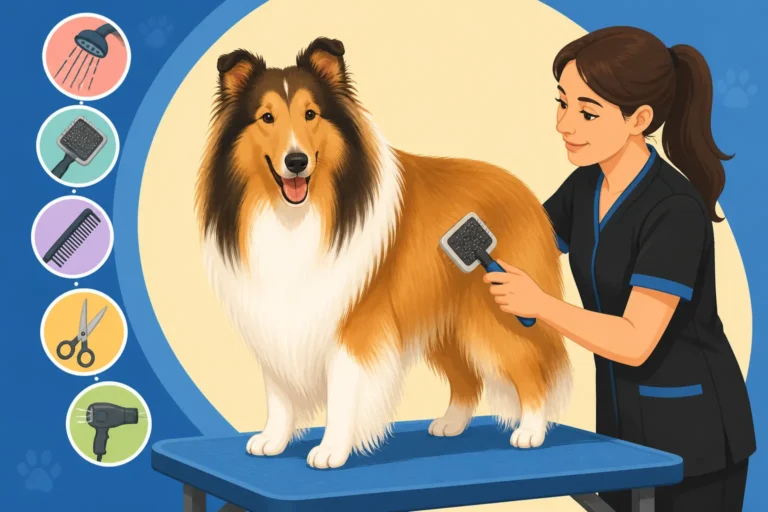
So, what exactly happens during a "full groom" that makes it such a specialized service for a Collie? It's far more involved than a simple bath and trim. When you drop off your majestic companion at the salon, they typically undergo a multi-step process designed to address every aspect of their unique coat. If you want to know What a Full Groom on a Collie in Full Coat Involves, here's the typical rundown:
First, a thorough brush-out and pre-bath dematting. This is crucial to remove as many tangles as possible before the bath, as water will tighten mats, making them nearly impossible to remove. Next comes a double bath with specialized shampoos and conditioners, often followed by a deshedding treatment. This helps loosen and remove the shedding undercoat. The drying process is extensive, using high-velocity dryers to separate the coat hairs and blast out remaining loose fur. This can take a significant amount of time, sometimes an hour or more, just for drying.
Finally, the coat is meticulously brushed again, and any necessary trimming is done. This isn't usually a "cut" in the way you might trim a Poodle; it's more about tidying up the feet, ears, and sanitary areas, and possibly thinning out overly dense spots to enhance the Collie's natural lines and comfort. The nails are trimmed, and ears are cleaned. This entire process can take several hours, reflecting the skill and effort required to properly manage such a magnificent coat.
Finding the Right Groomer Who "Gets" Collies
Not all groomers are created equal, and finding one who truly understands the Collie coat is paramount. Sending your Collie to a groomer unfamiliar with the breed can lead to disappointment, damage to the coat, or even unnecessary stress for your dog. A good Collie groomer knows the breed standard, understands the double coat, and, crucially, knows how to handle a dog that might not always be thrilled about an hours-long grooming session.
Look for groomers who have experience with herding breeds or specifically mention Collies on their client list. Ask about their techniques for deshedding and dematting, and whether they use force dryers. Be wary of any groomer who suggests shaving your Rough Collie "for summer comfort," as this is generally detrimental to their coat and health in the long run. (We cover this in more detail in our article, "Why a Collie Should Never Be Shaved"). A skilled groomer will instead suggest thorough deshedding to help them regulate temperature.
It's also a good idea to visit the salon, observe their facilities, and perhaps even schedule a meet-and-greet for your Collie. A good relationship with your groomer is invaluable, and they can offer advice on at-home care, making them a partner in your Collie's well-being. Don't be afraid to ask questions; you're entrusting them with a significant part of your dog's care.
DIY Grooming: Saving Money, Investing Time (and Sanity)
For those committed to saving on professional grooming costs, or simply wanting a deeper bond through hands-on care, DIY grooming is an option. However, it's not for the faint of heart, especially with a Rough Collie. It requires significant investment in time, patience, and the right tools.
The Essential Tool Kit: Brushes, Combs, and Dryers
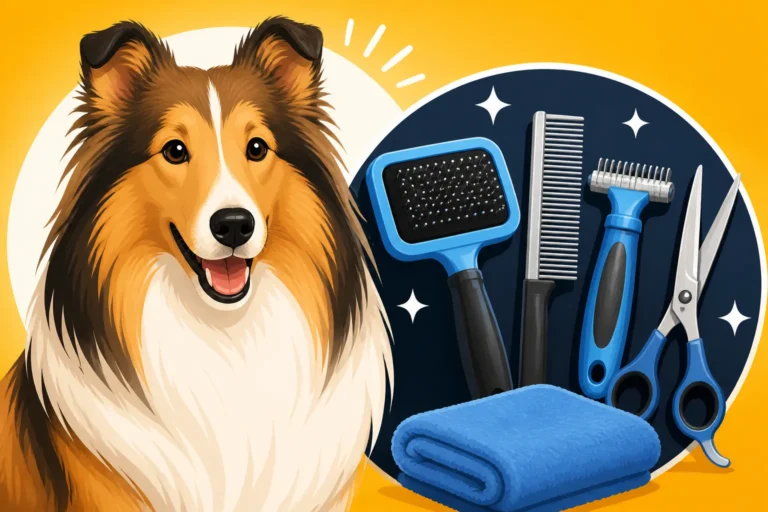
Embarking on the DIY grooming journey means equipping yourself properly. Trying to groom a Collie with inadequate tools is like trying to build a house with a butter knife – frustrating and ineffective. Your essential toolkit will be an upfront investment, but it will pay dividends over your Collie's lifetime. If you're wondering What Grooming Tools a Collie Owner Buys Once, here's a rundown:
- Pin Brush: This is your everyday workhorse for general brushing and getting through the topcoat. Look for one with long, sturdy pins that reach deep into the coat.
- Slicker Brush: While useful for detangling minor surface mats, be careful not to overuse this, especially on the undercoat, as it can be harsh on the skin.
- Undercoat Rake/Deshedding Tool: Absolutely crucial for removing dead undercoat. Tools like the Furminator can be effective, but must be used judiciously to avoid damaging the guard hairs. A simple, well-made undercoat rake is often safer and more effective for Collies.
- Metal Grooming Comb: A sturdy, long-toothed metal comb is essential for checking your work and finding hidden mats, especially in denser areas.
- Shears/Scissors: A pair of blunt-nosed grooming scissors for safely trimming around paw pads, and a pair of thinning shears for blending and reducing bulk without creating choppy lines.
- High-Velocity Dryer: While an investment, a good force dryer can significantly cut drying time and, more importantly, effectively blow out loose undercoat. This is probably the single most impactful tool for home grooming, next to brushes.
- Detangling Spray: A good quality detangling spray can make brushing through tangles much easier and help prevent static.
Without these basics, you'll find yourself struggling, and your Collie will likely share your frustration. Think of it as investing in your home maintenance crew – your grooming tools.
Mastering the Art of Line Brushing and Dematting
Brushing a Collie isn't just about running a brush over their back. To be truly effective, you need to master "line brushing." This technique ensures you reach all the way down to the skin, through both layers of the coat, where mats love to hide. How to Line Brush a Collie involves parting the hair in small sections, typically against the grain, and then brushing down from the skin, section by section. You work your way across the dog, ensuring no area is missed. This methodical approach is time-consuming, but it's the only way to genuinely prevent and remove mats.
Dematting is another critical skill. When you find a mat, resist the urge to pull or yank. Instead, use a detangling spray and your fingers or a mat splitter to gently tease it apart. Start from the outer edges of the mat and work your way inwards, slowly separating the tangled hairs. This requires immense patience and a light touch. If a mat is too tight or large, it's often safer to use blunt-nosed scissors to carefully cut into the mat from the underside (parallel to the skin, not perpendicular) to break it up, or to leave it for a professional. Remember, your goal is to make the experience as comfortable as possible for your Collie.
Consistent line brushing, combined with careful dematting, is the cornerstone of successful DIY Collie coat care. It might take forty-five minutes to an hour per session for a Rough Collie in full coat, two to three times a week, but it's essential.
Bathing Your Collie at Home: The Big Wet Challenge
Bathing a Collie at home is an undertaking. Their double coat means they get thoroughly soaked, and then take an incredibly long time to dry if not done properly. A damp undercoat can lead to skin problems like hot spots or fungal infections, so drying is just as important, if not more important, than the washing itself.
First, always, always, thoroughly brush and demat your Collie before bathing. Any mats that are wet will tighten like concrete and become exponentially harder to remove, often necessitating shaving. Use a good quality dog shampoo designed for dense coats, and rinse thoroughly until the water runs clear and you feel no residue. This might mean rinsing for what feels like an eternity.
Then comes the drying. This is where a high-velocity dryer truly shines. Towel dry as much as possible, then use the force dryer on a cool or low-heat setting to blow out the water and, crucially, the loose undercoat. Section the coat and dry layer by layer, just like line brushing. This process can take hours. Without a force dryer, you're looking at a dog that could take half a day or more to air dry completely, significantly increasing the risk of skin issues. Make sure your Collie is bone dry before letting them loose, especially if they are prone to rolling in the dirt!
Hidden Costs of Coat Care: Beyond the Brush and Clippers
The bills associated with a Collie's coat don't always come in the form of grooming appointments or tool purchases. Sometimes, the "cost" is more insidious, appearing as unexpected veterinary bills or constant cleaning expenses that add up over time. It's important to be aware of these less obvious financial drains.
Veterinary Care for Skin and Coat Issues
Neglecting your Collie's coat, or even sometimes with the best intentions, can lead to medical problems that require veterinary intervention. One of the most common issues arising from poor coat care is skin irritation or infection. Deep, neglected mats can pull at the skin, creating sores or trapping moisture and bacteria, leading to hot spots or other dermatological conditions. These can be incredibly painful for your dog and require medication, special shampoos, and sometimes even sedation and professional shaving by a vet to treat the underlying skin.
Furthermore, a Collie's dense coat can sometimes mask underlying skin issues or parasites. Fleas and ticks, for example, are much harder to spot on a Rough Collie than on a short-haired breed, allowing infestations to become more severe before detection. Certain genetic conditions, like dermatomyositis, also manifest as skin lesions, and their dense coat might obscure early signs. If your Collie's skin issues become chronic or severe, you might find yourself facing specialist veterinary referral costs to a veterinary dermatologist. This isn't just about a one-time visit; it can be an ongoing management cost.
Having pet insurance, such as from Healthy Paws, can be incredibly helpful in mitigating these unexpected veterinary costs. While routine grooming isn't covered, medical treatments for skin infections, allergies, or other issues exacerbated by a dense coat would typically fall under illness coverage, providing a financial safety net against these "hidden" coat-related expenses.
Home Cleaning and Maintenance Expenses
Beyond the direct grooming costs, the sheer volume of Collie fur demands a certain level of home cleaning and maintenance that can add up. As mentioned, a good quality pet vacuum is not a luxury; it's a necessity, and these can be more expensive and require more frequent filter replacements than standard vacuums. You might find yourself upgrading to a robot vacuum for daily maintenance, or even investing in professional carpet cleaning more frequently than you otherwise would.
Then there's the lint roller budget. You'll likely go through dozens of them a year keeping your clothes and furniture presentable. Washable furniture covers, specifically designed to repel pet hair or be easily thrown in the wash, might become essential. Dark clothing becomes less practical, and you'll find yourself investing in fabric shavers and sticky rollers for your car, too.
This isn't just about buying things; it's about the time investment in cleaning. You'll spend more time vacuuming, sweeping, and doing laundry to manage the constant influx of fur. While these costs might seem minor individually, cumulatively over a year, and certainly over your Collie's lifetime, they represent a tangible increase in household maintenance expenses directly attributable to that magnificent coat.
Emergency Grooming for Extreme Matting
Sometimes, despite best efforts, a Collie can get into a situation where their coat becomes severely matted. This could be due to an illness that prevented regular grooming, a sudden lifestyle change, or simply a period of overwhelming neglect. When mats become extreme – felted close to the skin, covering large areas, or causing obvious discomfort – it often requires emergency professional grooming.
These "emergency grooms" are usually more expensive than routine appointments. They require significantly more time, specialized techniques, and often, the groomer might need to use a short blade to get under the mats, which takes great care to avoid nicking the skin. In very severe cases, especially if the mats are causing pain or skin issues, the veterinarian might need to sedate your Collie to safely shave them down, which then incurs vet fees on top of the grooming cost.
This is a scenario every Collie owner hopes to avoid, as it's stressful for the dog, costly for the owner, and can take months for the coat to recover. It highlights why consistent preventative care, whether through professional grooming or diligent home efforts, is ultimately the more affordable and humane choice. Preventing extreme matting means preventing these sudden, significant financial shocks.
Long-Term Coat Health: Diet, Supplements, and Preventative Measures
While brushing and professional grooming tackle the external aspects of coat care, a truly healthy, lustrous Collie coat starts from within. What you feed your Collie, and whether you provide appropriate supplements, plays a huge role in the quality, texture, and resilience of their fur, potentially reducing grooming challenges and associated costs in the long run.
Nutrition's Role in a Lustrous Coat
The old adage "you are what you eat" applies directly to your Collie's coat. A diet lacking in essential nutrients will often manifest as a dull, brittle, sparse, or excessively shedding coat. Conversely, a high-quality, balanced diet rich in appropriate fats, proteins, and vitamins will contribute to a thick, healthy, shiny coat that is less prone to matting and excessive shedding.
Look for dog foods that list high-quality animal protein as the first ingredient. Essential fatty acids, particularly Omega-3s and Omega-6s, are crucial for skin and coat health. These are often found in ingredients like fish oil, flaxseed, and certain animal fats. Avoid foods with excessive fillers or artificial ingredients, which can sometimes lead to skin sensitivities or poor coat quality. Some owners find that fresh, human-grade food services, such as Ollie, can significantly improve their Collie's coat health, leading to less shedding and a more vibrant look, though this is also an ongoing cost.
Investing in a premium diet might seem like an added expense upfront, but consider it a preventative measure. A healthier coat means less dryness, less breakage, and potentially fewer skin issues, which can translate into less time spent dematting, less money on special shampoos, and fewer vet visits for dermatological problems. It's a foundational element of long-term coat care.
Supplements for Skin and Coat Support
Even with an excellent diet, some Collies can benefit from targeted supplements to boost their skin and coat health. This is particularly true for older Collies, those with specific sensitivities, or during periods of intense shedding.
- Omega Fatty Acid Supplements: Fish oil (salmon, krill, or sardine oil) is a popular choice, providing concentrated Omega-3s. These are known for their anti-inflammatory properties and their ability to promote healthy skin and a shiny coat.
- Biotin and Zinc: These are often found in skin and coat formulas. Biotin is a B vitamin that supports healthy skin and hair growth, while zinc is an essential mineral vital for skin integrity and immune function.
- Coconut Oil: Some owners add a small amount of coconut oil to their Collie's food or apply it topically (though topically, it can make the coat greasy and attract dirt). It's believed to have moisturizing properties for skin and coat.
Before adding any supplements to your Collie's diet, it’s always best to consult with your veterinarian. They can help you determine if a supplement is truly necessary, recommend appropriate dosages, and ensure it won't interfere with any existing medications or health conditions. While supplements add to the ongoing cost, they can be a worthwhile investment for optimizing coat health and potentially reducing future grooming challenges.
Preventing Problems Before They Start
The best approach to managing a Collie's coat, and by extension, its associated costs, is prevention. Being proactive can save you a significant amount of money and stress in the long run.
Regular, consistent brushing is paramount. Make it a habit from puppyhood so your Collie learns to tolerate and even enjoy the grooming process. How Often a Rough Collie Should Be Brushed varies, but aiming for every other day, with daily sessions during coat blows, is a good goal. Catching small tangles before they become giant mats is much easier and less painful. Integrate this into your daily routine.
Additionally, paying attention to your Collie's environment can help. If your dog loves to roll in the mud or burrs, consider limiting access to those areas or putting on a protective coat for walks. After outdoor adventures, a quick once-over with a brush can remove debris before it has a chance to work its way deep into the undercoat. Being observant of any changes in your Collie's skin or coat, such as excessive scratching, dryness, or unusual shedding, allows for early intervention before minor issues escalate into costly veterinary problems.
The Smooth Collie: A Different Budget, But Still a Collie
While the Rough Collie often hogs the spotlight when it comes to coat discussions, the Smooth Collie, though less demanding in terms of grooming time, still requires care and incurs costs. It's a mistake to think that a short coat means no grooming, and understanding their specific needs is crucial for potential owners.
Less Hair, Not No Hair: Smooth Collie Shedding
The most common misconception about Smooth Collies is that they don't shed. This is simply not true. While they lack the voluminous double coat of their rough counterparts, they still possess a dense, short double coat and undergo seasonal shedding. Their hair is shorter, yes, but it still comes out, and sometimes it can feel like it weaves itself into fabric more persistently than long hair.
A Smooth Collie will still have noticeable coat blows twice a year, though perhaps not with the same dramatic visual impact as a Rough Collie. During these times, you'll still find plenty of fur around your home, clinging to furniture and clothes. The main difference is that their shorter hair is less prone to matting and less likely to form the large, tumbleweed-like clumps that Rough Collies produce. However, it still needs to be removed to keep the dog comfortable and reduce shedding in the house.
So, while the grooming bill might not arrive every eight weeks for professional haircuts, you'll still be investing in deshedding tools and spending time brushing your Smooth Collie, especially during seasonal changes.
Grooming a Smooth Collie: Still Essential Care
Even with a short coat, a Smooth Collie benefits greatly from regular grooming. While you won't be line brushing for an hour, weekly or bi-weekly brushing with a rubber curry brush or a shedding blade (used gently) can work wonders. This helps to remove dead hair, stimulate circulation, and distribute natural oils, keeping their coat healthy and shiny.
During coat blows, a deshedding tool can be very effective at pulling out the loose undercoat. Bathing is also necessary, though drying time is significantly reduced compared to a Rough Collie. A quick towel dry followed by a blow dryer (even a human one on a cool setting) is usually sufficient.
Regular nail trims and ear cleaning are just as important for a Smooth Collie as for any other dog. Their feet and sanitary areas might also need occasional tidying. While these tasks are generally easier and quicker with a short coat, they are still essential parts of their overall care and contribute to the ongoing cost, whether it's through buying tools or paying for professional services.
Cost Comparison: Rough vs. Smooth Coat Care
Let's look at a quick comparison of the typical grooming costs and efforts for Rough and Smooth Collies.
| Aspect | Rough Collie | Smooth Collie |
|---|---|---|
| Professional Grooming | High, every 6-8 weeks (full grooms, deshedding) | Low to Moderate, occasional baths/deshedding (less frequent) |
| DIY Time Investment | High (45-60 min, 2-3x/week, more during coat blow) | Moderate (15-30 min, 1x/week, more during coat blow) |
| Tool Kit Cost | Higher (force dryer, specialized brushes/combs, shears) | Moderate (rubber curry, shedding blade, basic brushes) |
| Shedding Volume | Very High, especially during bi-annual coat blows | Moderate to High, year-round, distinct coat blows |
| Matting Risk | High (ears, armpits, hocks, tail) | Low (rare, usually only if neglected or very wet) |
| Risk of Vet Bills for Skin | Moderate to High (if coat neglected) | Low (skin issues more easily visible) |
As you can see, while the Smooth Collie is certainly less demanding in terms of coat maintenance and direct grooming costs, it's not a "no-groom" dog. The time and money saved on professional full grooms will likely be reallocated to quality deshedding tools, a good pet vacuum, and the time you spend on regular at-home care. Ultimately, choosing a Collie means choosing a dog that will contribute to your household budget in terms of coat care, regardless of its length.
Disclaimer
This article is for general informational purposes only and does not constitute professional advice. Laws, prices and regulations vary by location and change over time. Consult a qualified professional for guidance on your specific situation.