What a Full Groom on a Collie in Full Coat Involves
The glorious, flowing coat of a Collie is truly a sight to behold, but for many owners, the reality of maintaining that majestic mane can feel like facing a furry Everest. It's not just about looking pretty; a neglected coat can lead to painful mats, skin infections, and general discomfort for your beloved dog. This guide will walk you through exactly what a full professional groom for a Collie in full coat involves, demystifying the process and helping you understand what to expect and why it's so important.
Understanding the Collie's Magnificent (and Challenging) Coat
Before we dive into the nitty-gritty of a professional groom, it helps to truly appreciate the unique structure of your Collie's coat. It’s not just long hair; it’s a sophisticated, double-layered system designed to protect them from the elements, whether it's the chill of a Scottish winter or the heat of a summer day.
The Double Coat: Undercoat and Outer Coat
Your Collie sports what's known as a double coat, and this is the root of both its beauty and its grooming demands. The outer coat consists of long, coarse, straight guard hairs that are relatively water-resistant and provide a protective barrier. These are the hairs that give your Collie its distinctive silhouette and color. Beneath this lies the undercoat, which is thick, soft, and dense, acting as insulation. Think of it as a built-in down jacket. This undercoat is what keeps them warm in winter and, surprisingly, helps them regulate temperature in summer by trapping cooler air close to the skin.
The challenge arises because these two layers behave differently. The outer coat can shed, but the undercoat "blows" out in massive quantities, especially twice a year during seasonal changes. If this dense undercoat isn't meticulously removed, it traps dead hair, creating a felt-like mat that prevents air circulation. This can lead to skin irritation, hot spots, and make your dog incredibly uncomfortable. It's a fundamental misunderstanding that can lead new Collie owners to feel overwhelmed, but recognizing this dual nature is the first step toward effective grooming. Many people wonder The Three Weeks Twice a Year When a Collie Buries Your House, and it all comes down to this undercoat.
Common Coat Challenges for Collies
With such a luxurious coat come specific hurdles that professional groomers are expertly equipped to handle. Mats are the biggest enemy, forming easily behind the ears, in the armpits, on the breeches (the feathering on the back of the hind legs), and around the "frill" or mane around their neck. These aren't just cosmetic issues; mats pull on the skin, causing pain and can lead to serious skin conditions if left untended. Imagine trying to move with your hair constantly pulling at your scalp, then multiply that by your dog's entire body. That's what severe matting feels like.
Another challenge is the sheer volume of shedding, even outside of the biannual coat blow. Collies shed year-round, and if not brushed regularly, this dead hair can clog the coat, making it dull, greasy, and prone to tangles. The idea that a quick brush every now and then is enough for a Rough Collie is a common misconception, often leading owners to bring in a matted mess that could have been prevented with consistent home care, or at least regular professional attention. A healthy coat is a clean coat, and a clean coat is less likely to mat. For many, the true cost of owning a Collie involves understanding that A Collie's Coat Is the Bill That Arrives Every Eight Weeks in the form of regular grooming.
The Step-by-Step Process of a Full Professional Groom
When you entrust your Collie to a professional groomer for a full groom, they're not just giving a quick wash and brush. They're performing a multi-step process designed to maintain the health and beauty of that magnificent coat. This isn't just a luxury; it's an essential part of your Collie's welfare.
Initial Assessment and Pre-Brush Out
The groom typically begins with a thorough assessment of your Collie's coat condition. The groomer will carefully check for mats, tangles, skin issues, and any sensitivities your dog might have. They'll also look for parasites or anything unusual that might need veterinary attention. This initial check is crucial for determining the best approach and whether any special care or extra time will be needed to safely address severe matting. If your dog comes in with a heavily matted coat, the groomer might need to spend significant time on this first step, and it could impact the overall cost and duration.
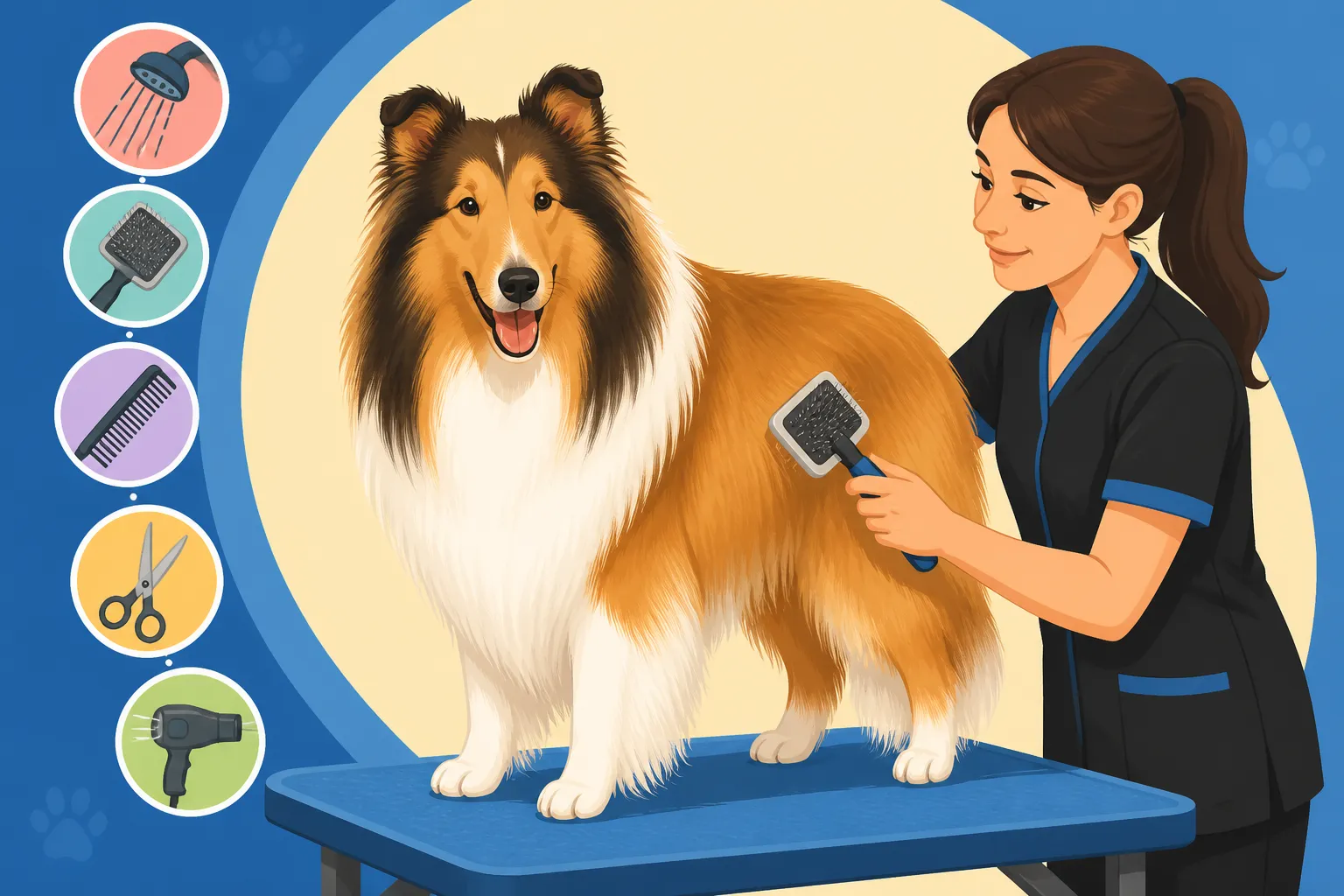
After the assessment, the pre-brush out begins. This involves carefully working through the coat with specialized tools, like slicker brushes and metal combs, to remove loose hair and minor tangles before the bath. Trying to wash a matted Collie is a big mistake; water only tightens mats, making them nearly impossible to remove without resorting to shaving, which is generally discouraged for Collies. The goal here is to get as much dead hair out as possible, making the bath more effective and preventing further matting. It's a meticulous process, especially in areas like the "frill," "petticoat," and behind the ears, which are notorious for matting. Understanding Mane, Frill and Petticoat: the Parts of a Collie That Mat can help you with home care.
The Bathing and Conditioning Ritual
Once the coat is largely free of tangles and loose undercoat, it’s time for the bath. This isn't just any bath; professional groomers use high-quality shampoos specifically formulated for dogs, often tearless and designed to penetrate dense double coats without stripping natural oils. They'll likely use a hydro-surge bathing system, which forces water and shampoo through the coat, ensuring deep cleaning and helping to loosen more dead undercoat. This deep cleaning removes dirt, dander, and oils, leaving the coat fresh and clean.
After shampooing, a professional-grade conditioner is applied. This step is vital for a Collie's coat, as it helps to moisturize the skin, soften the hair, reduce static, and make the subsequent drying and brushing much easier. The conditioner is massaged in thoroughly, ensuring it reaches the skin beneath the dense coat. For Collies prone to dry skin or allergies, specialized shampoos and conditioners may be used. Knowing Which Shampoo Suits a Collie's Coat can make a difference. The groomer will rinse your dog meticulously to ensure no residue is left behind, as any lingering shampoo can irritate the skin or make the coat feel sticky.
The Art of Drying and Final Brush Out
This is perhaps the most critical step for a Collie's coat health and appearance: the drying process. Professional groomers use high-velocity dryers, sometimes called force dryers, which are powerful machines designed to blow water out of the coat rather than just drying it with heat. These dryers are indispensable for Collies because they not only dry the dense undercoat thoroughly (preventing damp-related skin issues) but also literally "force" out remaining loose undercoat that the pre-brush and bath might have missed. It's an incredibly effective deshedding tool.
During this drying process, the groomer simultaneously brushes and combs the coat, ensuring it dries perfectly straight, fluffy, and free of any lingering tangles or mats. This line-drying technique, where they dry small sections of hair at a time, brushing from the skin out, is what gives a Collie that show-ring ready, flowing look. It's time-consuming but essential. Skipping this step or not doing it correctly can lead to mats reforming as the coat dries, defeating the purpose of the groom. A good groomer knows how to effectively How to Dry a Collie Properly to avoid issues.
Finishing Touches: Trims, Nails, and Ears
With the coat clean, dry, and fluffy, the groomer moves on to the "finishing" work. While Collies are generally "natural" breeds and aren't typically trimmed extensively like Poodles, a professional groom will include some tidying. This usually involves light trimming around the feet to create a neat, rounded "cat-foot" appearance, and cleaning up the hocks (the lower rear legs). They might also tidy up stray hairs on the legs for a cleaner line. Crucially, a Collie's body coat is never shaved or extensively clipped unless medically necessary, as it can permanently damage the coat texture and growth. For insights, check out Why a Collie Should Never Be Shaved and What Happens to a Shaved Collie's Coat.
Nail trimming is next, ensuring they're cut to a healthy length to prevent discomfort, splayed feet, and potential orthopedic issues. Many groomers use a Dremel tool for a smoother finish that lasts longer and is less likely to snag. Ear cleaning is also standard, removing wax and debris to prevent infections, though deep ear cleaning for infections is typically left to a vet. Some groomers might also express anal glands if requested and within their skill set, but this is often considered a veterinary procedure. Finally, a spritz of dog-safe cologne and a jaunty bandana might complete the look.
What to Expect from Your Groomer and Your Collie
Taking your Collie for a full groom is a partnership between you, your dog, and the groomer. Setting realistic expectations and clear communication are key to a positive experience for everyone involved.
Communication and Trust with Your Groomer
First and foremost, a good relationship with your groomer is invaluable. Don't be afraid to communicate your concerns, your dog's quirks, or any specific requests you have. If your Collie has a history of skin sensitivities, fear of dryers, or is prone to matting in a particular spot (like How to Work Out a Mat Behind a Collie's Ear), share this information upfront. A professional groomer appreciates knowing these details as it helps them tailor the experience to your dog. They should also be transparent about their process and any challenges they encounter, such as unexpected matting that might require extra time or a different approach.
It's important to trust your groomer's expertise. They see dozens of dogs with various coat types and conditions. If they recommend a specific frequency for grooming or a particular tool for home maintenance, it's usually for a good reason. Remember, they want your Collie to look and feel its best, and a happy, comfortable dog makes their job easier too. Sometimes, a groomer may identify health concerns, such as lumps, skin irritations, or ear infections, that you might not have noticed under all that fur. This extra set of eyes can be invaluable for your dog's overall health.
Your Collie's Experience and Behavior
For your Collie, a full groom can be a lengthy process, often taking several hours, especially if they have a dense coat or are particularly matted. It's a lot of standing, being handled, and tolerating loud noises from dryers. A well-socialized Collie who is accustomed to grooming from a young age will generally cope better. Early exposure to brushing at home, the sound of a hairdryer, and having their paws and ears handled can make a world of difference. When choosing dog food, even brands like Ollie (known for fresh, human-grade ingredients) can contribute to overall health, which in turn can lead to a healthier coat that's easier to maintain, though it's not a direct grooming tool.
If your Collie is anxious or has never been professionally groomed, discuss this with your groomer. They may suggest a "desensitization" visit or shorter, more frequent appointments to build positive associations. Be patient with your dog and your groomer; some Collies simply take longer to acclimate. While some owners worry about the cost, for example, What a Professional Groom Costs on a Rough Collie, the investment is truly in your dog's comfort and long-term health. If your Collie ever has a skin reaction or injury during grooming, knowing about pet insurance options like Healthy Paws can provide peace of mind for unexpected vet bills.
Table: Professional vs. At-Home Collie Grooming Tasks
| Task Category | At-Home Owner Responsibilities (Daily/Weekly) | Professional Groomer Responsibilities (Every 6-8 Weeks) |
|---|---|---|
| Brushing | Daily/weekly full-body brushing, especially mats-prone areas (ears, armpits). | Thorough de-shedding, dematting, line-brushing entire coat. |
| Bathing | Spot cleaning, emergency washes for minor messes. | Deep cleansing bath with specialized shampoos & conditioners, hydro-massage. |
| Drying | Towel drying after rain, light blow-dry if needed. | High-velocity force drying to remove all undercoat, full fluff drying. |
| Trimming | None, or very minor tidying of paw pads if comfortable. | Sanitary trim, paw pad tidy, feathering neatening (minimal body trimming). |
| Nails & Ears | Weekly nail checks, occasional ear wipes (outer ear). | Nail trimming/grinding, thorough ear cleaning (if no infection). |
| Health Check | Daily quick scan for lumps, parasites, skin issues. | Full body skin check, coat evaluation, early detection of issues. |
Maintaining That Groomed Look Between Appointments
The professional groom is a fantastic reset for your Collie's coat, but it's not a magic bullet that lasts forever without effort. Consistent home care is absolutely essential to keep your Collie comfortable, extend the life of the professional groom, and make the next grooming appointment much smoother for both your dog and the groomer.
The Importance of Regular Brushing at Home
Think of professional grooming as a deep clean, and your at-home brushing as daily tidying. For a Rough Collie, daily brushing is ideal, or at least every other day, to prevent mats from forming and to remove loose hair before it gets tangled. This is particularly crucial during seasonal coat blows. You'll need the right tools: a good pin brush, a slicker brush for stubborn areas (used carefully!), and a sturdy metal comb that can reach the undercoat. Focusing on those trouble spots – behind the ears, armpits, flanks, and the "petticoat" on the hind legs – can save you hours of dematting later. Four Tools and Twenty Minutes: Brushing a Rough Collie highlights the commitment needed.
Don't just skim the top; you need to line brush, meaning you part the hair and brush from the skin outwards, section by section. This ensures you're getting down to the root of the coat, where mats typically start. Regular brushing stimulates the skin, distributes natural oils, and keeps the coat healthy and shiny. You can find a wide array of quality grooming tools on platforms like Chewy, making it easier to stock up on everything you need for effective home care. Consistency is far more effective than sporadic, marathon brushing sessions. If you're wondering How Often a Rough Collie Should Be Brushed, the answer is "often!".
Spot Cleaning and Minor Tidying
While full baths are best left to the professionals to avoid wetting and tightening mats, you can and should do spot cleaning at home. If your Collie rolls in something muddy or messy, use a damp cloth or a dry shampoo designed for dogs to clean the affected area. Always ensure the cleaned spot is thoroughly dry before your dog can get back to their adventures. This prevents mildew and skin irritation.
You can also keep an eye on their paws and ears between grooms. A quick wipe of the outer ear with a dog-specific ear cleaner on a cotton ball can help prevent buildup. Regularly checking and trimming the hair between their paw pads can prevent snow, ice, or debris from getting stuck, which can cause discomfort. Remember, your home care isn't about replacing the professional groom, but about maintaining the excellent work done by your groomer and ensuring your Collie's comfort and cleanliness every day. It's a team effort that truly benefits your beautiful dog.
Disclaimer
This article is for general informational purposes only and does not constitute professional advice. Laws, prices and regulations vary by location and change over time. Consult a qualified professional for guidance on your specific situation.