Whether a Collie Owner Can Skip the Groomer Entirely
Oh, the age-old question for Collie owners: can you really skip the groomer entirely? It’s a thought that crosses almost every owner’s mind at some point, usually right after a particularly vigorous shake sends a cloud of fur across your freshly vacuumed floor, or when you get that dreaded bill from the professional groomer. We love our Collies with all our hearts, but that magnificent coat, whether rough or smooth, is a commitment. The idea of saving money and doing it all yourself is incredibly appealing, but the reality can be a whirlwind of tangled fur, frustration, and sometimes, even more expensive problems down the line. This guide is here to honestly explore whether going completely DIY on your Collie's grooming is a feasible, long-term solution, or if there are certain times when professional help is just plain indispensable.
Understanding the Collie Coat: More Than Just Fluff
Before we even consider grabbing a brush, it's crucial to truly understand the sheer engineering marvel that is a Collie's coat. It’s not just long hair; it’s a sophisticated system designed for protection and warmth. Thinking you can just "manage" it without proper knowledge is like trying to fix a complex engine with a butter knife.
The Double Coat's Demands
The rough Collie, with its iconic flowing mane, sports a double coat. This means two distinct layers working in tandem. The outer coat consists of long, harsh, straight guard hairs that are designed to shed water and protect against the elements. Beneath this lies a soft, dense, and fluffy undercoat. This undercoat is what truly provides insulation, keeping your Collie warm in winter and helping to regulate body temperature in summer (yes, really!). The frustration often comes from this undercoat, which, when shed, can get trapped beneath the guard hairs, leading to mats and tangles if not diligently removed. Imagine wearing a wool sweater under a waterproof jacket; if the sweater sheds, it has nowhere to go but to clump up inside. That's essentially what happens with an unbrushed Collie. This intricate layering is beautiful, but it requires consistent attention to prevent painful mats, which can pull on the skin and even lead to infections.
Smooth Collie: Less Coat, Still a Coat
Now, if you have a smooth Collie, you might be thinking you've dodged the bullet. And yes, while the grooming demands are certainly less intense than their rough-coated cousins, a smooth Collie is by no means a wash-and-wear dog. They still possess that essential double coat, though the guard hairs are much shorter and the undercoat less voluminous. This often means their shedding is less dramatic in terms of massive clumps, but it can be more consistent year-round, leading to a constant sprinkle of fine hairs throughout your home. A smooth Collie still needs regular brushing to remove dead hair, stimulate circulation, and distribute natural skin oils. Skipping grooming entirely, even for a smooth Collie, can result in dull coats, skin irritations from trapped dander, and yes, still some matting in finer areas if left unchecked. So, while you might not need the same array of heavy-duty tools, the principle of regular care remains.
The Realities of Coat Blows
Ah, the "coat blow" – a term that can strike fear into the heart of even the most seasoned Collie owner. This is typically when your Collie sheds their entire undercoat, usually twice a year, often in spring and fall. However, the timing can vary based on climate, hormones (for intact dogs), and even indoor living conditions. During a coat blow, the sheer volume of fur coming off your dog is astounding. It feels like you could build another Collie with the amount of fluff. This isn't just a bit of extra shedding; it's an absolute explosion of loose hair that, if not systematically brushed out, will quickly form dense, felt-like mats close to the skin. These mats are not only uncomfortable and potentially painful for your dog, but they can also hide skin issues and make it difficult for air to circulate, leading to hot spots. This period often feels like a full-time job for owners who opt for DIY grooming, demanding daily, sometimes twice-daily, thorough brushing sessions. It's during these times that many owners who swore off professional groomers find themselves frantically searching for "groomers near me" out of sheer desperation. Understanding When a Collie Blows Its Coat is paramount to being prepared.
The Essential Home Grooming Toolkit and Technique
If you're serious about taking on all of your Collie's grooming needs, you'll quickly realize that a single slicker brush won't cut it. This is an investment in time, patience, and the right equipment. Think of it as equipping yourself for a marathon, not a sprint.
Tools of the Trade It's More Than One Brush
To successfully groom a Collie at home, you need a collection of specialized tools. First and foremost, a good quality pin brush with rounded pins is your everyday workhorse for the outer coat. It helps to detangle and remove superficial loose hair. For getting into that dense undercoat, you absolutely need an undercoat rake. This tool is designed to reach beneath the guard hairs and gently pull out the dead undercoat without damaging the topcoat. If you have a rough Collie, you’ll likely need a V-rake, which is great for removing big clumps of shed undercoat efficiently. Next, a sturdy metal comb with both wide and narrow teeth is indispensable for checking your work and for tackling those tricky, sensitive areas where mats often form. You'll use the wide teeth for initial detangling and the fine teeth to ensure no small tangles are missed, especially behind the ears, in the armpits, and on the britches.
Beyond brushes, you'll need nail clippers (guillotine style or scissor style, depending on your preference) or, even better, a Dremel or pet-specific nail grinder. Regular nail trims are non-negotiable for a Collie's comfort and joint health. A high-quality detangling spray or conditioning spray can be a lifesaver, making brushing easier and helping to prevent static and breakage, especially on a dry coat. Many excellent brands are available, and you can often find them on sites like Chewy. Lastly, invest in a good pair of blunt-nosed scissors for carefully trimming around the paw pads and for sanitary trims, always with extreme caution. Which Four Brushes a Collie Owner Needs provides a deeper dive into these essential items.
Mastering the Art of Line Brushing
Line brushing is the secret weapon of successful home Collie grooming, and it's something a professional groomer does instinctively. It's not just running a brush over the top of the coat; it's a methodical, layer-by-layer approach that ensures you reach all the way down to the skin. To line brush, you essentially part the coat horizontally, hold the top layer up, and then brush the section below, starting from the skin outwards. Once that section is thoroughly brushed and combed through, you drop a bit more of the coat down and repeat, working your way across and down the dog's body.
This technique, while time-consuming, is the only way to effectively remove all dead undercoat and prevent mats from forming deep within the coat. It requires patience and a good understanding of your dog's anatomy. Many owners find a grooming table helpful to get their dog at a comfortable working height. Missing even a small patch can lead to a matted hotspot that becomes incredibly difficult to deal with later. It’s also important to make sure your Collie is dry when line brushing. Brushing a wet or damp Collie can actually cause more matting and damage the coat. For a comprehensive guide, check out How to Line Brush a Collie.
Tackling the Trouble Spots
While the whole Collie coat demands attention, some areas are particularly prone to matting and require extra vigilance. The mane and frill around their neck and chest are dense and see a lot of friction, making them prime real estate for mats. The feathers on their front and back legs, as well as the britches (the longer hair on the back of their thighs), also tangle easily due to movement and rubbing. And then there are the often-forgotten, delicate areas: behind the ears, in the armpits, and around the sanitary regions.
When tackling these "trouble spots," extreme gentleness is key. Use your metal comb to carefully work through small sections, supporting the skin at the base of the mat so you don't pull too hard. A detangling spray can make a world of difference here. If you encounter a mat that feels hard and close to the skin, resist the urge to just cut it out with scissors, as it's incredibly easy to cut skin underneath the mat. If a mat is severe, it might be safer to call a professional groomer, who has the right tools and expertise to safely remove it, potentially with clippers. Neglecting these areas is not only uncomfortable for your Collie but can quickly escalate into painful skin issues. Understanding how to manage Mane, Frill and Petticoat: the Parts of a Collie That Mat is a skill every owner needs.
Beyond Brushing: Bathing, Nails, and Hygiene
Grooming a Collie extends far beyond just brushing. A clean coat is a healthy coat, and routine hygiene tasks are critical for their overall well-being. These are tasks that professional groomers handle with ease, but at home, they can be quite the undertaking.
The Home Bathing Challenge
Bathing a Collie at home is less like washing a cat and more like wrestling a very fluffy, often reluctant, bear in your bathroom. Their dense double coat requires thorough soaking, multiple shampoo applications, and an even more thorough rinsing. Residual shampoo can irritate the skin and lead to flaking, so rinse, rinse, and rinse again until the water runs completely clear and you feel no slipperiness in the coat. The biggest challenge, however, comes after the bath: drying. You simply cannot let a Collie air dry, especially a rough Collie. Their dense undercoat will retain moisture for an incredibly long time, creating a perfect breeding ground for bacteria, fungus, and painful hot spots. This means hours with a high-velocity dryer (often a significant upfront investment) and diligent brushing while drying to ensure every layer is completely dry, down to the skin.
If your Collie has an aversion to loud noises, this step can be particularly stressful for both of you. A professional groomer has specialized drying equipment and techniques that significantly reduce drying time and ensure thoroughness. While it's certainly possible to bathe your Collie at home, it's a serious commitment of time and energy, often taking several hours from start to finish. Knowing How Often a Collie Needs a Bath is useful, but the process itself is the real hurdle.
Nail Trimming and Ear Care
Neglecting your Collie's nails isn't just a minor oversight; it can lead to pain, splayed toes, and long-term orthopedic problems. Overgrown nails can push up into the nail bed, causing discomfort with every step, and can even change the way your dog walks, straining their joints. Ideally, a Collie's nails should be trimmed every 2-4 weeks. If you're using clippers, be very careful to avoid the quick, which is the sensitive nerve and blood supply within the nail. For many Collies, a Dremel or nail grinder is less stressful and allows for more gradual shortening, helping to recede the quick over time. If you're unsure or nervous, ask your vet or a professional groomer for a demonstration.
Ear care is another important, though often less frequent, task. Collies generally have healthy ears, but it's still wise to check them weekly for redness, discharge, or any unusual odor, which could indicate an infection. Use a vet-approved ear cleaning solution on a cotton ball (never a Q-tip, which can push debris deeper) to gently wipe the visible parts of the ear. If you notice excessive head shaking, scratching, or a foul smell, it's time for a vet visit.
Sanitary Trims and Feathering Maintenance
These are the unsung heroes of home grooming. A sanitary trim involves carefully clipping the hair short around your Collie's rear end, belly, and inner thighs. This prevents feces from sticking to the long hair, reduces the chance of urine scalding, and generally improves hygiene for both you and your dog. It's not glamorous, but it's essential. Similarly, keeping the feathering on their paws and hocks neat prevents mats from forming between the toes and reduces the amount of dirt and debris tracked into your home.
You can also lightly tidy up the longer "feathers" on their legs and chest if they become overly long or scraggly, always using blunt-nosed scissors and taking very small snips at a time. This kind of detail work can be challenging to do safely and evenly at home, especially if your dog is squirmy. A professional groomer will include these tidying services as part of a full groom, ensuring your Collie not only looks neat but stays clean and comfortable. Knowing Whether a Collie's Feet Should Be Trimmed is a good start, but executing it well takes practice.
Weighing the Commitment: Time, Skill, and Cost
So, can you really skip the groomer entirely? Theoretically, yes. Practically, it’s a colossal undertaking that demands a significant investment from you. It’s not just about saving money; it’s about understanding the true cost in terms of your time, skill, and even your relationship with your beloved Collie.
The Time Investment
Let's be brutally honest: grooming a rough Collie thoroughly takes time. We're not talking about a five-minute once-over. A full line-brushing session for a well-maintained rough Collie in full coat can easily take 1-2 hours, done weekly. During a coat blow, you might need to do significant brushing daily for weeks. Add to that bathing (another 2-3 hours for a proper bath and dry), nail trims, ear cleaning, and sanitary trims, and you're looking at a serious time commitment. For many people with busy lives, fitting in these hours consistently can be a huge challenge. Skipping even a week or two, especially for a rough Collie, can mean the difference between minor tangles and severe matting that is difficult, if not impossible, to resolve at home. Consider How Many Hours a Year a Collie Owner Spends Brushing – it adds up!
| Grooming Task | DIY Time Commitment (Rough Collie, per week/month) | Professional Groomer (Time commitment for owner) |
|---|---|---|
| Full Line Brushing | 1-2 hours weekly (daily during coat blow) | 0 (dog gone for 3-5 hours) |
| Bathing & Drying | 2-3 hours monthly (more if very active/dirty) | 0 (included in groom) |
| Nail Trimming | 15-30 minutes bi-weekly/monthly | 0 (included in groom, or quick 15 min vet visit) |
| Ear Cleaning | 5-10 minutes monthly | 0 (included in groom) |
| Sanitary Trim | 15-30 minutes monthly | 0 (included in groom) |
| Total Owner Time | ~4-10+ hours per month | Drop-off/Pick-up time only |
Skill and Patience Requirements
Grooming a Collie effectively is a learned skill. It requires patience, a gentle touch, and the ability to read your dog's body language. You need to know how to hold the coat, how much pressure to apply, and how to spot potential problems like skin irritations or fleas (which can be notoriously hard to find in a dense coat). If your Collie isn't accustomed to grooming, teaching them to stand or lie still for extended periods takes training and positive reinforcement, starting from puppyhood. How to Teach a Collie Puppy to Lie Still for Grooming is crucial reading if you plan to go this route. If you lack confidence or patience, grooming can become a stressful, negative experience for both you and your dog, potentially leading to fear aggression or avoidance of grooming altogether. This makes future grooming, whether professional or at home, even more difficult.
When Professional Help is Invaluable
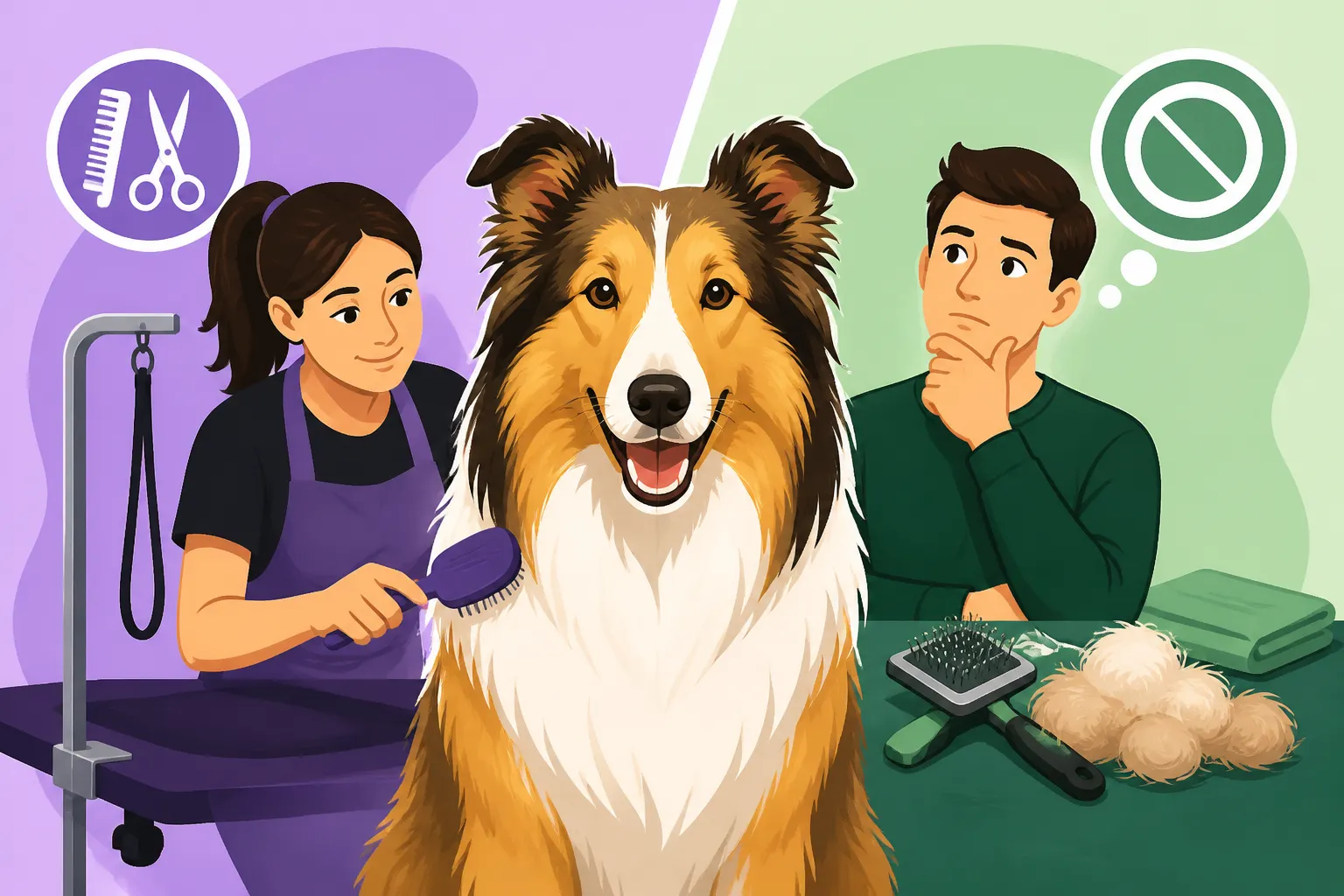
Even the most dedicated home groomers often find themselves relying on professional groomers for certain situations. If your Collie somehow ends up with a really bad mat, deep and tight against the skin, a professional groomer is often the safest and most humane option for removal. They have specialized tools and techniques (like using a small clipper blade under a mat) that minimize pain and risk to the dog's skin. Also, for dogs who are particularly anxious about grooming, or have skin conditions that require very specific care, a professional might be better equipped. Sometimes, you just need a "reset" – a professional groomer can get your Collie's coat back to a manageable state after a particularly intense shedding season or a period where you just couldn't keep up. They can also offer advice on home care techniques or recommend products.
Think of it this way: you might do all your own home repairs, but sometimes you need an electrician or a plumber for a really tricky job. Groomers are specialists, and their expertise is invaluable, especially when you consider the health of your Collie's skin and coat. While a pet insurance like Healthy Paws won't cover routine grooming, it could potentially help if severe matting leads to a skin infection requiring vet attention. And while you can buy many excellent grooming products on Chewy, knowing how to use them correctly is key. Investing in professional grooms periodically can actually make your home grooming efforts more effective in the long run, and prevent bigger, more costly problems.
Ultimately, while skipping the groomer entirely is possible for a highly dedicated and skilled owner with ample time, for most Collie owners, a combination of diligent home care and occasional professional appointments (especially during those epic coat blows) offers the best balance for maintaining their Collie's magnificent, healthy coat and their own sanity.
Disclaimer
This article is for general informational purposes only and does not constitute professional advice. Laws, prices and regulations vary by location and change over time. Consult a qualified professional for guidance on your specific situation.