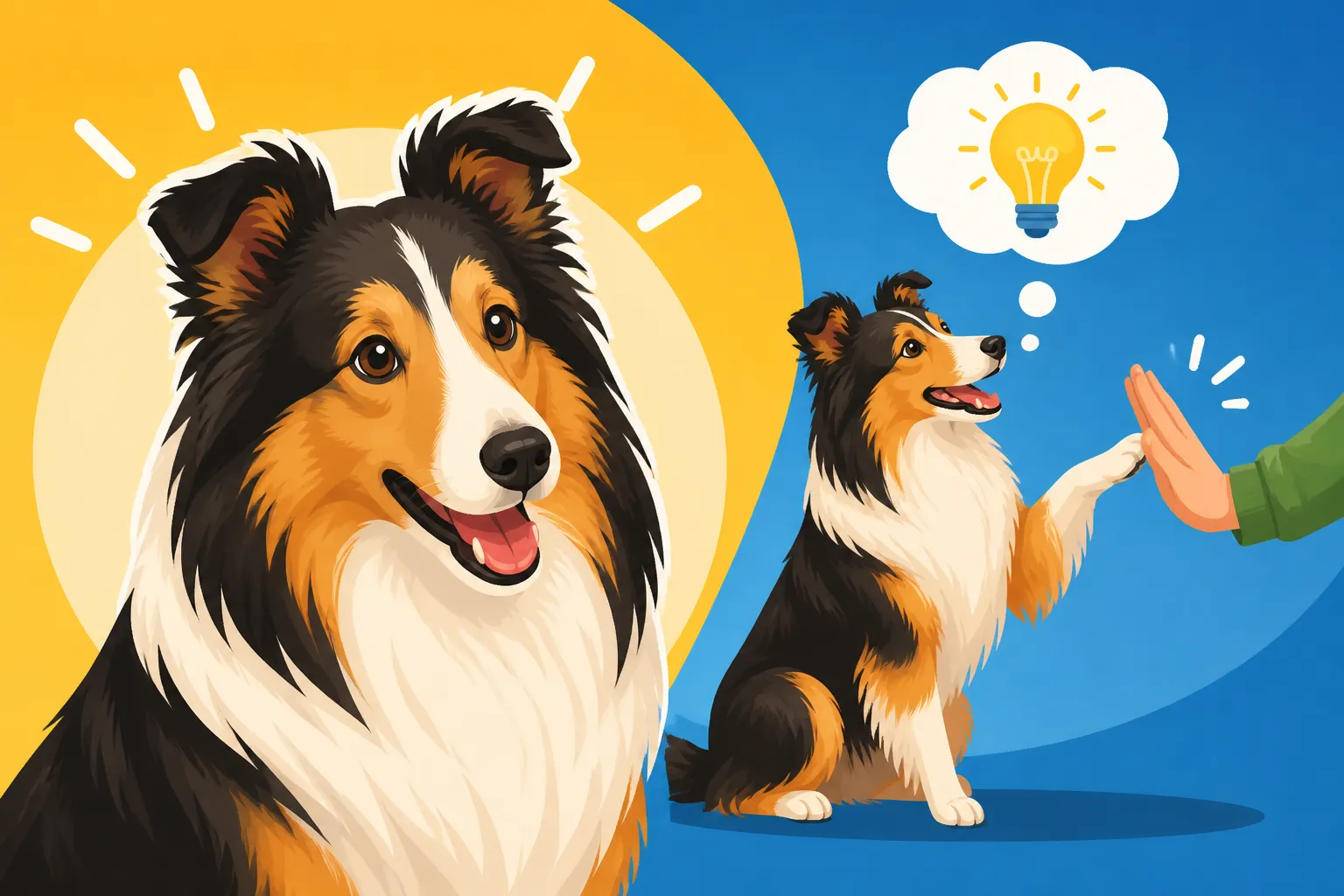
How Long a Collie Takes to Learn a New Cue
It’s a question every dog owner has asked themselves, often with a mix of hope and frustration: "Just how long does it take for my dog to learn this new thing?" When you have a Collie, known for their intelligence but also their incredible sensitivity, this question can feel even more complicated. You might be feeling like your brilliant dog understands perfectly one moment, only to seem utterly clueless the next. This guide is all about setting realistic expectations and understanding the nuances of how a Collie learns, helping you navigate the journey of teaching new cues with patience, empathy, and effective strategies.
Understanding the Collie Learning Style
Collies are remarkable dogs, known for their stunning looks and their sharp minds. But their intelligence often comes with a distinct learning style that's crucial for owners to understand. They aren't automatons that absorb commands; they are thinking, feeling beings who process information in their own unique way.
The Collie's Intelligence and Sensitivity
Collies possess a high degree of intelligence, placing them among the brightest of breeds when it comes to understanding and executing commands. This means they often pick up on new cues astonishingly quickly, sometimes even with just a few repetitions. You might find your Collie understands the meaning of "sit" or "stay" almost instantly. They are keenly observant, picking up on your body language, tone of voice, and even your mood. This makes them incredibly responsive partners in training.
However, this very intelligence is deeply intertwined with a profound sensitivity. A Collie isn't just learning the action; they are learning the context, the tone, and the emotional atmosphere surrounding the command. If a training session is stressful, inconsistent, or involves harsh corrections, a Collie can shut down. They might remember the negative feeling associated with the cue more vividly than the cue itself. This isn't stubbornness; it's a protective mechanism. They are delicate souls, and their trust, once broken, can be incredibly difficult to rebuild. This is why understanding Harsh Handling Breaks a Collie and It Does Not Come Back is so vital for any owner.
The Impact of Early Experiences on Learning
Just like people, a Collie's early life experiences significantly shape their ability and willingness to learn. A puppy from a responsible breeder who has provided a rich, positive environment with early socialization experiences – exposure to different sights, sounds, textures, and gentle human interactions – will generally be more confident and resilient when encountering new learning situations. They've learned that the world is a safe place to explore and that humans are reliable guides.
Conversely, a Collie who missed out on crucial early socialization, or perhaps experienced neglect or fear, may enter training with a backlog of anxieties. They might be wary of new situations, quick to startle, or struggle to focus due to underlying insecurities. For such a dog, "learning a new cue" isn't just about mastering a physical action; it's also about building trust and overcoming past negative associations. This adds layers of complexity and can naturally extend the time it takes for them to feel secure enough to engage fully in training. A solid foundation of positive experiences, even small ones, builds confidence and makes all subsequent learning easier.
Why Collies Don't Respond to Harsh Methods
You might hear outdated advice about "showing your dog who's boss" or using force to get compliance. With a Collie, these methods are not only ineffective but actively detrimental. Collies are thinkers and feelers, not mindless automatons. When faced with harsh treatment, like yelling, leash jerks, or physical corrections, a Collie won't simply comply more quickly. Instead, they are far more likely to withdraw, become fearful, or simply shut down.
Imagine trying to learn a new skill while someone is constantly shouting at you or making you feel small. You'd likely become anxious, resentful, and less capable of performing. A Collie experiences something similar. Their deep sensitivity means they internalize these negative interactions, and rather than speeding up learning, it poisons the well of trust and makes them hesitant to offer behaviors at all. Positive reinforcement, using rewards like tasty treats, enthusiastic praise, or a favorite toy, builds enthusiasm and a desire to participate, which is the fastest and most sustainable path to learning with this intelligent breed. It's about building a partnership, not asserting dominance.
Factors Influencing Learning Speed
While Collies are generally bright, how quickly any individual Collie learns a new cue isn't just about their breed intelligence. Many variables come into play, from their age to your own approach as a trainer, and even the environment where the training takes place. Recognizing these factors helps you tailor your approach for optimal success.
Age and Developmental Stages
A Collie puppy, typically between 8 weeks and 6 months, is like a sponge, soaking up information at an incredible rate. Their brains are developing rapidly, and they are naturally curious and eager to interact with their environment. Basic cues like "sit," "down," or "stay" can be grasped in a handful of short, positive sessions. This is a crucial window for The First Year With a Collie Puppy and for foundational training. However, puppies also have short attention spans and get tired easily, so sessions must be kept brief and fun. They might know "sit" perfectly in the living room, but completely forget it when a squirrel runs by outside. This isn't a failure; it's normal puppy development.
As Collies enter adolescence (roughly 6 months to 2 years), you might notice a "teenage phase" where they seem to forget everything they once knew. They test boundaries, get easily distracted, and their hormones are raging. Learning new, complex cues might slow down, or they might struggle with reliability. This isn't a sign of decreased intelligence, but rather a normal, if frustrating, part of their development. Consistency and patience are key here. An adult Collie (2+ years) often learns with more focus and less impulsivity than a puppy or adolescent, but may take a few more repetitions initially if the cue is entirely new, simply because their brains aren't in that rapid-absorption puppy mode. However, their maturity and longer attention span can make them excellent, steady learners.
The Trainer's Skill and Consistency
Let’s be honest, often the biggest variable in a dog's learning speed isn't the dog, but the person holding the leash! Your skill as a trainer, particularly your ability to communicate clearly and consistently, dramatically impacts how quickly your Collie picks up a new cue. Are you using the same word every time? Is your body language consistent? Are you rewarding immediately and enthusiastically when your Collie gets it right?
Inconsistency is a massive roadblock. If you sometimes ask for "sit" and sometimes "hup," or if you reward some attempts but not others, your Collie will naturally become confused and learning will slow. Clarity and consistency in your commands, hand signals, and reward delivery are paramount. The timing of your reward is also critical; a reward given even a few seconds too late can reinforce the wrong behavior. If you’re struggling, consider an online course like those offered by BAXTER & Bella, or local classes, to refine your own skills. Remember, training is a two-way street, and investing in your own learning can accelerate your Collie's progress significantly.
Distractions and Environment
Imagine trying to study for a difficult exam in a noisy, chaotic room. That's often what we ask our dogs to do when we try to teach a new cue in a highly stimulating environment. Distractions are a huge factor in learning speed, especially for a sensitive and observant breed like the Collie. In a quiet living room with no other people, dogs, or tempting smells, your Collie might learn "down" in five minutes. Take them to a busy park, and suddenly that same "down" cue might be completely forgotten.
The key is to introduce new cues in a low-distraction environment first. Once your Collie understands the cue reliably in that calm setting, you can gradually introduce more distractions. This process is called "proofing." Start with a slightly busier room, then move to the backyard, then a quiet street, and eventually the bustling dog park. Each new environment effectively feels like a slightly new cue to your dog, requiring more repetitions and patience. Don't get discouraged if your Collie struggles in a new, distracting place; it simply means you need to break down the training into smaller, more manageable steps for that specific environment.
The Process of Teaching a New Cue
Teaching a new cue isn't just about saying a word and hoping your Collie understands. It's a structured process that, when followed patiently, makes learning clear, fun, and effective for your intelligent companion. Think of yourself as a coach, guiding your Collie to understand exactly what you're asking.
Breaking Down Complex Behaviors
Some cues, like "sit" or "down," seem simple, but others, like "fetch" or "stay in place while I leave the room," are quite complex. The secret to teaching these more intricate behaviors quickly and effectively is to break them down into tiny, achievable steps. This is often called "shaping." Instead of expecting your Collie to perform the entire behavior at once, you reward successive approximations – each small movement that gets closer to the final goal.
For example, to teach "fetch," you wouldn't just throw a toy and expect them to bring it back. You'd start by rewarding them for:
- Looking at the toy.
- Nosing the toy.
- Picking up the toy.
- Taking a step with the toy.
- Bringing the toy closer to you.
- Dropping the toy in your hand.
Each small success builds confidence and clarity. Your Collie isn't overwhelmed by the big picture; they're celebrating tiny wins along the way. This method not only speeds up the learning process but also keeps your Collie engaged and enthusiastic, turning training into a fun game rather than a confusing chore. For challenging steps, having a variety of high-value treats on hand from a place like Amazon can be a real game-changer to keep motivation high.
Reinforcement and Motivation for Collies
Positive reinforcement is the cornerstone of effective Collie training. Forget the outdated notion that dogs should work just to please you; every animal, including humans, is motivated by what's in it for them. For Collies, this usually means high-value treats, praise, or a favorite toy. The key is to find what truly motivates your individual Collie. Some Collies live for a piece of chicken, others for a squeaky toy, and some just for a joyful "Good dog!" from their favorite human.
The timing of the reinforcement is paramount. The reward needs to happen immediately – within 1-2 seconds – of your Collie performing the desired action. This clear, instant feedback tells them precisely what they did right. If you're too slow, they might associate the reward with the action they did after the desired behavior, leading to confusion. Consistency in using your chosen reinforcer also helps solidify the learning. Remember that while food is often great for initial learning, gradually you can fade out constant food rewards and replace them with verbal praise, petting, or life rewards (like getting to go outside). This helps prevent your Collie from only working when food is present.
Generalization and Proofing
Once your Collie understands a new cue in one specific location with few distractions, the next crucial step is generalization and proofing. This is where many owners get frustrated, thinking their dog "forgot" the command. The truth is, dogs don't generalize well on their own. Knowing "sit" in the kitchen doesn't automatically mean they know "sit" in a busy park or at the vet's office.
Generalization involves practicing the cue in various locations, with different people, and in the presence of mild distractions. Proofing takes it a step further, gradually increasing the level of distraction, duration, and distance. For example, if you're teaching "stay":
- Start: "Stay" for 3 seconds in the living room while you stand still.
- Generalize: "Stay" for 3 seconds in the bedroom, then the backyard.
- Proof (distraction): "Stay" in the living room while a family member walks by.
- Proof (duration): "Stay" for 10 seconds, then 30 seconds, then a minute.
- Proof (distance): "Stay" while you take one step back, then two, then leave the room.
This systematic approach ensures your Collie truly understands the cue, regardless of the environment. Each step might feel like teaching the cue anew, but it builds incredible reliability. This is also where you might identify that your sensitive Collie needs a calm environment to feel secure. For additional support, services like BAXTER & Bella offer structured online programs that guide you through these generalization steps.
Common Roadblocks and Troubleshooting
Even with the best intentions and techniques, training a Collie isn't always a smooth, linear path. You’ll hit snags, feel frustrated, and sometimes wonder if your dog is just being stubborn. Understanding these common roadblocks and how to troubleshoot them is key to continuing your progress.
When a Collie "Knows It" But Won't Do It
This is a classic scenario that can drive any dog owner batty. Your Collie performs a cue flawlessly at home, maybe even shows off for guests, but then absolutely ignores you in a new environment or when you really need them to listen. It’s easy to interpret this as defiance or stubbornness, but for a Collie, it’s rarely either. More often, it's one of these issues:
- Lack of Generalization: As we discussed, dogs don't automatically transfer learning from one context to another. Your Collie might truly "know" the cue in the kitchen, but the sights, sounds, and smells of the park make it a completely different scenario in their mind. They haven't been "proofed" enough in that new environment.
- Insufficient Motivation: Is your reward high-value enough for the environment? A boring kibble might work at home, but won't stand a chance against a squirrel or another dog at the park. You need to escalate your rewards to match the distraction level. Think super tasty treats, a favorite tug toy, or even a game of chase.
- Over-Arousal: Collies are sensitive and can easily become overstimulated. If your Collie is too excited, nervous, or overwhelmed by their surroundings, their brain simply can't process your cue. In these moments, it's best to remove them from the distracting situation, let them calm down, and try again later in a less stimulating setting.
- Conflicting Cues/Body Language: Sometimes, without realizing it, we give mixed signals. Is your body language tense? Are you repeating the cue multiple times? Are you too far away or too close? Review your own delivery to ensure clarity.
Managing Frustration (Yours and Theirs)
Training can be incredibly rewarding, but it can also be incredibly frustrating. This is especially true when you feel like your Collie isn't "getting it," or when they seem to regress. Your Collie, being highly sensitive, will pick up on your frustration instantly. This can create a vicious cycle: you get frustrated, your Collie senses it and becomes anxious or shuts down, making them less likely to perform, which frustrates you further.
When you feel frustration bubbling up, it's crucial to take a break. Seriously, just stop. Put your Collie in their crate with a chew toy, or let them play in the yard, and go cool down. Walk away for a few minutes. Remember that training should always be a positive experience for both of you. If you're feeling stressed, your Collie is almost certainly feeling it too. Sometimes, taking a step back to an easier cue that your Collie performs perfectly can rebuild confidence for both of you. End every session on a positive note, even if it's just rewarding them for eye contact. This helps to reinforce the idea that training is fun and rewarding.
Seeking Professional Help
There's absolutely no shame in seeking professional help. In fact, it's a sign of a responsible and dedicated owner. If you've been working diligently on a new cue or a behavioral issue and feel like you're hitting a wall, a qualified dog trainer or veterinary behaviorist can offer invaluable guidance. They have the experience to spot nuances in your Collie's behavior or your training technique that you might miss.
Look for trainers who use positive reinforcement methods exclusively and have experience with herding breeds like Collies. They can help you break down complex behaviors, identify underlying issues like anxiety, or suggest alternative approaches. Sometimes, a fresh pair of eyes and some objective advice is all it takes to get you back on track. Organizations like the Association of Professional Dog Trainers (APDT) or the Certification Council for Professional Dog Trainers (CCPDT) can help you find qualified professionals in your area. For persistent behavioral issues, especially those involving fear or aggression, a veterinary behaviorist might be necessary, as they can assess for any underlying medical causes or prescribe medication if appropriate. This can be especially important for sensitive breeds prone to anxiety, where How to Build Confidence in a Nervous Collie becomes a critical focus.
Setting Realistic Expectations
The journey of teaching your Collie new cues is a marathon, not a sprint. It's filled with moments of triumph, periods of stagnation, and sometimes, outright confusion. Setting realistic expectations for yourself and your Collie is crucial for maintaining patience, preventing burnout, and truly enjoying the process.
How Many Repetitions Are "Normal"?
There's no magic number for how many repetitions it takes for a Collie to learn a new cue, but we can talk about averages and typical progress. For a relatively simple cue like "sit" or "down" introduced in a low-distraction environment to a motivated, well-adjusted Collie puppy, they might understand the concept within 5-10 repetitions. They might even perform it reliably in that specific context within a few short sessions over a day or two.
However, "understanding" is very different from "knowing it reliably anywhere, anytime." To reach true reliability, where your Collie performs the cue consistently even with distractions and in new environments, you're looking at hundreds, if not thousands, of repetitions spread out over weeks or months. Think of it like a muscle memory. You can learn to throw a ball in an afternoon, but to throw it consistently, accurately, and under pressure takes dedicated practice. For some Collies, their sensitivity means they need even more gentle repetition to build confidence and habit. This table illustrates typical progression for a basic cue:
| Stage of Learning | Environment | Typical Repetitions to Understand (Collie) | Reliability Achieved |
|---|---|---|---|
| Initial Acquisition | Quiet home, no distractions | 5-10 repetitions per short session | Understands concept, inconsistent |
| Early Practice | Quiet home | 20-50 repetitions total | Reliable in that specific spot |
| Generalization | Varied low-distraction spots | 50-100 repetitions per new location | Reliable in familiar low-distraction |
| Proofing | Increasing distractions | 100s of repetitions over time | Reliable with moderate distractions |
| Advanced Mastery | High distractions, distance | Ongoing, thousands of repetitions | Highly reliable, even under pressure |
This table shows that while initial learning can be fast, building true, rock-solid reliability is a long-term commitment.
The Difference Between Learning and Performing Reliably
This is perhaps the most significant distinction to grasp when training your Collie. Your Collie might learn a new cue very quickly. They'll understand that "sit" means putting their rear on the ground, and they'll do it promptly in your living room when asked. That's learning.
Performing reliably, however, means your Collie will "sit" every time you ask, regardless of where you are, who else is around, what smells are distracting them, or how far away you are. This level of reliability comes from endless repetition, practicing in diverse environments, gradually increasing distractions, and consistent, high-value reinforcement. It's about building strong neural pathways and habits that overcome instinctual responses in stimulating situations. Many people become frustrated when their Collie "forgets" a command, but it's not forgetting; it's simply that the cue hasn't been adequately proofed for that specific context. Patience is absolutely paramount in bridging the gap between initial learning and reliable performance. Consistent practice, even for just a few minutes each day, builds incredible reliability over time.
Celebrating Small Wins
In the grand scheme of training, it’s easy to focus on the big goals and overlook the tiny successes along the way. But with a Collie, especially a sensitive one, celebrating every small win is incredibly important for their confidence and your own morale. Did they offer eye contact when you said their name? Did they pause for a split second before chasing a squirrel? Did they touch your hand when asked? These are all moments to acknowledge and reward enthusiastically.
Every correct response, no matter how small or imperfect, is a step in the right direction. Acknowledging these efforts builds your Collie’s confidence, makes them feel successful, and reinforces their desire to engage with you. It also helps you stay positive and motivated, recognizing the incremental progress rather than getting bogged down by perceived failures. Keep training sessions short, fun, and always try to end on a successful note. A happy, confident Collie who feels understood and appreciated will always be a faster and more eager learner in the long run.
Disclaimer
This article is for general informational purposes only and does not constitute professional advice. Laws, prices and regulations vary by location and change over time. Consult a qualified professional for guidance on your specific situation.