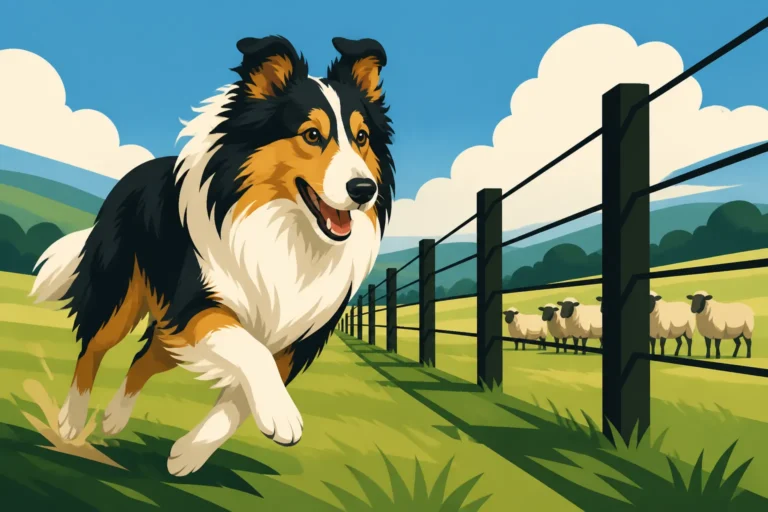
Whether a Collie Barks More Than a Sheltie
It's a common dilemma for anyone considering bringing a herding breed into their life: how much noise are they really going to make? When you're weighing the gentle, dignified Collie against the lively, intelligent Shetland Sheepdog, the question of which barks more is often high on the list. This guide will dive deep into the vocal tendencies of both breeds, helping you understand their natural inclinations and what you can realistically expect in your home.
Understanding the Barking Instinct in Herding Breeds
Herding breeds, by their very nature, are bred to be alert, observant, and responsive. Their historical jobs often involved working at a distance from their human shepherds, relying on their keen senses to monitor livestock and communicate effectively. Barking, in this context, wasn't just noise; it was a vital tool in their toolkit, a way to move sheep, warn off predators, or alert their human to a problem. This deep-seated instinct doesn't just vanish when they become beloved family pets; it often manifests in their modern lives as a tendency to vocalize.
The Collie's Vocal Nature and Historical Role
The Collie, with its majestic appearance and serene demeanor, might not immediately strike you as a highly vocal dog. However, their history as working dogs on the Scottish moors tells a different story. They were tasked with gathering and driving sheep, often over vast distances, and a well-placed bark could be just as effective as a nudge. More importantly, Collies were often the eyes and ears of the shepherd, acting as vigilant guardians against anything amiss. This meant they needed to be keenly aware of their surroundings and ready to alert their human to potential threats, whether it was a stray lamb or an approaching stranger.
This background instills in Collies a deep sense of responsibility for their family and home. They are sensitive dogs, often picking up on subtle changes in their environment or in their owners' moods. A sudden noise outside, a delivery person approaching the door, or even a shift in the household routine can trigger their "alert" bark. It's not usually a frantic, incessant bark, but rather a purposeful, resonant sound intended to inform you that something is happening. They are trying to communicate, to let you know they've registered an event. Understanding this intrinsic motivation is key to managing their vocalizations.
The Sheltie's Energetic Alerting
Shetland Sheepdogs, or Shelties, share a similar lineage to Collies, albeit on a smaller scale, hailing from the rugged Shetland Islands. Their job involved herding miniature sheep, ponies, and poultry, and also acting as farm watchdogs. On small, isolated crofts, a small dog with a big bark was invaluable for alerting farmers to anything unusual. They needed to be quick, agile, and very vocal to compensate for their size when dealing with livestock or intruders.
This historical role has cemented a strong alerting instinct in the Sheltie. They are incredibly observant and highly intelligent, often perceiving things long before their human companions do. Every leaf blowing past the window, every squirrel in the yard, every distant siren, can be cause for a flurry of barks. For many Shelties, barking is also an expression of their exuberance and excitement. They are lively dogs, and sometimes that energy simply bubbles over into vocal expression. Their barks tend to be higher pitched and can seem more urgent and persistent than a Collie's, which can contribute to the perception of them being more vocal.
Comparing Barking Patterns: Collie vs. Sheltie
When we talk about which breed barks "more," it's not always a simple measure of volume or frequency. It's also about the kind of barking, the triggers, and the overall context. Both breeds are vocal, but their approach to barking often differs significantly.
Frequency and Intensity of Collie Barking
Collies are generally considered to be moderate barkers. They aren't typically the breed that barks at absolutely everything, but they are certainly not silent. Their barking is often tied to their guarding and alerting instincts. For instance, a Collie is likely to bark if someone approaches the front door, if they see a strange person or animal in their yard, or if they hear an unfamiliar noise. Why a Collie Barks is usually rooted in their perception of a change or a potential intrusion.
The intensity of a Collie's bark is often described as deep, resonant, and authoritative. It's a sound designed to command attention and to deter. While they can have bursts of excited barking during play or when greeting someone, their prolonged barking sessions are more commonly associated with an alert. If a Collie is barking excessively at "nothing," it's worth investigating, as it might indicate boredom, anxiety, or a perceived threat that you're simply not noticing. How Loud a Collie's Bark Is can be quite substantial, especially in the larger rough Collies, but it's often an intermittent rather than continuous sound unless they are highly agitated.
| Barking Aspect | Collie | Shetland Sheepdog (Sheltie) |
|---|---|---|
| Typical Triggers | Strangers, doorbells, unusual noises, perceived threats, excitement, perceived need to "tell" owner something. | Anything new or unusual, distant sounds, squirrels, delivery people, excitement, frustration, alarm. |
| Frequency | Moderate; tends to be more purposeful/alert-driven. | High; often perceived as more constant or easily triggered. |
| Intensity/Pitch | Deeper, more resonant, "authoritative." | Higher-pitched, sometimes shrill, urgent, "yappy." |
| Volume | Can be quite loud and commanding. | Can be surprisingly loud for their size. |
| Motivation | Guarding, alerting, communicating observations, sometimes boredom. | Alerting, guarding, expressing excitement, anxiety, boredom, drawing attention. |
| Management | Requires clear boundaries, positive reinforcement, mental stimulation, addressing underlying causes. | Requires consistent training, desensitization, channeling energy, managing excitement. |
Frequency and Intensity of Sheltie Barking
Shelties, on the other hand, have a much stronger reputation for being vocal, and in many cases, it's well-deserved. They are often described as frequent barkers, and their propensity to bark can be triggered by a wider range of stimuli. A Sheltie might bark at the sound of a distant car, the rustle of leaves, a bird landing on a feeder, or a person walking down the street even if they're far away. They are highly sensitive to sounds and movement, and their natural instinct is to announce everything.
The intensity and pitch of a Sheltie's bark are notably different from a Collie's. Sheltie barks are generally higher-pitched, often described as yappy, shrill, or insistent. While they may not have the deep boom of a larger Collie, their sharp, rapid barks can be incredibly piercing and persistent. This can be more grating on the ears for some owners and neighbors than the more measured, lower-toned bark of a Collie. For a Sheltie, barking is often a form of engagement—they want to tell you about everything they've noticed, and they are very good at ensuring they get your attention.
Managing Barking in Both Breeds
Regardless of whether you choose a Collie or a Sheltie, understanding and managing barking is going to be a part of your journey as an owner. Both breeds are intelligent and eager to please, but they also have deeply ingrained instincts that need to be understood and channeled appropriately. Effective management isn't about silencing them completely, but about teaching them when and where barking is appropriate.
Training and Environment for Collies
Managing a Collie's barking starts with consistent training and a stable environment. Because Collies are sensitive and thrive on routine, a predictable schedule and clear expectations can help reduce anxiety-driven or attention-seeking barks. When your Collie barks to alert you, acknowledge their "report" calmly, investigate, and then teach a "quiet" cue. Whether a Collie Can Be Taught a Quiet Cue is definitely possible with patience and positive reinforcement. Instead of scolding the bark itself, reward the silence that follows.
Mental stimulation is also crucial. Collies are intelligent and need their minds engaged. Puzzle toys, short training sessions, and interactive games can help prevent boredom, which can often lead to excessive vocalization. If your Collie is barking out of boredom or frustration, providing more mental challenges can make a huge difference. Consider activities like scent work or learning new tricks. You might find excellent resources for positive reinforcement training on platforms like BAXTER & Bella, which offers online puppy training programs that emphasize gentle, effective methods suitable for sensitive breeds.
Training and Environment for Shelties
For Shelties, who are often more prone to frequent and high-pitched barking, a multi-faceted approach is essential. Desensitization to common triggers can be very effective. This involves gradually exposing your Sheltie to sounds and sights that typically trigger barking, but at a low intensity, and rewarding them for remaining calm. For example, if they bark at people walking by the window, start by having people walk at a greater distance, or use window film to reduce visibility, then slowly increase exposure as they learn to stay quiet.
Channeling their energy and intelligence into constructive activities is also vital. Shelties excel in dog sports like agility, obedience, and rally, which provide both physical exercise and mental engagement. A tired Sheltie, both physically and mentally, is often a quieter Sheltie. It's also important to avoid inadvertently rewarding barking. If your Sheltie barks for attention and you immediately respond, you're teaching them that barking is effective. Instead, wait for a moment of quiet before giving attention or a treat. Whether Exercise Reduces a Collie's Barking is true for Shelties too; sufficient exercise can burn off excess energy that might otherwise be expressed vocally.
The Importance of Socialization and Early Training
For both Collies and Shelties, early socialization and consistent training from puppyhood are paramount in shaping their vocal habits. A well-socialized puppy is less likely to be fearful or overly reactive to new sights and sounds, which can significantly reduce alert barking. Exposing them gently to a variety of people, places, and noises during their critical socialization period can build confidence and a sense of security.
Positive reinforcement methods are key. Both breeds are sensitive and respond poorly to harsh corrections or punishment. Such methods can actually increase anxiety and, paradoxically, lead to more barking or other behavioral issues. Focus on rewarding desired behaviors—calmness, quiet, responding to cues—rather than punishing unwanted ones. The First Year With a Collie Puppy is a crucial time to establish these foundations, teaching them that you are in control and that they don't need to alert you to every little thing. Consistency is your best friend here; everyone in the household needs to be on the same page with training and management strategies.
The Impact of Individual Temperament and Breeding
While breed tendencies provide a good general idea, it's vital to remember that every dog is an individual. Just as not every human fits a stereotype, not every Collie or Sheltie will perfectly match the general description of their breed's vocal habits. Factors like genetics, early experiences, and the environment they live in play a huge role.
Genetic Predisposition and Responsible Breeding
A dog's genetic background can significantly influence its temperament and behavioral traits, including vocalization. Responsible breeders are keenly aware of the temperament of their breeding dogs. They strive to produce puppies that are not only healthy but also have stable, confident dispositions. A puppy from parents known for excessive or anxious barking might inherit similar tendencies. When looking for a puppy, don't hesitate to ask breeders about the temperaments of their adult dogs and their approach to minimizing excessive barking. A good breeder will be transparent about their dogs' personalities and vocal habits. While not a brand per se, reputable breeders often list their health testing on public registries, demonstrating their commitment to the breed's well-being beyond just physical traits.
It's also worth considering that some lines might be bred for different purposes. A Collie from working lines might have a stronger natural "voice" than one bred solely for the show ring, as vocal communication was once a crucial part of their job. However, even within those lines, a well-adjusted dog should still be trainable. If you are ever faced with an adult dog where the barking is a significant problem, or if you're dealing with a rescue dog whose history is unknown, consulting with a certified professional dog trainer or behaviorist can provide tailored strategies.
The Role of Owner Consistency and Lifestyle
Ultimately, a huge part of how vocal a Collie or Sheltie becomes rests on the owner's shoulders. Your lifestyle, your consistency in training, and the environment you provide will all play a significant role. A dog that is under-exercised, under-stimulated mentally, or left alone for long periods without adequate enrichment is far more likely to develop nuisance barking, regardless of breed. Forty Five Minutes a Day, and Half of It in Its Head is a good baseline for a Collie's needs, implying that mental work is as important as physical exercise.
If you lead a quiet lifestyle and prefer a very calm household, you'll need to be extra diligent in managing the natural alerting instincts of either breed. If you live in a busy area with lots of external triggers, you'll need to invest more time in desensitization and management. Providing a secure, comfortable space where your dog can retreat from overstimulating environments, perhaps with a white noise machine or calming classical music, can also be helpful. Some owners even use puzzle feeders from companies found on Amazon to keep their dogs engaged during quiet times, reducing boredom-induced barking.
The truth is, both Collies and Shelties can be vocal. However, Shelties generally have a reputation for being more frequent and persistent barkers with a higher-pitched, more urgent sound, due to their intense alerting instincts as farm watchdogs. Collies, while still vocal alert dogs, tend to have a deeper, more measured bark, often used for more significant perceived threats or observations. Neither breed is inherently "quiet," but with patience, consistent positive reinforcement training, appropriate exercise, and mental stimulation, you can teach both a Collie and a Sheltie when to use their voice and when to enjoy the quiet moments with you.
Disclaimer
This article is for general informational purposes only and does not constitute professional advice. Laws, prices and regulations vary by location and change over time. Consult a qualified professional for guidance on your specific situation.