What a V Rake Does on a Collie
Oh, the beloved Collie coat! It's one of their most stunning features, isn't it? But let's be honest, it can also be one of our biggest headaches. Many Collie owners find themselves overwhelmed by the sheer volume of fur, especially when it comes to dealing with that dense, fluffy undercoat that seems to appear out of nowhere, forming mats and clinging to every surface in your home. This guide is here to shed some light (pun absolutely intended!) on a specific grooming tool: the V rake. We'll dive deep into what this tool is, how it works its magic on a Collie's glorious double coat, and how you can use it effectively to keep your furry friend comfortable and your house a little less hairy.
Understanding the Collie's Double Coat
Before we even touch a grooming tool, it's really important to understand the incredible engineering of a Collie's coat. It’s not just one layer of fur; it's a sophisticated system designed for protection, insulation, and even a bit of flair! Understanding this will help you appreciate why certain tools, like the V rake, are so critical.
The Outer Coat and Undercoat Distinction
Your Collie, whether rough or smooth, sports a double coat. Imagine it as two distinct wardrobes, each serving a different purpose.
First, there's the outer coat, often called the guard coat or topcoat. These are the longer, coarser hairs that you see on the surface. On a rough Collie, these are the flowing, elegant hairs that give them their signature silhouette – think of their mane, frill, and the beautiful feathering on their legs and tail. This outer coat is water-resistant and acts as a shield against the elements, protecting your Collie from rain, snow, and even harsh sunlight. It's also what gives their coat its color and shine. These hairs are quite strong and resilient, designed to lie smoothly and repel dirt.
Beneath this protective layer lies the undercoat. Ah, the undercoat! This is where the V rake truly shines. The undercoat consists of soft, dense, downy hairs that are much finer than the guard hairs. Its primary job is insulation – keeping your Collie warm in winter and surprisingly, helping to keep them cool in summer by trapping air close to their skin. During seasonal changes, especially in spring and fall, this undercoat "blows" out in massive quantities. If this dead undercoat isn't removed, it can become a matted mess, trapping moisture, dirt, and creating a perfect breeding ground for skin problems. It’s this dense, cotton-like layer that creates the infamous "Collie tumbleweeds" rolling across your floors.
Why Regular Undercoat Management is Crucial
Ignoring the undercoat is not just a cosmetic issue; it's a health and comfort issue for your Collie. When the dead undercoat isn't properly removed, several problems can arise.
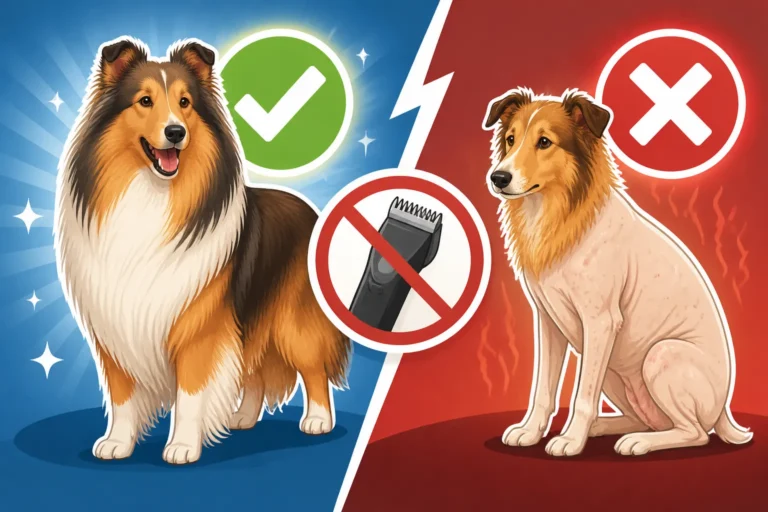
Firstly, matting. The soft undercoat, when combined with shed guard hairs and moisture, can quickly form tight, painful mats. These mats pull on your Collie's skin, causing discomfort and even skin irritation or infections if left unchecked. They can restrict movement, particularly behind the ears, under the legs, and in the "petticoat" area. Secondly, a clogged undercoat hinders temperature regulation. That dense, dead fur acts like a suffocating blanket, preventing air from circulating against the skin, making your Collie overheat in warm weather. Conversely, if it's matted and damp, it can lead to chilling. Thirdly, good undercoat management promotes healthy skin. By removing dead hair, you allow the skin to breathe, reduce dandruff, and make it easier to spot any skin issues, parasites, or lumps that might be hiding beneath that luxurious fur. Regular grooming, especially during shedding season, is key to preventing these issues and keeping your Collie happy and healthy. It also significantly reduces the amount of hair floating around your home.
Introducing the V Rake: What It Is and Isn't
So, what exactly is this V rake we've been talking about? Often misunderstood and sometimes misused, the V rake is a specialized tool with a very specific job in the comprehensive care of a Collie's coat. It’s not a magic bullet for all grooming woes, but it is an incredibly effective tool when used correctly.
Anatomy and Design of a V Rake
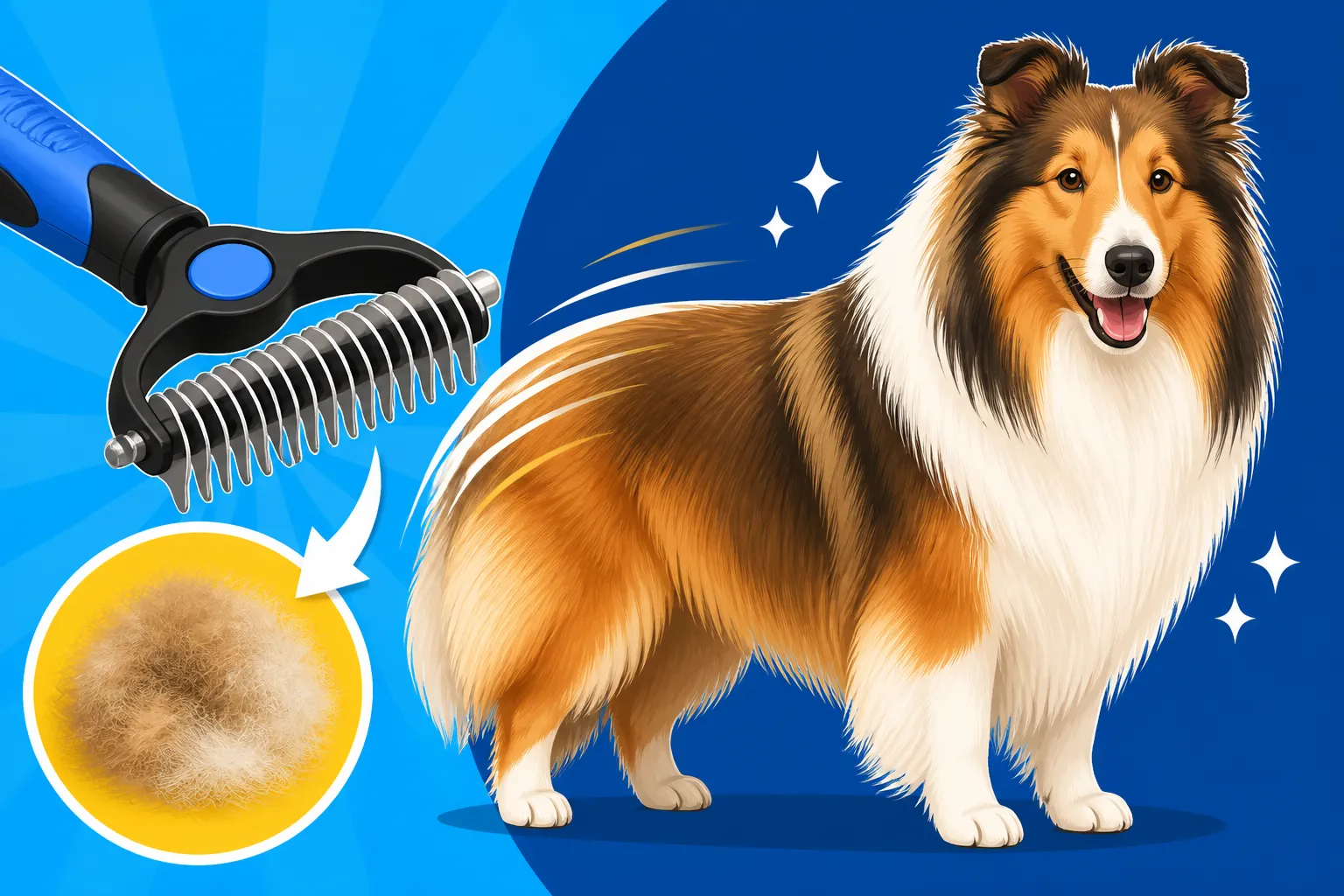
A V rake, sometimes referred to as a "coat rake" or "undercoat rake," is distinct from other grooming tools you might have. It typically features a handle and a head equipped with a single or double row of metal teeth. These teeth are usually quite rigid, relatively widely spaced, and often curved or hooked at the ends, forming a "V" shape or a slightly angled profile. Crucially, the ends of these teeth are blunted, not sharp. This design is paramount to its function: the blunted tips allow the rake to glide through the outer guard hairs and dive deep into the undercoat without cutting or damaging the topcoat. The V shape or slight curve of the teeth helps to gently grab and pull out the loose, dead undercoat that would otherwise remain trapped. The spacing of the teeth can vary; some V rakes have wider spacing for very dense coats, while others have finer spacing for more delicate work or shorter undercoats. The build quality of these tools can vary, from simple plastic handles to more ergonomic designs with comfortable grips, which can make a big difference during a longer grooming session. You can find quality V rakes on platforms like Chewy or Amazon, ensuring you're getting a durable and effective tool.
V Rake vs. Other Deshedding Tools
It’s easy to get confused with the myriad of grooming tools available, and many owners incorrectly use one tool when another would be more appropriate. Let's clarify where the V rake stands in comparison to some other common deshedding tools.
- Slicker Brush: A slicker brush has fine, wire bristles bent at an angle. It's excellent for removing loose hair from both the topcoat and undercoat, and for detangling superficial mats. However, its bristles are too fine and close together to effectively penetrate the densest layers of a Collie's undercoat, especially during a heavy coat blow. It's more for surface grooming and general detangling.
- Pin Brush: A pin brush has widely spaced metal pins, often with rounded tips. This is your go-to for daily brushing, separating individual hairs, and gently working through tangles. It's fantastic for maintaining the topcoat and stimulating circulation, but it's not designed to remove significant amounts of dead undercoat. It simply doesn't have the grabbing power.
- Shedding Blade: A shedding blade typically looks like a metal loop with serrated edges. It's often used on short-coated breeds to pull out loose hair. While it can remove some loose hair from a Collie's topcoat, it doesn't effectively reach the dense undercoat and can be too harsh, potentially cutting or damaging the guard hairs if not used with extreme care. It's not generally recommended for the deep undercoat of a Collie.
- De-shedding Tools (e.g., Furminator-style tools): These tools have fine, comb-like blades that are very effective at reaching deep into the undercoat. They can remove a prodigious amount of dead hair. However, if used incorrectly or too frequently, they can cut or damage the delicate guard hairs, thinning the topcoat and altering its texture. The V rake, with its blunted, widely spaced teeth, is designed to only grab loose hair, minimizing the risk of cutting live coat. The key difference is that a V rake specifically separates and extracts dead undercoat without the cutting action some de-shedding tools possess. A V rake is much gentler on the topcoat.
The V rake excels where these other tools fall short for the Collie's specific coat type: it's built to penetrate that deep, fluffy undercoat and lift out only the dead, shedding hair, leaving the healthy guard coat intact. This makes it an indispensable part of a thorough grooming session, especially during those infamous shedding seasons that can truly bury your house in fur. The Three Weeks Twice a Year When a Collie Buries Your House are precisely when you'll be reaching for this tool.
The Primary Purpose of a V Rake on a Collie
Now that we understand what a V rake is and how it differs from other tools, let's talk about its core mission: tackling that magnificent, yet sometimes unruly, Collie undercoat. This tool isn't for a quick once-over; it's for dedicated work to keep your Collie's coat healthy and prevent the discomfort of matting.
Targeting Loose Undercoat for Removal
The main job of a V rake is to delve beneath the protective layer of the outer coat and efficiently pull out the dead, loose undercoat that your Collie is shedding. Imagine your Collie's undercoat as a thick blanket that gets progressively thicker with dead hairs. If these hairs aren't removed, they can become a felted mess, unable to do their job of insulating and protecting the skin.
The V rake's unique design, with its rigid, often curved or V-shaped teeth, allows it to bypass the longer, coarser guard hairs and reach directly into this dense, cottony undercoat. As you gently pull the rake through the coat, the blunted teeth "grab" onto the loose, dead hairs and lift them away. You'll often see clumps of fluffy undercoat coming out with each stroke, a truly satisfying sight for any Collie owner struggling with shedding. This process is crucial because a healthy coat needs that dead undercoat removed to allow for air circulation and to make room for new growth. Without it, the coat can become heavy, dull, and prone to severe matting, especially in high-friction areas like behind the ears, under the front legs, and along the flank. It's a precise tool for a precise problem, designed to do a job that a simple pin brush or slicker can't accomplish on its own.
Preventing and Addressing Undercoat Mats
Beyond just removing loose undercoat, the V rake plays a vital role in preventing mats from forming and in carefully detangling smaller, more superficial ones. This is where its design truly shines as a preventative measure.
Consider those areas where mats seem to magically appear: behind the ears where the fur is finer and gets rubbed, in the "armpits" where movement causes friction, and around the ruff or "frill" where the coat is especially dense. The V rake, used regularly, can break up the beginnings of these tangles by systematically removing the loose undercoat that would otherwise contribute to their formation. By keeping the undercoat thinned out and free of dead hair, you reduce the material available for mats to bind to. When you encounter a small, developing mat that isn't too tight or close to the skin, the V rake can often be used to gently tease it apart. You'll want to work slowly, holding the fur at the base of the mat to prevent pulling on the skin, and use short, careful strokes from the outer edge of the mat inwards. The V-shaped teeth can help to separate the tangled hairs without cutting them. However, it's absolutely crucial to remember that a V rake is not a tool for serious, tight, or pelted mats. Attempting to rake through such mats will only cause significant pain to your Collie, potentially tear their skin, and break their healthy guard hairs. For severe matting, the safest and kindest course of action is always a professional groomer. But for daily or weekly maintenance, especially during the shedding season, the V rake is an excellent tool for keeping those insidious mats at bay. It helps ensure that your brushing efforts are genuinely effective in reaching the core of the coat. Mane, Frill and Petticoat: the Parts of a Collie That Mat are often the first places you'll find it useful.
How to Use a V Rake Safely and Effectively
Using a V rake isn't just about pulling it through the coat; there's a technique involved to ensure your Collie is comfortable, the coat isn't damaged, and you're actually achieving the desired results. Like any specialized tool, a little knowledge goes a long way in making it work for you and your beloved companion.
Preparing the Coat for Raking
Before you even think about bringing out the V rake, some crucial preparatory steps need to be taken. Skipping these can lead to frustration for you and discomfort for your Collie.
First and foremost, your Collie's coat needs to be clean and completely dry. Attempting to rake a dirty or damp coat is a recipe for disaster. Dirt and grime can create friction, making the rake drag and pull, while moisture can make the coat more susceptible to breakage and can turn existing tangles into tighter mats. A freshly bathed and thoroughly blow-dried coat (using a high-velocity dryer if you have one, they’re fantastic for Collies!) is ideal. Next, perform a thorough initial brush-out with a pin brush and then a slicker brush. This step is non-negotiable. You want to remove any superficial tangles, loose topcoat hairs, and small debris before the V rake comes into play. The V rake is designed for undercoat, not major detangling of the entire coat. If you hit a knot with the V rake that could have been handled by a slicker, you're not only making more work for yourself but risking pain for your dog. Consider using a grooming spray or detangler as you brush. These products can help lubricate the coat, making it easier for brushes and the V rake to glide through and reducing static. A good spritz can also help to condition the fur and prevent breakage. Always start at the extremities and work your way up, brushing in small sections, making sure you can get a comb through the area before you consider it ready for the V rake.
The Correct Technique for V Rake Application
Once the coat is prepped, it's time to put the V rake into action. Remember, gentle and methodical is the name of the game.
Start with your Collie standing or lying comfortably. Begin by sectioning off a small area of coat. Imagine you're doing a How to Line Brush a Collie – you want to work layer by layer. Hold the fur at the base with one hand to minimize skin pulling, and with the other hand, take the V rake. Place the rake on the coat, close to the skin but not scraping it, and pull it in the direction of hair growth. Use slow, even strokes. You are not trying to rip through the coat; you're allowing the teeth to catch the dead undercoat. You should see a satisfying amount of fluff gathering in the rake's teeth. After each stroke, remove the hair from the rake and set it aside (you’ll be amazed at how much comes out!). Pay particular attention to dense areas such as the ruff, the breeches, and under the chest. These are prime areas for undercoat build-up. Be extra gentle around sensitive spots like the armpits and ears. Never apply excessive pressure or repeatedly rake the same spot intensely, as this can irritate the skin or even cause brush burn beneath that thick coat. If the rake snags, stop immediately. Do not pull. Gently work it out with your fingers or switch back to a pin brush to detangle the snag before resuming with the rake. The goal is to remove dead hair without causing discomfort or damaging healthy coat. This process takes time, especially if your Collie is blowing coat, so be patient and take breaks if needed.
Recognizing When to Stop or Seek Professional Help
Knowing when to put the V rake down is just as important as knowing how to use it. There are clear signals that tell you to pause, switch tools, or even call in a professional.
Firstly, if you notice your Collie becoming agitated, flinching, or vocalizing during raking, stop. This indicates discomfort, likely because you've hit a tangle that's too tight or you're pulling too hard. Grooming should be a positive experience, not a wrestling match. Secondly, examine the hair coming off the rake. If you're consistently pulling out healthy, long guard hairs rather than just the soft undercoat, your technique might be too aggressive, or the rake might be catching live hair. This is a sign to lighten your touch or switch to a different tool. You might also be over-raking an area where the undercoat has already been largely removed. Thirdly, observe your Collie's skin. If you see any redness, irritation, or raw spots appearing on the skin after raking, you've gone too far. Their delicate skin can be easily abraded by overzealous raking.
Finally, for significant matting, especially those dense, felt-like mats close to the skin, put the V rake away and call a professional groomer. These types of mats are often painful to remove and trying to do it yourself with a rake can cause severe injury, skin tears, or necessitate sedation at the vet for removal. A groomer has specialized tools and experience to safely and humanely remove even the worst matting, often resorting to clipping or shaving if the mat is too tight to brush out. Never attempt to cut out mats with scissors close to the skin yourself, as it's incredibly easy to accidentally cut the dog. Tools like the V rake are for maintenance and prevention, not for extreme rescue missions.
Integrating the V Rake into Your Collie's Grooming Routine
A V rake isn't a standalone tool, but rather a valuable player in your overall Collie grooming strategy. Knowing when and how often to deploy it, and what other tools to pair it with, will help you maintain that stunning coat year-round.
Seasonal Use and Frequency
The V rake truly earns its keep during your Collie's seasonal "coat blow" periods. Collies typically have two major shedding seasons per year: in spring, to shed their heavy winter coat for a lighter summer one, and in fall, to prepare for the growth of their dense winter coat. These periods, which can last several weeks, are when you'll be reaching for the V rake most frequently.
During a heavy coat blow, you might find yourself using the V rake every few days, or even daily in short sessions, to manage the sheer volume of dead undercoat. The goal is to stay ahead of the shedding and prevent those massive clumps from forming and matting. Outside of these heavy shedding phases, your usage will likely decrease. For regular maintenance, perhaps once a week or every two weeks, a lighter pass with the V rake can help catch any lingering loose undercoat and maintain a healthy, airy coat. For some Collies, especially those with extremely dense coats or in warmer climates where they might shed more consistently, more frequent, lighter raking might be beneficial. Pay attention to your individual Collie's coat and shedding patterns. A spayed or neutered Collie may have a slightly different coat texture or shedding pattern, sometimes leading to a more profuse, "cottony" undercoat year-round, which might necessitate more consistent V rake use. How Often a Rough Collie Should Be Brushed will give you a good benchmark, and the V rake supplements that effort.
Complementary Grooming Tools
As mentioned, the V rake is part of a team. It works best when used in conjunction with other grooming essentials to ensure a thoroughly cared-for Collie coat.
Think of your grooming toolkit as an orchestra, with each instrument playing a vital role. Before reaching for the V rake, you'll always want to use a pin brush to gently work through the topcoat, removing loose surface hairs and larger tangles. This helps open up the coat for the rake to penetrate. Next, a slicker brush can be used to further detangle and remove more fine, loose hair from both layers, especially around areas where mats might be starting. After raking out the bulk of the dead undercoat, a wide-toothed comb or a greyhound comb is essential for a final check. Run the comb through the entire coat, all the way down to the skin, to ensure you haven't missed any tangles or small mats, and that the undercoat is truly free-flowing. If the comb glides smoothly, you've done a fantastic job!
Other useful complementary items include:
- Detangling spray: As discussed, this helps the tools glide more easily and prevents breakage.
- High-velocity dryer: Absolutely invaluable for drying a Collie quickly and thoroughly after a bath, and for "blowing out" a significant amount of loose undercoat before brushing, making the raking process much easier. Whether a Collie Owner Needs a High Velocity Dryer is a resounding yes for many owners!
- Nail clippers or Dremel: Don't forget nail care!
- Ear cleaner: To keep those ears healthy.
By utilizing these tools in a systematic way, you create a comprehensive grooming routine that addresses all aspects of your Collie's coat health, from preventing painful mats to maintaining a beautiful, shiny topcoat. The V rake plays its critical role in the undercoat management, making all other efforts more effective. Which Four Brushes a Collie Owner Needs is a great resource to round out your arsenal.
Here's a quick comparison of common grooming tools for your Collie:
| Tool | Primary Function | When to Use It | What it's NOT For |
|---|---|---|---|
| Pin Brush | General detangling, surface brushing, stimulating skin | Daily maintenance, opening coat before other tools | Deep undercoat removal, heavy matting |
| Slicker Brush | Removing loose hair, detangling smaller mats | After pin brush, for finer detangling | Deep undercoat removal, very dense areas |
| V Rake | Removing dense, dead undercoat, preventing mats | During shedding season, periodic deep grooming | Severe matting, daily surface brushing |
| Wide-Toothed Comb | Checking for missed tangles, final coat check | After brushing/raking, to ensure thoroughness | Initial detangling, removing large amounts of hair |
| High Velocity Dryer | Rapid drying, blowing out loose undercoat | After bathing, before brushing during shedding | Gentle drying (can be too intense for small areas) |
| Detangling Spray | Lubricating coat, reducing static, aid in brushing | As needed during brushing/raking | Cleaning, removing large knots (just aids removal) |
Regular, consistent grooming is a labor of love for your Collie, and understanding the purpose of each tool, especially the powerful V rake, empowers you to keep them looking and feeling their absolute best. It's an investment in their health and your sanity during shedding season!
Disclaimer
This article is for general informational purposes only and does not constitute professional advice. Laws, prices and regulations vary by location and change over time. Consult a qualified professional for guidance on your specific situation.