When a Pin Brush Is the Wrong Tool for a Collie
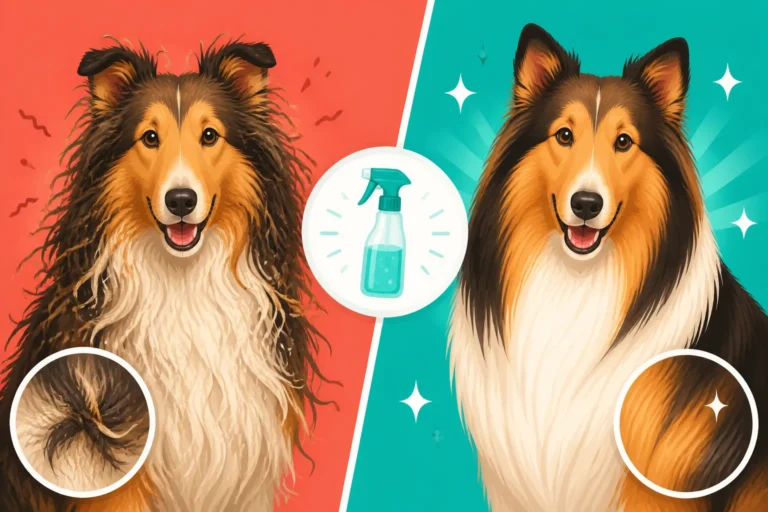
It’s a common sight: a Collie owner, diligently brushing away with a pin brush, only to find the magnificent coat still feels heavy, matted underneath, or is shedding endlessly. Many of us fall into the trap of thinking one brush fits all, especially for a breed as famously fluffy as the Collie. But the truth is, while a pin brush has its place, it's often the wrong tool for the deeper, more serious grooming tasks a Collie's luxurious double coat demands. This guide will help you understand why and what tools you need instead.
Understanding the Collie Coat: More Than Just Fluff
Before we dive into the specifics of grooming tools, it’s crucial to truly appreciate the marvel that is a Collie's coat. It's not just a single layer of hair; it's a complex, functional system designed by nature to protect them in various climates. Understanding this dual nature is the first step toward effective grooming and knowing when your trusty pin brush might be letting you down.
The Dual Nature of the Collie's Coat (Guard Hairs vs. Undercoat)
The hallmark of a Rough Collie, and even present in a more subtle form on a Smooth Collie, is its impressive double coat. First, you have the outer layer, often called the guard hairs. These are typically long, coarse, straight, and quite dense, forming the majestic mane, frill, and distinctive 'petticoat' around their legs. This protective layer acts like a natural rain slicker and shield, repelling water, dirt, and harsh weather conditions, keeping the dog's skin dry and safe from environmental hazards. It’s what gives the Collie its elegant silhouette and impressive volume.
Beneath this beautiful outer shell lies the true workhorse of the Collie's coat: the undercoat. This layer is entirely different – it's soft, dense, and remarkably woolly, providing insulation against both cold and heat. Think of it as a natural thermostat. In winter, it traps warm air close to the body, and in summer, if properly maintained, it helps to keep cooler air against the skin and prevents sunburn. The undercoat is also the primary culprit behind the prodigious shedding that Collie owners know all too well. When this undercoat sheds, it doesn't just fall out; it often gets trapped within the dense guard hairs, forming mats and creating a heavy, uncomfortable burden for your dog.
It’s this stark contrast between the two layers – the protective outer coat and the insulating undercoat – that makes single-tool grooming so ineffective for Collies. Each layer serves a different purpose and, consequently, requires different handling and tools to keep it healthy and functional. Without addressing both, you’re only ever doing half the job, which can lead to discomfort for your Collie and a perpetually hairy house for you.
Why a Single Tool Won't Conquer All Coat Challenges
When you look at a Collie, especially a magnificent Rough Collie in full coat, it’s easy to assume that a good brush is all you need. However, that assumption often leads to frustration and an inadequately groomed dog. The very structure of their double coat ensures that no single grooming tool can effectively manage both layers simultaneously and completely. Trying to tackle everything with just one type of brush is like trying to build a house with only a hammer – you’ll get some things done, but many crucial steps will be impossible or poorly executed.
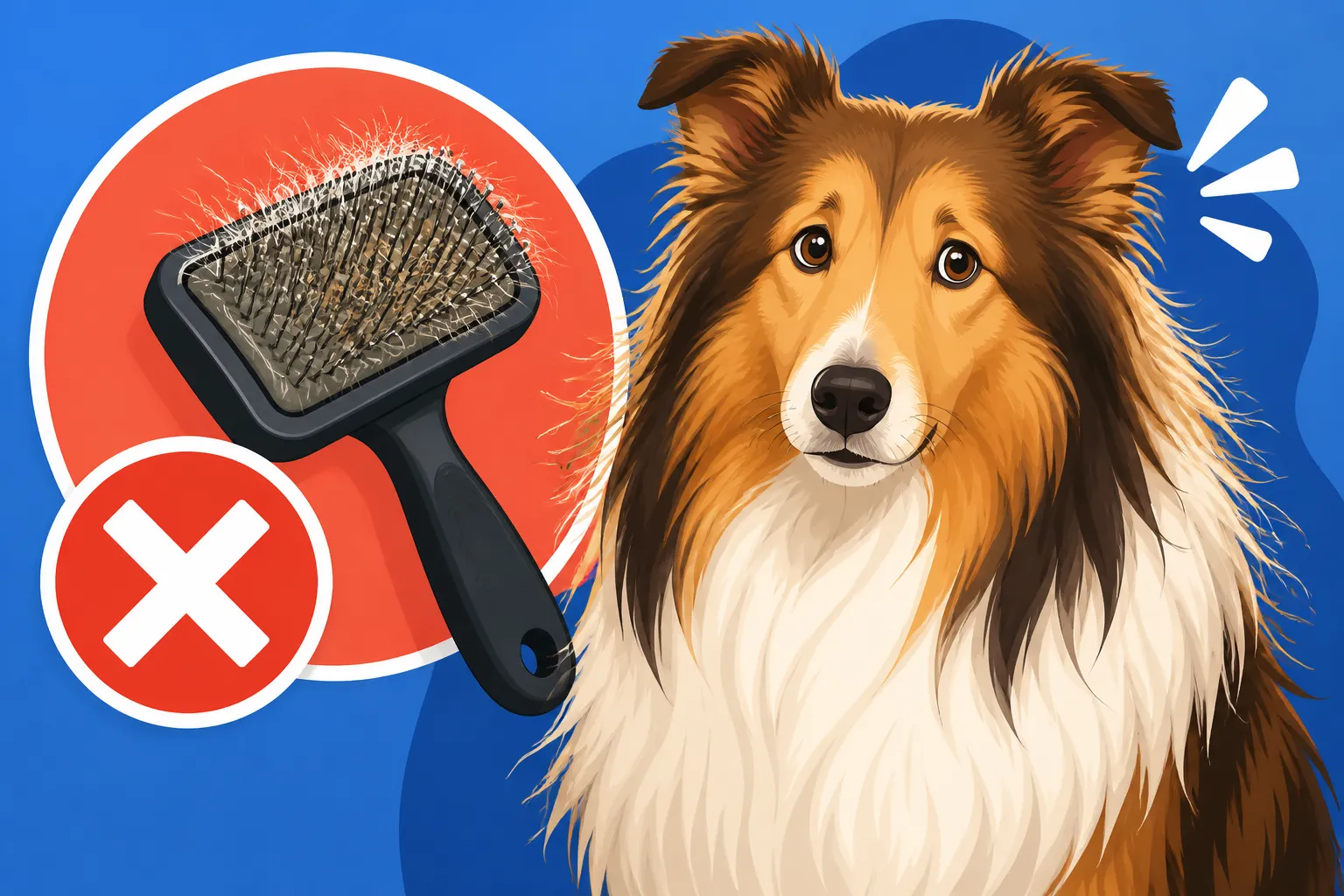
A pin brush, for instance, might glide beautifully over the top layer of guard hairs, making them look neat and shiny. But what’s happening underneath? More often than not, the pins are simply passing over the dense, woolly undercoat, leaving shed fur trapped closer to the skin. This trapped undercoat quickly begins to compact and mat, especially in areas of friction or behind the ears, armpits, and under the tail. It creates a breeding ground for skin issues, prevents proper air circulation, and makes your Collie feel perpetually hot and itchy, even after a "brushing" session.
The real challenge with a Collie’s coat isn't just managing the visible fur; it's penetrating through the guard hairs to remove the dead undercoat before it becomes a problem. This is a job that requires specific tools designed to reach that deep, dense layer without damaging the beautiful outer coat. Relying solely on a pin brush means you're addressing the symptom (the surface) but completely missing the cause (the trapped undercoat and budding mats). This not only compromises your Collie's comfort and coat health but also sets you up for bigger, more time-consuming grooming battles down the line. You need a strategy that acknowledges the unique needs of each layer of your Collie's impressive coat.
The Pin Brush: Its Strengths and Limitations
The pin brush is a staple in many grooming kits, and for good reason—it’s not entirely useless for a Collie! However, understanding precisely what it excels at and, more importantly, where it falls short is critical to avoiding common grooming pitfalls. Thinking of a pin brush as your primary weapon against a Collie’s heavy coat is a bit like bringing a butter knife to a sword fight; it might poke, but it certainly won't conquer.
When a Pin Brush Shines (Surface Grooming)
Despite its limitations for deep coat work, a pin brush does have specific, valuable roles in a Collie's grooming routine. For one, it's excellent for gentle, surface detangling of the outer guard hairs. If your Collie has just come in from a light stroll through some tall grass, or you're simply giving their topcoat a quick fluff and tidy before guests arrive, a pin brush can glide through those long, flowing hairs, removing any superficial tangles and leaving the coat looking smooth and elegant. It’s perfect for a quick touch-up or making that majestic mane truly shine.
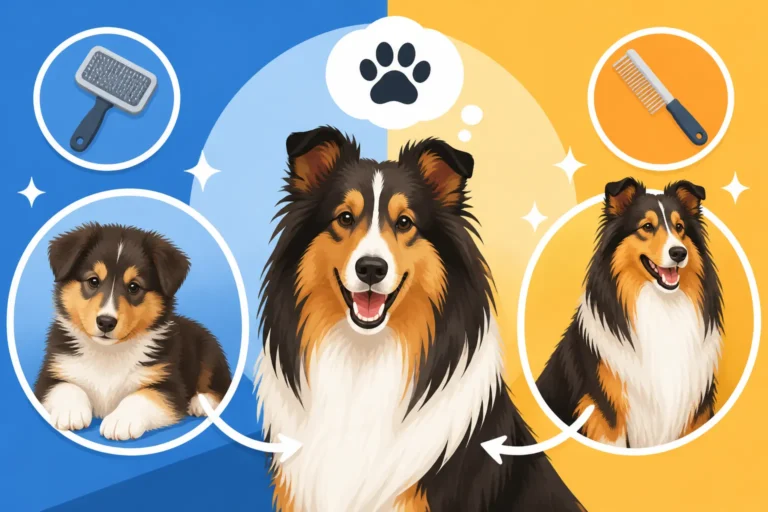
Furthermore, a pin brush is an ideal tool for introducing grooming to a Collie puppy. Their coats are still relatively thin, without the dense undercoat of an adult, so a pin brush offers a soft, non-intimidating experience. It helps them get accustomed to the sensation of being brushed, making future, more intensive grooming sessions much easier. It can also be used as a finishing brush on an adult Collie whose undercoat has already been thoroughly removed, simply to add air and polish to the outer layer, distributing natural oils and leaving a lovely sheen.
Ultimately, a pin brush contributes to a positive grooming experience, both for you and your Collie. Its soft, rounded pins provide a gentle massage, which many dogs genuinely enjoy, turning a routine task into a bonding moment. While it won't tackle the deep-seated issues of a double coat, it's fantastic for light, regular maintenance, keeping the visible coat looking its best, and reinforcing that grooming can be a pleasant interaction, not a battle.
The Crucial Gaps a Pin Brush Leaves (Deep Undercoat and Mats)
Here's where the pin brush truly falls short when it comes to the formidable Collie coat: it simply cannot effectively penetrate the dense, woolly undercoat. Imagine trying to rake dry leaves with a broom – you'll move some, but most will remain stubbornly on the ground. A pin brush acts similarly, its widely spaced, smooth pins gliding right over the top of the packed undercoat, leaving huge amounts of shed fur trapped close to the skin. This isn't just about aesthetics; this trapped undercoat forms a thick, insulating layer that prevents air circulation, can lead to painful skin infections, and makes your dog miserably hot.
When faced with actual mats, the limitations of a pin brush become even more apparent and problematic. Instead of breaking down the mat, the pins tend to either skip over the top, giving you a false sense of progress, or they pull at the edges of the mat, tightening it further and causing significant discomfort to your Collie. This pulling can be painful, leading your dog to resist future grooming sessions and making the mat even harder to remove. You'll often find yourself just skimming the surface, leaving the core of the mat untouched and growing worse with each ineffective brushing attempt.
This creates a vicious cycle of frustration. You spend time brushing, but the undercoat remains packed, and small tangles quickly become large, impenetrable mats. You might think you're grooming thoroughly because you're brushing frequently, but in reality, you're missing the most crucial layer of their coat. The pin brush, in these scenarios, becomes a source of false hope, leading to a neglected undercoat that can cause serious skin issues and ultimately necessitate professional de-matting, which can be an uncomfortable and costly ordeal for your beloved Collie.
Recognizing When the Pin Brush Isn't Enough
There are clear signs that your pin brush isn't cutting it for your Collie's grooming needs. Ignoring these signals can lead to discomfort for your dog, more intensive (and expensive) grooming sessions, and a perpetually hairy living space. It’s about being proactive and recognizing the specific coat challenges that demand a different approach.
Dealing with Dense Undercoat Blowouts
One of the most defining characteristics of owning a Collie is experiencing their "coat blow" – those seasonal periods, typically twice a year in spring and fall, when they shed an astonishing amount of their dense undercoat. During these times, if you only rely on a pin brush, you'll feel like you're fighting a losing battle. The pins simply can't reach deep enough or extract the sheer volume of dead, loose fur that needs to come out. It’s not just a few stray hairs; we're talking about handfuls, sometimes even bagfuls, of woolly undercoat that your Collie is trying to shed. During this time, you might feel like your house is being buried in fur, as described in The Three Weeks Twice a Year When a Collie Buries Your House.
If this shed undercoat isn't thoroughly removed, it doesn't just disappear. Instead, it gets trapped beneath the coarser guard hairs, compacting and forming a dense, suffocating layer close to your Collie's skin. This trapped fur prevents proper air circulation, which can quickly lead to painful skin irritations, hot spots, or even bacterial infections because moisture and heat get locked in. Your Collie will feel incredibly uncomfortable, constantly scratching, often to no avail. A pin brush, while moving some surface hair, will largely leave this problem untouched, allowing it to worsen and make your dog miserable.
The key during a coat blowout is efficient, deep undercoat removal, which is a task a pin brush is simply not designed for. You need tools that can penetrate the topcoat, grab hold of the loose undercoat, and pull it out without damaging the healthy guard hairs or irritating the skin. Without these specialized tools, your Collie will be left with a heavy, uncomfortable coat, and your home will be perpetually covered in a fine layer of white, tan, or tricolor fluff, no matter how often you attempt to brush with a pin brush.
Tackling Tangled Tangles and Stubborn Mats
Few things are as frustrating for a Collie owner as discovering a stubborn mat, and trying to remove it with a pin brush is a recipe for disaster. Mats aren't just messy; they can be incredibly painful for your dog, pulling at the skin and creating tight, impenetrable knots that can lead to skin infections and restrict movement. Common problem areas where mats sneak up include behind the ears, under the armpits, in the long feathering on the legs, and in the "petticoat" area around their flank, as we often discuss in articles like Mane, Frill and Petticoat: the Parts of a Collie That Mat.
When you encounter one of these dense tangles, a pin brush is largely useless, and in some cases, actively harmful. The smooth, rounded pins simply glide over the surface of the mat or, worse, catch on a few strands and pull, causing sharp pain to your Collie. This pain teaches your dog to associate grooming with discomfort, making future sessions a struggle. Furthermore, the action of a pin brush can actually tighten the mat, pushing the outer layers inward and making the tangle even more compact and difficult to remove without cutting it out. This is a common frustration for many owners; you brush and brush, but the mat just seems to become more solid.
Instead of effectively separating the matted hairs, a pin brush often just brushes around the problem, leaving the core of the mat untouched. This means that while the surrounding hair might look somewhat tidier, the painful knot remains, continuing to pull on the skin and potentially growing larger. For removing mats, you need tools designed to carefully tease apart the tangled hair or, for really severe mats, safely cut them out. Trying to brute-force a mat with a pin brush will only cause distress and likely end with you needing to carefully work out the mat behind a Collie's ear or other areas, a process that requires patience and the right tools.
Preventing "Pinning" and Skin Irritation
Another subtle but significant issue when relying solely on a pin brush for a Collie’s coat is what we call "pinning" or "combing over." This happens when the brush's pins only make contact with the very top layer of the coat, failing to reach the skin or adequately pull through the dense undercoat. You might see a beautiful, fluffy outer coat after brushing, but underneath, the dead fur remains trapped and compacted, forming a thick, unhealthy layer that is easily overlooked. The result is a dog that looks groomed but is actually suffering from an unmanaged undercoat.
This superficial brushing can lead to skin irritation in a couple of ways. Firstly, the constant, ineffective scraping of pin tips against the surface of the coat, without actually removing the underlying debris, can create static electricity and minor surface abrasions, especially if done vigorously. More importantly, leaving the dead undercoat packed against the skin prevents proper air circulation and can trap moisture, leading to a humid environment perfect for bacteria and fungi to thrive. This hidden problem often manifests as incessant scratching, redness, or even hot spots, which are painful, inflamed skin lesions your Collie might chew or lick excessively.
A Collie’s skin needs to breathe, and its coat needs to be managed all the way down to the skin to ensure health and comfort. If your pin brush isn't allowing you to feel the individual hairs separating right from the root, and you're not seeing significant amounts of undercoat come out (especially during shedding season), then you’re likely just "pinning" the coat. This ultimately harms your Collie’s skin health and makes proper grooming a much larger, more uncomfortable task down the line. It's a clear indicator that you need to switch to tools that can effectively reach and address the deepest layers of their magnificent fur.
Alternative and Complementary Grooming Tools for Your Collie
Since a pin brush often falls short, what should you be using? The answer isn't just one alternative, but a collection of specialized tools designed to work with the unique challenges of a Collie's double coat. Building a comprehensive grooming kit with these items will make all the difference in maintaining your Collie's health and beauty. As we explore these tools, remember that stores like Chewy or Amazon offer a vast selection, making it easy to build your ideal kit.
Slicker Brushes for De-matting and Loosening
When it comes to tackling those tricky tangles and beginning to address the dense undercoat, a slicker brush is an absolute game-changer for Collie owners. Unlike the widely spaced pins of a pin brush, a slicker brush features a rectangular or oval head covered in numerous fine, short, angled wire pins. These pins are designed to effectively grab and separate tangled hairs, gently pulling apart mats and loosening shed undercoat without damaging the longer guard hairs.
The key to using a slicker brush effectively is to work in small sections, layer by layer, starting from the bottom of your Collie's leg and working upwards. You should always brush gently, with short, sweeping strokes, moving away from the skin. The fine wires are incredibly efficient at catching loose undercoat that would otherwise be missed by a pin brush. As you brush, you'll see a surprising amount of soft, woolly fur accumulating on the brush head – this is exactly what you want! It means you're successfully extracting the dead undercoat before it has a chance to compact and cause problems.
A slicker brush is not just for de-matting; it's also excellent for general undercoat maintenance in between major shedding cycles. Regular use helps to prevent mats from forming in the first place, keeping the undercoat light and airy. It's an indispensable tool for achieving that truly "clean" feeling in a Collie's coat, where you can feel that all the loose undercoat has been removed, leaving only the soft, flowing guard hairs. Always be careful to use a gentle touch, especially around sensitive areas, to avoid "brush burn" from excessive pressure.
Undercoat Rakes for Serious Shedding
When your Collie is in the throes of a coat blowout, and you feel like your house is being consumed by fur, the tool you absolutely cannot live without is an undercoat rake. This specialized brush is engineered specifically to reach deep into the dense undercoat, beneath the protective guard hairs, and effectively pull out massive quantities of dead, loose fur. Unlike a pin brush that skims the surface, or even a slicker that works more on tangles and surface undercoat, an undercoat rake is designed for bulk removal. You'll often hear us talk about What a V Rake Does on a Collie, as these types of tools are essential during shedding season.
Undercoat rakes come in various styles, often featuring long, widely spaced teeth that can be straight or curved, sometimes with rotating pins to prevent pulling. The design allows the teeth to pass through the coarser outer coat relatively easily, snagging and collecting the soft, dead undercoat without damaging the healthy guard hairs. This is particularly crucial during those intense shedding periods, as getting rid of the old undercoat prevents it from matting, trapping moisture, and causing discomfort for your Collie. Without an undercoat rake, you'll likely find your Collie sheds continuously year-round, as discussed in Whether an Indoor Collie Sheds Year Round Instead, simply because the old coat can't escape.
Using an undercoat rake requires a methodical approach. Work in small sections, much like with a slicker brush, always brushing in the direction of hair growth. You’ll be amazed at the sheer volume of fur that comes out – sometimes enough to knit a small sweater! This aggressive, yet safe, removal of dead undercoat is vital for maintaining your Collie's skin health, regulating their body temperature, and significantly reducing the amount of fur shed around your home. It’s a tool that takes a bit of practice to master but provides unparalleled results during heavy shedding seasons, making both you and your Collie much happier.
Combs for Finishing and Detail Work
Once you've done the heavy lifting with a slicker brush and undercoat rake, getting rid of the bulk of the loose fur and mats, it's time to bring in the humble but mighty grooming comb. Think of a comb as your quality control tool, the final check that ensures you haven't missed a spot. A good sturdy, wide-toothed metal comb is invaluable for a Collie, allowing you to confirm that the coat is truly tangle-free, all the way down to the skin.
There are various types of combs, but a "greyhound" style comb with both wide and medium-spaced teeth is often ideal. You start with the wider teeth to gently work through the areas you've just brushed, ensuring no hidden tangles remain. If the comb glides smoothly from root to tip, without snagging, you know you’ve done a thorough job. If it catches, that's your cue to go back with your slicker brush and work through that specific section again. This meticulous combing is especially important in delicate areas like the feathering on the legs, the long tail hair, and the fur behind the ears – places where mats love to form.
Beyond being a "tangle detector," combs are also fantastic for detail work. You can use the finer-toothed side to neaten up the hair around the face or to smooth out the longer frill. For Collies, a metal comb is far more effective than plastic ones, which can cause static and snap under pressure. This final combing step not only gives your Collie’s coat a polished, finished look but also helps distribute natural oils, enhancing shine and overall coat health. It ensures that all your hard work with the other brushes truly pays off, leaving your Collie perfectly groomed and comfortable.
A Tailored Grooming Approach for Every Collie
Grooming a Collie isn't just about brushing; it's about understanding their unique coat, their shedding cycles, and employing a strategic approach with the right tools. Just like a balanced diet, perhaps inspired by insights from a brand like Ollie, contributes to overall health, a comprehensive grooming strategy contributes to a healthy coat. It’s not a one-time event but an ongoing commitment to their well-being.
Building a Comprehensive Grooming Kit
For a Collie, relying on just one brush is like bringing a spoon to a knife fight – you'll make some effort, but you won't get the job done effectively. A truly well-equipped Collie owner understands the necessity of a diverse grooming kit. At a minimum, you’ll want a high-quality slicker brush to tackle tangles and start the undercoat removal process, an undercoat rake for those heavy shedding seasons, and a sturdy metal comb (preferably a "greyhound" style with both wide and narrow teeth) for finishing work and checking your progress. While a pin brush can be included for light fluffing and bonding moments, it’s not the primary workhorse. We often discuss Which Four Brushes a Collie Owner Needs because it truly takes an arsenal to manage their magnificent coat.
Beyond brushes and combs, consider adding blunt-nosed scissors for carefully trimming around paw pads or in sanitary areas (never for the main coat!), and a sturdy grooming table with a noose if you plan to do extensive home grooming. This elevates your Collie to a comfortable working height, saving your back and making the process more efficient. When investing in these tools, look for quality. Brands available on platforms like Chewy and Amazon offer a wide range of options, from budget-friendly to professional-grade. High-quality tools last longer, perform better, and are less likely to cause discomfort to your dog, making the initial investment well worth it in the long run.
Having the right tools isn't just about efficiency; it's about respect for your Collie’s coat and comfort. Imagine trying to untangle long, thick human hair with just a fine-toothed comb – it would be painful and ineffective. The same principle applies here. With the correct grooming kit, you empower yourself to manage your Collie’s coat proactively, preventing problems before they become severe, and ensuring your dog is always looking and feeling their very best.
The Seasonal Shedding Strategy
A Collie's grooming needs are not static; they fluctuate significantly throughout the year, primarily dictated by their seasonal coat blows. Understanding and adapting to this natural cycle is the cornerstone of effective grooming. During the peak shedding seasons, typically in spring and fall, your grooming efforts need to intensify dramatically. This isn't the time for a quick once-over with a pin brush; this is when your undercoat rake and slicker brush become your best friends, often needing to be deployed daily or every other day. We recommend brushing a rough Collie at least a few times a week, but during these periods, that frequency increases significantly, as outlined in guides like How Often a Rough Collie Should Be Brushed.
During these heavy shedding periods, the goal is to remove as much dead undercoat as possible, as quickly as possible. This prevents it from compacting, matting, and causing skin problems, and it also vastly reduces the amount of fur floating around your home. However, once the major coat blow subsides, your routine can shift to a maintenance phase. This might involve weekly line brushing sessions to keep the coat free of tangles and to catch any lingering loose undercoat. Consistency, even during quieter periods, is key to preventing mats from forming stealthily.
Furthermore, consider how your Collie's diet plays into their coat health. A well-nourished dog with a diet rich in essential fatty acids will often have a healthier, more manageable coat that sheds more predictably and is less prone to matting. Exploring options from reputable brands found on Ollie's website, for instance, can be a great way to support overall coat vitality. By tailoring your grooming strategy to the seasons and integrating good nutrition, you’ll not only maintain a stunning coat but also ensure your Collie is comfortable and healthy year-round, making those heavy shedding weeks much more manageable.
Learning the Art of Line Brushing
If there's one technique that every Collie owner should master, it's line brushing. This isn't just a casual pass with a brush; it's a methodical, layer-by-layer approach that ensures you penetrate through the dense topcoat to address every single strand of the undercoat. Many new Collie owners struggle with feeling like they’re brushing forever without making progress, and line brushing is the answer to that frustration. As we detail in How to Line Brush a Collie, this technique guarantees no spot is missed.
To line brush, you’ll need to part your Collie’s coat horizontally, creating a line (like parting hair on a human head). Using a slicker brush or undercoat rake, you then brush down from that line, working in small sections, always brushing away from the skin. Once that small section is thoroughly brushed, you move the next layer of coat down over it, create a new part, and repeat the process. This slow, deliberate method ensures that you're systematically working through the entire coat, from the skin outwards, removing all loose undercoat and teasing out any tangles. It might sound time-consuming, and yes, it does take dedication – sometimes How Long Brushing a Collie in Full Coat Takes can be a significant commitment – but it is the most effective way to ensure a truly groomed Collie.
The beauty of line brushing is that it allows you to truly feel the condition of the coat all the way down to the skin. You’ll immediately know if you’ve missed a patch or if a mat is starting to form. While a pin brush can be used for a quick surface fluff, line brushing is where the real work happens, creating that airy, flowing coat that Collies are famous for. Mastering this technique will not only prevent painful mats and skin issues for your Collie but will also build a stronger bond between you, as regular, gentle grooming becomes a cherished routine. It's the gold standard for maintaining the health and grandeur of your Collie's magnificent double coat.
Disclaimer
This article is for general informational purposes only and does not constitute professional advice. Laws, prices and regulations vary by location and change over time. Consult a qualified professional for guidance on your specific situation.