Whether a Collie’s Nails Wear Down Naturally
It's a common thought among Collie owners: "My dog is so active, surely their nails just wear down naturally, right?" While it's a lovely idea, the reality for most of our beloved four-legged companions, especially those with busy home lives, is that natural wear just isn't enough to keep their nails at a healthy length. This guide will walk you through why that's the case, the problems overgrown nails can cause, and how you can proactively maintain your Collie's paw health.
The Myth of Naturally Worn Nails for Most Collies
Many people assume that because dogs run and play, their nails will file down perfectly on their own, much like a wild animal. However, the lives of our domestic Collies are vastly different from their wild ancestors, and this difference has a significant impact on their nail health.
Lifestyle Factors Versus Wild Ancestors
Think about where a wild canid spends its day. It's traversing diverse terrains: rocky paths, rough dirt, sandy streambeds, packed earth. These varied, abrasive surfaces act like natural sandpaper, constantly grinding down their nails as they move. Every step contributes to keeping those claws short and functional.
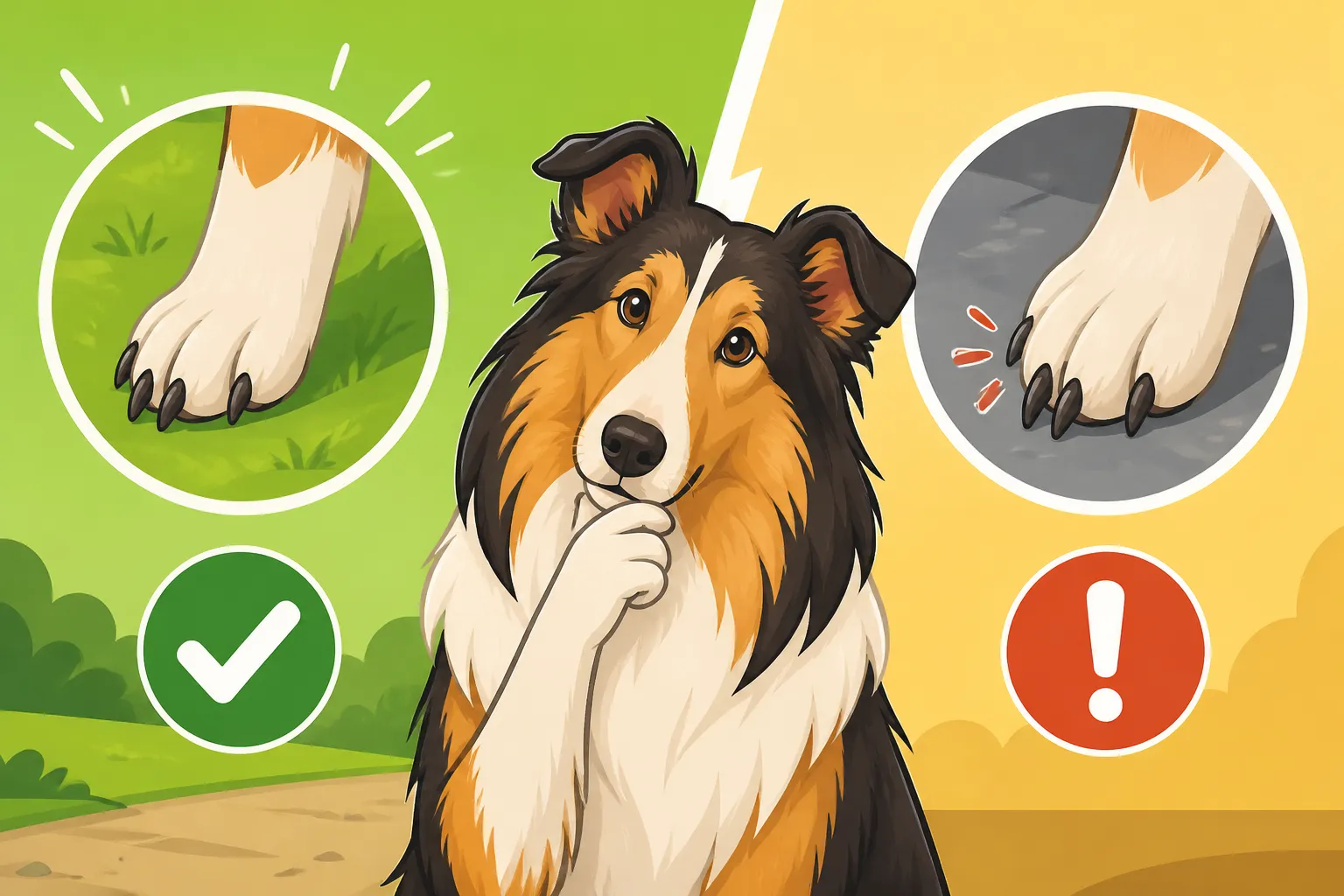
Now, consider your Collie's typical routine. They might have a lovely romp in the park, bounding through soft grass. They might enjoy a walk around the neighborhood on smooth asphalt or concrete sidewalks. Inside, they're likely lounging on plush carpets, hardwood floors, or cozy dog beds. While a walk on concrete is certainly better for nail wear than a frolic in a grassy field, it's rarely enough to wear them down evenly and adequately. The soft surfaces in particular do nothing to abrade the nail, and often allow it to grow unchecked.
The dewclaws, those nails located higher up on the inner side of the leg (like a thumb), are a prime example of where natural wear fails entirely. They typically don't touch the ground at all, regardless of the surface your Collie walks on. This means they're entirely dependent on you for trimming, and if overlooked, they can grow into a painful, ingrown spiral.
The Anatomy of a Collie's Nail and the Quick
To understand why regular trimming is so crucial, it helps to know a little about a Collie's nail structure. Each nail consists of a hard, keratinized outer shell and an inner core called the "quick." The quick contains blood vessels and nerves, which is why cutting too far back causes pain and bleeding.
Here's the critical part: the quick grows with the nail. If your Collie's nails are allowed to grow long, the quick will extend further down the nail. This makes it increasingly difficult to trim the nail back to a healthy length without hitting the quick. Over time, the quick can become so advanced that getting the nails short enough without causing pain becomes a real challenge, sometimes requiring very gradual trimming or even veterinary intervention.
The Silent Pain: Why Overgrown Nails Are a Big Deal
It might seem like a minor cosmetic issue, but overgrown nails can lead to a cascade of problems for your Collie, ranging from discomfort to serious health issues. They don't just look untidy; they actively impact your dog's well-being.
Impact on Gait and Joint Health
Imagine trying to walk around all day with shoes that are several sizes too small, forcing your toes to curl up, or with pebbles constantly under your feet. That's a bit like what a Collie experiences with excessively long nails. When the nails are too long, they hit the ground before the paw pad does. This unnatural contact pushes the nail back into the nail bed and forces the toes to splay apart.
This constant, incorrect pressure can alter your Collie's natural gait, making them walk more awkwardly or even painfully. Over time, this abnormal posture can put undue stress on the toe joints, the paw structure, and even higher up the leg into the wrists, elbows, and shoulders. For older Collies, or those already predisposed to joint issues, like Hip Dysplasia in a Collie, this can exacerbate discomfort and contribute to the early onset of arthritis or other mobility problems. It's a subtle change you might not notice immediately, but it's a persistent, low-grade source of pain that impacts their quality of life. Regular nail care is an essential part of Caring for a Collie Past Nine.
Risk of Injury and Infection
Beyond the chronic discomfort, overgrown nails pose significant risks for acute injuries and infections. A very long nail is much more likely to snag on carpet, furniture, or rough terrain during a spirited run. When a nail catches, it can partially or completely tear away from the quick, which is incredibly painful and results in profuse bleeding. A torn nail often warrants an emergency trip to the vet, which is stressful for both you and your Collie, and can be quite costly.
Dewclaws, in particular, are prone to growing so long they curl around and grow into the paw pad itself. This is not only excruciatingly painful but also creates an open wound where bacteria can thrive, leading to serious infections. Even if they don't grow completely into the pad, long dewclaws can easily get caught and torn during play or activity, causing significant distress.
Furthermore, dirt and debris can accumulate under long nails, creating a breeding ground for bacteria and yeast, which can lead to localized infections in the nail bed itself. These infections are uncomfortable and may require veterinary treatment, including antibiotics or antifungals.
Taking Control: Essential Nail Care for Your Collie
The good news is that maintaining your Collie's nails doesn't have to be a battle. With patience, the right tools, and a consistent routine, you can keep their paws healthy and comfortable. Remember, this is a skill that develops over time for both you and your dog.
Establishing a Routine
Consistency is key when it comes to nail care. For most Collies, a trim every 2-4 weeks is ideal. However, your individual dog's activity level and nail growth rate might mean they need more or less frequent attention. For a deeper dive into frequency, you might want to read How Often a Collie's Nails Need Trimming. The best approach is to check their nails weekly. If you hear them clicking on hard floors, they're definitely too long and it's past time for a trim.
Start early, if possible, with a Collie puppy. Handle their paws frequently, praise them, and offer high-value treats without even trimming. Just make it a positive experience. As they get older, introduce the tools gradually. Even if you only get one nail done per session at first, celebrate that success! It builds trust and a positive association.
Choosing the Right Tools
There are several types of nail trimming tools available, and what works best often comes down to personal preference and your Collie's comfort level. You can find a wide array of these tools readily available on sites like Chewy or Amazon.
- Guillotine Clippers: These are often spring-loaded and have a small hole where you insert the nail. Squeeze the handle, and a blade cuts through. They can be quick but sometimes crush thicker nails if not sharp.
- Scissor-Style Clippers: Resembling small garden shears, these offer good leverage and can be very precise, especially for thicker nails. They allow for a clearer view of the nail as you cut.
- Nail Grinders (Dremel-style tools): These use a rotating abrasive head to file the nail down. They are excellent for achieving a very smooth finish and are often preferred for dogs who are sensitive to the "snip" sensation of clippers. They also reduce the risk of quicking, as you remove small amounts at a time. For more specific information, check out Whether a Dremel Suits a Collie's Nails.
- Styptic Powder: Always have this on hand! If you accidentally nick the quick, this powder will quickly stop the bleeding. It’s a good safety net that helps build confidence.
Comparison of Nail Trimming Tools
| Tool Type | Pros | Cons | Ideal For |
|---|---|---|---|
| Guillotine Clippers | Fast, widely available, generally inexpensive. | Can crush thick nails if dull; harder to see the quick precisely. | Quick trims on thin to medium nails; dogs tolerant of the snip. |
| Scissor-style | Good leverage for thick nails; precise control. | Can be intimidating for new users; requires a steady hand. | Thick, strong nails; precise trimming for shaping. |
| Dremel (Grinder) | Smooth finish; less risk of quicking; good for dark nails; can desensitize fearful dogs. | Noise/vibration can scare some dogs; takes longer than clipping; requires practice. | Dogs with dark nails; fearful dogs; achieving perfectly smooth, short nails. |
The Step-by-Step of a Nail Trim
- Gather Supplies: Your chosen clippers or grinder, styptic powder, and plenty of high-value treats (think cheese, boiled chicken, or a lick mat smeared with peanut butter).
- Find a Calm Spot: Choose a quiet area where both you and your Collie can be comfortable.
- Position Your Collie: Some dogs are comfortable lying down, others prefer to sit, or stand. Find what works for your dog. For smaller jobs, sometimes just having them settle while you cradle a paw is enough.
- Isolate the Paw: Gently hold one paw, separating a single toe and nail from the others.
- Identify the Quick (If Possible): On clear or white nails, the quick looks like a pinkish area inside the nail. You want to cut just ahead of this. For dark nails, it's harder. Look at the underside of the nail—the very center will often be a dry, chalky white or grey, and as you get closer to the quick, a small dark circle will appear. Stop before you hit that circle.
- Make Small Cuts: It's always better to take off too little than too much. Take small nips, especially with clippers. If using a grinder, just touch it to the nail for a few seconds at a time, checking your progress.
- Reward, Reward, Reward: After each successful nail, or even just after you've handled a paw, give a treat and praise. Make this a highly positive experience.
- Don't Forget Dewclaws: Carefully check for and trim the dewclaws, remembering they don't wear down naturally.
- Finish Strong: If your Collie gets anxious, do fewer nails per session but more often. The goal is positive association, not perfection in one go.
Dealing with Dark Nails
This is perhaps the biggest frustration for Collie owners. Many Collies have dark nails, which completely obscure the quick. It feels like you're operating blind! Here are a few tricks:
- The "Nip and Check" Method: Take tiny slivers off the end of the nail. After each sliver, look at the cut surface. You'll see a dry, chalky center. As you get closer to the quick, this center will become more moist and have a tiny dark dot or "bullseye." Stop there! You're just shy of the quick.
- Use a Flashlight: For very dark nails, sometimes holding a bright flashlight to the underside of the nail can help you visualize the quick’s shadow from the top, though this is often more effective with translucent nails.
- Grinding is Your Friend: A Dremel-style grinder is often safer for dark nails because it removes material slowly, allowing you to watch for that tiny dark dot as you go. You'll smell the nail dust and see the powder, but the moment you get close to the quick, the appearance of the nail's cross-section changes, becoming slightly darker or more opaque right at the center.
A high-quality diet, perhaps like those offered by Ollie, contributes to strong, healthy nails and overall paw integrity, making regular maintenance easier. Healthy nails are less brittle and less prone to splitting, which can make trimming a smoother process.
When to Call in the Professionals
Despite your best intentions and efforts, sometimes nail trimming at home just isn't feasible. And that's perfectly okay! There's no shame in seeking professional help.
Fear and Anxiety in Both Dog and Owner
It's a common scenario: you're nervous about hurting your Collie, and your Collie picks up on that anxiety. Or maybe your Collie had a bad experience in the past and now views nail trims with outright fear or aggression. Trying to force the issue can damage your bond and make future attempts even harder.
If you find yourself dreading nail trims, or if your Collie becomes extremely distressed, aggressive, or panics, it's time to call in the experts. Professional groomers have specialized tools, techniques, and experience with all sorts of temperaments. They can often get the job done quickly and efficiently. Your veterinarian's office is also an excellent resource. Vet techs are skilled at nail trims, and if your Collie is truly phobic, the vet might be able to prescribe a mild sedative to make the process less stressful for everyone involved. Don't let pride or a fear of "failing" lead to your dog enduring painful, overgrown nails.
Medical Conditions and Special Needs
Certain medical conditions can make nail trimming challenging or even risky at home. Dogs with severe arthritis may find it painful to have their paws handled or held in certain positions. Collies with conditions that affect their sensation or coordination might be more prone to accidental quicking. Sometimes, very old or infirm Collies can become quite sensitive, and a quick, professional job is simply kinder.
If your Collie has any underlying health issues, always consult with your vet before attempting new grooming routines. They can advise on the safest approach, recommend sedatives if necessary, or simply perform the trim themselves. Investing in professional grooming or vet services for nail care is a smart choice for your Collie's comfort and overall health. Don't forget that Ears, Feet and the Small Jobs on a Collie often require a bit of confidence and steady hands, whether your own or a professional's!
Disclaimer
This article is for general informational purposes only and does not constitute professional advice. Laws, prices and regulations vary by location and change over time. Consult a qualified professional for guidance on your specific situation.