How Often a Collie’s Nails Need Trimming
One of the trickiest parts of caring for our beautiful Collies, often hidden beneath all that glorious fur, is keeping their nails in tip-top condition. Many of us struggle to know just how often our beloved companions need a trim, and the thought of accidentally cutting too far can be genuinely anxiety-inducing. This guide is here to walk you through everything you need to know about keeping your Collie's paws healthy and comfortable, taking the guesswork out of nail care.
Why Regular Nail Trimming is Non-Negotiable for Your Collie's Health
It might seem like a small detail, but neglecting your Collie's nail care can lead to a cascade of problems that impact their comfort, mobility, and even their long-term health. We often focus on their stunning coats or their intelligent eyes, but those paws carry them through life, and they deserve just as much attention.
The Impact on Gait and Posture
When a Collie's nails grow too long, they start to hit the ground before the paw pads do. Think about trying to walk comfortably in shoes that are too small or have rocks permanently stuck in them – that's a bit like what your Collie experiences. This constant pressure on the nail forces their toes upwards, splaying their paw and altering their natural posture. Over time, this unnatural stance can put undue stress on their joints, ligaments, and tendons, not just in their feet, but all the way up their legs to their shoulders and hips. It's a subtle change you might not notice immediately, but it's happening. Whether a Collie Needs Joint Support From Middle Age is a real concern for many owners, and long nails can contribute to joint issues.
Imagine your Collie trying to herd a flock of sheep or even just play fetch in the park with their toes constantly pushed back. It's uncomfortable, inefficient, and can lead to chronic pain. They might compensate by shifting their weight, which then strains other parts of their body. This isn't just about aesthetics; it's about preserving their natural athleticism and ensuring they can move freely and without discomfort as they age.
Risk of Injury and Infection
Overgrown nails are not just uncomfortable; they are a significant injury risk. A long nail can easily get snagged on carpet, upholstery, or even rough terrain during a walk, potentially tearing or breaking. A broken nail can be incredibly painful, often bleeding profusely and leaving the quick exposed, which is essentially the sensitive nerve and blood supply within the nail. This kind of injury almost always warrants a vet visit, which can be stressful and costly.
Furthermore, if a nail breaks or is torn, it creates an open wound that is susceptible to infection. Dirt and bacteria from the ground can easily enter the exposed quick, leading to painful infections that require antibiotics and careful management. In some severe cases, extremely long nails can even grow so long that they curl under and grow into the paw pad itself, causing excruciating pain, lameness, and a high risk of deep infection. This is a situation no Collie owner ever wants to face, and thankfully, it's entirely preventable with routine care.
Maintaining Paw Health and Hygiene
Beyond the immediate risks, keeping nails trimmed contributes to overall paw hygiene. Long nails can harbor dirt, debris, and moisture, especially between the toes and around the paw pads. This moist, dark environment is a breeding ground for yeast and bacterial infections. While Collies have lovely feathered feet, making it harder to spot issues, it's crucial to ensure their nails aren't contributing to dampness or trapping foreign objects.
Regular nail trims often go hand-in-hand with checking the paw pads for cracks, cuts, or foreign bodies like burrs or foxtails that can embed themselves. This proactive approach helps prevent minor issues from escalating into major problems. For example, if your Collie is prone to allergies or skin issues, keeping their paws clean and nails short can reduce secondary infections caused by paw licking and chewing. It's all part of the holistic approach to foot care, ensuring every part of their paw is healthy.
Telling When Your Collie's Nails Are Too Long
It can be a bit of a mystery, especially with a Collie's gorgeous, often heavily feathered feet, to know when their nails have officially crossed the line from "just right" to "too long." But there are some clear indicators that, once you know what to look for, will tell you it's time for a trim.
The Dreaded Click-Clack Sound
This is often the first, and most obvious, sign that your Collie's nails are overdue for attention. When your dog walks across hard surfaces like hardwood floors, tile, or pavement, you shouldn't hear their nails clicking or clacking. If you do, it means their nails are touching the ground with every step, indicating they're too long. Ideally, your Collie's paw pads should be the primary point of contact with the ground, with the nails barely skimming the surface.
The "click-clack" isn't just an auditory annoyance; it's a physical reminder of the pressure being exerted on their toes and joints. Imagine trying to sneak around your house when your shoes constantly make noise – it's both awkward and distracting. For your Collie, this sensation is constant, and it can disrupt their natural gait and lead to discomfort. Paying attention to this simple sound can save them a lot of trouble down the line.
Visual Cues and Paw Structure Changes
Beyond the sound, you can often visually inspect your Collie's nails, even with all that floof! When your Collie is standing on a flat, level surface, their nails should ideally not touch the ground. If you can clearly see the nails making contact or even lifting the paw pads slightly off the ground, they are too long.
Another visual cue is how their paw looks. Overly long nails can cause the toes to splay out unnaturally, losing the compact, tight appearance that healthy Collie paws should have. The nail itself might also appear to be curving downwards or even twisting, rather than extending straight out from the toe. This splaying is a direct consequence of the nails pushing the toes back, and it's a clear sign that the structural integrity of their paw is being compromised. Regular inspections, perhaps during your How Often a Rough Collie Should Be Brushed sessions, can help you catch these changes early.
Snagging and Discomfort
While not always immediately obvious, a Collie with overgrown nails might start exhibiting subtle signs of discomfort or changes in behavior. They might hesitate to walk on hard surfaces, preferring carpet or grass. You might notice them licking or chewing at their paws more frequently, not necessarily due to an infection yet, but perhaps due to the general discomfort or an accidental snag.
Furthermore, you might find their nails getting caught on things more often – blankets, carpets, or even your clothing. This snagging can be startling for your Collie and, as mentioned, can lead to painful tears or breaks. If you find yourself constantly untangling their nails from household items, consider it a definite sign that a trim is urgently needed. Even a slight increase in clumsiness could be linked to their nails, as they struggle for purchase and balance. Your Collie might even start to Whether a Collie Hides Pain, making these subtle cues even more important to notice.
Factors Influencing Your Collie's Nail Growth Rate
Just like with humans, every Collie is an individual, and their nail growth rate can vary. Several factors play a role in how quickly their nails grow and how often they'll need trimming. Understanding these can help you fine-tune your grooming schedule.
Activity Level and Environment
This is arguably the most significant factor. Collies are active dogs, built for herding and covering ground. A Collie who spends a lot of time walking or running on abrasive surfaces like pavement, concrete, or rocky trails will naturally wear down their nails more than a Collie who spends most of their time indoors or on soft grass. The friction from these surfaces acts like a natural file, keeping the nails shorter.
Think about the difference between a city dog and a farm dog. A Collie regularly hiking on varied terrain or enjoying long walks on sidewalks in a bustling city like Seattle or Portland might need less frequent trimming than one whose daily exercise primarily consists of romping in a soft-turfed backyard. However, even active dogs often have a dewclaw (the "thumb" nail) that never touches the ground and will always require manual trimming. Forty Five Minutes a Day, and Half of It in Its Head is a good baseline for a Collie's exercise, and the type of exercise directly influences nail wear.
Diet and Genetics
While less impactful than activity, a Collie's diet and genetics can play a subtle role in nail health and growth. A well-balanced diet rich in essential vitamins, minerals, and fatty acids contributes to strong, healthy nails that are less prone to splitting or breaking. Conversely, nutritional deficiencies could theoretically lead to weaker, faster-growing, or more brittle nails, though this is less common with high-quality commercial dog foods.
Genetics can also influence nail thickness and growth patterns. Some Collies naturally have thicker, stronger nails that may grow more quickly, while others might have finer nails. While you can't change your Collie's genetics, understanding their individual tendencies can help you establish a routine that works best for them. A reputable breeder will often be able to give you some insight into the nail health and growth patterns of their lines, which can be helpful when you bring home a new puppy.
Age and Health Conditions
A Collie's age also impacts nail growth. Puppies often have softer nails that grow quickly but also wear down easily. As Collies mature, their nails tend to become harder and can sometimes grow more slowly, but this isn't a hard and fast rule. Senior Collies, especially those with reduced mobility or arthritis, might not get as much natural nail wear from exercise. This means Caring for a Collie Past Nine often involves more diligent nail care, as their activity levels may decrease.
Certain health conditions, though rare, can also affect nail growth. For example, some endocrine disorders can impact nail and coat health. If you notice a sudden, dramatic change in your Collie's nail growth rate, texture, or appearance (e.g., becoming unusually brittle, soft, or discolored), it's always a good idea to consult your veterinarian to rule out any underlying health issues. This is part of the general vigilance we maintain as responsible pet parents.
How Often is "Often Enough"? Establishing a Routine
So, with all those variables, what's the magic number? The truth is, there isn't one universal answer for every Collie. However, we can establish general guidelines and help you figure out the best rhythm for your furry family member.
General Guidelines for Nail Trimming Frequency
For most adult Collies, a good starting point for nail trimming is every 3 to 4 weeks. This frequency helps keep the nails at a healthy length, preventing them from touching the ground and allowing the quick (the blood vessel and nerve inside the nail) to recede. Regular trimming encourages the quick to pull back further into the nail, making future trims easier and safer. If you wait too long, the quick will grow out with the nail, making it harder to trim short without hitting it, which is painful for your dog and stressful for you.
However, if your Collie is highly active on abrasive surfaces, you might find they need less frequent trims, perhaps every 4-6 weeks. Conversely, a less active Collie, or one primarily walked on soft surfaces like grass, might need a trim every 2-3 weeks. The key is to observe your dog and listen for the "click-clack." It's also worth noting that dewclaws, since they don't touch the ground, almost always need trimming at the regular interval, regardless of your Collie's activity level.
Tailoring the Schedule to Your Individual Collie
The best approach is to start with the general 3-4 week guideline and then adjust based on your Collie's specific needs and lifestyle. Pay close attention to the sound of their nails on hard floors. If you start hearing the click-clack a week or two before your scheduled trim, you know you need to shorten the interval. If you consistently find their nails are still quite short and barely touching the ground when your trim date rolls around, you might be able to stretch it a little.
Consistency is more important than strict adherence to a specific number of days. Establishing a predictable routine, even if it's every 3.5 weeks, makes it a normal part of your Collie's life and helps prevent the nails from ever getting truly overgrown. Using a calendar reminder or setting a recurring event on your phone can be a huge help in staying on track. Whether a Collie Needs a Predictable Routine certainly applies to grooming, making it less stressful for everyone involved.
Starting Early with Collie Puppies
For Collie puppies, starting nail care early and making it a positive experience is absolutely crucial. Their nails grow quickly, and getting them accustomed to having their paws handled and nails trimmed from a young age will save you a world of trouble later on. Begin with very short, frequent sessions – even if it's just touching their paws, then the clippers, then giving a high-value treat.
Puppies might need trims as often as every 1-2 weeks initially, simply because their nails are softer and can wear down differently. The goal isn't just to keep their nails short, but to build a positive association with the process. Use lots of praise and tasty treats. If your puppy is struggling, don't force it; take a break and try again later. Making it a pleasant experience during The First Year With a Collie Puppy will set them up for a lifetime of stress-free nail care. You can find excellent puppy-sized clippers and irresistible training treats on Chewy or Amazon to help make these early sessions successful.
Tools and Techniques for At-Home Nail Trimming
Tackling your Collie's nails at home can feel daunting, but with the right tools, a bit of practice, and a lot of patience, it's absolutely achievable. There are a couple of main routes you can take, and understanding both will help you choose what's best for you and your dog.
Clippers vs. Dremel: Choosing Your Weapon
The two most common tools for nail trimming are traditional clippers and a Dremel (or other rotary tool specifically designed for pet nails). Each has its pros and cons:
Nail Clippers:
- Pros: Quick and efficient for many dogs, especially if nails are kept short and the quick is recessed. Affordable and readily available. Come in scissor-style or guillotine-style; many Collie owners find scissor-style easier for larger, thicker nails.
- Cons: Can be intimidating, especially if you've ever "quicked" a dog before. Requires a steady hand and good visibility, which can be tricky with black nails. Can leave sharp edges that need filing.
- Brands: Safari, Resco, Millers Forge are popular choices, often found on Chewy or Amazon.
Dremel/Rotary Tool:
- Pros: Grinds the nail down gradually, reducing the risk of cutting into the quick. Creates a smoother, rounded edge, which is gentler on floors and furniture. Many dogs tolerate the sensation better than the squeeze of clippers, though some are sensitive to the sound/vibration. Excellent for maintaining short nails by "taking a little off" frequently.
- Cons: Takes longer than clipping. The sound and vibration can be off-putting for some dogs initially. More expensive upfront than clippers. Requires charging or batteries.
- Brands: Dremel Pet Nail Grooming Tool, ConairPRO dog & cat, Casfuy are well-regarded and available on Amazon.
Many owners use a combination: clippers for the bulk of the nail if it's very long, followed by a Dremel to smooth and finish. A table to compare them might look like this:
| Feature | Nail Clippers | Dremel / Rotary Tool |
|---|---|---|
| Method | Cuts the nail quickly | Grinds the nail gradually |
| Speed | Faster per nail | Slower per nail, but good for frequent touch-ups |
| Learning Curve | Can be steep for fear of quicking | Requires patience for dog to adjust to sound/vibration |
| Risk of Quicking | Higher, especially with dark nails | Lower, as material is removed slowly |
| Finish | Can leave sharp edges, may need filing | Smooth, rounded edge |
| Cost | Generally lower | Higher upfront cost |
| Noise/Vibration | Silent operation | Audible motor, vibration |
| Dog Acceptance | Varies, some dislike the 'squeeze' | Varies, some dislike sound/vibration; often better for fearful dogs |
Regardless of your choice, always have styptic powder (like Kwik Stop, also on Chewy) on hand. It's a miracle worker for stopping bleeding if you accidentally hit the quick – it happens to the best of us!
Step-by-Step Home Trimming Techniques
Once you've chosen your tool, here's a general approach:
- Gather Your Supplies: Clippers or Dremel, styptic powder, high-value treats (Ollie treats are great for this!), and good lighting. A headlamp can be incredibly helpful, especially for dogs with dark nails.
- Find a Calm Spot: Choose a quiet area where your Collie feels comfortable. Having another person to help hold your Collie or distract them with treats can make a huge difference.
- Positive Reinforcement: Before you even touch a nail, make the experience positive. Let your Collie sniff the tools, offer a treat. Touch their paw, treat. Turn on the Dremel, treat. Gradually build up their tolerance. Whether a Collie Learns to Bark on Cue uses similar positive principles, proving Collies respond well to reward-based training.
- Position Your Collie: For many Collies, lying on their side is comfortable. Others prefer to stand. Find what works best, ensuring you have good access to their paws and a clear view of the nails.
- Identify the Quick (If Possible): On light-colored nails, you can often see the pink quick. Aim to trim just before this. On dark nails, it's much harder. Instead, look for the 'dot' – a small, greyish oval or circle at the center of the nail, which indicates you're nearing the quick. If you see this, stop or take tiny slivers.
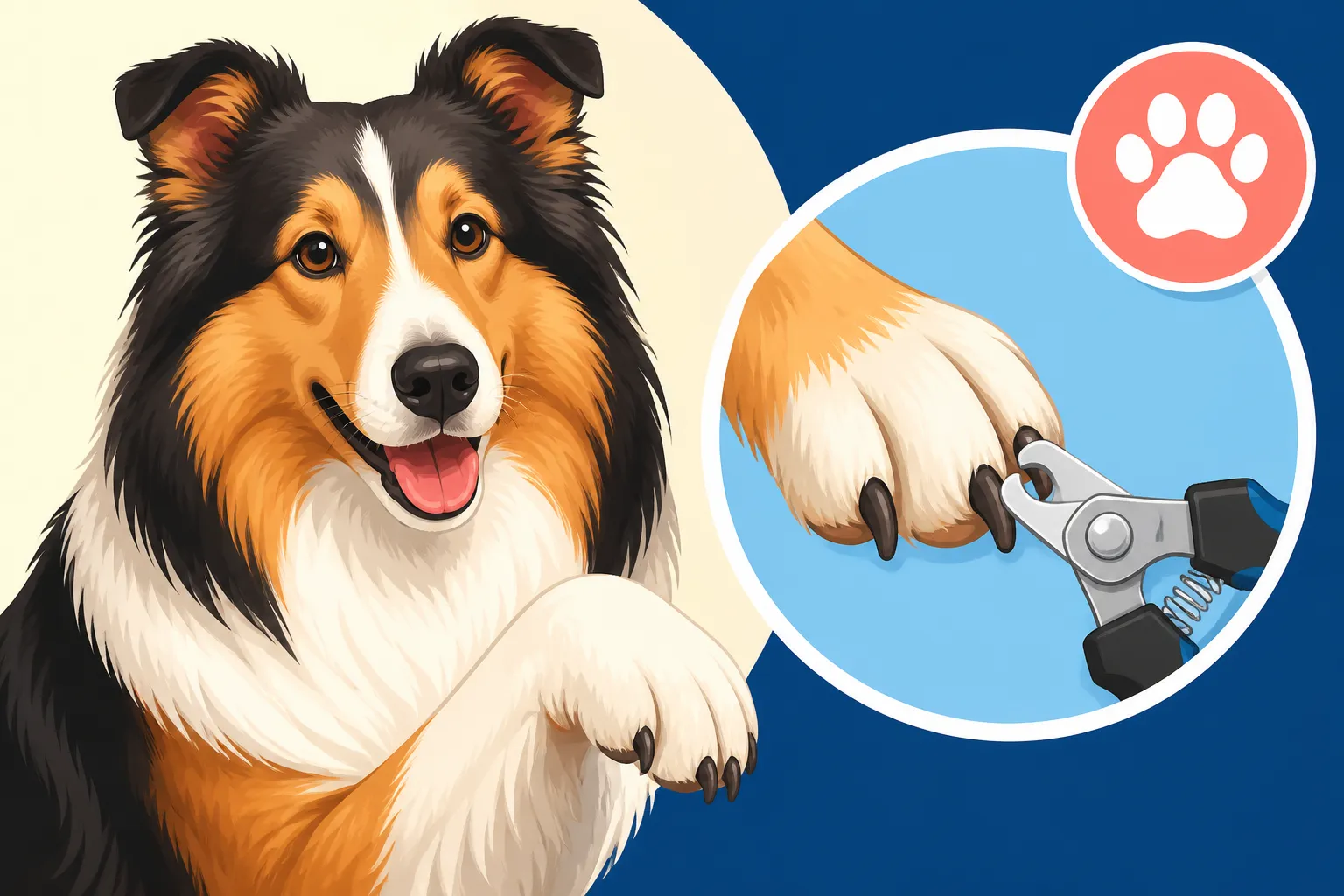
- Clipping Technique: Hold the paw firmly but gently. Separate a toe and hold the nail. Make a quick, decisive cut straight across the tip of the nail, angling slightly upwards from the bottom if needed to maintain the natural shape. Take small amounts off at a time. Better to do frequent, small trims than one big, risky one.
- Dremel Technique: Hold the paw firmly. Touch the Dremel to the very tip of the nail, grinding a small amount at a time. Move the tool quickly from side to side to avoid generating too much heat, which can be uncomfortable. Round off the edges for a smooth finish. Again, go slow and steady.
- Reward, Reward, Reward: After each nail (or even after a few seconds of grinding), offer praise and a treat. End the session on a positive note, even if you only managed a few nails. You can always do more later.
- Don't Forget Dewclaws: These are often overlooked but can grow very long and curl into the leg if not trimmed.
Remember, practice makes perfect. Don't get discouraged if it's messy or stressful at first. Your patience and persistence will pay off. How a Collie learns to trust applies here too – building their confidence in you and the process is key. You can find virtually all the tools you'll need, from high-quality clippers to various Dremel models and styptic powder, readily available on Amazon or Chewy.
When to Seek Professional Grooming or Vet Assistance
Sometimes, even with the best intentions and the right tools, trimming your Collie's nails at home just isn't feasible or safe. There's absolutely no shame in seeking professional help; in fact, it's often the smartest and kindest thing you can do for your dog.
Overcoming Fear and Anxiety
If your Collie has developed a strong aversion to nail trims – perhaps due to a previous bad experience, or simply an inherent fear – the struggle can become intense. Trying to force a fearful dog can not only solidify their negative associations but also put you at risk of being bitten. Signs of severe anxiety might include trembling, heavy panting, trying to escape, growling, or even snapping.
In these situations, a professional groomer or veterinary technician often has the expertise and specialized techniques to handle fearful dogs calmly and efficiently. They might use different restraint methods, work quickly, or even suggest desensitization training protocols. For extreme cases, your veterinarian might recommend mild sedatives to help your Collie relax for a trim, ensuring a safer and less stressful experience for everyone involved. Sometimes, taking your Collie in for What a Professional Groom Costs on a Rough Collie is worth it just for the nail trim alone.
Dealing with Dark Nails and the Elusive Quick
Many Collies have dark, opaque nails, making it nearly impossible to see where the quick begins and ends. This is a common source of anxiety for home trimmers, as accidentally cutting into the quick is painful for your dog and can cause profuse bleeding. If you're constantly worried about hitting the quick, or if you've done it repeatedly, it's a clear signal to let a professional take over.
Experienced groomers and vet staff are highly skilled at trimming dark nails. They use their knowledge of nail anatomy, often taking tiny slivers off at a time until they see the "dot" indicating they're close to the quick. This technique requires practice and confidence that many home groomers simply don't have, and there's no need to push yourself if it's causing undue stress for you or your Collie.
Other Complications: Ingrown Nails or Injuries
If your Collie's nails are severely overgrown, curling into the paw pads, or if there's any sign of injury, infection, or lameness, this is definitely a job for your veterinarian. Trying to address an ingrown nail at home can be extremely painful for your dog and risks making the situation worse. A vet can safely trim the nail, clean any wounds, prescribe antibiotics if necessary, and address any underlying pain.
Similarly, if a nail has been torn or broken badly, it often requires medical attention, potentially including pain relief, antibiotics, and careful bandaging to prevent further injury or infection. These situations are beyond the scope of routine home care, and prompt veterinary attention is crucial for your Collie's well-being. Knowing What a Collie Owner Should Carry to an Emergency Visit is important, as nail trauma can definitely be an emergency.
Proactive Nail Health: Beyond Just Trimming
While regular trimming is paramount, there are other aspects of care that contribute to overall nail health, making the trimming process easier and your Collie more comfortable. It's all part of the bigger picture of responsible Collie ownership.
Regular Paw Inspections
Make it a habit to regularly inspect your Collie's paws. This is especially important for rough Collies whose abundant fur can easily hide issues. During your regular brushing sessions, take a moment to gently spread their toes, examine their paw pads, and check their nails. Look for any redness, swelling, cracks, cuts, foreign objects (like burrs or thorns), or any signs of irritation or infection.
This proactive approach allows you to catch minor problems before they escalate. You might discover a tiny burr lodged between their toes, which you can easily remove, preventing it from causing pain or infection later. It also helps your Collie become more accustomed to having their paws handled, which makes future nail trims and vet visits much less stressful. Consider this a key part of your Four Tools and Twenty Minutes: Brushing a Rough Collie routine.
Providing Ample Opportunities for Natural Wear
While you can't rely solely on natural wear, maximizing your Collie's opportunities to walk on abrasive surfaces can certainly help extend the time between manual trims. Incorporate regular walks on pavement, concrete sidewalks, or light gravel trails into your exercise routine. Even a few times a week can make a noticeable difference in how quickly their nails grow out.
However, always be mindful of your Collie's paw pads. While hard surfaces wear down nails, excessive walking on very hot pavement in summer, or extremely rough terrain, can cause pad abrasions or burns. Always check the temperature of the pavement with your hand (if it's too hot for your hand, it's too hot for their paws) and monitor their pads for wear and tear. A balanced approach is key – enough hard-surface walking to help with nails, but not so much that it harms their sensitive pads.
Nutrition and Paw Supplements
A balanced, high-quality diet is the foundation for overall health, including strong nails. Ensure your Collie is receiving appropriate nutrition for their age, size, and activity level. If you're feeding a commercial kibble, choose a reputable brand with good ingredients. If you're exploring fresh food options like those from Ollie, ensure they are nutritionally complete and balanced.
For Collies with particularly brittle or problematic nails, some owners find success with supplements. Biotin, omega-3 fatty acids (like fish oil), and zinc are sometimes recommended for promoting healthy skin, coat, and nails. However, it's always best to consult your veterinarian before adding any supplements to your Collie's diet, as they can advise on appropriate dosages and check for any potential interactions with existing medications or health conditions. They can also help you determine if nail issues are truly nutritional or indicative of a deeper problem.
Disclaimer
This article is for general informational purposes only and does not constitute professional advice. Laws, prices and regulations vary by location and change over time. Consult a qualified professional for guidance on your specific situation.