How Long Brushing a Collie in Full Coat Takes
The majestic, flowing coat of a Rough Collie is undeniably one of their most defining features, a breathtaking cascade of fur that turns heads wherever they go. But let's be real, beneath that beauty lies a significant commitment, and for many new Collie owners, the sheer thought of maintaining that coat can feel like staring up at Mount Everest. You've heard stories, perhaps even seen pictures of matted Collies, and you're wondering just how much of your precious time will be swallowed by brushing. This guide is here to give you a realistic roadmap for how long brushing a Collie in full coat truly takes, breaking down the variables and offering strategies to make it a manageable, even enjoyable, part of your routine.
Understanding the Collie's Magnificent, Yet Demanding, Full Coat
Before we even talk about how long it takes to brush, it's crucial to understand what you're actually brushing. A Collie's coat isn't just a simple layer of fur; it's a complex, multi-layered marvel designed for insulation and protection, and it's this very complexity that dictates your grooming schedule.
The Anatomy of a Collie's Double Coat
Your Collie isn't just fluffy; they're equipped with a serious piece of natural engineering: a double coat. This means two distinct layers working in harmony. The outer coat, or "guard coat," consists of long, harsh, straight hairs that are resistant to water and debris. These are the hairs that give your Collie their regal outline and that glorious mane. Beneath this, and often completely hidden until you start digging, is the undercoat. This is a dense, soft, woolly layer of fine hair, much like a sheep's fleece. Its primary job is insulation, keeping your Collie warm in winter and surprisingly, helping to keep them cool in summer by trapping air.
The challenge with brushing comes from these two layers. The guard hairs can tangle, but the real villain in the grooming story is often the undercoat. When the soft undercoat sheds, it doesn't always release easily from the denser outer coat. Instead, it can become trapped, forming tight, felt-like mats close to the skin. These mats are not only unsightly but can be incredibly painful for your dog, pulling on their skin and preventing proper airflow, leading to skin infections. Understanding this double layer is the first step in appreciating why brushing isn't just a quick surface flick of a brush.
Seasonal Shedding and "Blowing Coat"
If you thought shedding was a year-round affair with a Collie (and it is, to some extent), you haven't lived through a "coat blow" yet. Twice a year, typically in spring and fall, Collies undergo a massive shedding event where they literally "blow" their entire undercoat. This is when the sheer volume of hair can overwhelm unprepared owners. During these periods, the amount of loose undercoat trapped in their longer guard hairs can be astronomical.
Imagine literally pulling out handfuls of soft, downy fluff with every stroke of the brush. This isn't just a few stray hairs; it's enough to build a new, smaller Collie from the tumbleweeds that will inevitably invade your home. The Three Weeks Twice a Year When a Collie Buries Your House isn't an exaggeration; it's a vivid, realistic portrait of what you'll face. During these peak shedding times, brushing sessions will become longer and more frequent – what might normally be a 20-30 minute session could easily stretch to 45 minutes to an hour, and you might need to do it every day or two, just to keep pace with the shedding undercoat and prevent mats from forming.
Age and Hormonal Influences on Coat Density
It's not just the seasons that dictate coat changes; your Collie's age and hormonal status also play a significant role. Puppies, of course, have softer, less dense coats that are relatively easy to manage. As they mature, usually between 18 months and three years, their full adult coat comes in. This is when you'll truly appreciate the phrase "full coat" – the mane, frill, and breeches will thicken, and the undercoat will become much denser. This is also when matting becomes a more serious concern, as there's simply more hair to tangle.
Furthermore, hormonal changes can impact coat quality and shedding. Unspayed females might experience coat changes around their heat cycles, and sometimes even "blow" their coat more significantly after a season. Older Collies might find their coats thinning in some areas or becoming coarser, while others might develop a softer, more cottony texture that is prone to matting. A spayed or neutered Collie's coat can sometimes become even denser and more prolific than an intact dog's, requiring diligent grooming to prevent it from becoming felted. These subtle shifts mean that a grooming routine that worked perfectly at age two might need adjustments by age five or eight. What Changes in an Old Collie's Coat can shed more light on these specific shifts you might observe in your senior companion.
Factors Influencing Brushing Time Beyond the Coat Itself
While the coat's natural characteristics are primary drivers of brushing time, several other factors directly impact how long you'll spend with a brush in hand. These are areas where your consistency and approach can make a world of difference.
Coat Condition and Matting
Let's be brutally honest: nothing extends a brushing session faster or makes it more miserable than mats. A well-maintained Collie with a clean, mat-free coat is a joy to brush. You're gliding through the fur, removing loose hair, and feeling productive. But let's say you've had a busy week, or perhaps your Collie rolled in something particularly sticky, or maybe you just missed a few spots. That's when those innocent tangles can quickly escalate into painful, tight mats.
Mats form when shed undercoat gets hopelessly intertwined with the guard hairs, often in high-friction areas like behind the ears, under the armpits, or on the "petticoat" (the long hair on their belly). If you encounter a mat, you can't just pull through it with a brush; that will hurt your Collie and make them dread future sessions. Instead, you'll need to carefully work it out, often by hand, with a detangling spray, and specialized tools. This process is slow, tedious, and requires immense patience. What could have been a 20-minute preventative brush can easily turn into an hour-long, multi-session ordeal if you're dealing with a few stubborn mats. And if the matting is severe, you might even be looking at a trip to a professional groomer or vet for shaving, which is certainly not cheap. Mane, Frill and Petticoat: the Parts of a Collie That Mat explores these problem areas in detail.
Your Collie's Cooperation Level
Ah, the "wiggle factor." Even if your Collie has a perfectly pristine coat, a dog who constantly shifts, tries to play with the brush, or simply decides they're done after five minutes can turn a quick brush into a test of wills. Collies are generally intelligent and eager to please, but like any dog, they can have their off days, or they might simply have learned that grooming is uncomfortable if they've had bad experiences in the past.
Puppies need to be introduced to grooming gently and positively from a young age. Short, frequent sessions paired with high-value treats and praise can build a positive association. For an adult Collie who isn't keen on brushing, you'll need to re-establish trust. This might mean breaking up sessions into even smaller chunks, focusing on one area at a time, or even doing "touch and treat" drills without a brush to desensitize them to handling. A relaxed, cooperative Collie can cut your brushing time in half compared to one who is constantly trying to escape or nip at the brush. Learning How to Teach a Collie Puppy to Lie Still for Grooming is an investment that pays dividends for a lifetime.
Your Skill and Experience
Let's face it, we all start somewhere. The first time you pick up a slicker brush and comb for your full-coated Collie, it can feel daunting. You might be unsure of the correct technique, hesitant to pull too hard, or simply slow as you navigate the different layers of coat. An experienced Collie owner or professional groomer can often zip through a coat in half the time it takes a novice, not because they're rushing, but because they understand the mechanics of the coat, know which tools to use where, and have developed an efficient workflow.
Techniques like "line brushing" (which we'll discuss later) are critical for Collies, but they take practice to master. Knowing how to hold the hair, how much pressure to apply, and how to spot potential tangles before they become full-blown mats comes with experience. Don't get discouraged if your initial sessions feel incredibly long. Like any skill, grooming improves with practice. The more you do it, the more confident and efficient you'll become, naturally reducing the time each session takes.
Breaking Down the Brushing Session for Maximum Efficiency
To truly get a handle on how long brushing a Collie in full coat takes, it's helpful to break the task down into smaller, more manageable segments. Trying to tackle the entire dog as one monolithic task can feel overwhelming; approaching it section by section makes it far less daunting.
Segmenting the Body: Tackling One Section at a Time
Think of your Collie's body as a series of zones. Instead of aiming to brush the whole dog, focus on completing one zone thoroughly before moving to the next. This approach not only makes the task feel less endless but also ensures you don't miss any critical areas. A common strategy is to start with a leg, move to the tail, then one side of the body, followed by the other, and finally the chest and neck.
For example, you might start with one back leg, meticulously brushing from the foot upwards. Once that leg is completely free of mats and loose undercoat, you reward your Collie and move to the next. This segmentation is particularly useful if your Collie has a limited attention span or gets antsy during longer sessions. You can even break it up further: do the legs in the morning and the body later in the day. The goal is to be thorough in each section, knowing that once it's done, you won't have to revisit it during that session. This methodical approach might sound slower, but it actually prevents you from having to go back and re-do neglected areas later, saving time in the long run.
The Importance of Line Brushing
If there's one technique every Collie owner must master, it's line brushing. This isn't just surface-level brushing; it's a deep dive into the layers of your Collie's coat. To line brush, you use one hand to part the coat, exposing a small "line" of skin. With the other hand, you use a slicker brush (or pin brush for some areas) to brush the hair downwards and outwards, thoroughly working through the undercoat, from the skin out to the ends, layer by layer.
Once that small section is brushed, you move your hand up slightly, create another line, and repeat the process. It's like working in rows across a field. This method ensures that you're removing all the loose undercoat and preventing mats from forming deep within the coat, close to the skin. If you only brush the top layer, you're merely smoothing the guard hairs while mats are silently forming underneath. Line brushing is a slower, more deliberate process than a quick surface brush, but it's the only way to effectively groom a full-coated Collie. A properly line-brushed Collie will remain mat-free for much longer, meaning fewer emergency detangling sessions. Learn more about How to Line Brush a Collie to perfect your technique.
Post-Brushing Checks and Finishing Touches
Once you've diligently line-brushed your entire Collie, your work isn't quite done. The post-brushing check is crucial for catching any missed spots and ensuring overall coat health. Take a wide-toothed metal comb and gently run it through all the areas you've just brushed, especially those prone to matting like behind the ears, armpits, and the "frill" around the neck. The comb should glide through the coat smoothly, all the way to the skin. If it snags, you've found a spot that needs more attention from your slicker brush.
Beyond mat checks, these finishing touches can include a light spray of detangler or conditioning spray to add shine and help prevent future tangles. You might also use a soft bristle brush to smooth the outer coat and remove any lingering loose hairs. Finally, don't forget to check their ears for cleanliness and their nails, as good grooming extends beyond just the coat. These final steps might only add an extra 5-10 minutes, but they ensure your hard work is complete and your Collie is comfortable and looking their best.
Tools That Can Make or Break Your Brushing Time
Trying to brush a full-coated Collie with the wrong tools is like trying to build a house with a spoon – it's going to take forever, be incredibly frustrating, and likely won't yield good results. Investing in the right grooming equipment is not just a luxury; it's an absolute necessity for efficiency and your Collie's comfort.
Essential Brushes and Combs
You're going to need more than just one brush for a Collie. A good grooming kit will include:
- Slicker Brush: This is your workhorse for removing loose undercoat and tackling minor tangles. Look for one with firm, angled wire pins that can penetrate the dense undercoat without scratching the skin. Brands like Chris Christensen or similar professional-grade options found on Chewy or Amazon are often recommended for their quality and effectiveness on thick coats.
- Pin Brush: Great for general daily brushing, smoothing the outer coat, and separating longer hairs without pulling. It's less effective for deep undercoat removal but excellent for the initial pass and finishing.
- Undercoat Rake: This tool, often resembling a small rake with rounded teeth, is specifically designed to pull out loose undercoat. Use it gently, as it can pull too much hair if not used correctly. It's particularly useful during coat blow seasons.
- Metal Comb (Coarse/Fine): Indispensable for checking your work after brushing. The coarse end helps detangle larger sections, while the fine end is perfect for checking for small mats, especially behind the ears and on the feathering.
Having the right arsenal means you can switch tools as needed, maximizing efficiency and minimizing discomfort for your dog. Which Four Brushes a Collie Owner Needs provides an in-depth look at these essential tools.
Detangling Sprays and Conditioners
Think of detangling sprays as your secret weapon against matting and your ally in faster brushing. A good quality detangling spray, applied lightly before or during brushing, can significantly reduce friction, making it easier for your brush and comb to glide through the coat. This saves you time by allowing quicker progress and also saves your Collie from uncomfortable pulling.
Conditioning sprays or leave-in conditioners also help to moisturize the coat, making the hair softer, more pliable, and less prone to static and tangles. When the coat is healthy and well-conditioned, individual hairs are less likely to intertwine and bind, meaning brushing takes less effort and time. You can find excellent leave-in conditioners and detangling sprays from a variety of reputable pet brands on Amazon, often sold in larger, economical sizes. These products are a small investment that yield big returns in grooming ease.
The Power of a High-Velocity Dryer
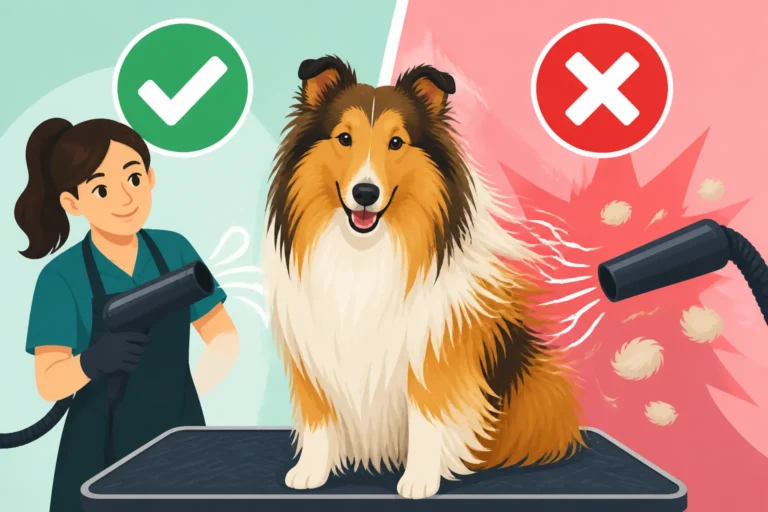
While not strictly a "brushing" tool, a high-velocity force dryer (also known as a forced air dryer) is an absolute game-changer for reducing brushing time, especially after a bath or during a coat blow. These powerful dryers use high-speed air, not heat, to blast water and loose undercoat out of the coat.
After a bath, a high-velocity dryer dramatically speeds up drying time, preventing mats from forming as the coat dries. More importantly for brushing time, during a dry deshedding session (especially during coat blow), a force dryer can literally blow out massive amounts of loose undercoat before you even pick up a brush. This pre-brushing step can cut your actual brushing time significantly, as you're starting with a coat that has far less trapped dead hair. While it's an initial investment and requires your Collie to tolerate the noise, the time and effort it saves make it invaluable for many Collie owners. Whether a Collie Needs a High Velocity Dryer explores the benefits in more detail.
| Grooming Tool | Primary Function | Time-Saving Impact | Best Used For |
|---|---|---|---|
| Slicker Brush | Removing undercoat, detangling | Efficiently clears loose fur, prevents deep matting | All-over brushing, especially dense areas |
| Metal Comb | Checking for mats, finishing | Confirms thoroughness, catches missed tangles early | Behind ears, feathering, anywhere mats hide |
| Undercoat Rake | Expedited undercoat removal | Drastically reduces shedding during coat blow | Dense undercoat sections during seasonal shedding |
| Detangling Spray | Lubricates coat, reduces friction | Makes brushing smoother, faster, and less painful | Pre-brushing, mat breakdown |
| High-Velocity Dryer | Dries, blasts out loose undercoat/debris | Cuts drying time, pre-desheds large volumes of fur | Post-bath, heavy shedding season deshedding |
Strategies to Reduce Brushing Time (Without Sacrificing Coat Health)
The goal isn't to spend no time brushing your Collie; it's to spend effective time. By implementing smart strategies, you can minimize the total time commitment and keep your Collie's coat in pristine condition with less struggle.
Regularity is Key: Preventing Problems Before They Start
This is perhaps the single most important piece of advice for any Collie owner. Consistent, regular brushing sessions, even short ones, will always take less time overall than sporadic, lengthy battles with mats. Think of it like dental hygiene: a quick brush every day is far more effective and less painful than trying to tackle major plaque buildup at the dentist every few months.
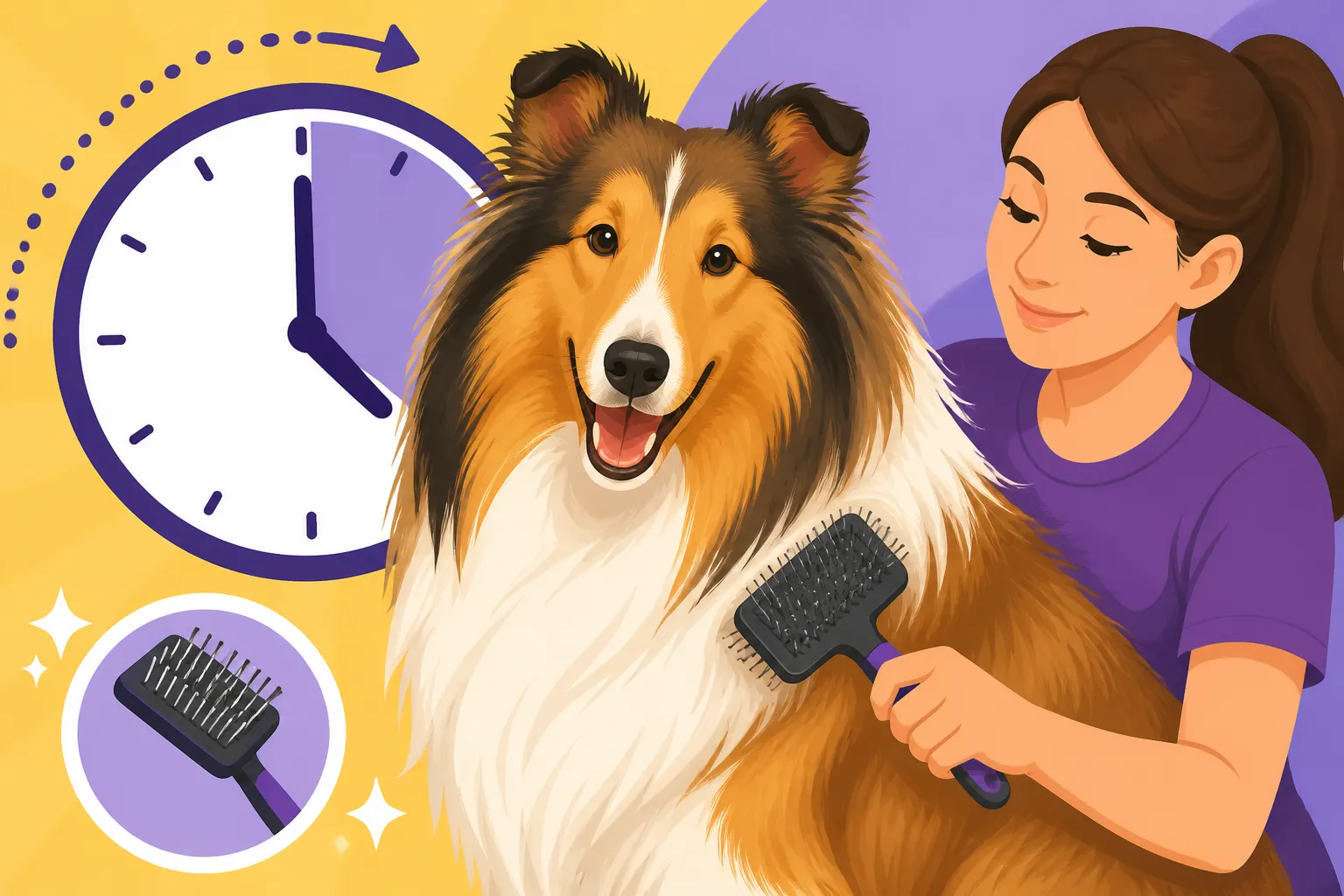
For a Rough Collie, aim for at least two to three thorough brushing sessions per week, outside of coat blow season. Each session might be 20-30 minutes if you're diligent. During coat blow, this needs to increase to daily or every-other-day sessions, potentially lasting 45-60 minutes or more. These regular sessions prevent the undercoat from accumulating and forming tight mats. Whether a Collie's Coat Mats If You Skip a Week isn't a hypothetical question; it's a reality. Mats don't form overnight, but they develop quickly when shed hair is left untended, and once they're present, they add significantly to your grooming time and your dog's discomfort. By staying on top of it, you're constantly removing loose hair and keeping the coat free-flowing, which makes future sessions faster and more pleasant for everyone.
Professional Groomer vs. DIY: When to Call for Help
While many Collie owners prefer to do their own grooming, there's absolutely no shame in seeking professional help, especially during challenging times or if you're feeling overwhelmed. A professional groomer experienced with Collies can perform a full deshedding treatment and bath that would take you hours, often using specialized equipment like high-velocity dryers and professional-grade shampoos and conditioners.
Consider a professional groomer for:
- Seasonal Coat Blows: A professional deshedding service can significantly reduce the amount of undercoat, giving you a head start and making your at-home maintenance easier.
- Severe Matting: If your Collie has developed extensive matting, attempting to remove it yourself can be painful and traumatic for your dog. A professional can often work through it more efficiently, or safely shave if necessary.
- Time Constraints: If you're going through a particularly busy period in your life, outsourcing a few grooming sessions can keep your Collie comfortable and healthy until you have more time to dedicate.
Remember, a professional groomer isn't replacing your role as primary caretaker; they're a valuable resource to help manage a demanding coat. What a Professional Groom Costs on a Rough Collie can help you budget for these invaluable services.
Diet and Supplements for Coat Health
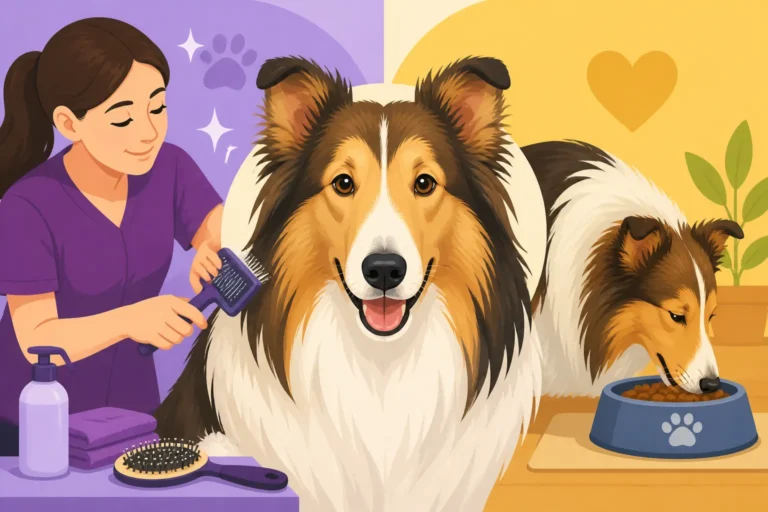
It might seem indirect, but what goes into your Collie can absolutely impact how long it takes to brush their coat. A healthy coat, nourished from the inside out, is generally stronger, less prone to breakage, and less likely to tangle severely. Think of it this way: a dry, brittle coat will snap and knot more easily than a soft, supple one.
Feeding a high-quality, balanced diet rich in essential fatty acids (like Omega-3s and 6s) can promote healthy skin and a lustrous coat. These nutrients help maintain the integrity of the hair follicles and the skin barrier, leading to stronger, shinier hairs that are smoother and less prone to static and matting. Some owners find that adding specific supplements, such as fish oil, can further enhance coat quality. Always discuss supplements with your veterinarian before adding them to your dog's diet. While diet won't eliminate the need for brushing, a healthier coat will be easier and faster to brush, making the experience more pleasant for both of you. Whether a Collie Needs Supplements for Its Coat delves into how various dietary additions can support a healthy Collie coat.
The Unseen Costs of Neglecting the Coat
It's tempting, when life gets busy, to let grooming slide. After all, what's a few missed brushing sessions? But for a full-coated Collie, neglecting their beautiful fur comes with a host of unpleasant consequences, both for their health and your wallet, often turning brushing from a chore into a crisis.
Health Implications of Matting
When mats form, especially tight ones close to the skin, they don't just look bad; they actively compromise your Collie's health.
- Skin Irritation and Infections: Mats pull on the skin, causing pain and irritation. This constant tugging can create raw spots, and the lack of air circulation under a matted coat creates a warm, moist environment ripe for bacterial and fungal infections. You might not see these infections until the mat is removed, revealing angry, inflamed skin underneath.
- Parasites: Matted fur makes it incredibly difficult to spot fleas, ticks, or other parasites. These unwelcome guests can hide deep within the felted hair, feeding on your dog and causing further skin issues, allergic reactions, and even transmitting diseases.
- Restricted Movement: Severe matting, particularly around joints like the elbows, hips, and under the armpits, can physically restrict your Collie's movement. Imagine trying to walk with your clothes glued to your skin – it's uncomfortable and can even lead to gait changes and muscle soreness.
- Hot Spots: These are acute moist dermatitis lesions, essentially rapidly developing, painful skin infections that dogs create by licking, chewing, or scratching a localized area of irritation. Mats can be a significant trigger for hot spots, as the underlying skin becomes inflamed and itchy. Whether a Collie Gets Skin Infections Under Its Coat is a stark reminder of these serious risks.
Behavioral Impact
Beyond the physical discomfort, a neglected coat can take a heavy toll on your Collie's behavior and your bond.
- Pain and Fear: If brushing sessions consistently involve painful tugging to remove mats, your Collie will quickly associate grooming with negative experiences. They might become fearful of the brush, resist being handled, or even try to bite or snap out of pain and fear.
- Reduced Affection: A dog in pain or discomfort from their coat might be less inclined to engage in playful activities or cuddle. They might become withdrawn or irritable because every movement causes a tug on their skin.
- Grooming Avoidance: Once a Collie learns to dread grooming, it becomes a vicious cycle. They avoid it, the coat gets worse, and future sessions become even more painful and difficult, ultimately taking longer and becoming more stressful for everyone involved. Rebuilding trust and positive associations can be a long and challenging process.
Emergency Grooming and Vet Bills
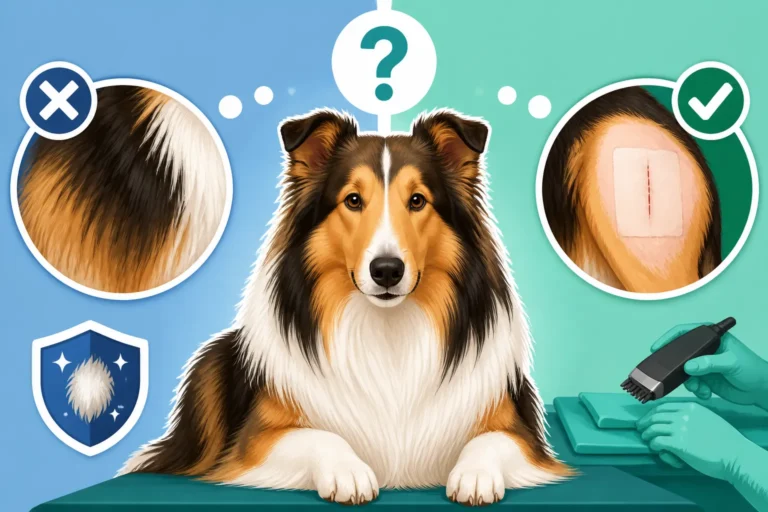
The ultimate "unseen cost" of neglecting your Collie's coat often manifests as a significant financial hit. If matting becomes too severe for you to handle, a trip to a professional groomer is inevitable. They will often charge a premium for dematting services due to the extra time, effort, and specialized tools required. If the mats are too tight or extensive, the only humane option is often a full body shave-down, which requires a groomer or a veterinary clinic to perform under sedation to ensure the dog's comfort and safety.
Veterinary intervention for matted coats can be costly, involving:
- Sedation: To safely shave off severe mats without causing pain or stress.
- Shaving Fee: Often higher than a regular groom due to the difficulty and potential for skin nicks.
- Treatment for Skin Infections: If the matting has led to dermatitis, yeast infections, or bacterial infections, your vet will prescribe medications, medicated shampoos, and follow-up visits, adding to the expense.
What started as a simple refusal to brush for 20 minutes a few times a week can escalate into hundreds of dollars in unexpected bills, not to mention the stress and discomfort for your beloved Collie. Investing the time in regular preventive grooming isn't just about aesthetics; it's about responsible pet ownership and protecting your Collie's health and happiness.
Disclaimer
This article is for general informational purposes only and does not constitute professional advice. Laws, prices and regulations vary by location and change over time. Consult a qualified professional for guidance on your specific situation.