Whether the Sheltie Is a Miniature Collie
If you’ve seen a Shetland Sheepdog and thought, “That looks like a tiny Collie,” you’re not imagining the resemblance. The breeds share a herding-dog look and many familiar traits, but a Sheltie is not simply a Collie bred smaller. This guide explains what they have in common, how they differ, and what “miniature Collie” usually means.
Is a Sheltie a miniature Collie
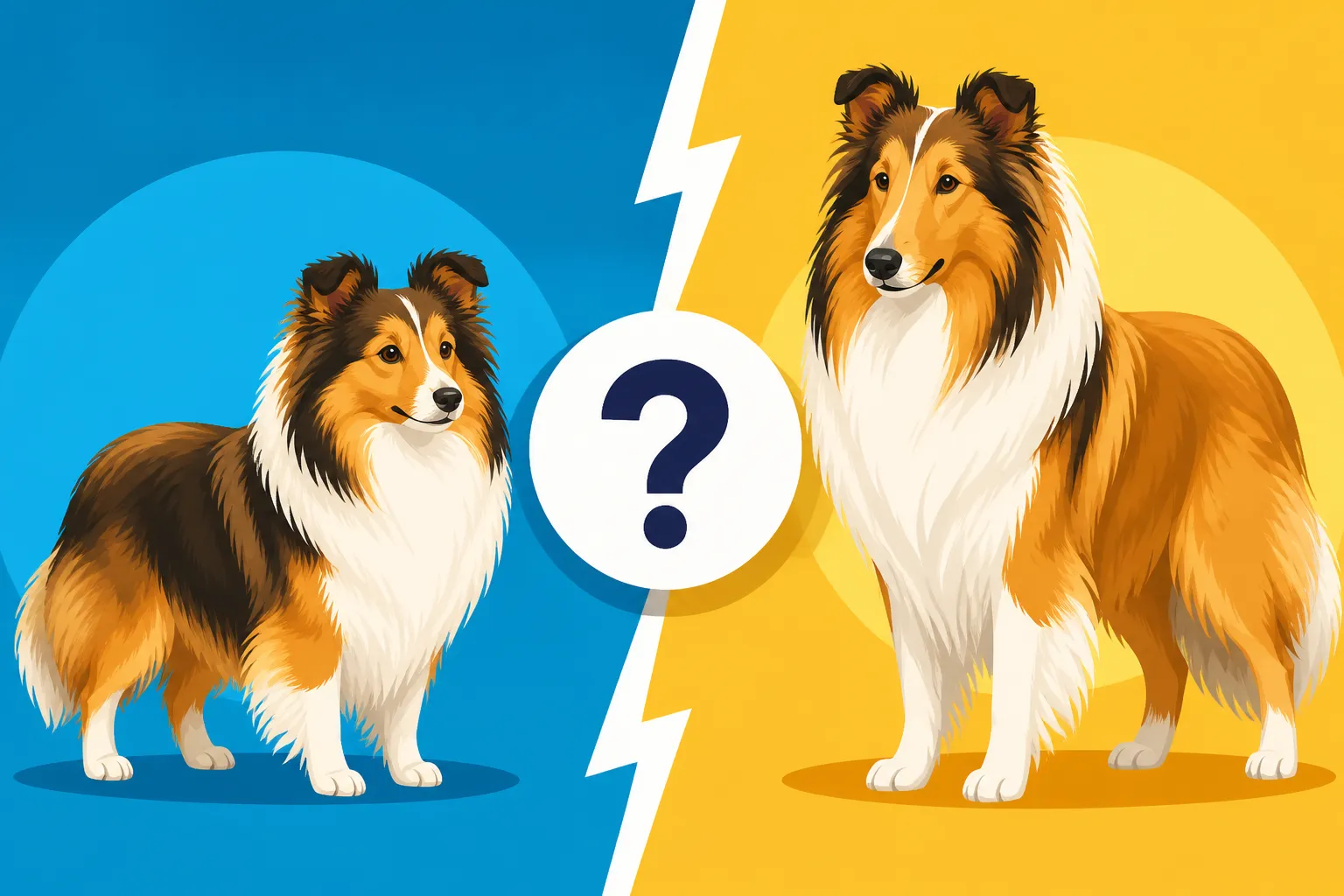
No. A Sheltie, formally called a Shetland Sheepdog, is its own breed—not a miniature variety of the Rough or Smooth Collie. The two breeds are related in appearance and purpose, and their histories overlap, but they have separate breed standards and their own distinguishing traits.
“Miniature Collie” is generally an informal description people use when a Sheltie reminds them of a small Collie. It is not the formal name of a Collie variety. If a breeder advertises “miniature Collies,” ask exactly what breeds are in the dog’s pedigree and what the breeder means by that label. The phrase alone doesn’t tell you whether the dog is a Sheltie, a Collie mix, or another type of dog.
Why the resemblance is so strong
Both breeds have the outline many people associate with a classic herding dog: an alert expression, a long muzzle, a full double coat in the Rough Collie and Sheltie, and a tail that often hangs low when the dog is relaxed. Both come in familiar colors such as sable and white, tricolor, and blue merle. If you see a sable Sheltie beside a sable Rough Collie, it’s easy to understand why people assume one is a smaller version of the other.
Their resemblance is not just about coat color. Collies and Shelties are intelligent, responsive dogs with a history of working closely with people. They may notice changes in their surroundings quickly, and many are eager to learn. Those broad similarities can make the breeds seem interchangeable in a photograph, even though the details become clearer when you meet them.
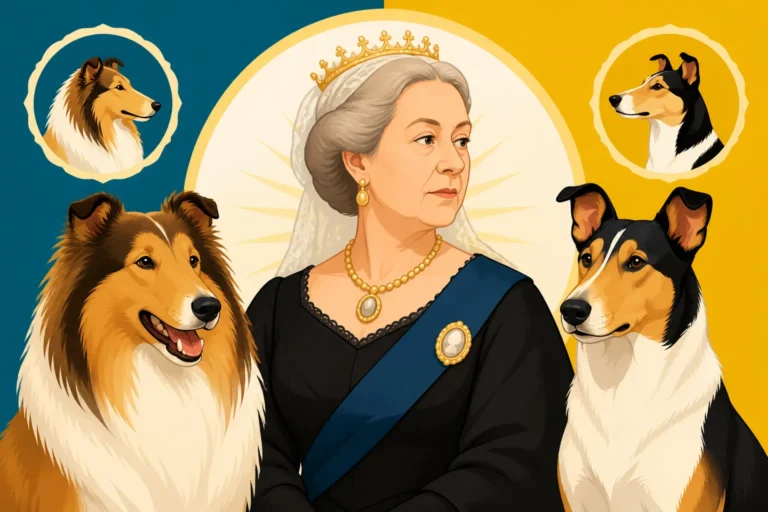
The Collie also comes in Rough and Smooth varieties, which can make the comparison more confusing. Rough Collies have a long outer coat and abundant feathering; Smooth Collies have a short, dense coat. Both are Collies, not separate miniature and standard sizes. For more on that distinction, see Whether the Rough and Smooth Collie Are One Breed and What Separates a Rough Collie From a Smooth.
How the breeds developed separately
The Sheltie’s name points to the Shetland Islands, north of mainland Scotland. The breed developed in an island environment where smaller animals were practical to keep and feed. The Sheltie became a small herding dog, shaped by its own local history and breeding—not simply a full-sized Collie reduced in scale.
Collies are associated with Scotland and a broader working-dog history. Their development as herding and droving dogs reflects a different setting and role. You can explore that background in The Collie Was a Scottish Droving Dog Before It Was a Show Dog. Shared working roots help explain why the breeds have similarities, but they don’t make them the same breed.
Breed histories can be complicated, and a dog’s appearance doesn’t reveal its entire ancestry. The safest way to describe a Sheltie is as a Shetland Sheepdog: a distinct breed with a look that overlaps with the Collie. For a broader side-by-side overview, see The Collie Against the Border Collie and the Sheltie.
The clearest differences between Shelties and Collies
Size is the difference people notice first, but it’s not the only one. Head shape, body proportions, coat, and everyday behavior can help you tell the breeds apart. Even so, individual dogs vary, and a single feature—especially color or coat length—isn’t a reliable way to identify a breed.
| Feature | Shetland Sheepdog | Collie |
|---|---|---|
| Breed status | A distinct breed, not a miniature Collie | A distinct breed with Rough and Smooth varieties |
| Typical height | Commonly around 13 to 16 inches at the shoulder | Commonly around 22 to 26 inches, depending on sex and standard |
| Overall build | Small, light, and compact | Taller and more substantial |
| Coat varieties | Long double coat | Rough long coat or Smooth short coat |
| Common colors | Sable, tricolor, and blue merle, among others | Sable and white, tricolor, blue merle, and white |
| Common impression | Lively, alert, and often quick to vocalize | Gentle, responsive, and often watchful |
These are general comparisons, not a promise about an individual dog. A Sheltie may be quieter than expected, and a Collie may be especially vocal. A dog’s upbringing, health, temperament, and environment all matter.
Size and proportions
A Sheltie is much smaller than a typical Collie. Many Shelties stand about 13 to 16 inches at the shoulder, while adult Collies are substantially taller. The Collie’s height can be striking when the two breeds stand together, even when their coats and expressions look similar. For a closer look at Collie measurements, read How Tall a Collie Stands and How Much a Collie Weighs.
Size affects everyday handling. A smaller dog may be easier to lift into a car or manage in a compact home, but that doesn’t mean it needs little activity or training. Shelties are working dogs with busy minds. Collies also benefit from regular walks, learning, and social time, even if their exercise needs vary from dog to dog.
It’s worth looking at the whole dog rather than focusing only on shoulder height. A Sheltie generally has a lighter, smaller frame; a Collie has a longer, larger outline. A thick coat can make either breed look broader than it is, so use body condition and your hands—not just a quick glance through the fur—to judge weight.
Face, ears, and coat
Both breeds can have a refined, alert expression, but their heads and proportions are not identical. Shelties are smaller throughout, and their features tend to look compact. A Collie has a larger frame and a longer overall outline. Their ears may be carried in a similar tipped shape, which adds to the family resemblance, but ear carriage alone doesn’t establish a dog’s breed.
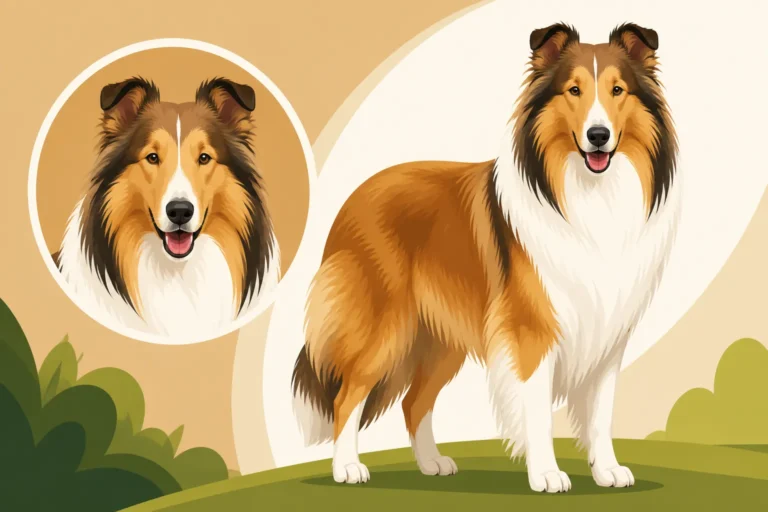
A Sheltie’s long coat can resemble a Rough Collie’s, including a prominent ruff around the neck and feathering on the legs and tail. That similarity is one reason the “miniature Collie” nickname sticks. A Smooth Collie, by contrast, has short hair, so the coat comparison is less immediate.
Both breeds can shed and need routine coat care. Long hair may collect tangles behind the ears, under the legs, and around the feathering, so regular checking matters. If you’re choosing between them, don’t assume the smaller dog is automatically low-maintenance. A Sheltie’s coat still needs attention, and a Rough Collie’s size can make grooming sessions more involved. The Household a Collie Was Built For offers more context on what living with a Collie can involve.
Personality and daily life
Shelties and Collies are often described as intelligent and people-oriented, but breed tendencies aren’t guarantees. Many Shelties are alert and quick to respond to sounds or movement. Some are frequent barkers, especially when they’re excited, under-stimulated, or reacting to activity outside. Collies can also be watchful and vocal, though the amount and style of barking varies among individuals.
Both breeds usually benefit from kind, consistent training. Their sensitivity can be an asset: they may pick up routines and cues quickly. It can also mean that harsh handling or an unpredictable household makes learning harder. Short, positive sessions and clear household rules tend to be more useful than repeated scolding.
A small stature does not make a Sheltie a decorative lapdog, just as a Collie’s calm appearance doesn’t mean it needs no engagement. Think about the dog in front of you: its confidence, energy, social comfort, and response to noise. If you’re deciding whether a Collie fits your household, Whether a Collie Suits a First Time Owner can help you think through the day-to-day commitment.
Choosing a Sheltie, a Collie, or a dog called a miniature Collie
The right choice depends less on which dog looks most like the one in an old photograph and more on which dog fits your life. Consider adult size, coat care, activity, noise, and the breeder or rescue’s transparency about the dog’s background.
Questions to ask a breeder or rescue
If someone uses “miniature Collie” to describe a puppy, ask what the dog’s registered breed is and request a clear explanation of its parentage. A responsible breeder should be able to identify the breeds involved and discuss the health and temperament of the parents. If the seller cannot explain what the label means, treat it as a marketing phrase rather than proof of a recognized breed or predictable adult size.
Ask to see available records and learn what health screening is appropriate for the specific breed and family line. Don’t assume that a dog with a Collie-like face has the same background as a Collie, or that a small dog advertised as a Collie will stay small. If the dog is mixed, its adult size, coat, and behavior can be less predictable than a seller’s label suggests.
A rescue may not know a dog’s full history, and that doesn’t make the dog a poor choice. Ask what staff or foster caregivers have observed: how the dog responds to visitors, household noise, other animals, grooming, and time alone. Practical observations can tell you more about day-to-day fit than a guess based on appearance.
Match the dog to your household
If you want a smaller herding dog with a long coat and an alert nature, a Sheltie may be worth considering—but plan for training, companionship, and coat care. If you prefer a taller dog with either a long or short coat, a Collie may be a better fit. Neither choice is automatically easier; they simply bring different proportions and individual needs.
Think through ordinary moments, not just the appealing ones. Who will walk the dog on a wet weekday? Where will it rest when the household is busy? How will you teach it to settle when the doorbell rings? A dog that looks like a miniature Collie still needs the same thoughtful planning as any other companion.
Before bringing either breed home, consider the supplies you’ll actually use: a properly fitted harness, grooming tools suited to the coat, a comfortable bed, and safe ways to manage the dog’s space. Some owners use retailers such as Chewy to compare basic supplies, but choose items according to the individual dog’s measurements and needs rather than a breed label. For example, a harness should fit the dog in front of you, not simply match a “Sheltie” or “Collie” category. Chewy may also be one place to look for coat-care basics, though an experienced groomer can help you choose tools for your dog’s particular coat. If you’re setting up for a puppy, check that a crate or gate is secure and suitable for the dog’s expected size; retailers such as Chewy offer general pet supplies, but fit and safety matter more than the store.
What “miniature Collie” means in practice
When someone says “miniature Collie,” they may simply mean a Sheltie because the dogs look alike. In other cases, the term may describe a mixed-breed dog or appear in an advertisement without a precise definition. Ask for specifics before making decisions based on the name.
A Sheltie is not a pocket-sized Collie, and a Collie is not just an oversized Sheltie. They are distinct breeds with overlapping looks and herding backgrounds. Once you separate the nickname from the breed identity, it becomes easier to compare the dogs fairly—and to choose based on temperament, size, care, and the life you can offer.
Disclaimer
This article is for general informational purposes only and does not constitute professional advice. Laws, prices and regulations vary by location and change over time. Consult a qualified professional for guidance on your specific situation.