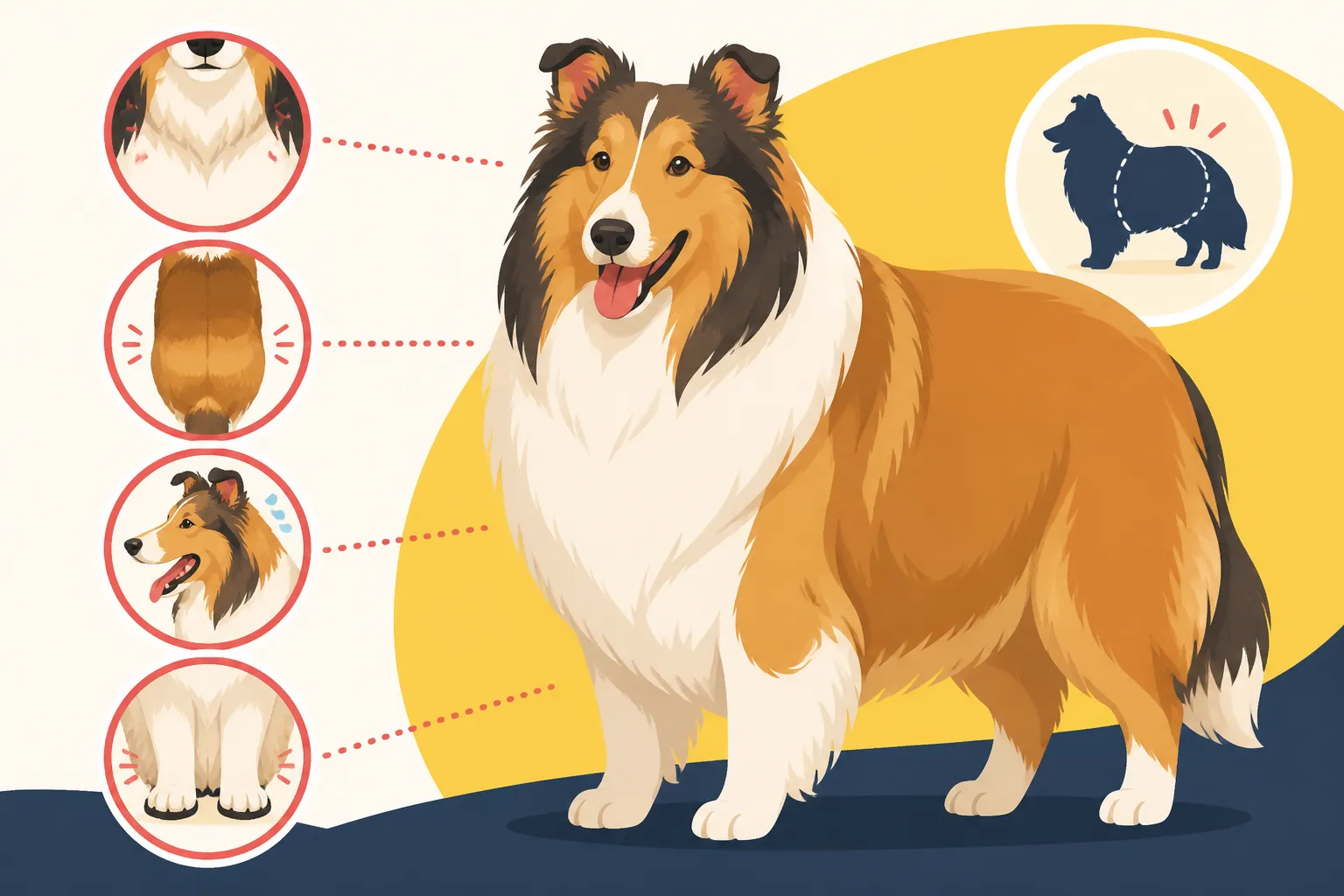
Signs a Collie Is Overweight Under All That Coat
You adore your Collie's majestic coat, that flowing, glorious mane that makes them look like a walking cloud of canine elegance. It’s part of their undeniable charm! But here’s the rub: that thick, luxurious double coat is also a master of disguise, an unintentional cloak that can effortlessly hide a creeping weight gain. Before you know it, your slender lassie might be carrying a few extra pounds, and it’s genuinely hard to spot until it’s become a significant concern. This guide is here to help you peel back the fluff, offering practical, empathetic ways to assess your Collie’s physique and ensure they stay at a healthy weight, despite what their magnificent fur might try to tell you.
The Grand Illusion: Why a Collie's Coat Hides Weight Gain
It's not your fault if you've ever struggled to tell if your Collie is getting a bit chunky. Their breed standard calls for a robust, well-muscled body, but it's encased in a voluminous coat designed for protection from the elements, not for showing off their waistline. This natural insulation and aesthetic beauty make assessing their true body condition a constant challenge for even the most diligent owner. You might swear they look fine, only to have a vet gently suggest otherwise, leaving you wondering how you missed it.
The Double-Layered Deception
Collies possess a magnificent double coat, a dense undercoat for insulation and a long, flowing outer coat. This isn't just a pretty feature; it's a functional design that allowed their ancestors to work in harsh Scottish weather. But in a modern home, it acts like a permanent, very effective sweater. When your Collie starts to put on weight, the fat deposits spread across their body, but the hair simply puffs out further to accommodate it. There’s no stark change in outline like you might see in a short-haired breed, where every ripple of fat is immediately apparent. Instead, the coat maintains its general shape, just slightly (or not so slightly) expanded, making visual detection incredibly tricky. You could look at them from above and think, "Yep, still got that nice hourglass shape," when in reality, it's the fur creating that illusion.
Optical Illusions and False Impressions
Beyond the sheer volume of hair, the way a Collie's coat drapes and flows can create optical illusions. The deep frill around their neck, the abundant feathering on their legs, and the impressive pantaloons on their hindquarters all add to their overall perceived size, regardless of their actual body mass. A slightly overweight Collie might just look "fuller" or "more substantial" rather than outright fat. This can lead owners to underestimate how much extra weight their dog is carrying. We see the majestic sweep of their coat and mentally adjust for it, often subconsciously assuming that any perceived wideness is just part of their breed's natural presentation. It takes a conscious effort to look past the superficial and delve into a more tactile assessment.
Beyond the Fluff: Visual Clues Your Collie Is Carrying Extra Pounds
While the coat can be a magnificent disguise, there are still subtle visual cues you can learn to spot if your Collie is gaining weight. These signs often require a keen eye and a willingness to look beyond the initial "fluffy" impression. It's about noticing changes in their overall silhouette and how their body moves and settles, rather than just their general size. Remember, we're looking for indicators that persist even after a thorough brushing.
Changes in Overall Silhouette and Proportions
Even with all that fur, a healthy Collie should have a discernible waist when viewed from above, and a tuck-up in their abdomen when viewed from the side. As they gain weight, this "hourglass" figure softens or disappears entirely. Their back might start to look flatter and wider, rather than gently sloping. Their ribs, which should be easily felt (though not necessarily seen) with light pressure, become more padded. Their topline might lose some of its elegance, appearing heavier or more level than it should. You might also notice their legs seeming shorter or thicker in proportion to their body as their torso widens. It's about noticing the loss of those athletic, graceful lines under the coat. You might notice this more after they've been wet, or after a very vigorous play session when their fur is matted down somewhat.
Spotting Fat Pads and Extra Bulk
Certain areas on a Collie tend to accumulate fat more readily, and these can be easier to spot, or at least to feel, through the coat. Look for widening across their shoulders and hips. The base of their tail is another common spot for fat accumulation; if it feels excessively squishy or broad, that's a red flag. Their neck might appear thicker, and the deep frill that's characteristic of the breed can seem even more pronounced due to underlying fat. You might also notice a heavier dewlap (the skin under the chin) or rolls of fat at the base of their legs or where their front legs meet their chest. These aren't usually areas where the coat gets thicker, so any extra bulk there is more likely to be fat than fur.
Getting Hands-On: The Essential Rib and Spine Check for Collies
This is where the real detective work begins! To truly determine your Collie's body condition, you must use your hands. Visual inspection alone simply isn't enough for a breed with such a copious coat. Don't be afraid to get right in there, parting the fur and really feeling what's underneath. This tactile assessment is the most reliable way to gauge their weight and is something your vet will do during an examination.
The Rib Check: A Crucial First Step
To perform a rib check, gently run your open palms along your Collie's sides, just behind their front legs. You should be able to feel their ribs with relatively light pressure, much like feeling the knuckles on your hand if you hold it flat. You shouldn't see the ribs, but you should definitely be able to feel them without having to press hard. If you have to dig your fingers in, or if it feels like you're pressing into a thick layer of padding before you hit bone, your Collie is likely overweight.
A healthy Collie will have ribs that feel distinct and countable under a thin layer of muscle and skin. An overweight Collie's ribs will feel obscured, like trying to feel knuckles through a thick glove. Practicing this regularly helps you establish a baseline for your individual dog, allowing you to notice even subtle changes over time. Consistency is key here.
Tracing the Spine and Assessing the Waistline
After checking the ribs, move your hands to your Collie's topline, running them along their spine from the shoulders to the tail. You should be able to feel the individual bumps of their vertebrae, again, with light pressure. They shouldn't be prominent or sharp (which would indicate being underweight), but they should be discernible. If their spine feels like a smooth, padded ridge, or if it's difficult to locate the individual bones, it’s another sign of excess fat.
Next, focus on their waistline. With your hands on their sides, just behind the rib cage, you should feel a gentle indentation where the waist tucks in. This is best done while they are standing squarely. If you run your hands along their sides and it feels like a continuous, straight line from their ribs to their hips, or even bulges outwards, then that ideal waist is gone. This lack of a tucked-in waist is a strong indicator of excess abdominal fat. Even a little extra cushioning can diminish this vital anatomical landmark.
Here’s a simple table to help you interpret what you're feeling:
| Area to Check | Ideal Condition (Healthy Weight) | Overweight Condition (Needs Attention) |
|---|---|---|
| Ribs | Easily felt with light pressure, like knuckles on a flat hand. | Hard to feel without firm pressure; feel covered by padding. |
| Spine | Individual vertebrae felt with light pressure, not sharp. | Smooth, padded ridge; difficult to feel individual bones. |
| Waistline (from above) | Clearly discernible tuck-in behind the rib cage. | Straight line from ribs to hips, or even bulging outwards. |
| Abdominal Tuck (from side) | Definite upward slope from chest to pelvis when standing. | Flatter or sagging belly line, less pronounced tuck-up. |
| Base of Tail | Smooth transition, bones felt easily. | Squishy, broad, or padded feeling. |
Energy Drain: Behavioral Signs of an Overweight Collie
Beyond the physical examination, your Collie's behavior can offer significant clues about their body condition. Dogs are remarkably resilient and often hide discomfort, but when weight starts to impact their mobility and energy levels, it becomes harder to ignore. These behavioral changes are often the first things owners notice before they even suspect a weight issue.
Lethargy and Reduced Stamina
One of the most noticeable behavioral changes in an overweight Collie is a general decrease in energy and stamina. You might find them less enthusiastic about walks, lagging behind, or cutting play sessions short. A Collie typically loves to be active and engaged, even if they don't always need a job in the traditional sense. If your normally spirited companion now prefers to nap more, struggles to keep up on familiar routes, or seems less interested in games of fetch or [agility classes for a Collie], it's a strong indicator that their body is working harder than it should. They might even seem to lose interest in their regular training sessions, finding it more of a chore than an enjoyable activity.
It's easy to dismiss this as "just getting older," but often, shedding those extra pounds can give a dog a new lease on life. Pay attention to how quickly they tire during their regular exercise routine. If a leisurely stroll now requires more effort, or if they're panting excessively after minimal exertion, it’s definitely time for a closer look at their weight and diet. This reduced stamina can also make them more susceptible to other issues, like heatstroke, especially with their thick coats.
Difficulty Moving, Breathing, or Grooming
Excess weight places significant strain on a Collie's joints, ligaments, and cardiovascular system. You might observe them struggling with tasks that were once easy. Climbing stairs, jumping onto furniture, or even standing up after lying down can become more labored. They might move with a stiffer gait, exhibit reluctance to jump into the car, or seem generally less agile. This difficulty isn't just about pain; it's about the sheer physical effort required to move a heavier body.
Furthermore, an overweight Collie may become breathless more easily. You might hear heavier panting after mild activity or even when at rest, as their heart and lungs work harder to supply oxygen to a larger body mass. Their deep chest cavity, while protective, can also conceal how much effort their respiratory system is expending. Another surprising indicator can be self-grooming. Overweight dogs often struggle to reach certain areas, leading to matted fur in places they can no longer comfortably groom, like their hindquarters or under their belly. If you're finding more mats in these areas, it could be a sign your Collie's flexibility is hampered by extra weight. Regularly checking their coat condition can sometimes give you hints beyond just their health. Four tools and twenty minutes: brushing a rough Collie becomes even more crucial when mobility is compromised.
More Than Just a Number: The Health Risks of Obesity for Collies
It's easy to think of a few extra pounds as just a cosmetic issue, but for our beloved Collies, it carries a significant burden of health risks. Obesity isn't just about looking chubby; it's a metabolic disease that can shorten their lifespan and dramatically impact their quality of life. Understanding these risks can be a powerful motivator to help your Collie achieve and maintain a healthy weight.
Increased Strain on Joints and Organs
Every extra pound your Collie carries places increased stress on their joints, especially their hips, elbows, and knees. This significantly increases their risk of developing or exacerbating conditions like hip dysplasia in a Collie or arthritis. Imagine carrying a heavy backpack all day, every day – that's what it's like for an overweight dog. The cartilage wears down faster, inflammation increases, and mobility becomes painful and restricted. This can lead to a vicious cycle: pain leads to less activity, which leads to more weight gain, which leads to more pain.
Beyond the musculoskeletal system, obesity impacts virtually every organ. Their heart has to work harder to pump blood to a larger body, increasing the risk of cardiovascular disease. Their lungs are compressed by abdominal fat, making breathing more difficult, particularly in breeds like Collies with their deep chests. The liver and kidneys can become strained, and the risk of certain cancers is elevated. Overweight Collies also face a higher risk of complications during anesthesia, which can be a concern for routine procedures or emergency surgeries.
Higher Risk of Diabetes, Heat Intolerance, and Skin Issues
Obesity is a major risk factor for insulin resistance and type 2 diabetes in dogs, just as it is in humans. Their bodies become less efficient at processing sugars, leading to a cascade of health problems that require lifelong management. While Collies aren't specifically prone to diabetes, an overweight Collie is certainly putting themselves at higher risk.
With their dense double coat, Collies are already sensitive to overheating. Add excess body fat, which acts as an extra layer of insulation, and their risk of heat intolerance and potentially fatal heatstroke skyrockets. Even on a moderately warm day, an overweight Collie can struggle to regulate their body temperature, especially during exercise. This means you have to be extra careful with them in warmer months, adjusting their exercise schedule to cooler parts of the day. Whether a Collie's coat protects it from heat is a complex question, but excess fat certainly doesn't help!
Finally, overweight Collies are more susceptible to various skin issues. The folds of fat can create warm, moist environments perfect for bacterial and yeast infections (hot spots). They might also struggle to properly groom themselves, leading to matted fur and debris accumulating against the skin, further contributing to irritation and infection.
Taking Action: How to Assess and Manage Your Collie's Weight
Once you've identified that your Collie might be carrying too much weight, it's time to take proactive steps. This isn't about crash dieting or excessive exercise; it's about making sustainable, healthy lifestyle changes that support their long-term well-being. Always consult your veterinarian before making significant changes to your Collie's diet or exercise routine, as they can help rule out underlying medical conditions and provide personalized recommendations.
Regular Weight Checks and Body Condition Scoring
Make regular weight checks a habit. If you have a large enough scale at home, great! Otherwise, most vet clinics are happy for you to pop in for a quick weigh-in between appointments. Keep a record of their weight to track progress over time. Remember, the number on the scale is just one piece of the puzzle; the body condition score (BCS) is equally, if not more, important, especially for a heavily coated breed.
Your vet will likely use a BCS system (often on a scale of 1-9, with 5 being ideal). They will teach you how to feel for the ribs, waist, and spine, helping you accurately assess your Collie's condition beneath that magnificent fur. This hands-on assessment is paramount for Collies. Once you understand their ideal feel, you can perform quick checks at home during your regular grooming sessions. Some owners even invest in a large dog scale, available on Amazon or Chewy, to monitor weight more frequently, especially if their Collie is on a weight loss journey.
Adjusting Diet and Portion Sizes
The first and often most impactful step is to re-evaluate your Collie's diet. Even high-quality dog foods, if fed in excess, will lead to weight gain. Start by accurately measuring their food portions. Many people eyeball it, or use scoops that aren't standardized, leading to accidental overfeeding. Use a kitchen scale to measure kibble by weight for precision. If you are struggling to get weight off, your vet might recommend a specific "weight management" or "light" formula. Brands available on Chewy often have a good selection, with reduced calorie options and increased fiber to help your Collie feel full.
Consider feeding two smaller meals a day rather than one large one, which can help with satiety and digestion. If you're giving treats, factor them into their daily caloric intake, or switch to low-calorie options like plain green beans or baby carrots. Be mindful of human food scraps; even small amounts add up quickly. Some owners find success with fresh food diets, like those offered by Ollie, as they often have clear portion guidelines and natural ingredients, making it easier to control calorie intake. Just be sure any dietary change is gradual to avoid stomach upset. Whether a Collie's diet prevents stones is another excellent area to discuss with your vet as you adjust their nutrition.
Increasing Appropriate Exercise
While diet is usually 80% of the battle, increased exercise plays a vital role in weight loss and overall fitness. Collies are intelligent and generally active dogs, but they might need a little extra motivation if they've become sedentary. Aim for daily walks, gradually increasing the duration and intensity as your Collie's stamina improves. Two good walks a day, plus some mental stimulation, is usually a great starting point. How much exercise a Collie needs daily will vary based on age and health, but consistency is key.
Incorporate play into their routine: fetch, hide-and-seek, or even just exploring new scents on a long leash walk can be mentally and physically engaging. Just be mindful of the weather; Collies can overheat, so avoid strenuous exercise during the hottest parts of the day. Swimming, if your Collie enjoys it, is an excellent low-impact exercise for overweight dogs. Puzzle toys, available from Chewy or Amazon, can also help burn calories and provide mental stimulation. Remember, the goal is consistent, enjoyable activity that helps them burn more calories than they consume, without overstressing their recovering joints. Caring for a Collie past nine especially involves careful exercise management.
Disclaimer
This article is for general informational purposes only and does not constitute professional advice. Laws, prices and regulations vary by location and change over time. Consult a qualified professional for guidance on your specific situation.