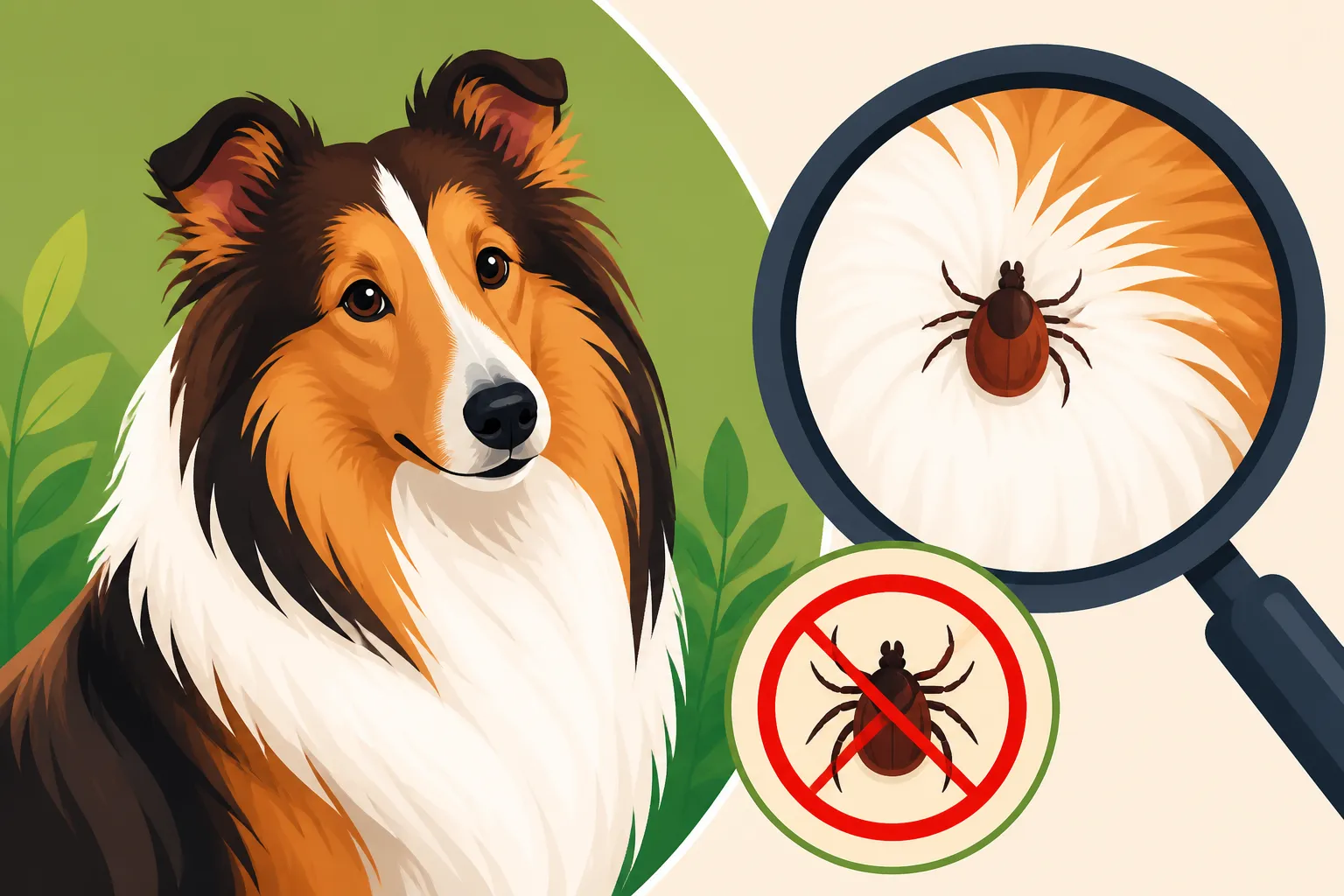
Whether Ticks Are Hard to Find on a Collie
As a Collie owner, there's a unique kind of dread that sets in after a lovely romp through tall grass or a peaceful hike in the woods: the tick check. You know those pesky parasites are out there, just waiting for a furry host, and your beautiful, abundant Collie coat, while a marvel to behold, is also the perfect camouflage for them. It feels like searching for a needle in a haystack, and the worry of missing one, only for it to transmit something nasty, is a legitimate concern for any dedicated owner. This guide is here to walk you through the realities of finding ticks on your beloved Collie and equip you with the best strategies for detection, removal, and prevention, so you can enjoy those outdoor adventures with less anxiety.
Why a Collie's Coat Makes Tick Detection a Real Challenge
Let's be honest, your Collie's magnificent coat is both its crowning glory and, at times, its biggest secret keeper. It’s a double coat, meaning it has a soft, dense undercoat for insulation and longer, coarser guard hairs that protect against the elements. This combination is fantastic for keeping them warm and dry, but it creates a literal labyrinth for tiny ticks to hide in.
Imagine a tick, no bigger than a poppy seed or a small pebble, trying to make its way through that luxurious fur. It doesn't have to go far to become completely invisible to the naked eye. Ticks prefer warm, dark, and often moist areas, which means they'll gravitate towards places like behind the ears, under the collar, in the armpits, and around the groin – all spots where the coat tends to be thick and matted, or simply dense enough to provide ample cover. You can run your hands over your Collie, feel nothing, and still have a tick firmly embedded deep within the undergrowth of their fur, happily feasting away. It's a frustrating reality that makes every post-adventure check feel like a high-stakes treasure hunt. Even with a smooth Collie, while the coat is shorter, it's still thick enough to offer plenty of hiding places compared to, say, a Boxer or a Greyhound. The sheer volume of hair means you're not just looking for a tiny speck; you're trying to find a tiny speck nestled amongst thousands of strands of hair that are all moving and shifting around. This is why a methodical approach is not just helpful, but absolutely essential.
The Best Strategies for Thorough Tick Checks on a Collie
Finding ticks on a Collie isn't about luck; it's about being systematic, patient, and knowing what you're looking for – or, more accurately, what you're feeling for. You're going to become an expert at feeling for tiny bumps and changes in texture.
The Importance of a Systematic Approach
You wouldn't clean your entire house by randomly moving from room to room, would you? The same principle applies to tick checks. You need a consistent routine that ensures you cover every square inch of your Collie's body. I always recommend starting at one end and working your way to the other, creating mental "zones."
Begin with the head: carefully check around the muzzle, inside and outside the ears (especially in those ear folds), and down the throat latch under the chin. These are prime spots. Then move to the neck and chest, pushing back the fur to get right down to the skin. Next, tackle each front leg, paying close attention to the armpits and between the toes. Don't forget the pads of their feet! After that, work your way along their back, down the flanks, and over their belly. The belly can be tricky because the fur might be less dense but still floppy, allowing ticks to hide in the folds of skin. Finally, check the back legs, again focusing on the "armpits" (groin area), between the toes, and under the tail. It might sound like a long process, but once you get into the rhythm, it becomes second nature. And let's be real, a few extra minutes of careful checking is a small price to pay for peace of mind.
Tools and Techniques for Effective Searching
Your most valuable tools for finding ticks on a Collie are actually your fingertips. While you'll certainly look for ticks, your sense of touch will be far more effective in penetrating that dense coat. Run your hands slowly over their body, applying gentle pressure, feeling for any small bumps or irregularities on the skin. A tick, whether unfed or engorged, will feel like a tiny lump, a scab, or a small wart.
When you do feel something suspicious, gently part the fur with your fingers, going against the grain of the hair, to expose the skin. Good, bright lighting is absolutely critical here. Natural daylight is often best, but a strong, focused lamp can work wonders, especially for evening checks. For areas like behind the ears or along the neck where mats can easily form, a fine-toothed metal comb can be incredibly helpful for carefully sifting through the fur and helping you get down to the skin. You don't want to drag it hard, but rather use it to systematically separate the hair. If you're lucky enough to have a grooming table, that can also make the process much easier, allowing you to get a better vantage point without straining your back. For a deeper dive into tools that help with coat management and therefore tick checks, you might find Four Tools and Twenty Minutes: Brushing a Rough Collie incredibly useful, and knowing What a Good Pin Brush Costs for a Collie can help you invest in the right grooming arsenal.
Creating a Routine
Consistency is key here. After every walk or outdoor excursion, especially if you've been in wooded or grassy areas, perform a quick run-through with your hands. Once a day, or even every other day during peak tick season, commit to a more thorough, systematic check. Make it a positive experience for your Collie, perhaps while they're relaxing with you in the evening or during a regular grooming session. Use plenty of praise and perhaps even a treat to associate the checks with something pleasant. This isn't just about preventing tick-borne illnesses; it's also a chance to bond with your dog and become intimately familiar with their body, so you can spot any other lumps, bumps, or changes early on.
What to Do When You Find a Tick on Your Collie
Finding a tick can be alarming, but don't panic! It's an unfortunately common occurrence for any dog that spends time outdoors. The key is to remove it promptly and correctly.
Safe Tick Removal
You'll need a good quality pair of fine-tipped tweezers or, even better, a specialized tick removal tool. These tools are designed to grip the tick without squeezing its body, which is important because squeezing can inject more potentially harmful bacteria into your Collie. Brands like Tick Twister or similar hook-style removers are often recommended.
Here's how to do it:
- Gather your supplies: Tweezers or tick remover, rubbing alcohol or antiseptic wipes, and a small container with alcohol to dispose of the tick.
- Part the fur: Gently but firmly hold your Collie's fur away from the tick to expose it clearly.
- Grasp the tick: Using your chosen tool, grasp the tick as close to your Collie's skin as possible. If using tweezers, try to get them around the head of the tick, not the body. If using a hook, slide it under the tick until it cradles the head.
- Pull straight up: With a steady hand, pull straight upwards with even pressure. Do not twist, jerk, or squeeze the tick's body. The goal is to remove the entire tick, including its head. It might take a moment of sustained pressure, but it should eventually release.
- Inspect: Check the tick to ensure the head is still attached. Also, check the bite site to confirm nothing was left behind. A small red bump is normal, but any remaining tick parts need to be removed.
- Dispose: Place the tick in a small container with rubbing alcohol to kill it. Never crush a tick with your fingers or flush it down the toilet, as they can often survive.
Post-Removal Care and Monitoring
Once the tick is removed, clean the bite area thoroughly with an antiseptic wipe or rubbing alcohol. A small raised bump or a bit of redness is perfectly normal and might linger for a few days, similar to a mosquito bite. Keep an eye on the area for any signs of infection, such as excessive swelling, pus, or continued redness and heat.
More importantly, monitor your Collie for the next few weeks for any signs of tick-borne illness. Symptoms can be subtle and might include lethargy, loss of appetite, lameness (shifting from leg to leg), fever, swollen joints, or swollen lymph nodes. If you notice any of these symptoms, contact your veterinarian immediately. It's helpful to make a note of the date you removed the tick and where on your Collie's body you found it. This information can be valuable to your vet if your dog does develop symptoms later. Knowing Whether a Collie Hides Pain is also crucial, as they might not overtly show discomfort, requiring you to be extra vigilant.
Proactive Prevention: Minimizing Tick Risk for Your Collie
The best tick is the one that never gets on your Collie in the first place! Prevention is truly the most effective defense against these persistent parasites and the diseases they carry.
Vet-Recommended Preventatives
There are so many effective tick preventative products available today, but it’s crucial to consult with your veterinarian to determine the best option for your Collie and your specific geographical area. Different regions have different tick populations and prevalent tick-borne diseases, and your vet will have the most up-to-date knowledge.
These preventatives come in several forms:
- Oral Medications: These are typically chewable tablets given monthly or every few months. They work by entering your dog's bloodstream, and when a tick bites, it ingests the medication and dies. This is often a great option for Collies with thick coats, as there's no messy topical application. Many of these also cover fleas.
- Topical Treatments: These are liquid solutions applied directly to your Collie's skin, usually between the shoulder blades, once a month. They spread across the skin via natural oils, killing or repelling ticks (and fleas) on contact. With a thick Collie coat, ensuring the product reaches the skin and isn't just absorbed by the fur can be a bit more challenging, so careful application is essential.
- Collars: Certain collars are impregnated with active ingredients that release into your Collie's skin oils, spreading over their body to kill or repel ticks. These can last for several months. They can be a good hands-off option, but ensure it's specifically designed for ticks and fits snugly enough to make skin contact.
When it comes to purchasing these, many pet owners find convenience in online retailers. For prescription medications, you'll need a vet's prescription, which can often be sent directly to online pharmacies like Chewy for home delivery. For certain over-the-counter options, you might find a selection on platforms like Amazon, but always, always double-check with your vet about the product's safety and efficacy. Remember, your Collie might have specific sensitivities, such as the [MDR1 mutation], which can make certain drugs risky. While most modern tick preventatives are generally safe for Collies, it's always wise to discuss The Drug List That Can Kill a Collie with your vet, especially if they also cover heartworm or other parasites. You might also want to look at Whether an MDR1 Collie Can Be Wormed Safely for broader parasite prevention context.
Environmental Management
Beyond direct medication, managing your environment can significantly reduce tick exposure:
- Yard Maintenance: Keep your lawn mowed short. Ticks love tall grass and leaf litter. If you have wooded areas bordering your property, consider creating a barrier of wood chips or gravel.
- Hiking Habits: When walking your Collie, try to stick to marked trails and avoid venturing into dense brush, tall grasses, or heavily wooded areas, especially during peak tick season.
- Post-Walk Wipe-Downs: Even if you use a preventative, a quick wipe-down of your Collie's legs, belly, and tail area with a damp cloth after a walk can sometimes remove ticks before they have a chance to attach.
Training and Routine
Make tick prevention a year-round commitment. Ticks can be active even in colder months in many regions, especially if temperatures are unseasonably mild. Consistent use of preventatives is key, and regular, thorough checks should remain part of your grooming routine. You'll become so much more efficient with practice, and your Collie will likely enjoy the extra attention. Integrating grooming practices like those described in How to Line Brush a Collie or ensuring your Collie's Whether a Collie's Feet Should Be Trimmed can also make tick detection and removal easier.
| Preventative Type | Pros | Cons |
|---|---|---|
| Oral Medication | Easy to administer, often palatable. Not affected by bathing/swimming. | Requires dog to ingest. May have side effects for sensitive dogs. |
| Topical Treatment | Kills/repels ticks on contact. Easy application once a month. | Can be messy. May need to avoid bathing directly after application. |
| Tick Collar | Long-lasting protection (months). No internal medication. | Must fit correctly. Potential skin irritation. Some dogs dislike collars. |
Disclaimer
This article is for general informational purposes only and does not constitute professional advice. Laws, prices and regulations vary by location and change over time. Consult a qualified professional for guidance on your specific situation.