Whether an MDR1 Collie Can Be Wormed Safely
It's a terrifying thought for any Collie owner: giving your beloved dog a routine medication only to discover it could be deadly. The MDR1 mutation in Collies casts a long shadow over seemingly simple acts like deworming, leaving many of us anxious about whether we're truly keeping our furry companions safe. This guide is here to shed light on how to safely worm your MDR1-affected Collie, detailing which medications are safe, which to avoid, and the crucial steps you need to take with your veterinarian.
Understanding the MDR1 Mutation and Worming Medications
If you own a Collie, the term MDR1 probably keeps you up at night, and for good reason. This genetic mutation fundamentally changes how your dog's body processes certain medications, turning common treatments into potential poisons. Understanding the basics of this mutation is the first step in ensuring your Collie's safety, especially when it comes to parasite control.
What is the MDR1 Gene and How it Affects Collies?
The MDR1 gene, officially known as the Multidrug Resistance 1 gene, is responsible for producing a protein called P-glycoprotein. Think of P-glycoprotein as your dog's built-in bouncer and detox specialist. It's a guardian located in various parts of the body, including the brain, intestines, kidneys, and liver, where it actively pumps certain drugs and toxins out of cells and out of the body. For example, in the brain, it forms part of the blood-brain barrier, preventing harmful substances from entering the delicate brain tissue.
For Collies with the MDR1 mutation, this crucial P-glycoprotein isn't produced correctly, or sometimes not at all. This means their body can't effectively eliminate certain drugs, leading to a dangerous buildup in their system. When these drugs accumulate, especially in the brain, they can become toxic, causing severe neurological symptoms, and in the worst cases, death. It’s why you might have heard to Assume Your Collie Has the MDR1 Mutation if you don’t have proof otherwise. We're not just talking about a minor side effect; this is a profound physiological difference that demands careful management. It's estimated that a significant What Share of Collies Carry MDR1, making this a widespread concern within the breed.
Why Certain Wormers Are Dangerous for MDR1 Collies
Many common antiparasitic medications, or wormers, are among the drugs that the P-glycoprotein normally handles. Without a properly functioning P-glycoprotein, these drugs are absorbed more readily, cross the blood-brain barrier with ease, and linger in the body far longer than they should. This prolonged exposure and elevated concentration are what cause the toxicity.
The most infamous example is ivermectin. While often used safely in other breeds for heartworm prevention at very low doses, higher doses—the kind typically used for deworming or treating specific parasites like mange—can be devastating for an MDR1 Collie. Other medications in the "macrocyclic lactone" class, like selamectin, moxidectin, and milbemycin, also fall into this category. The specific risk depends on the drug, the dose, and the individual Collie's MDR1 status (whether they have one or two copies of the mutated gene). It's a complex picture, and understanding What the MDR1 Mutation Actually Does to a Collie is key to appreciating the danger. This is why having a comprehensive The Drug List That Can Kill a Collie is so important for every Collie owner.
Safe Worming Practices for MDR1 Collies
Navigating the world of medications for an MDR1 Collie can feel like walking a tightrope. When it comes to worming, it's not just about picking a product off the shelf; it requires a proactive and informed approach. Your vigilance and a strong partnership with your veterinarian are your Collie's best defense.
Consulting Your Veterinarian is Non-Negotiable
This simply cannot be overstated: always consult your veterinarian before administering any worming medication to your Collie. Even if you're using a product you believe to be safe, a professional opinion tailored to your specific dog is invaluable. Your vet will have the most up-to-date knowledge on drug interactions, dosages, and the latest recommendations for MDR1-affected dogs.
When you go to the vet, make sure you bring any MDR1 test results you have for your Collie. If your dog hasn't been tested, that should be your first priority. Be prepared to discuss your dog's lifestyle, any current medications, and their full medical history. Ask direct questions: "Is this specific worming medication safe for an MDR1 Collie?" and "What alternative medications are available if this one isn't safe?" Don't be shy about asking for written instructions or having them note your Collie's MDR1 status prominently in their file. This ensures that everyone at the clinic is aware, especially if you have to visit an emergency vet later. Knowing How a Collie Owner Tells the Vet About MDR1 can literally save your dog's life.
Safe Worming Medications for MDR1 Collies
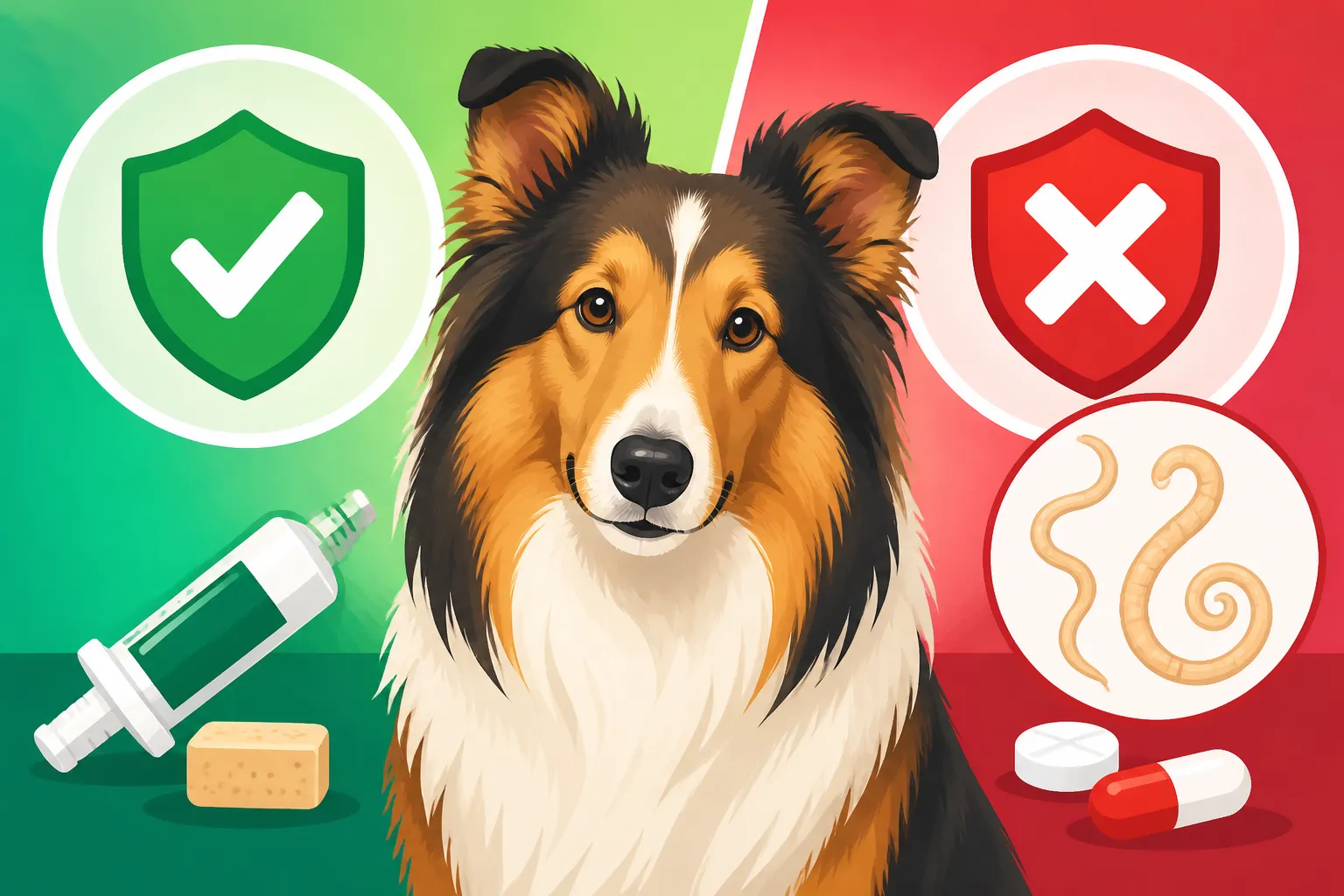
Thankfully, not all worming medications are problematic for MDR1 Collies. There are several effective and safe options available for treating common intestinal parasites and even heartworm. The key is to know the active ingredients and confirm their safety.
For many common intestinal worms like roundworms, hookworms, and whipworms, drugs such as fenbendazole (often found in products like Panacur) and pyrantel pamoate are generally considered safe. These drugs do not rely on the P-glycoprotein for their elimination and therefore do not pose the same risk. For tapeworms, praziquantel is typically a safe choice.
When it comes to heartworm prevention, this is where it gets a little trickier, as many preventives contain macrocyclic lactones like ivermectin or milbemycin. However, the doses of these drugs in monthly heartworm preventives are extremely low – often 1/100th to 1/1000th of the dose used for deworming or treating mites. At these micro-doses, most MDR1 Collies (even those homozygous for the mutation) can tolerate them without issue. Brands like Heartgard (ivermectin) and Interceptor Plus (milbemycin oxime/praziquantel) are often prescribed safely by veterinarians for MDR1 Collies. Always confirm with your vet, but generally, the low-dose heartworm preventatives are considered safe.
| Medication Type | Common Active Ingredients | MDR1 Collie Safety Status | Notes |
|---|---|---|---|
| Heartworm Preventives | Ivermectin (low dose) | Generally Safe | Doses in monthly preventives are very low. |
| Milbemycin Oxime (low dose) | Generally Safe | Doses in monthly preventives are very low. | |
| Moxidectin (low dose) | Generally Safe | Doses in monthly preventives are very low. | |
| Selamectin (low dose) | Generally Safe | Doses in monthly preventives are very low. | |
| Intestinal Dewormers | Fenbendazole | Safe | Common for roundworms, hookworms, whipworms, giardia. |
| Pyrantel Pamoate | Safe | Common for roundworms, hookworms. | |
| Praziquantel | Safe | Common for tapeworms. | |
| Epsiprantel | Safe | Common for tapeworms. | |
| Broad-Spectrum/High Dose | Ivermectin (high dose) | DANGEROUS | Used for deworming, mange treatment. Avoid. |
| Milbemycin Oxime (high dose) | CAUTION | High doses can be problematic. Avoid unless explicitly directed and monitored by vet. | |
| Moxidectin (high dose) | CAUTION | High doses can be problematic. Avoid unless explicitly directed and monitored by vet. | |
| Selamectin (high dose) | CAUTION | High doses can be problematic. Avoid unless explicitly directed and monitored by vet. | |
| External Parasite Treatment | Spinosad | CAUTION | Some sources list as moderate risk; use with caution/vet guidance. |
This table provides a general overview, but again, always verify with your vet.
Considering Preventative Measures Beyond Medication
While medication is often necessary for parasite control, a holistic approach that includes preventative measures can reduce your Collie's overall exposure to parasites and, consequently, the need for frequent medication.
One of the simplest yet most effective measures is regular fecal testing. Instead of blindly deworming your Collie, your vet can test a stool sample to confirm the presence of parasites and identify the specific type. This allows for targeted treatment with the safest possible medication, rather than using broad-spectrum dewormers unnecessarily.
Environmental control is also crucial. Picking up your dog's waste immediately minimizes the spread of parasitic eggs in your yard. If your dog frequents dog parks or other public areas, be mindful of the hygiene practices there. Preventing your Collie from eating stool (a common way to pick up parasites) is also important, though easier said than done sometimes! Regular grooming, especially for a Rough Collie, can also help you spot external parasites like fleas and ticks early, reducing the need for emergency treatments that might contain problematic ingredients. A well-maintained home, with regular cleaning of dog bedding and living areas, further reduces the risk of parasite reinfection.
Common Worming Medications: Safe or Unsafe for MDR1 Collies?
Let's dive a little deeper into the specific medications you might encounter. It's really easy to get confused with brand names, so focusing on the active ingredients is the best way to stay informed and keep your Collie safe. Understanding Which Drugs an MDR1 Collie Must Never Have is paramount.
Ivermectin and Its Relatives
Ivermectin is the most well-known villain in the MDR1 story, but it's crucial to understand the nuances. At high doses, the kind used for treating conditions like demodectic mange, ear mites, or as a general dewormer for resistant parasites, ivermectin is unequivocally dangerous for MDR1 Collies. These high doses can overwhelm the compromised P-glycoprotein, leading to rapid accumulation in the brain. Symptoms can range from drooling and tremors to seizures, blindness, and coma. It’s a stark reminder of the serious implications of this genetic mutation.
However, many heartworm prevention medications contain ivermectin (e.g., Heartgard, Iverhart Max). The key distinction here is the dosage. The amount of ivermectin in a monthly heartworm preventive is minuscule – typically 6 micrograms per kilogram of body weight, compared to deworming doses of 200-600 micrograms per kilogram. At these extremely low, preventative doses, most MDR1 Collies, even those homozygous for the mutation, can safely metabolize and excrete the drug. Their limited P-glycoprotein activity is usually sufficient for these tiny amounts. So, while it sounds contradictory, a low-dose ivermectin heartworm preventive is generally safe, while a high-dose ivermectin dewormer is not. Always confirm the specific product and dose with your vet, and never assume.
Other macrocyclic lactones like milbemycin oxime (found in Interceptor, Sentinel), moxidectin (ProHeart 6, Advantage Multi), and selamectin (Revolution) also have varying degrees of risk. Like ivermectin, their safety for MDR1 Collies depends heavily on the dosage. At the low doses used for monthly heartworm and flea/tick prevention, they are generally considered safe. However, higher doses, particularly those used to treat certain types of mites or for comprehensive deworming in livestock formulations, should be strictly avoided in MDR1 Collies. For instance, while Revolution is typically safe at heartworm preventative doses, using a large animal selamectin product would be highly dangerous.
Other Commonly Used Dewormers
Fortunately, several other deworming agents are well-tolerated by MDR1 Collies across all genotypes.
- Fenbendazole: This is a fantastic option for treating a wide range of intestinal parasites, including roundworms, hookworms, whipworms, and even Giardia. Products containing fenbendazole, such as Panacur C, are considered very safe for MDR1 Collies because this drug is not a substrate for the P-glycoprotein pump. It's a go-to for many veterinarians when an MDR1 Collie needs deworming for these common issues.
- Pyrantel Pamoate: Often found in many over-the-counter dewormers, pyrantel pamoate is effective against roundworms and hookworms. It also does not interact with the MDR1 gene and is considered safe for Collies. It's frequently used for young puppies to address their typical worm burdens.
- Praziquantel: This drug is highly effective against tapeworms (both Dipylidium caninum and Taenia species). Praziquantel is also generally considered safe for MDR1 Collies, as its metabolism and excretion do not significantly involve the P-glycoprotein. It's often combined with other dewormers in broad-spectrum products.
- Epsiprantel: Another drug specifically used for tapeworms, epsiprantel (e.g., Cestex) is also recognized as safe for MDR1 Collies.
When your vet suggests a wormer, always ask for the active ingredient and double-check it against known safe lists for MDR1 dogs. This proactive step helps avoid any miscommunication or accidental administration of a risky drug. If you're using a pet insurance provider like Healthy Paws, knowing these details can also help streamline any claims should an unexpected issue arise, though with careful planning, we hope those issues are few and far between!
What to Do If Your MDR1 Collie Has a Reaction
Despite all the precautions, accidents can happen. Maybe an emergency vet didn't have your full records, or perhaps a new over-the-counter product contained an unexpected ingredient. Knowing what to do if your MDR1 Collie has a drug reaction is critical for their survival and recovery.
Recognizing the Signs of a Drug Reaction
An MDR1 drug reaction usually manifests with neurological symptoms because the drug has accumulated to toxic levels in the brain. The onset can vary depending on the drug and dose, but it typically happens within hours to a day after exposure. The severity can range from mild disorientation to life-threatening complications.
Keep an eye out for any of these signs:
- Lethargy and Depression: Your normally active Collie might become unusually quiet, withdrawn, and unresponsive.
- Dilated Pupils: Their pupils might appear larger than normal and react slowly to light.
- Drooling (Hypersalivation): Excessive drooling that isn't typical for your dog can be a warning sign.
- Vomiting and Diarrhea: While not always present, gastrointestinal upset can occur.
- Weakness and Incoordination (Ataxia): Your Collie might stumble, have difficulty walking straight, or appear weak in their hindquarters. They might seem "drunk."
- Tremors and Shivering: Uncontrolled muscle twitching or shaking.
- Blindness: Temporary or permanent vision loss.
- Seizures: This is a severe sign and requires immediate intervention.
- Coma: In the most severe cases, the dog may lose consciousness and become unresponsive.
If you observe any of these symptoms after your Collie has received medication, don't delay. Every minute counts. Understanding Signs an MDR1 Collie Is Having a Drug Reaction can empower you to act quickly.
Emergency Steps and Veterinary Care
If you suspect your MDR1 Collie is having a drug reaction, act immediately. This is an emergency.
- Contact Your Veterinarian or Emergency Vet: Don't wait. Call your vet's office right away. If it's after hours, call your nearest veterinary emergency clinic. Describe your Collie's symptoms and mention their MDR1 status and the medication they received.
- Gather Information: Collect any packaging or labels from the medication your Collie received. Note the exact time and dose given. This information is crucial for the vet.
- Transport Your Collie Safely: If your Collie is having seizures or is disoriented, ensure they are secured for transport to prevent further injury.
Upon arrival at the vet, treatment will focus on stabilizing your Collie and eliminating the drug from their system. This might include:
- Activated Charcoal: If the medication was ingested recently, activated charcoal can be given to absorb remaining drug in the digestive tract and prevent further absorption.
- Intravenous Fluids: To help flush the drug from the system, support organ function, and maintain hydration.
- Supportive Care: Depending on symptoms, this could include anti-seizure medications, oxygen therapy, keeping the dog warm, and manual turning if they are comatose to prevent bedsores.
- Lipid Emulsion Therapy: In some cases of severe macrocyclic lactone toxicity, intravenous lipid emulsion therapy can be used. The idea is that the lipid (fat) emulsion acts like a "sink" in the bloodstream, drawing the fat-soluble drug out of the tissues (like the brain) and into the blood, where it can then be more easily metabolized and excreted.
The recovery period can be long and challenging, and the cost of emergency care can be substantial. This is where a robust pet insurance plan, perhaps from a provider like Healthy Paws, can be a real lifesaver, helping to cover the often hefty expenses of critical care. While it's a difficult road, many Collies can recover from drug reactions with prompt and aggressive veterinary intervention. Knowing Whether an MDR1 Collie Recovers From a Reaction can offer a glimmer of hope during a frightening time.
Long-Term Management and Breeding Considerations
Living with an MDR1 Collie isn't just about managing immediate drug risks; it's about a commitment to long-term health and responsible ownership. This includes comprehensive testing and thoughtful decisions that impact the future of the breed.
The Importance of MDR1 Testing
For any Collie owner, the single most important step you can take to protect your dog is to get them tested for the MDR1 mutation. This simple DNA test can definitively tell you if your Collie is clear (N/N), a carrier (N/M), or affected (M/M). Knowing their status removes all guesswork and allows you and your vet to make informed, safe medication choices. You might think, "My Collie looks perfectly fine, why bother?" But Whether an MDR1 Collie Looks Any Different is a common misconception – the mutation has no outward physical signs.
Testing is straightforward, usually involving a simple cheek swab that you can collect at home or have your vet do. The sample is then sent to a specialized laboratory. Historically, Washington State University's Veterinary Clinical Pharmacology Lab (VCPL) was the primary facility, but now other reputable genetic testing companies like Embark and Paw Print Genetics also offer comprehensive MDR1 testing. Which Lab Runs the Collie MDR1 Test might vary, but the results are consistent. The What an MDR1 Test Costs for a Collie is a small investment for peace of mind and potentially life-saving information. Ideally, all Collies, especially those intended for breeding, should be tested.
Communicating with Breeders and Future Owners
Responsible breeding practices are fundamental to reducing the prevalence of the MDR1 mutation. Ethical breeders will test all their breeding stock and share those results openly with prospective puppy buyers. If you're looking for a Collie puppy, always ask the breeder for the MDR1 test results of both parents, and ideally, the puppy itself. A breeder who is transparent about health testing is one you can trust.
If you own an MDR1 Collie, it's crucial to inform any future caregivers about their genetic status. This includes pet sitters, boarding kennels, and especially new owners if you ever have to rehome your dog. Providing a printed copy of their MDR1 test results, along with a list of contraindicated drugs, should be part of their essential paperwork. This due diligence ensures that your Collie's unique medical needs are always respected and addressed, no matter who is caring for them. By understanding the genetics and acting responsibly, we can all contribute to healthier Collies for generations to come.
Disclaimer
The information provided in this article is for educational purposes only and is not a substitute for professional veterinary advice. Always consult with your veterinarian regarding any medical conditions or treatment options for your Collie.