Whether Two Low Risk Collies Can Produce an Affected Puppy
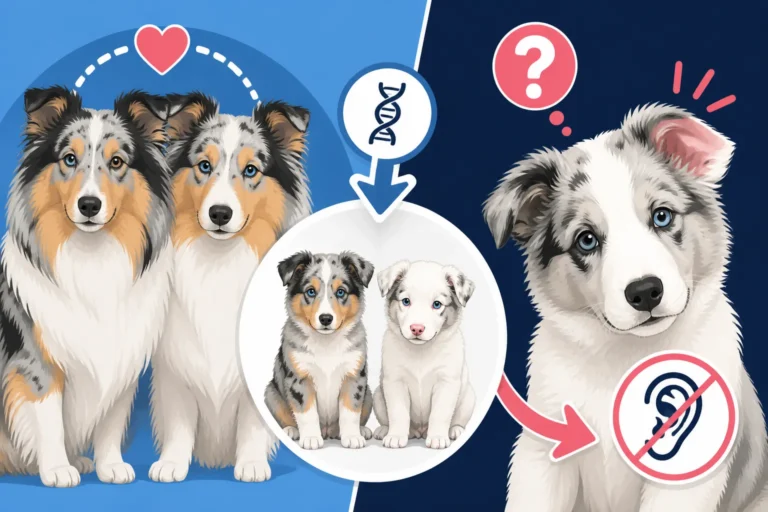
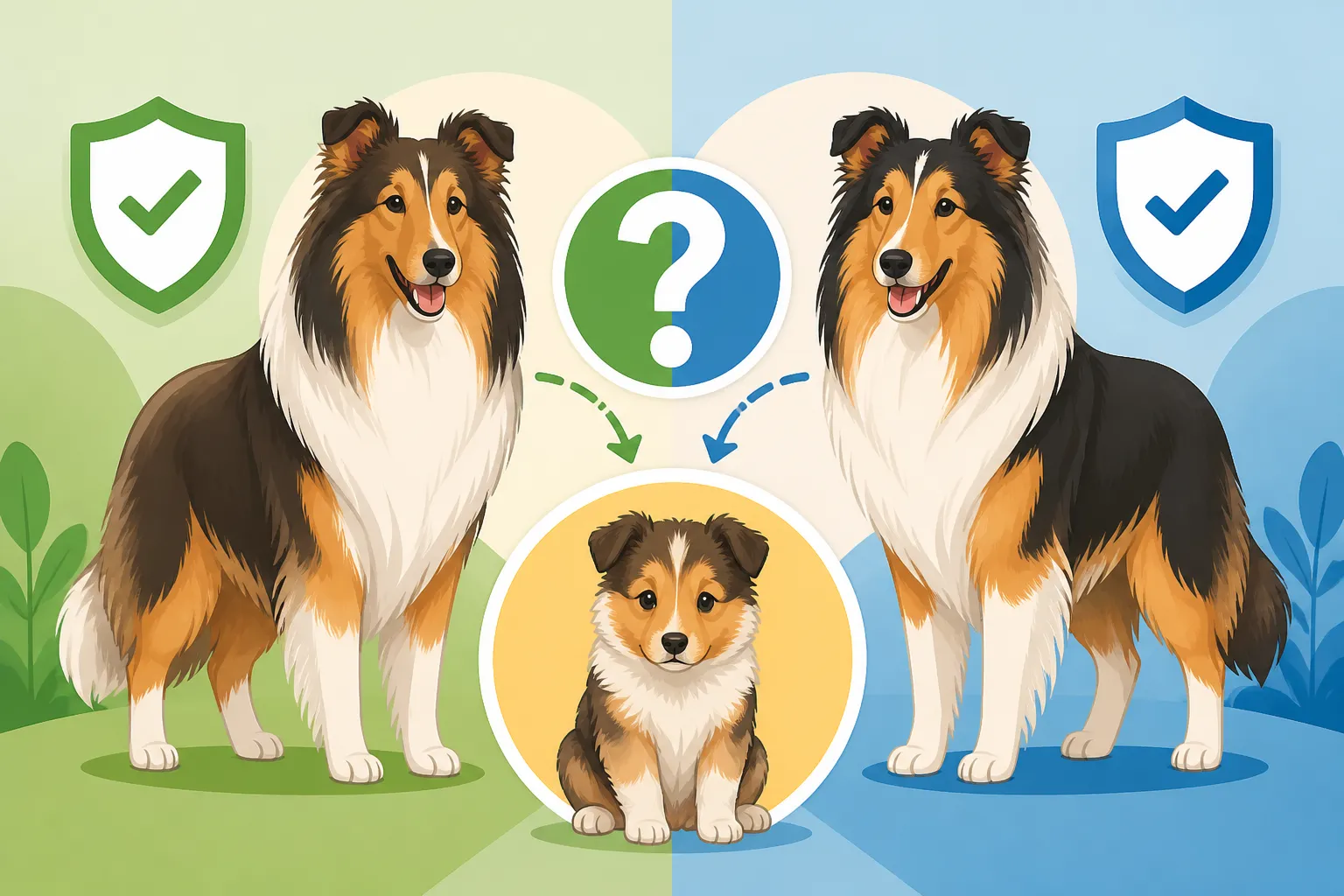
It's a common and completely understandable hope for any Collie owner, especially those considering breeding or looking for a new puppy, that rigorous health testing can eliminate the risk of genetic diseases entirely. We invest time, effort, and considerable emotional energy into ensuring our beloved dogs are healthy. But when it comes to a complex condition like Dermatomyositis (DMS), the path isn't always as clear-cut as we might wish. It's incredibly frustrating to do everything "right" – choosing parents deemed "low risk" – only to wonder if an affected puppy could still appear. This guide aims to demystify how two Collies with a low-risk genetic profile can still produce a puppy affected by Dermatomyositis, shedding light on the intricate science behind this challenging reality.
Understanding Dermatomyositis in Collies
Dermatomyositis, or DMS, is a baffling and often heartbreaking condition that specifically affects Collies, Shetland Sheepdogs, and some related breeds. It's one of those health challenges that can make even experienced Collie enthusiasts feel helpless, and for good reason—it's not always straightforward.
What is Collie Dermatomyositis?
At its core, Dermatomyositis is an inherited autoimmune inflammatory disease that primarily impacts the skin and muscles, though in some severe cases, it can also affect blood vessels. Imagine your dog's own immune system mistakenly attacking healthy cells, leading to a range of uncomfortable and sometimes debilitating symptoms. For a Collie, this usually manifests first as distinct skin lesions, often around the face, ears, tail tip, and bony prominences on the legs. These lesions can appear as redness, crusting, scaling, or even hair loss. It's not just a superficial issue; these areas can become quite painful, itchy, and prone to secondary infections.
Beyond the skin, DMS can also cause muscle atrophy, which means the muscles waste away. This might be subtle at first, perhaps just a slight weakness, but in more severe instances, it can lead to noticeable muscle wasting, particularly in the head and limbs, making it difficult for the dog to chew, swallow, or even walk comfortably. Over time, these skin lesions can unfortunately result in permanent scarring and changes to the coat. The disease typically begins to show its signs quite early in life, often when a Collie puppy is between 7 and 11 weeks old, though sometimes it can manifest later in adolescence or even early adulthood. The variability makes it particularly tricky, as a seemingly healthy puppy can later develop symptoms, leaving owners wondering what went wrong.
The Complex Genetics of DMS Risk
Unlike some genetic diseases caused by a single, straightforward gene mutation, Dermatomyositis is far more complicated. It's what scientists call a polygenic trait, meaning that multiple genes interact with each other to determine a dog's overall risk of developing the condition. This isn't a simple "dominant" or "recessive" inheritance pattern where you can easily predict outcomes based on two parent's status. Instead, think of it as a delicate balance where several genetic components each contribute a piece to the puzzle.
Research, much of it supported by organizations like the Collie Health Foundation, has identified several key genetic markers associated with DMS risk. The most well-known are located within the Major Histocompatibility Complex (MHC) region on chromosome 16, and two specific genes, PANL and MAP3K7CL, are frequently discussed. These genes carry different alleles (variations), and certain combinations of these alleles are linked to higher or lower probabilities of developing DMS. However, it's crucial to understand that these identified markers don't account for 100% of the risk. There are likely other genetic factors, perhaps even environmental influences that we're still trying to fully understand, that play a part. This complexity is precisely why predicting outcomes, even with genetic testing, isn't always a perfect science.
What "Low Risk" Really Means
When a Collie breeder or owner talks about a dog being "low risk" for Dermatomyositis, they're referring to the results of a genetic test panel, often provided by labs like OptiGen or Wisdom Panel. These tests analyze a dog's DNA for the known genetic markers associated with DMS. Based on the specific combination of alleles a dog possesses at these various loci (locations on the chromosomes), the lab assigns a risk category: low, moderate, or high.
However, "low risk" for DMS does not equate to "no risk," and this is a critical distinction that can cause a lot of confusion and heartache. A "low risk" designation means that, based on the currently identified and testable genetic markers, the dog has a statistically lower probability of developing clinical signs of DMS. It indicates a favorable genetic profile concerning the known risk factors. For example, a dog might be classified as 'AABB' or 'ABBC' in some systems, representing combinations of alleles associated with lower incidence.
But here's the catch: because DMS is polygenic, a dog can have a "low risk" profile for the known genes, yet still carry other, perhaps undiscovered, genetic predispositions. Furthermore, even low-risk dogs can be carriers of certain alleles that, when combined with similar alleles from another low-risk dog, can result in offspring with a higher overall risk profile. It’s like having several ingredients for a recipe; you might not have enough of any one ingredient to bake a cake yourself, but if you combine your few ingredients with someone else's few ingredients, suddenly you might have the full set. This nuanced understanding is essential for managing expectations and for responsible breeding practices. How Dermatomyositis Risk Is Scored in a Collie further elaborates on these scoring systems.
The Nuances of Polygenic Inheritance
The complexity of Dermatomyositis really comes down to the way genes interact, which is far more intricate than simple Mendelian genetics we learned in high school biology. It’s not just one switch being on or off; it’s a whole control panel with many dials, some of which we haven’t even found yet.
How Multiple Genes Contribute to Risk
Imagine DMS risk as a bucket that gets filled by various genetic contributions. Each identified gene (like PANL or MAP3K7CL) and its specific alleles adds a certain amount of "water" to that bucket. A "low risk" Collie has genetic combinations that, individually, don't fill the bucket very high. However, if multiple genes each contribute a small, seemingly insignificant amount of risk, the cumulative effect can be substantial. For example, a dog might carry a 'good' allele at gene A, a 'good' allele at gene B, but a 'less-than-ideal' allele at gene C. Each of these might be considered "low risk" in isolation, or contribute to an overall low-risk score for that individual.
The problem arises when two such "low risk" parents, each carrying their own unique mix of these smaller contributions, breed. An offspring might inherit all the "less-than-ideal" alleles from both parents for several genes, inadvertently stacking the deck against them. It’s like shuffling a deck of cards where each card has a slightly negative value. You might have two 'low-risk' hands (parents) that, when combined, can still produce a 'high-risk' hand (puppy) if all the less favorable cards end up together in the draw. This is the essence of polygenic inheritance – the whole is greater (or worse) than the sum of its seemingly benign parts.
Environmental Triggers and Phenotypic Expression
To add another layer of complexity, genetics only provide the predisposition for Dermatomyositis; they don't always guarantee that the disease will actually manifest. This is where environmental factors come into play. A Collie can have a genetic risk, even a relatively high one, but never show clinical signs of DMS throughout its life if it's not exposed to certain triggers. Conversely, a low-risk dog might, under very specific and severe environmental stressors, still develop some symptoms.
Common environmental triggers for DMS flare-ups include stress, intense sun exposure, certain medications, vaccinations, or even dietary factors. For instance, a genetically predisposed Collie might experience its first lesions after a period of significant stress, such as moving to a new home or during an intense training phase. Sun exposure is a particularly well-known trigger; UV radiation can exacerbate skin lesions in susceptible dogs. This means that managing a Collie's environment and lifestyle can be just as crucial as understanding their genetic profile. Even if a puppy inherits a low-risk genetic score, protecting them from these known triggers can be a vital part of proactive care, as discussed in Whether Sun Makes a Collie's Dermatomyositis Worse and Whether Stress Triggers a Collie's Skin Flare.
The Role of Undiscovered Genetic Factors
It's important to remember that our scientific understanding of complex genetic diseases like Dermatomyositis is constantly evolving. While genetic tests for DMS have identified several key markers, it's highly probable that there are other genes or genetic modifiers involved that we haven't yet discovered or don't have tests for. These unknown factors could influence the disease's expression, severity, or even its presence.
Consider a scenario where a specific gene, let's call it 'Gene X,' plays a significant role in DMS but hasn't been identified by current research. Two parents might test "low risk" based on all the known markers. However, if both parents happen to carry a problematic allele for this 'Gene X' and pass it on to their offspring, that puppy could develop DMS despite the parents' favorable test results for the known markers. This is a humbling aspect of genetic science: we can only test for what we know. A "low risk" designation, therefore, is always based on the best available science at the time, not a definitive guarantee against the disease. This uncertainty underscores the importance of continued research, as funded by organizations like the What the Collie Health Foundation Funds.
Probability and Responsible Breeding Practices
The concept that "low risk" parents can produce an "affected" puppy isn't meant to discourage testing or breeding, but rather to foster a deeper, more realistic understanding of genetic health. Responsible breeders embrace this complexity, using current knowledge to make the best decisions possible.
Why "Low Risk" Parents Can Have "Affected" Puppies
This is the heart of the matter. When we say two low-risk Collies can produce an affected puppy, we're talking about the statistical probability inherent in polygenic inheritance. Let's use a simplified example. Imagine DMS risk is determined by three gene loci: A, B, and C. Each locus has two possible alleles: a 'good' allele (g) and a 'bad' allele (b). A dog with all 'ggg' alleles might be very low risk, while a dog with 'bbb' alleles might be high risk.
Now, a "low risk" parent might have a genotype like A(g/b), B(g/g), C(g/b) – meaning they carry one 'bad' allele at A and one at C, but overall, their profile is considered low risk because of the 'good' alleles elsewhere. If you breed two such "low risk" parents, each with this A(g/b), B(g/g), C(g/b) profile, an offspring could, by chance, inherit the 'b' allele from both parents for gene A AND the 'b' allele from both parents for gene C. This new puppy could end up with a combination like A(b/b), B(g/g), C(b/b), which, despite both parents being "low risk," might cross the threshold into a "moderate" or even "high" risk category for developing DMS.
This is not a failure of the parents or the testing; it's simply how polygenic traits work. Each parent contributes half of their genetic material, and the specific combination that ends up in the puppy is a matter of chance. While the probability of a high-risk combination from two low-risk parents is lower than from moderate or high-risk parents, it's never zero. This is a key reason why Whether a Collie With Dermatomyositis Should Be Bred is such a critical discussion point for ethical breeders.
Interpreting DMS Risk Panel Results
Understanding your Collie's DMS risk panel results goes beyond just seeing "low," "moderate," or "high." Reputable labs provide detailed reports that often break down the risk contribution from each identified gene marker. For example, OptiGen's risk panel categorizes Collies based on a combination of genetic markers (e.g., DLA-DRB1 haplotype, MAP3K7CL risk alleles, and PANL risk alleles). They might assign a dog a "DMS Risk Score" (e.g., from 0 to 5), or provide an overall risk category based on a matrix of these gene combinations.
It's vital for breeders and prospective owners to look at the specific genetic markers, not just the overarching risk category. A dog might be labeled "low risk" but still carry certain alleles that, while not problematic for that individual, could be problematic if bred to another dog carrying complementary alleles. This is why some breeders use the "breeding for diversity" approach, trying to avoid doubling up on any known risk alleles, even if the individual dog is low risk. Discussion with a genetics expert or an experienced breeder who understands these nuances is incredibly valuable when interpreting these results.
The Ethical Breeder's Approach to DMS
Given the complexities of DMS, ethical Collie breeders don't simply aim to breed "clear" (low risk) to "clear." While that's a good starting point, a truly responsible approach involves a more holistic view of genetic health.
Here’s what a conscientious breeder typically does:
- Comprehensive Testing: All breeding stock is tested for the full Collie DNA health panel, including DMS risk. This isn't just a one-time thing; records are meticulously kept.
- Informed Pairing: Breeders consider the individual genetic contributions of each potential parent, not just their overall risk score. They aim to pair dogs in a way that minimizes the chance of combining multiple unfavorable alleles in the offspring. This might mean breeding a "low risk" dog to another "low risk" dog that carries different favorable alleles, rather than two low-risk dogs that happen to carry the same minor risk factor. They also consider the scores in Dermatomyositis and the Collie Risk Panel.
- Phenotypic Evaluation: Beyond genetics, ethical breeders observe their dogs closely for any clinical signs of DMS throughout their lives. A dog that tests "low risk" but shows even mild symptoms might be reconsidered for breeding.
- Transparency: Responsible breeders are open about their dogs' health test results and are willing to discuss the intricacies of DMS inheritance with prospective puppy buyers. They understand the frustration owners can feel, especially when pet insurance like Healthy Paws might have specific clauses about inherited conditions.
- Long-term Goals: The goal isn't just to produce healthy puppies in one litter but to reduce the overall prevalence of DMS in the breed over generations. This often involves making difficult breeding decisions to maintain genetic diversity while still improving health outcomes.
This table provides a simplified overview of how different DMS risk categories might influence breeding decisions:
| Parent 1 DMS Risk Category | Parent 2 DMS Risk Category | Potential Offspring Risk Profile (General Probability) | Breeding Recommendation (Ethical Breeder) |
|---|---|---|---|
| Low Risk | Low Risk | Predominantly Low, but Mod/High possible | Generally acceptable, aim for diverse genetic markers |
| Low Risk | Moderate Risk | Mix of Low/Mod, High possible | Exercise caution; aim to reduce Moderate risk |
| Low Risk | High Risk | Mix of Mod/High, Low unlikely | Avoid unless absolutely critical for genetic diversity, with very careful pairing |
| Moderate Risk | Moderate Risk | Predominantly Mod/High, Low unlikely | Generally avoided; significantly increases risk |
| Moderate Risk | High Risk | Predominantly High, Mod possible | Strongly avoided |
| High Risk | High Risk | Very High Risk | Never recommended |
Note: This table is a simplification for illustrative purposes. Actual genetic risk is far more complex and involves specific allele combinations across multiple loci.
Managing a Collie's Dermatomyositis Risk
Understanding the genetic probabilities is one thing; living with a Collie, whether low risk or otherwise, and navigating the potential for DMS is another. It’s about being prepared and proactive.
Genetic Testing for Prospective Owners
For anyone looking to bring a Collie puppy into their home, proactive genetic testing is a conversation you absolutely must have with your prospective breeder. Don't be shy about asking for proof of health testing for both parents, including their DMS risk panel results. A reputable breeder will not only have these results readily available but will be happy to explain what they mean. They should be able to articulate why they chose a particular pairing, considering the DMS risk, and what steps they take to mitigate it.
You should receive a copy of the parent dogs' genetic test results, often from labs like OptiGen, Embark, or Wisdom Panel. These reports will typically specify the dog's genotype at the various DMS-associated loci and their overall risk assessment (e.g., "Low Risk," "Moderate Risk," "High Risk"). Don't hesitate to ask questions if anything is unclear. Understanding these results upfront can help you gauge the potential risks for your future puppy and make an informed decision. Remember, an upfront investment in a well-bred puppy often saves significant vet costs down the line, although issues can still arise, making pet insurance providers like Healthy Paws a good consideration for covering unexpected health challenges.
Monitoring for Early Signs of DMS
Even with low-risk parents, keeping an eye out for early signs of DMS in your Collie puppy is essential. Early detection can lead to better management and potentially a better quality of life. The most common period for symptoms to emerge is between 7 and 11 weeks of age, though they can appear later in adolescence or even early adulthood.
Keep a close watch for any unusual skin changes, especially on the face (around the eyes, muzzle, ear tips), legs (over bony prominences like elbows and hocks), and the tip of the tail. Look for:
- Redness or inflammation: The skin might appear irritated.
- Crusting or scaling: Small, dry patches or flakes on the skin.
- Hair loss: Thinning fur or bald spots, particularly in areas subject to friction or sun exposure.
- Sores or lesions: Open wounds that may or may not be infected.
Beyond skin issues, also observe for signs of muscle weakness, such as difficulty chewing, changes in gait, or reluctance to play. While these can be subtle, noticing them early and discussing them with your veterinarian immediately is crucial. Your vet can perform a physical examination and may recommend a skin biopsy for a definitive diagnosis if DMS is suspected. This careful monitoring is particularly important during the weeks a Collie puppy first shows Dermatomyositis.
Lifestyle Adjustments for At-Risk Collies
Whether your Collie is considered low risk, moderate risk, or even if they've had a few relatives with DMS, adopting certain lifestyle adjustments can help minimize the potential for symptoms or flare-ups. Remember, environmental triggers play a significant role in how and if the genetic predisposition manifests.
Here are some practical steps you can take:
- Sun Protection: If your Collie is sensitive, limit their exposure to direct sunlight, especially during peak UV hours (10 AM to 4 PM). Provide shaded areas in your yard, or consider dog-safe sunscreen on exposed, sensitive areas like the nose, though this requires careful application.
- Stress Reduction: Collies are sensitive dogs, and stress can be a significant trigger for many autoimmune conditions. Maintain a consistent routine, provide a calm home environment, and use positive reinforcement training methods. Avoid overly stressful situations if possible.
- Gentle Grooming: Be mindful during grooming sessions, especially around areas prone to lesions like the ears and tail. Rough brushing or clipping can irritate already sensitive skin. While a Collie is never trimmed and never shaved for its main coat, careful attention to sanitary trims or removing mats behind the ears is still important.
- Dietary Considerations: While no specific diet cures DMS, some owners find that high-quality, anti-inflammatory diets or supplements (e.g., omega-3 fatty acids) can support overall skin and immune health. Discuss any dietary changes with your veterinarian.
- Veterinary Consultations: Maintain regular vet check-ups. If your Collie is identified as being at moderate or high risk, or if you notice any suspicious symptoms, consult your veterinarian immediately. They can help you manage the condition, which might involve medication to control inflammation or infection if a flare-up occurs. Knowing Whether a Collie's Dermatomyositis Needs Lifelong Medication will be a part of those conversations.
By combining informed breeding decisions with vigilant observation and proactive environmental management, we can collectively work towards healthier Collies and a better understanding of complex genetic conditions like Dermatomyositis.
Disclaimer
This article is for general informational purposes only and does not constitute professional advice. Laws, prices and regulations vary by location and change over time. Consult a qualified professional for guidance on your specific situation.