Whether Flea Treatment Is Safe for an MDR1 Collie
For Collie owners, the constant worry about drug sensitivities, especially those tied to the MDR1 gene mutation, can make even routine care feel like navigating a minefield. Choosing a simple flea treatment often devolves into an anxious research project, fearing that an everyday preventive could trigger a devastating neurological reaction in your beloved companion. This comprehensive guide aims to cut through that anxiety, providing clear, actionable information on which flea and tick treatments are safe and effective for your MDR1-sensitive Collie, and how to confidently discuss these choices with your veterinarian.
Understanding MDR1 Sensitivity and Flea Treatment Challenges
Bringing a Collie into your life means understanding their unique genetic predispositions, and few are as critical as the Multi-Drug Resistance 1 (MDR1) gene mutation. This single genetic quirk transforms what might be harmless medications for other breeds into potentially dangerous toxins for our sensitive Collies. It's not just a concern for exotic drugs; it impacts everyday preventatives and treatments, including those used to combat pesky fleas and ticks.
The Core Problem with MDR1 and Certain Drugs
At the heart of the MDR1 issue lies a crucial protein called P-glycoprotein. Think of P-glycoprotein as a diligent bouncer for your dog's brain, constantly working to pump certain drugs and toxins out of the brain tissue and back into the bloodstream, where they can be metabolized and excreted. This protective barrier, known as the blood-brain barrier, relies heavily on this protein to function correctly. When a Collie inherits two copies of the mutated MDR1 gene (genetically designated as MDR1 mutant/mutant, or affected), this P-glycoprotein is either dysfunctional or completely absent.
This breakdown in the brain's defense mechanism means that drugs that would normally be expelled from the brain can accumulate there, reaching toxic levels. What might be a standard, safe dose for a dog without the mutation can become profoundly dangerous for an MDR1-affected Collie, leading to severe neurological signs. It's a silent threat, as these dogs look entirely normal until they are exposed to one of the "problem" drugs. This is why it's so vital to Assume Your Collie Has the MDR1 Mutation until proven otherwise, especially if you don't have genetic test results. Understanding What the MDR1 Mutation Actually Does to a Collie is the first step in ensuring your Collie's safety.
Identifying High-Risk Flea and Tick Medications
The list of drugs problematic for MDR1 Collies is extensive, and unfortunately, some active ingredients historically used in flea and tick treatments fall squarely into this category. The main culprits are certain macrocyclic lactones, a class of drugs that includes ivermectin, selamectin, and milbemycin oxime.
Ivermectin is perhaps the most famous example. While low doses found in many monthly heartworm preventatives are generally considered safe for most MDR1 Collies — because the dosage is so minuscule it rarely overwhelms the compromised P-glycoprotein pump — higher doses used to treat other parasites (like demodectic mange or severe intestinal worms) are extremely dangerous. A Collie with the MDR1 mutation exposed to high doses of ivermectin can develop severe neurological symptoms, including tremors, ataxia (loss of coordination), blindness, drooling, dilated pupils, coma, and even death. This is why understanding Whether Heartworm Preventive Is Safe for a Collie is critical, as it often causes confusion with higher-dose ivermectin products.
Selamectin, another macrocyclic lactone found in some spot-on treatments like Revolution (which also covers heartworm and some internal parasites), has also been reported to cause sensitivity in some MDR1-affected dogs, though typically less severely than high-dose ivermectin. Milbemycin oxime (found in Interceptor, Sentinel) also falls into this category, requiring careful consideration and often a dose adjustment or avoidance for affected Collies, particularly at higher parasiticidal doses. It's crucial to consult your vet on Which Drugs an MDR1 Collie Must Never Have to ensure all bases are covered, not just flea treatments.
The Anxiety of Choosing the Right Product
For many Collie owners, this knowledge about MDR1 sensitivity creates a real dilemma. You want to protect your dog from fleas and ticks, which can carry diseases like Lyme disease or cause intense discomfort and skin issues. Yet, the fear of inadvertently giving your Collie a dangerous medication is paralyzing. Reading labels becomes an exercise in deciphering complex chemical names, and the sheer volume of products on the market, from oral tablets to topical applications and collars, can be overwhelming.
It's a genuine frustration when you simply want to provide routine care but feel like you need a degree in pharmacology to do so safely. This anxiety is completely valid. It highlights the importance of open communication with your veterinarian and relying on their expertise, especially when armed with your Collie's genetic testing results. It also underscores why seeking out proactive health coverage, such as a pet insurance policy from a provider like Healthy Paws, can offer peace of mind, knowing that if an unforeseen reaction were to occur, you'd be supported in providing immediate veterinary care.
Safe Flea and Tick Treatment Options for MDR1 Collies
The good news is that living with an MDR1-affected Collie doesn't mean leaving them vulnerable to fleas and ticks. Thanks to advancements in veterinary medicine, there are numerous safe and highly effective options available. The key is knowing which ingredients to choose and which to avoid, always in consultation with your trusted veterinarian.
Vet-Approved Oral Medications
In recent years, a new class of oral flea and tick preventatives, known as isoxazolines, has revolutionized parasite control. These medications are generally considered very safe for MDR1 Collies because their mechanism of action is different from the macrocyclic lactones, and they don't appear to interact significantly with the P-glycoprotein pump. They work by targeting specific receptors in the insect nervous system, which are different from those in mammals, making them highly effective against fleas and ticks with a wide margin of safety for dogs.
Popular brands in this class include:
- Bravecto (active ingredient: Fluralaner): A chewable tablet that provides 12 weeks of protection against fleas and ticks. Many Collie owners find the extended duration convenient.
- NexGard (active ingredient: Afoxolaner): A monthly chewable tablet effective against fleas and ticks.
- Simparica (active ingredient: Sarolaner): Another monthly chewable that protects against fleas and a broad spectrum of ticks.
- Credelio (active ingredient: Lotilaner): A monthly chewable for fleas and ticks.
These products have undergone rigorous testing, and extensive field use has demonstrated their safety in MDR1-affected dogs. They are prescription-only, ensuring that a veterinarian assesses your Collie's health and specific needs before dispensing. Having a pet insurance plan, such as one from Healthy Paws, can be incredibly helpful for covering the costs of these necessary prescription medications and the associated veterinary visits.
Topical Treatments and Collars
For owners who prefer non-oral options, or whose Collies might have other health considerations that make oral medications less suitable, several topical treatments and medicated collars offer excellent protection without posing an MDR1 risk.
Topical spot-on treatments are applied directly to the skin, typically between the shoulder blades, and are absorbed into the skin's oil glands or a shallow layer of the skin, rather than being extensively absorbed into the bloodstream or crossing the blood-brain barrier in significant amounts. Safe active ingredients often include:
- Fipronil (e.g., Frontline Plus): Widely used and generally safe for MDR1 Collies. It kills fleas and ticks on contact.
- Imidacloprid (e.g., Advantage II, K9 Advantix II): Another popular choice, also safe for MDR1 Collies. K9 Advantix II also contains Permethrin, which is safe for dogs but highly toxic to cats, so extreme caution is needed if you have felines in the household.
- Dinotefuran (e.g., Vectra 3D): Offers broad-spectrum protection and is considered safe for our sensitive Collies.
Medicated collars, such as the Seresto collar (containing Flumethrin and Imidacloprid), provide long-lasting protection (up to 8 months) by releasing active ingredients onto the skin and coat. These ingredients primarily stay on the skin surface and are not absorbed systemically to a degree that would be problematic for MDR1 Collies. Again, if there are cats in the household, ensuring the Collie doesn't spend prolonged periods in close physical contact with them, especially right after application, is a good practice, as some ingredients can be irritating to felines. The key with all topical treatments is careful application to ensure the dog cannot lick the product off while it's still wet.
Environmental Control and Non-Chemical Approaches
While chemical preventatives are often necessary, a holistic approach that includes environmental control can significantly reduce the flea and tick burden, lessening reliance on treatments. This is especially true if you find your Collie has unusual sensitivities or if you simply prefer to minimize chemical exposure where possible.
- Regular Cleaning: Vacuuming your home frequently, especially carpets, rugs, and upholstery where fleas and their eggs can hide, is paramount. Immediately dispose of the vacuum bag outdoors after use. Washing your Collie's bedding, your own bedding, and any other washable fabrics they frequent in hot water regularly will also kill fleas and their larvae.
- Yard Maintenance: Keeping your lawn mowed, trimming bushes, and removing leaf litter can reduce tick habitats in your yard. Some owners opt for pet-safe yard treatments or diatomaceous earth in outdoor areas, though their efficacy can vary.
- Flea Combing: For Collies with their dense coats, regular flea combing can be a surprisingly effective physical removal method, particularly during peak flea season or if you suspect an infestation. Use a fine-toothed flea comb to systematically go through their fur, paying special attention to the neck, tail base, and inner thighs. Dip the comb in soapy water after each pass to kill any fleas caught.
- Regular Inspections: After walks or outdoor adventures, especially in wooded or grassy areas, perform a thorough "tick check" on your Collie. Pay attention to hidden spots like between toes, in and around the ears, under the tail, and in skin folds. Prompt removal of ticks can prevent disease transmission.
Combining these strategies with appropriate, vet-approved preventatives provides the most robust defense against fleas and ticks for your sensitive Collie.
Navigating Veterinary Care and Product Selection
Ensuring your MDR1 Collie receives safe and effective flea and tick treatment requires a proactive approach, starting with genetic knowledge and continuing with excellent communication with your veterinary team. Don't underestimate the power of being an informed advocate for your dog.
The Critical Role of Genetic Testing
The absolute cornerstone of safely managing an MDR1 Collie's medication needs is knowing their genetic status. Without it, every drug administration carries a question mark. Genetic testing for the MDR1 mutation is a simple, non-invasive process, usually involving a cheek swab. Knowing whether your Collie is Clear/Clear (no mutation), Carrier (one copy of the mutation), or Affected (two copies of the mutation) provides invaluable information to your veterinarian.
This test eliminates guesswork and allows for precise, individualized treatment plans. Testing is usually quite affordable; What an MDR1 Test Costs for a Collie is a small investment for such crucial information. Reputable labs like OptiGen or Washington State University's Veterinary Clinical Pharmacology Laboratory (VCPL), which pioneered the test, are reliable choices. When looking for a lab, consider Which Lab Runs the Collie MDR1 Test for accurate results. Armed with this knowledge, you can confidently discuss appropriate flea and tick preventatives, knowing exactly what sensitivities your Collie possesses.
Communicating with Your Veterinarian
Once you have your Collie's MDR1 test results, it's paramount to share them with your veterinary clinic. Don't assume they already know, even if you’ve mentioned it casually before. Make sure it's formally noted in their medical record. How a Collie Owner Tells the Vet About MDR1 is more than just a quick mention; it's about providing the actual documentation and having a thorough discussion.
Bring a copy of the official test results to every vet visit, even if their chart is flagged. It serves as an undeniable reference. During appointments, always reiterate your Collie's MDR1 status, especially when new medications or procedures are discussed. Ask direct questions about any prescribed or recommended drug: "Is this safe for an MDR1-affected Collie?" or "Does this product contain any macrocyclic lactones or other drugs problematic for MDR1 dogs?" This proactive questioning helps ensure nothing is overlooked. Asking your vet to flag your Collie's chart prominently with their MDR1 status is also a smart move, ensuring all staff are aware. Whether a Collie's Chart Should Be Flagged at the Clinic delves deeper into this essential step.
What to Do in Case of an Accidental Exposure or Reaction
Despite all precautions, accidents can happen, or a previously unknown sensitivity might emerge. Knowing the signs of a drug reaction and what to do can be life-saving.
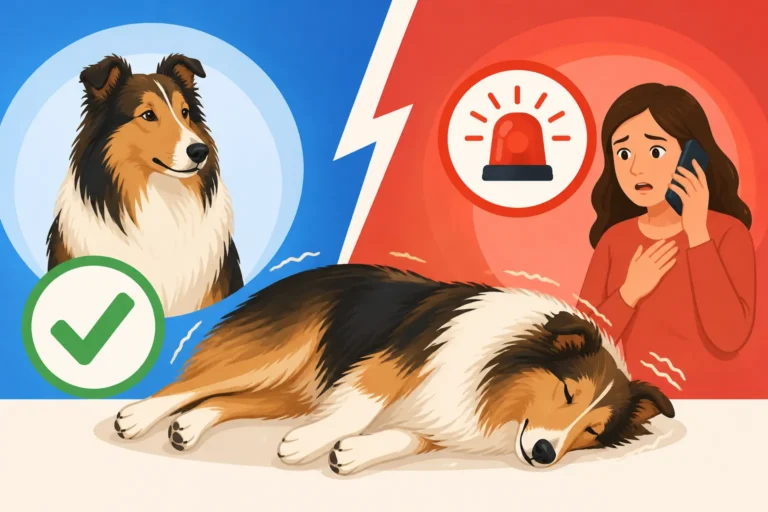
Signs of a Drug Reaction in an MDR1 Collie: Symptoms typically involve neurological impairment. These can include:
- Ataxia: Unsteadiness, stumbling, difficulty walking, falling over.
- Dilated Pupils: Pupils that are larger than normal and may not react to light.
- Blindness: Temporary or permanent vision loss.
- Excessive Drooling: Profuse salivation.
- Tremors or Seizures: Involuntary muscle contractions or full-body convulsions.
- Lethargy/Depression: Extreme tiredness, unresponsiveness, mental dullness.
- Coma: In severe cases, complete unconsciousness.
The onset of these signs can vary from minutes to hours after exposure, depending on the drug and dosage. For a deeper dive, check out Signs an MDR1 Collie Is Having a Drug Reaction.
Immediate Steps to Take: If you suspect your MDR1 Collie is having a drug reaction:
- Contact Your Vet Immediately: This is not a "wait and see" situation. Call your veterinarian or the nearest emergency veterinary clinic (like VCA or BluePearl Pet Hospital) right away. Describe the symptoms and mention the suspected drug exposure and your Collie's MDR1 status.
- Gather Information: If possible, have the drug packaging or name ready. Note the time of exposure and the onset of symptoms.
- Do NOT Induce Vomiting Unless Directed: Some substances can cause more harm coming back up. Only induce vomiting if explicitly told to do so by a veterinary professional.
- Transport Safely: If advised to come in, transport your Collie safely. They may be disoriented or unable to walk.
Preparation is key for emergencies. It’s wise to keep an emergency kit ready, including your Collie's medical records, a list of their medications, and their MDR1 test results. Knowing What a Collie Owner Should Carry to an Emergency Visit can save precious time. Many Collies who experience a reaction, particularly if caught early, can recover fully with aggressive supportive care. Whether an MDR1 Collie Recovers From a Reaction often depends on the speed and quality of veterinary intervention. This is another area where a comprehensive pet insurance plan from a provider like Healthy Paws can significantly ease the financial burden of emergency treatment, allowing you to focus on your Collie's recovery.
Comparative Table of Flea & Tick Active Ingredients for MDR1 Collies
To help you quickly discern between commonly used ingredients, here's a table summarizing their general safety for MDR1 Collies. This information is a guide, not a substitute for veterinary advice.
| Active Ingredient Group | Example Drugs/Brands | General MDR1 Safety | Notes |
|---|---|---|---|
| Isoxazolines | Afoxolaner (NexGard), Fluralaner (Bravecto), Sarolaner (Simparica), Lotilaner (Credelio) | Generally Safe | New class of oral preventatives. Specific mechanism of action that typically does not pose a risk to MDR1-affected dogs. Requires veterinary prescription. Often preferred by vets for MDR1 Collies due to excellent safety profile and efficacy. |
| Fipronil | Frontline Plus | Generally Safe | Topical spot-on. Works by affecting the insect nervous system. Very minimal systemic absorption, posing no known risk for MDR1 Collies. |
| Imidacloprid | Advantage II, K9 Advantix II (with Permethrin), Seresto Collar (with Flumethrin) | Generally Safe | Topical application. Minimal systemic absorption. No known risk for MDR1 Collies. (Note on K9 Advantix II: Permethrin is highly toxic to cats; use with extreme caution in multi-pet households). |
| Dinotefuran | Vectra 3D | Generally Safe | Topical spot-on. No known risk for MDR1 Collies. |
| Macrocyclic Lactones (High Dose) | Ivermectin (at >50 mcg/kg), Milbemycin Oxime (high dose for mites/worms), Selamectin (topical; some reported sensitivity) | HIGH RISK/Unsafe | These are the drugs of primary concern for MDR1 Collies. High doses of Ivermectin are neurotoxic. Even some formulations of Selamectin (e.g., Revolution) can cause sensitivity. Always consult your vet and clarify doses, especially for deworming beyond heartworm prevention. For questions on deworming, see Whether an MDR1 Collie Can Be Wormed Safely. |
| Macrocyclic Lactones (Low Dose) | Ivermectin (Heartgard), Milbemycin Oxime (Interceptor, Sentinel) | Generally Safe with Caution | Low doses used in monthly heartworm preventatives are generally safe for most MDR1 Collies, as the amount is too small to cause issues. However, some extremely sensitive individuals or those with other health issues might react. Always confirm with your vet, especially if your Collie has other health concerns. |
Disclaimer
The information provided in this article is for general informational purposes only and does not constitute veterinary medical advice. Always consult with a qualified veterinarian for any health concerns or before making any decisions about your Collie's medical care, including choice of medications. Your veterinarian can provide personalized advice based on your dog's specific health status and MDR1 genetic testing results.