Whether a Collie With Dermatomyositis Should Be Bred
It's incredibly tough when you're deeply invested in your Collie's health and future, and then faced with the complexities of a genetic condition like Dermatomyositis (DMS). For any dedicated breeder or loving owner, the question of whether to breed a Collie affected by or at risk for DMS is fraught with emotional and ethical considerations. This guide aims to thoroughly explore the challenges, responsibilities, and difficult decisions involved when Dermatomyositis enters the picture for breeding Collies.
Understanding Dermatomyositis in Collies
Dermatomyositis (DMS) is a hereditary, immune-mediated inflammatory disease that primarily affects the skin and muscles, and occasionally the blood vessels, in Collies and related breeds like Shetland Sheepdogs and Beaucerons. It's not just a simple rash; it's a chronic condition that can significantly impact a dog's quality of life. For Collie enthusiasts, understanding this disease is paramount because our beloved breed is disproportionately affected.
What is Dermatomyositis DMS
DMS typically manifests in Collie puppies or young adults, often between 7 weeks and 6 months of age, though it can appear later. The initial signs are usually skin lesions, which can be disheartening to discover on a beautiful, fluffy puppy. These lesions often show up on areas prone to trauma or friction, such as the face (especially around the eyes, muzzle, and ear tips), the bony prominences of the legs, tail tip, and sometimes on the trunk. You might notice redness, scaling, crusting, and hair loss, which can sometimes be mistaken for ringworm or other common skin issues. The problem is, these aren't just cosmetic; they can be uncomfortable, itchy, and even painful for the dog.
Beyond the skin, DMS can also affect the muscles. This can be more insidious, as muscle involvement might not be immediately obvious. It can lead to muscle atrophy, particularly in the face and chewing muscles, making it difficult for the dog to eat or even just express themselves. In severe cases, a Collie with Dermatomyositis might develop megaesophagus, a condition where the esophagus dilates and loses its ability to move food to the stomach effectively, leading to regurgitation and aspiration pneumonia. The varied and sometimes subtle symptoms make early diagnosis crucial, but also challenging.
The Genetic Basis of DMS in Collies
The heartbreaking reality of DMS is its genetic roots. It's a polygenic disease, meaning it's influenced by multiple genes rather than just one, which complicates breeding decisions significantly. While the exact interplay of all genes isn't fully understood, we do know that specific genetic markers, particularly those in the MHC (Major Histocompatibility Complex) region, play a significant role in a Collie's susceptibility to the disease. Researchers have identified several risk alleles (variants of genes) that, when inherited in certain combinations, can lead to a higher likelihood of a Collie developing DMS. For instance, the University of California, Davis (UC Davis) has been at the forefront of identifying these genetic markers, and their research has led to the development of a genetic test.
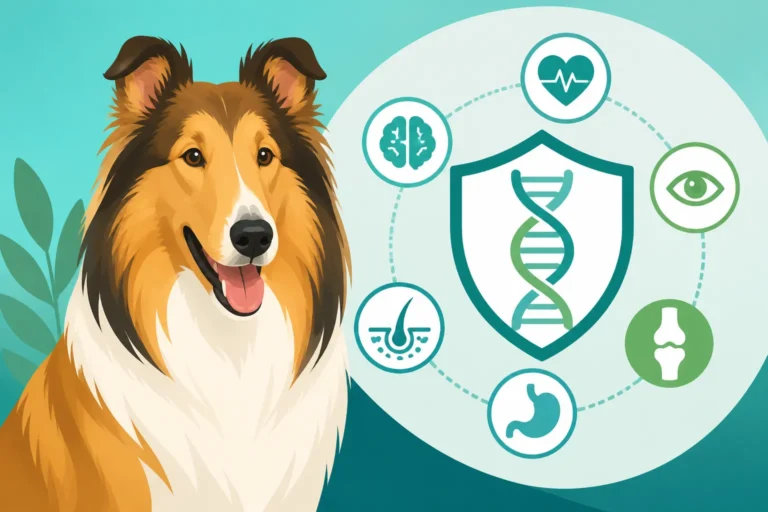
This test helps breeders and owners assess a Collie's genetic risk for developing DMS or passing it on to their offspring. The test typically looks at three key markers, often designated as A, B, and C, with different combinations indicating varying levels of risk. For example, a dog might be classified as low, moderate, or high risk depending on its genotype. It's not a simple "yes" or "no" answer like some other genetic tests; instead, it provides a probability. This means that even dogs with a lower genetic risk can still potentially develop DMS, and some with higher risk may not show severe symptoms. The presence of these genetic markers isn't a guarantee of disease, but rather an indication of predisposition. This intricate genetic picture is why making breeding decisions is so complex for this condition, making it essential to understand the full scope of Dermatomyositis and the Collie Risk Panel.
The Ethical Dilemma of Breeding a Collie with DMS
When a Collie is diagnosed with Dermatomyositis, or even identified as being at high genetic risk, it presents a profound ethical quandary for anyone considering breeding. On one hand, you have the desire to preserve valuable bloodlines and contribute to the breed. On the other, you have a solemn responsibility to promote health and prevent suffering. This is where the decision becomes incredibly difficult, requiring a careful balance of passion and pragmatism.
Health Implications for Affected Dogs
Living with DMS can be a lifelong journey of management and care for the affected Collie. The skin lesions, which might first appear subtly, can wax and wane, often flaring up during periods of stress, sun exposure, or illness. These flare-ups can be painful, leading to open sores, secondary bacterial infections, and permanent scarring. Imagine your beautiful Collie constantly battling itchy, crusty skin, needing special shampoos, topical creams, and sometimes even oral medications to keep the discomfort at bay. It's not a small ask; it's a significant commitment of time, effort, and financial resources.
Beyond the visible skin issues, the muscle involvement can be devastating. As we've discussed, a Collie with Dermatomyositis can experience profound muscle loss, which can be particularly noticeable in the head. Whether a Collie With Dermatomyositis Loses Muscle is a critical question, as it impacts their ability to chew, swallow, and even their overall demeanor. In severe cases, the muscle weakness can lead to difficulty walking, chronic pain, and a severely diminished quality of life. Managing these symptoms often involves expensive treatments, specialized diets, and ongoing veterinary care, which can include corticosteroids, immunosuppressants, and even physical therapy. Pet insurance providers like Healthy Paws can be a real lifeline for owners facing these kinds of long-term health challenges, helping to alleviate some of the financial burden associated with chronic conditions.
Impact on Offspring and the Breed
The decision to breed a Collie with DMS, or a known carrier, has far-reaching consequences that extend beyond just the individual dog and its immediate offspring. It impacts the entire breed. If you breed a dog with a high genetic risk for DMS, you're essentially increasing the prevalence of those risk alleles in the Collie gene pool. This means that more puppies will be born carrying these genes, and more Collies will potentially develop the debilitating disease down the line. It's a domino effect that can undermine years of effort by responsible breeders to improve breed health.
Understanding How Dermatomyositis Risk Is Scored in a Collie through genetic testing is crucial here. Breeders have a moral obligation to use these tools to make informed decisions. Producing puppies that will suffer from painful skin lesions, muscle atrophy, and potentially lifelong medication isn't responsible breeding. It leads to heartbreak for new owners, increased veterinary costs, and ultimately, a decrease in the overall health and well-being of the breed. Each decision to breed a high-risk dog contributes to the perpetuation of this complex and challenging disease, making it harder for future generations of Collies to live healthy, pain-free lives.
Navigating Breeding Decisions with DMS Risk
Given the serious nature of Dermatomyositis and its genetic complexity, making breeding decisions for Collies at risk requires careful thought, comprehensive testing, and a deep commitment to breed health. This isn't a decision to be taken lightly or in isolation; it often requires consulting with experienced breeders, geneticists, and veterinarians.
Genetic Testing and Risk Assessment
The first, and arguably most important, step in making any breeding decision involving DMS is thorough genetic testing. Reputable Collie breeders should be routinely testing their breeding stock for a range of genetic conditions, and DMS should absolutely be on that list. Remember, The Three Genetic Tests a Collie Breeder Owes You usually include MDR1, CEA, and DMS, at a minimum. The UC Davis genetic test for Dermatomyositis provides a genotypic risk score (e.g., AABBCC, AABBCP, etc.) which correlates to a low, moderate, or high risk of developing the disease.
It's vital to understand what these scores mean. A "low risk" dog is still a carrier of some risk alleles, just in a combination that makes them less likely to express the disease or pass on a high-risk combination. A "high risk" dog, even if outwardly healthy, carries significant genetic markers that predispose them to developing DMS and passing those genes on to their offspring. Using this information, breeders can strategically plan matings to reduce the risk of producing affected puppies. For instance, pairing a low-risk dog with another low-risk dog might be considered, but pairing a high-risk dog with any other dog carries a significant chance of producing affected puppies. This responsible approach to genetic screening is part of What the Collie DNA Health Panel Covers and is crucial for the future health of our breed.
Considerations for Breeders and Owners
For a Collie breeder, the ethical imperative is clear: the health and well-being of future generations must take precedence. If a Collie has been diagnosed with clinical DMS, regardless of its genetic score, the consensus among responsible breeders and veterinary geneticists is that it should absolutely not be bred. The potential for passing on a debilitating condition and causing suffering to future puppies is simply too great. This applies even if the dog has an otherwise outstanding pedigree or temperament. The traits we breed for should not come at the cost of health.
Even for Collies that are "at risk" but not clinically affected (e.g., moderate or high genetic risk scores), extreme caution is warranted. Breeding such a dog could be considered only under very specific and highly controlled circumstances, and typically only if an outcross to an unrelated, low-risk, thoroughly health-tested individual is absolutely necessary to bring in otherwise irreplaceable, vital genetics (which is rare). In such cases, the offspring must be rigorously tested, and placement would only be with owners fully educated on the risks and committed to neutering/spaying. Frankly, in most situations, it's far safer and more ethical to remove such dogs from a breeding program. Consider instead celebrating their wonderful qualities as beloved pets. Resources like Healthy Paws can provide peace of mind for owners of at-risk dogs, covering unexpected veterinary costs should DMS eventually manifest. It's a crucial consideration for anyone taking on a puppy from even a moderate-risk pairing.
When Breeding Might Be Considered and the Caveats
While the general recommendation leans heavily against breeding Collies with Dermatomyositis or high-risk genotypes, some advanced breeding programs might contemplate it under extremely specific and rare circumstances. This isn't about ignoring the risks, but about understanding the broader genetic landscape of the breed. For example, if a particular Collie carries truly unique and indispensable genetic diversity that is not found in other DMS-low-risk Collies, and its removal from the gene pool would lead to an even greater genetic bottleneck for the breed (e.g., in a critically endangered line), a highly experienced breeder might consider a very careful, limited breeding.
However, such a decision would involve stringent protocols:
- Only pairing with a completely DMS-clear, non-carrier mate. This minimizes the risk of passing on affected combinations.
- Testing all offspring. Every single puppy in the litter would need to be genetically tested for DMS risk.
- Strict spay/neuter contracts for all puppies. Any puppy produced from such a mating, especially those carrying risk alleles, would be placed on a non-breeding contract.
- Full transparency with puppy buyers. Potential owners would need to be thoroughly educated about the genetic risks, potential health issues, and their responsibility in managing a dog that might develop DMS.
- Consultation with veterinary geneticists. This is not a DIY decision. Expert guidance is non-negotiable.
This is an incredibly rare scenario, and one that most breeders would, and should, avoid. The simple truth is that Whether Two Low Risk Collies Can Produce an Affected Puppy demonstrates the complexity; even careful planning has its limits. The primary goal should always be to reduce the incidence of this painful disease, not to risk its perpetuation. Responsible breeders are working to breed down the DMS risk over generations, by making thoughtful, ethical choices today.
Supporting Collies with Dermatomyositis
Even if a Collie with Dermatomyositis shouldn't be bred, that doesn't diminish their worth as cherished family members. For those Collies who are diagnosed with DMS, whether they were intentionally bred or not, the focus shifts entirely to providing them with the best possible quality of life.
Management and Care for Affected Dogs
Managing Dermatomyositis in a Collie is often a lifelong commitment that requires a proactive and consistent approach. The goal is to minimize symptoms, prevent secondary infections, and keep the dog as comfortable as possible. This typically involves a multi-faceted approach:
- Veterinary Care: Regular check-ups with a veterinarian, and often a veterinary dermatologist, are essential. They can monitor the progression of the disease, adjust medications, and address any secondary issues.
- Medication: Treatment often includes corticosteroids to reduce inflammation, immunosuppressive drugs like pentoxifylline or azathioprine, and sometimes cyclosporine. Whether a Collie's Dermatomyositis Needs Lifelong Medication is a common question, and for many, the answer is yes, to keep symptoms under control.
- Topical Treatments: Medicated shampoos, conditioners, and soothing creams can help manage skin lesions, reduce itching, and prevent secondary infections.
- Sun Protection: Sun exposure can exacerbate skin lesions. Owners might need to limit outdoor time during peak sunlight hours or even use dog-specific sunscreens or protective clothing on sensitive areas. Whether Sun Makes a Collie's Dermatomyositis Worse is a crucial consideration for their daily routine.
- Nutrition: A high-quality diet, sometimes supplemented with omega-3 fatty acids, can support skin and coat health and overall immune function.
- Environmental Management: Reducing stress and providing a comfortable, clean living environment can also play a role in preventing flare-ups.
The costs associated with managing a chronic condition like DMS can be substantial, encompassing medication, specialized veterinary visits, and ongoing treatments. This is where pet insurance, such as a policy from Healthy Paws, can be incredibly valuable, helping to cover a significant portion of these expenses and allowing owners to focus on their Collie's care rather than the financial strain. Understanding What Treating a Collie's Skin Flare Costs can help owners prepare for the financial realities.
The Role of Responsible Ownership
Beyond the medical management, responsible ownership of a Collie with DMS involves unwavering advocacy and love. It means being attuned to their comfort, recognizing subtle changes in their condition, and working closely with your veterinary team. It also means educating others, including friends, family, and even other pet professionals, about your dog's specific needs.
Furthermore, contributing to research can make a huge difference. Organizations like the Collie Health Foundation actively fund studies into conditions like Dermatomyositis. By participating in research studies (if applicable and safe for your dog), or simply by sharing your experiences and genetic information with researchers (anonymously, of course), you can help advance our understanding of this complex disease and contribute to finding better treatments or even a cure. Every Collie owner plays a part in the health and future of the breed, whether through breeding decisions or dedicated care for an affected dog.
Dermatomyositis Risk and Breeding Decisions
Here's a quick overview of the implications for breeding based on a Collie's DMS genetic risk profile:
| DMS Genetic Risk Status (UC Davis) | Description | Breeding Recommendation |
|---|---|---|
| Affected (Clinical DMS) | Dog has been diagnosed with Dermatomyositis and shows symptoms (skin lesions, muscle atrophy, etc.). | DO NOT BREED. The primary concern is the welfare of the dog and its potential offspring. Breeding an affected dog would knowingly perpetuate a painful, debilitating genetic disease. |
| High Risk Genotype (e.g., AABB) | Dog carries a combination of risk alleles that gives it a very high predisposition to developing DMS. May or may not show clinical signs, but the risk is significant. | DO NOT BREED. While the dog might not be showing symptoms yet, it has a high chance of developing the disease and will pass on significant risk to all offspring. Ethical breeding prioritizes reducing the prevalence of severe genetic diseases. |
| Moderate Risk Genotype (e.g., AABC) | Dog carries some risk alleles, putting it at a moderate predisposition for DMS. Clinical signs are less likely than high-risk dogs but still possible. | Generally NOT Recommended. If considered at all, it would require pairing only with a proven DMS-clear, non-carrier mate, rigorous health testing of all offspring, and strict non-breeding contracts. This should only be done by highly experienced breeders with clear justification and geneticist consultation. |
| Low Risk Genotype (e.g., AACC) | Dog carries minimal risk alleles for DMS, making it unlikely to develop the disease or pass on high-risk combinations. | May be Considered. These dogs are generally considered suitable for breeding, provided they are clear of other significant genetic health issues and meet breed standards. The goal is to increasingly select for low-risk genotypes to improve overall breed health. |
Disclaimer
The information provided in this article is for educational purposes only and should not be considered a substitute for professional veterinary advice. Always consult with a qualified veterinarian or veterinary geneticist regarding your Collie's specific health concerns and breeding decisions. Genetic testing results and interpretations can be complex, and expert guidance is essential for making informed choices.