Whether a Collie’s Seizure Is an Emergency
The moment you see your beloved Collie suddenly collapse, stiffen, or start convulsing, it’s like your heart leaps into your throat. That terrifying sight of a seizure can leave any dog owner feeling helpless, panicked, and desperate for answers. This guide aims to cut through the fear and confusion, helping you understand what a Collie seizure looks like, when it becomes an immediate emergency, and the crucial steps you need to take to protect your furry family member.
Understanding What a Collie Seizure Looks Like
Witnessing your Collie have a seizure is incredibly distressing, and it's easy to feel overwhelmed. However, recognizing the different phases and types of seizures can help you stay a little calmer and provide vital information to your veterinarian. It’s not just about grand, dramatic convulsions; seizures can manifest in many subtle ways, too.
The Different Faces of Collie Seizures
When people think of a seizure, they often picture a "grand mal" or generalized seizure, where the dog loses consciousness and exhibits full-body convulsions. But seizures are neurological events, originating from abnormal electrical activity in the brain, and they don't always look the same.
- Generalized Seizures (Grand Mal): This is the most recognized type. Your Collie might collapse onto their side, become stiff, and then paddle their legs uncontrollably. You might see frothing at the mouth, vocalization (whining, crying), and involuntary urination or defecation. Their eyes might be open but unresponsive, or they could roll back. These typically last from a few seconds to a few minutes. Imagine your normally graceful Collie suddenly stiffening, then kicking out as if running in their sleep, but with an intensity that is unmistakably wrong. This is the classic presentation that sends most owners straight into a panic.
- Focal Seizures (Partial Seizures): These are often more subtle and can be harder to identify as a seizure. They involve abnormal electrical activity in only a localized part of the brain. Your Collie might twitch a specific limb, have facial muscle contractions (like repeated blinking or lip-licking), or exhibit unusual, repetitive behaviors such as tail chasing, fly biting, or staring blankly. They might remain conscious or have an altered level of consciousness. For example, your Collie might repeatedly snap at imaginary flies for no apparent reason, or one side of their face might seem to droop or twitch rhythmically. It's easy to mistake these for odd quirks or anxiety if you don't know what to look for, but they are just as much a seizure as a grand mal.
Phases of a Seizure Event
A seizure isn't just the main event; it actually has three distinct phases, and understanding them can help you observe and manage the situation better.
- Pre-Ictal Phase (Aura): This is the period before the actual seizure, and it can last from minutes to hours, or even days. Your Collie might show subtle behavioral changes. They might become restless, anxious, seek comfort from you, or seem withdrawn and confused. Some dogs might pace, drool more than usual, or even appear to "know" something is coming. You might notice your normally aloof Collie suddenly glued to your side, or a typically playful pup becoming strangely quiet. Paying attention to these subtle cues can sometimes give you a precious few moments to prepare.
- Ictal Phase (The Seizure Itself): This is the actual seizure, characterized by the physical manifestations described above. It's the part that is most frightening to witness. During this phase, it’s critical to ensure your Collie's safety and avoid getting bitten yourself. Keep a close eye on the clock, as the duration is a key piece of information for the vet. Try to notice if one side of the body is more affected, or if they lose consciousness completely.
- Post-Ictal Phase: This is the recovery period after the seizure, and it can also vary greatly in duration, from minutes to several hours or even a full day. Your Collie might appear disoriented, confused, restless, or even temporarily blind or deaf. They might pace aimlessly, bump into furniture, drink excessive amounts of water, or have a ravenous appetite. It's not uncommon for them to be exhausted and sleep deeply. It's heartbreaking to see your usually sharp Collie seem utterly lost in their own home, perhaps walking into walls or failing to respond to their name. This phase can be just as alarming as the seizure itself, especially if it's prolonged or severe.
Many Collies diagnosed with epilepsy experience their first seizure around 1 to 5 years of age. If your Collie is showing signs of disorientation or weakness after a seizure, it’s always best to contact your vet.
When a Collie's Seizure Demands Immediate Veterinary Attention
While all seizures are serious and warrant veterinary consultation, some scenarios are genuine emergencies that require immediate intervention. Knowing the difference can save your Collie's life. This is the part that often confuses owners: when is it okay to wait until morning, and when do you rush to the emergency clinic?
Seizure Duration: The Critical Time Limit
The single most important factor in determining if a seizure is an emergency is its length. Time is truly of the essence here, as prolonged seizure activity can lead to irreversible brain damage and other life-threatening complications.
- Status Epilepticus: If a seizure lasts for five minutes or longer, it is considered an emergency called status epilepticus. This is a medical crisis, and you need to get your Collie to an emergency veterinary clinic immediately. During this prolonged electrical storm in the brain, the body's temperature can rise dangerously, the brain can be deprived of oxygen, and irreversible damage can occur. Do not wait for it to stop; load your Collie safely into your car and go. Imagine your Collie seizing for what feels like an eternity, far beyond the typical minute or two. This isn't just a "long seizure"; it's a critical medical event that needs urgent professional help.
- Multiple Seizures Without Full Recovery (Cluster Seizures): This is another urgent situation. If your Collie has two or more seizures within a 24-hour period, especially if they do not fully regain consciousness or return to their normal self between episodes, it's called cluster seizures. This also constitutes a veterinary emergency. Even if each individual seizure is short, the repeated stress on the brain and body can be devastating. Your Collie might seem to recover only to crash into another seizure a short time later, unable to catch a break. This repeated trauma is extremely dangerous and needs prompt medical attention.
Other Alarming Signs to Watch For
Beyond duration and frequency, certain accompanying signs can indicate a seizure is more severe or signaling another underlying health crisis.
- High Body Temperature: During a prolonged seizure, a dog's body temperature can skyrocket. Overheating can cause brain swelling and further damage. If your Collie feels excessively hot during or after a seizure, this is a red flag.
- Difficulty Breathing: While some shallow or irregular breathing can occur during a seizure, severe difficulty breathing, gasping, or blue gums (cyanosis) indicate a critical emergency requiring immediate veterinary care.
- Severe Post-Ictal Disorientation or Weakness: While some confusion is normal in the post-ictal phase, extreme disorientation, profound weakness, inability to stand, or other neurological deficits that persist for a long time are worrying. If your Collie is completely unresponsive or seems to have lost all coordination hours after a seizure, seek help.
- Head Trauma or Injury During Seizure: If your Collie hit their head or sustained any injury during the convulsion (e.g., falling down stairs, hitting sharp furniture), this adds another layer of emergency to the situation, as they could have internal injuries or further brain trauma.
- First-Time Seizure in an Older Collie: While epilepsy typically starts in younger dogs, a first seizure in an older Collie (generally over five or six years old) is particularly concerning. It might indicate a more serious underlying cause like a brain tumor, stroke, or other metabolic disease, and warrants an urgent diagnostic workup.
When you're dealing with these kinds of emergencies, having pet insurance like Healthy Paws can be an absolute lifesaver. The last thing you want to worry about when your Collie is in crisis is the financial burden of an emergency vet visit. Planning ahead for potential health issues, especially with a breed prone to certain conditions, is a really smart move.
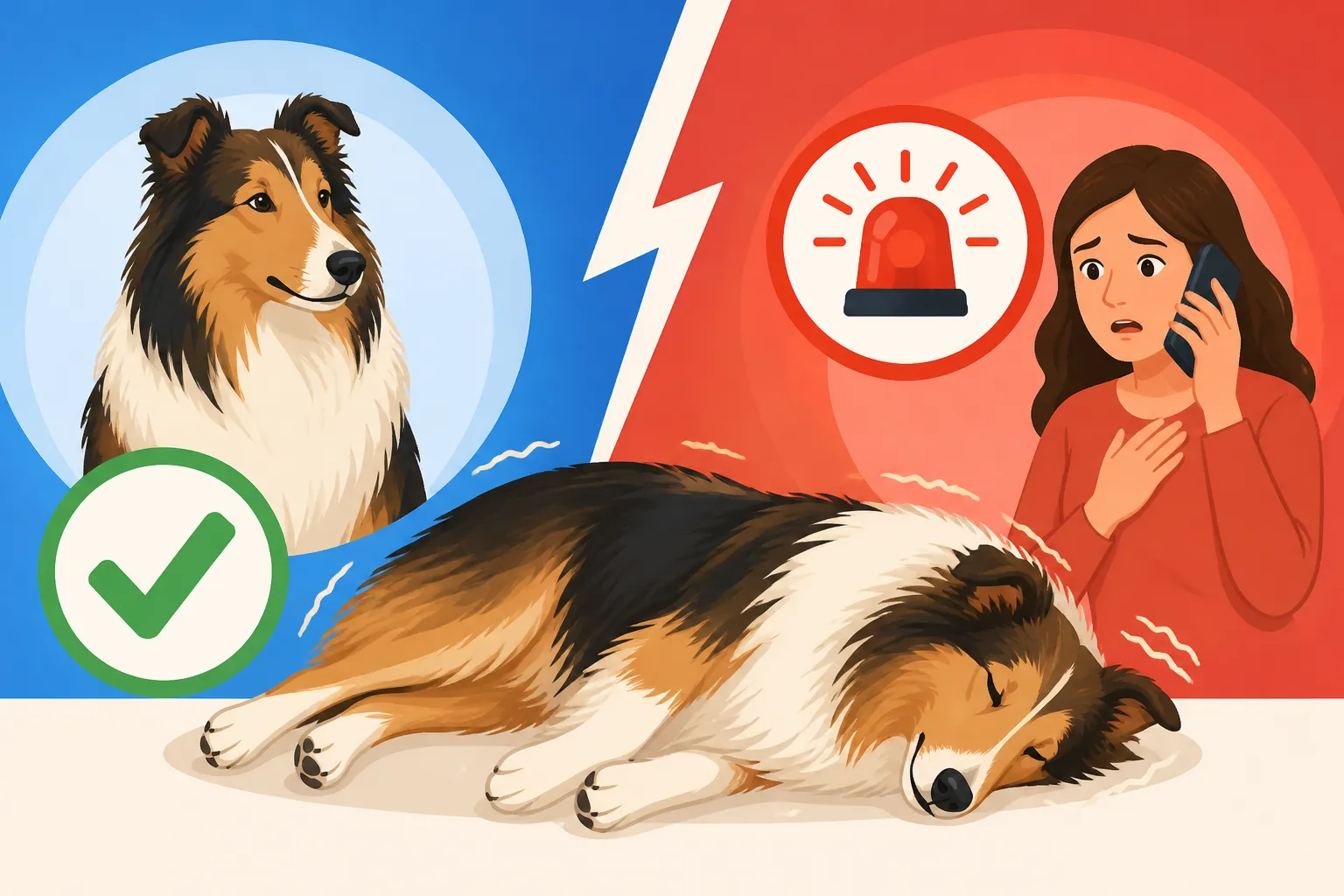
Here's a quick comparison to help you gauge the severity:
| Feature | What to Look For (Non-Emergency) | What Indicates an Emergency |
|---|---|---|
| Duration | 30 seconds to 3 minutes | 5 minutes or longer (Status Epilepticus) |
| Frequency | Isolated incident, full recovery between episodes | Two or more within 24 hours without full recovery (Cluster Seizures) |
| Recovery (Post-Ictal) | Disoriented, tired, hungry for a few minutes to hours | Profound weakness, blindness, extreme disorientation lasting hours or unresolving; no return to normal between episodes |
| Associated Signs | Foaming, paddling, vocalization, urination/defecation | High body temperature, severe breathing difficulty, blue gums, significant injury during seizure |
| Age of Onset | 1-5 years typical for idiopathic epilepsy | First seizure in a Collie over 5-6 years old |
Immediate Steps to Take During a Collie's Seizure
When your Collie is seizing, panic is a natural reaction, but what you do in those crucial moments can make a difference for their safety. Your primary goals are to protect them from injury, keep yourself safe, and gather vital information for the vet.
Prioritizing Safety for Your Collie and Yourself
It’s an instinct to want to comfort your dog, but during a seizure, they are unconscious and can't control their movements. Attempting to hold them or put your hands near their mouth can result in a serious bite, even from the gentlest Collie.
- Create a Safe Space: Gently move any furniture or objects away from your Collie that they could hit themselves on. If they are on a hard surface, you can try to slide a blanket or towel underneath them, but do not try to move them aggressively or hold them down. The goal is to cushion their head and body if possible, without risking injury to yourself.
- Do Not Restrain or Interfere: Never put your hands in your Collie's mouth. Despite the common misconception, dogs cannot swallow their tongues during a seizure. You are far more likely to get bitten severely. Just let the seizure run its course, focusing on protecting them from external harm.
- Minimize Sensory Overload: Dim the lights, turn off loud music or the television, and speak in a calm, soothing voice if you speak at all. While your Collie is unconscious, reducing external stimuli can sometimes help them recover more smoothly into the post-ictal phase.
- Time the Seizure: This is arguably the most critical piece of information you can provide to your vet. Use a stopwatch or your phone to accurately time the entire ictal phase, from start to finish. If possible, note down the specific movements or behaviors you observe. Did they paddle all four legs, or just twitch one side of their face? Did they vocalize? Did they lose bladder or bowel control? This information is invaluable for diagnosis and treatment.
What to Do After the Seizure Has Ended
Once the actual convulsing stops, your Collie will enter the post-ictal phase. This is still a vulnerable time for them.
- Stay Calm and Reassure: Your Collie will likely be confused, disoriented, or even temporarily blind or deaf. Speak to them gently, in a soft, reassuring voice. Avoid sudden movements or loud noises that could startle them further. They might not recognize you immediately.
- Offer Water (Carefully): Many Collies are extremely thirsty after a seizure. Offer a small amount of fresh water in a bowl. If they are still very disoriented or wobbly, hold the bowl for them to prevent them from stumbling or inhaling water if they drink too quickly.
- Guide, Don't Push: If your Collie is pacing or bumping into things, gently guide them away from obstacles, but let them move at their own pace. Do not force them into a crate or try to confine them if they are agitated, as this could cause more stress or lead to accidental injury.
- Monitor for Recovery: Continue to observe your Collie carefully. How long does the disorientation last? Do they return to their normal self within minutes, or do they remain out of it for hours? Note down the entire duration of the post-ictal phase. This prolonged observation helps your vet understand the seizure's impact.
- Contact Your Veterinarian: Even if the seizure was short and your Collie seems to recover well, you should always contact your regular veterinarian to report the incident. They can advise you on whether an immediate visit is necessary or if you can monitor at home and schedule an appointment soon. If any of the emergency criteria (like a seizure lasting over 5 minutes or cluster seizures) were met, call the emergency vet while you're driving. Having your vet’s emergency number readily available, perhaps even as a sticker on your fridge, is a small but crucial step in preparedness. Many Collie owners keep a seizure log, detailing the date, time, duration, and observations of each episode, which can be immensely helpful for tracking patterns and assessing medication effectiveness if treatment becomes necessary.
Remember that Collies, especially those carrying the MDR1 mutation, can be sensitive to certain medications, including some anti-seizure drugs. Always ensure your vet is aware of your Collie's full genetic history, and consider getting your Collie tested for MDR1 if you haven't already. You should always ensure that MDR1 status is flagged at the clinic.
Veterinary Intervention and Long-Term Management of Seizures
Once you've navigated the immediate crisis of a Collie seizure, the next step is typically a thorough veterinary evaluation. This can be a journey of diagnostics and management, but with the right approach, many Collies with seizure disorders live full and happy lives.
What to Expect at the Vet
When you bring your Collie in after a seizure, especially if it was an emergency, the veterinary team will work quickly to assess the situation.
- Initial Assessment: The vet will perform a comprehensive physical and neurological exam. They'll check vital signs, assess your Collie's mental state, coordination, and reflexes. This helps rule out non-seizure causes of collapse or identify any neurological deficits.
- Diagnostic Testing: Depending on your Collie's age, medical history, and the nature of the seizure, a variety of tests might be recommended.
- Bloodwork: This usually includes a complete blood count (CBC) and a biochemistry panel to check organ function (liver, kidneys), blood sugar levels, electrolytes, and rule out metabolic causes like liver shunt, hypoglycemia, or severe kidney disease. They might also check thyroid levels, as Whether a Collie Gets Thyroid Disease can sometimes present with neurological signs.
- Urinalysis: To assess kidney function and rule out urinary tract infections.
- MDR1 Testing: If your Collie's MDR1 status is unknown, or if they've already been diagnosed with epilepsy, your vet will carefully consider this when prescribing medications. This is especially vital since certain anti-seizure drugs can be affected by the MDR1 mutation.
- Advanced Imaging (MRI/CT): If bloodwork doesn't reveal a cause, or if the seizures are focal, severe, or occur in an older Collie, your vet might recommend an MRI or CT scan of the brain. This helps to identify structural issues like brain tumors, inflammation (encephalitis), stroke, or hydrocephalus. These specialized tests can be expensive, which is where having a robust pet insurance policy like Healthy Paws can truly make a difference, helping to cover unexpected costs for these in-depth diagnostics.
- Cerebrospinal Fluid (CSF) Analysis: Sometimes, if inflammation or infection of the brain and spinal cord is suspected, a sample of CSF might be taken and analyzed.
- Diagnosis of Epilepsy: If all other causes are ruled out, and your Collie experiences recurrent seizures (typically more than one, often unprovoked, and starting at the typical age of 1-5 years), they may be diagnosed with idiopathic epilepsy. This means the seizures have no identifiable underlying cause, but are likely genetic. It's not uncommon for seizures to start at a similar age.
Managing Seizures and Long-Term Care
For Collies diagnosed with epilepsy or a seizure disorder, long-term management focuses on reducing the frequency, severity, and duration of seizures, improving their quality of life.
- Anti-Epileptic Drugs (AEDs): If your Collie's seizures are frequent (e.g., more than once every 1-3 months), severe, or cluster, your vet will likely recommend starting anti-epileptic medication. Common AEDs include phenobarbital, potassium bromide, levetiracetam (Keppra), zonisamide, and gabapentin. The choice of medication will depend on several factors, including the type of seizures, your Collie's overall health, and their MDR1 status. For Collies, specifically, ensuring that Whether an MDR1 Collie’s Seizure Drugs Need Adjusting are adjusted is paramount to avoid potentially dangerous drug interactions. It can take time and adjustment to find the right dosage and combination of drugs that control seizures with minimal side effects.
- Seizure Log: Keeping a detailed seizure log is crucial for management. Record the date, time, duration, type of seizure, any observed triggers, and the post-ictal recovery time. This log helps your vet assess the effectiveness of medication and make informed adjustments.
- Regular Veterinary Check-ups: Your Collie will need regular check-ups, often including blood tests, to monitor drug levels (for some AEDs) and assess liver and kidney function, as some medications can have side effects.
- Lifestyle Adjustments: While not a cure, certain lifestyle factors can help manage seizures.
- Consistent Routine: A predictable routine for feeding, exercise, and medication can help reduce stress and potential triggers.
- Avoid Triggers: Some Collies might have identifiable triggers, such as stress, excitement, certain foods, or even flashing lights. Observing and avoiding these can be beneficial.
- Nutritional Support: While no specific diet cures epilepsy, some anecdotal evidence suggests certain supplements (e.g., omega-3 fatty acids, MCT oil) might be supportive. Always discuss any supplements with your vet first.
- Emergency Medication: Your vet might prescribe a "rescue" medication, such as rectal diazepam or intranasal midazolam, to administer at home if your Collie has a prolonged seizure (over 3-5 minutes) or a cluster of seizures. This can help stop the seizure and prevent a trip to the emergency clinic. Knowing when and how to administer this is a critical part of your emergency preparedness plan, and your vet will walk you through the specifics.
- Proactive Planning: It's a good idea to have a plan in place for emergencies. Knowing where your nearest 24/7 veterinary emergency clinic is, having their number saved, and being prepared for potential costs can alleviate stress. An emergency fund or pet insurance like Healthy Paws can cover the significant expenses associated with diagnostic tests, medications, and emergency visits. Knowing that Healthy Paws has your back can bring immense peace of mind.
Managing a Collie with a seizure disorder is a team effort between you and your vet. It requires patience, diligence, and a commitment to observation and care. While it can be challenging, seeing your Collie enjoy their life despite their condition is incredibly rewarding.
Disclaimer
This article is intended for informational purposes only and does not constitute professional veterinary advice. Always consult with a qualified veterinarian for any health concerns or before making any decisions related to your Collie's medical care. In case of a suspected emergency, contact your veterinarian or an emergency veterinary clinic immediately.