Whether Ignoring a Collie’s Bark Works
Oh, the infamous bark! If you live with a Collie, you’ve undoubtedly experienced it. That deep, resonant "WOOF!" that can startle you out of a peaceful nap, or the more insistent, higher-pitched series of barks when they're trying to tell you something (or everything). It's a common frustration for so many Collie owners, and one of the most frequent pieces of advice you'll hear is, "Just ignore it!" But does ignoring a Collie's bark actually work? This guide will dive deep into the nuances of Collie vocalizations and explore when ignoring might be a viable strategy, when it's utterly counterproductive, and what truly effective solutions look like.
Understanding Why Your Collie Barks It's Not Always for Attention!
Before we even consider ignoring the bark, we need to understand why our Collies bark in the first place. It's easy to assume they're just being "naughty" or "stubborn," but more often than not, there's a legitimate reason behind their vocalizations. Collies, by nature, are communicative dogs. They were bred to work with people, to protect and guide livestock, and that often involved using their voices.
The Instinctual Bark: Warning, Herding, and Communication
Think about the history of the Collie. These magnificent dogs were originally developed to herd sheep in the Scottish Highlands. Their job wasn't just to move the sheep; it was also to alert the shepherd to potential dangers, to keep the flock together, and to communicate across vast distances. This deeply ingrained instinct is still very much alive in our modern-day companion Collies.
When your Collie barks at the mail carrier, a squirrel scampering across the yard, or even a new sound outside, they're often acting as your family's personal alarm system. They’re saying, "Hey, something's different! I need to tell you about it!" This isn't necessarily a bad thing; it's part of their breed heritage. They want to protect their "flock"—you and your family. If you notice your Collie circling or staring intently at something while barking, that's often their herding instinct kicking in, trying to gather or control the perceived "stray." This type of bark isn't usually attention-seeking in the way we often think of it; it's a deep-seated behavioral response.
Barking for Needs: Boredom, Frustration, and Anxiety
Beyond instinct, Collies bark to express a wide range of needs and emotions. Sometimes, a bark is a direct plea for help or interaction. Imagine your Collie pacing around, nudging your hand, and then letting out a sharp "woof!" This might be them saying, "I need to go outside!" or "My water bowl is empty!" These are simple, direct communications of a need.
However, a more persistent or generalized bark can signal deeper issues. A bored Collie, left alone with no mental or physical stimulation, might bark simply to alleviate their own boredom. It's a self-stimulating behavior, a way to make some noise and feel like they're doing something. This is especially true for an intelligent breed like the Collie, who thrives on mental engagement. If your Collie isn't getting enough physical exercise and mental workouts, they're likely to find their own "entertainment," and barking is a common outlet.
Frustration is another huge factor. Your Collie might bark relentlessly if they can see a desired object or person but can't reach them. Perhaps you're on a video call, and they want your undivided attention. They might bark, escalate their volume, and get increasingly agitated. Then there's anxiety. Separation anxiety often manifests as barking, whining, and destructive behaviors when you leave the house. A Collie experiencing fear (of thunder, fireworks, or a strange new object) might also bark as a self-soothing mechanism or an attempt to make the scary thing go away. In these cases, ignoring the bark doesn't address the root cause and can actually make the anxiety worse. You can learn more about this by reading Whether a Collie Is Sensitive to Household Tension or Whether a Collie Gets Separation Anxiety.
The Learned Bark: When Attention-Seeking Kicks In
This is often the type of barking people hope to address by ignoring it. Collies are incredibly smart and observant. They learn quickly what behaviors get them what they want. If your Collie barks at you, and you immediately look at them, talk to them (even to tell them "no"), or give them whatever they're demanding, you've just reinforced that barking works. Even negative attention is attention, and for some dogs, any interaction is better than none.
Think about these scenarios:
- Your Collie barks at you while you're eating dinner, and you toss them a bite.
- They bark when you're on the couch, and you immediately get up to play.
- They bark by the door, and you let them out instantly.
In these situations, your Collie has successfully "trained" you to respond to their bark. This learned behavior can quickly become a habit, and your Collie will utilize this highly effective communication tool whenever they desire something. This is the prime candidate for an "ignoring" strategy, but it requires incredible consistency and understanding of what you're truly ignoring. Why a Collie Barks covers these motivations in more detail.
When "Ignoring" a Collie's Bark Can Actually Work And When It's a Disaster
So, you've decided to try the "ignore it" method. It sounds simple enough, right? Just pretend your dog isn't making that deafening racket. But as any seasoned Collie owner knows, it's rarely that straightforward. The key lies in which bark you're ignoring and how you're doing it.
The Right Kind of Bark to Ignore: Extinction Bursts and Attention-Seeking
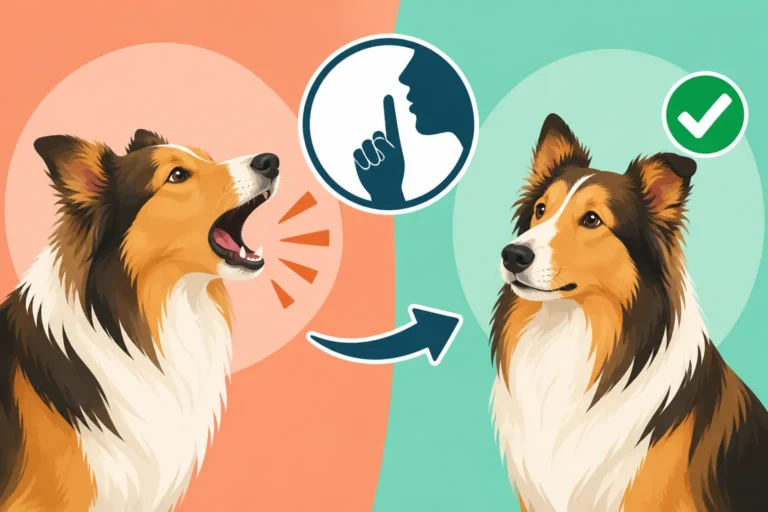
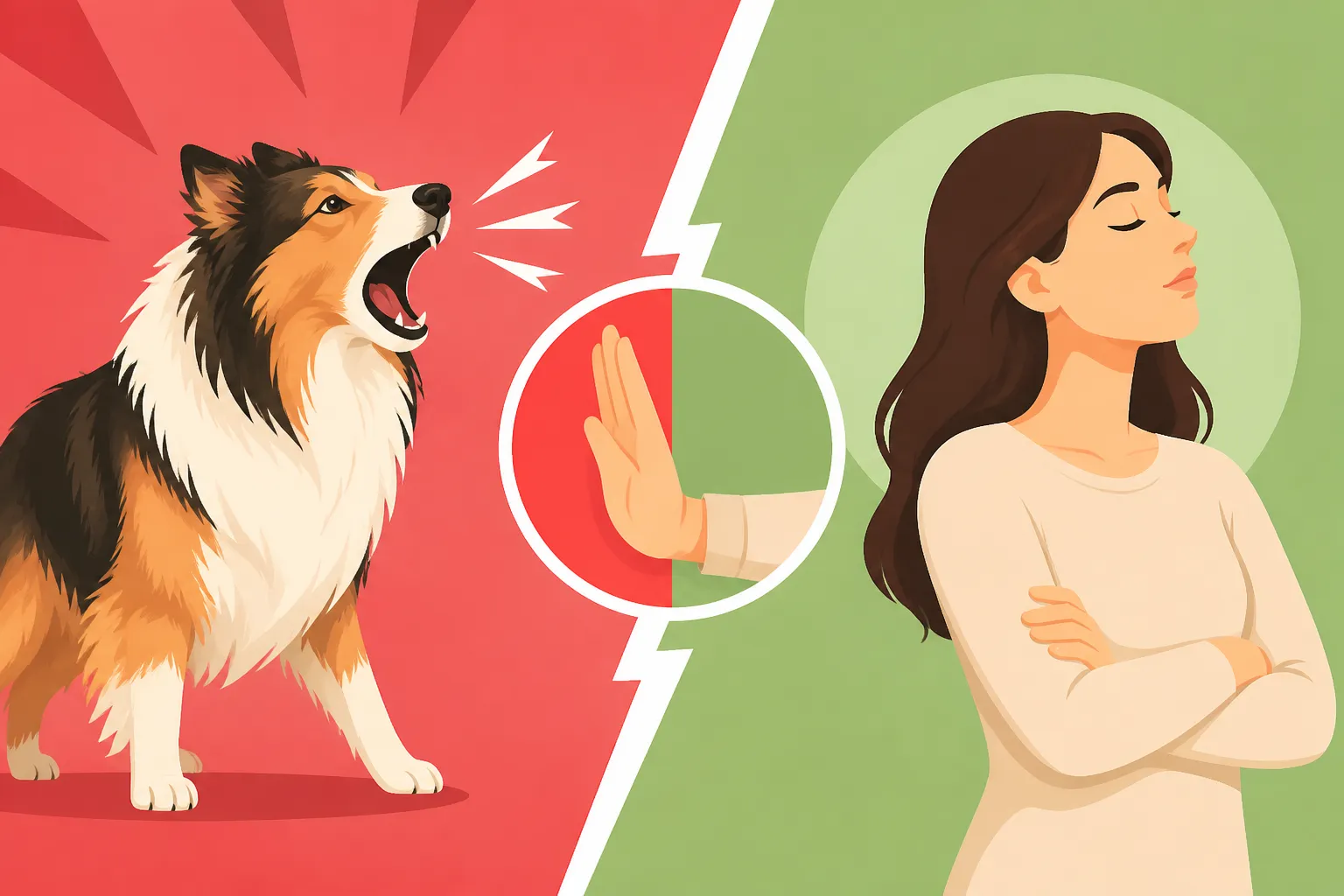
Ignoring is primarily effective for barks that are purely attention-seeking. This means your Collie is barking at you to get a reaction, a treat, playtime, or to be let out. The moment they bark, you must become a statue. No eye contact, no verbal cues, no touching, no looking in their direction. Turn your back, walk out of the room if possible, or engage in a quiet activity that clearly signals their barking is having no effect on you.
This is where the concept of an "extinction burst" comes in, and it's absolutely crucial to understand. When you start ignoring a behavior that previously worked, your Collie will likely try harder at first. They'll think, "My usual bark isn't working, maybe I need to bark louder! Or faster! Or jump up!" It will feel like things are getting worse before they get better. This is completely normal and means your strategy is actually having an effect. If you give in during this extinction burst—even once—you've just taught your Collie that if they bark long enough and loud enough, they will eventually get what they want. This makes the barking problem much harder to solve in the future, as they've learned to be even more persistent.
Consistency is paramount. Every single person in the household must be on board and ignore the attention-seeking bark in the exact same way, every single time. It's tough, it's annoying, and it requires immense patience, but for purely attention-seeking barks, it's often the most effective method. For example, if your Collie barks at the doorbell or at people walking past the window for attention, you might try a modified ignoring method combined with management. Reading Whether a Collie Barks at the Doorbell might give you more ideas.
Why Ignoring Other Barks Is Harmful And What to Do Instead
Here’s where ignoring becomes a dangerous and counterproductive strategy. You absolutely should not ignore barks that signal distress, pain, fear, or an urgent need.
- Fear/Anxiety Barks: If your Collie is barking out of fear (e.g., during a thunderstorm, at a new object they find scary), ignoring them will only confirm their fear and make them feel abandoned. Their anxiety will likely escalate, potentially leading to destructive behaviors or even aggression. Instead, you need to create a safe space, comfort them (without overly rewarding the fear), and potentially engage in counter-conditioning or desensitization if the fear is specific. Learn more about building confidence in How to Build Confidence in a Nervous Collie.
- Pain/Illness Barks: If your Collie suddenly starts barking or vocalizing in a way that's unusual for them, and there's no obvious external trigger, never ignore it. They could be in pain, feeling unwell, or experiencing a medical emergency. Always investigate new or unusual barking.
- Urgent Needs: If your Collie is barking to go to the bathroom, especially if they're typically well house-trained, ignoring them can lead to accidents and undue stress. They are communicating a basic need. Similarly, if they're barking because they're trapped, tangled, or need help, ignoring them is cruel.
For barks stemming from boredom or lack of stimulation, ignoring them won't solve the problem; it will only create a more frustrated, perhaps even destructive, dog. Instead of ignoring, you need to meet their needs. This means providing adequate physical exercise, mental enrichment through training and puzzle toys, and consistent, positive interaction. A bored Collie might bark at nothing in particular, and simply ignoring them won't make them stop. You need to give them appropriate outlets for their energy and intelligence. We talk about How Often a Collie Barks at Nothing in another article, and the sheer volume can be overwhelming.
The Challenge of Consistency: The Human Factor
Let's be real: ignoring a barking Collie is incredibly difficult. Their barks are loud, often persistent, and designed to get a reaction. Your resolve will be tested. Many owners try to ignore, but then give in "just this once" because they can't take the noise anymore, or they have guests, or they're trying to work. This inconsistency is actually worse than never trying to ignore at all. Why? Because you've just taught your Collie that if they keep barking even longer, you'll eventually cave. You've reinforced persistence.
For this strategy to work, every single person who interacts with the Collie – adults, children, visitors – must understand and commit to the "ignore" rule for specific types of barking. A single slip-up can undo days or weeks of hard work. This makes it challenging in busy households or when you're just plain exhausted. It’s also much harder to ignore if your Collie's barking is disturbing neighbors, as discussed in Whether a Collie Barks While You Are Out.
A Holistic Approach: Beyond Just Ignoring the Bark
While strategically ignoring purely attention-seeking barks can be a tool in your training arsenal, it's rarely a standalone solution for a vocal Collie. A truly effective approach involves understanding, prevention, and proactive training.
Proactive Management and Enrichment
The best way to deal with unwanted barking is to prevent it from happening in the first place. This means ensuring your Collie's physical and mental needs are consistently met. A tired, mentally stimulated Collie is a quiet Collie.
- Exercise: Collies need a good amount of physical activity. A brisk walk or a vigorous play session can make a huge difference. Don't underestimate the power of physical exertion to reduce barking born of pent-up energy.
- Mental Stimulation: This breed thrives on having a "job." If they don't have one, they'll invent one, and that often involves barking. Engage their minds with training sessions, puzzle toys, and scent work. These activities tire a dog out far more effectively than just physical exercise alone. Think about it: Forty Five Minutes a Day, and Half of It in Its Head is a good rule of thumb. Invest in interactive feeders or treat-dispensing toys that make your Collie work for their food. Brands you can find on Amazon, for instance, offer a fantastic selection of puzzle feeders that can keep a smart Collie engaged for a good chunk of time. Whether Puzzle Feeders Tire a Collie is a great article if you're looking for more ideas on this front.
- Environmental Management: If your Collie barks excessively at things outside the window, consider blocking their view with curtains or window film. If sounds trigger barking, use white noise or classical music to mask external noises. For doorbell barking, place a treat jar near the door and reward quiet behavior before they bark when someone approaches.
Teaching an Alternative Behavior and a "Quiet" Cue
Instead of just waiting for your Collie to stop barking so you can reward silence, you can actively teach them a "quiet" cue. This puts you in control and gives your Collie a clear understanding of what you want.
Here’s a simple way to teach "quiet":
- Trigger a Bark: Have someone ring the doorbell or knock lightly (or use another common bark trigger).
- Wait for a Pause: Let your Collie bark a few times, then wait for even a tiny pause in their barking. This might be just a breath.
- Mark and Reward: The instant they are quiet, say "Quiet!" (or your chosen cue) and immediately give them a high-value treat.
- Repeat and Lengthen: Repeat this many times. As they start to understand, gradually increase the length of time they need to be quiet before they get the treat.
- Practice in Different Scenarios: Once they're consistent, practice in different environments with varying distractions.
Another approach is to teach them an incompatible behavior. If your Collie barks when guests arrive, teach them to go to their mat or bed and stay there quietly for a treat. This gives them something specific to do that can’t be combined with barking. For this, consistent positive reinforcement training is essential. Online training platforms, such as BAXTER & Bella, often provide structured courses and live coaching that can guide you through teaching "quiet" and other polite behaviors. They often have resources that help you troubleshoot common barking issues with professional guidance. For more on this, check out Whether a Collie Can Be Taught a Quiet Cue.
Seeking Professional Guidance
If your Collie's barking is extreme, persistent, causing significant stress to you or your neighbors, or is accompanied by other worrying behaviors (like destructive tendencies, excessive panting, or fearfulness), it's always best to seek professional help. A certified professional dog trainer or a veterinary behaviorist can help you identify the root cause of the barking and develop a tailored behavior modification plan. They can differentiate between attention-seeking, anxiety-related, or fear-based barking and guide you on the most effective, humane strategies. Don't feel like a failure for needing help; sometimes an outside perspective and expert knowledge are exactly what's needed to unlock a breakthrough.
| Type of Barking | When to Consider "Ignoring" (With Caveats) | When to Actively Address (Do NOT Ignore) | Recommended Approach |
|---|---|---|---|
| Attention-Seeking | Yes, if 100% consistent | Never ignore if it leads to frustration/escalation | Become a "boring statue," no eye contact/verbal cues. Reward silence. Teach "quiet" cue. Ensure all needs are met. |
| Boredom/Frustration | Rarely effective, can worsen | Always address | Increase physical exercise and mental enrichment (puzzle toys, training). Teach alternative, desirable behaviors. Manage environment. |
| Alert/Territorial | Only if excessive and unwanted | Address if it's causing distress or is uncontrollable | Manage triggers (window film, white noise). Teach a "thank you, quiet" cue. Desensitize to triggers. |
| Fear/Anxiety | Absolutely NO | ALWAYS address immediately | Identify trigger. Create safe space. Comfort (without reinforcing fear). Counter-condition, desensitize. Seek professional help for severe cases. |
| Pain/Illness | Absolutely NO | ALWAYS investigate immediately | Rule out medical issues with a vet visit. |
| Urgent Need (e.g., Potty) | Absolutely NO | ALWAYS respond appropriately | Reinforce proper communication for needs (e.g., ringing a bell to go out). |
Ultimately, ignoring a Collie's bark can be a powerful tool, but it's like using a precise surgical instrument rather than a blunt hammer. It has its place for specific, learned attention-seeking behaviors, but it requires unwavering consistency and a deep understanding of your dog's motivations. For many other types of barking, ignoring is not only ineffective but can be detrimental to your Collie's well-being and your bond with them. The most successful approach is always multifaceted: meeting their physical and mental needs, managing their environment, and teaching them what you do want them to do, rather than just punishing what you don't. Your Collie is trying to tell you something, and it's our job to figure out what that is.
Disclaimer
This article is for general informational purposes only and does not constitute professional advice. Laws, prices and regulations vary by location and change over time. Consult a qualified professional for guidance on your specific situation.