A Collie Is Never Trimmed and Never Shaved
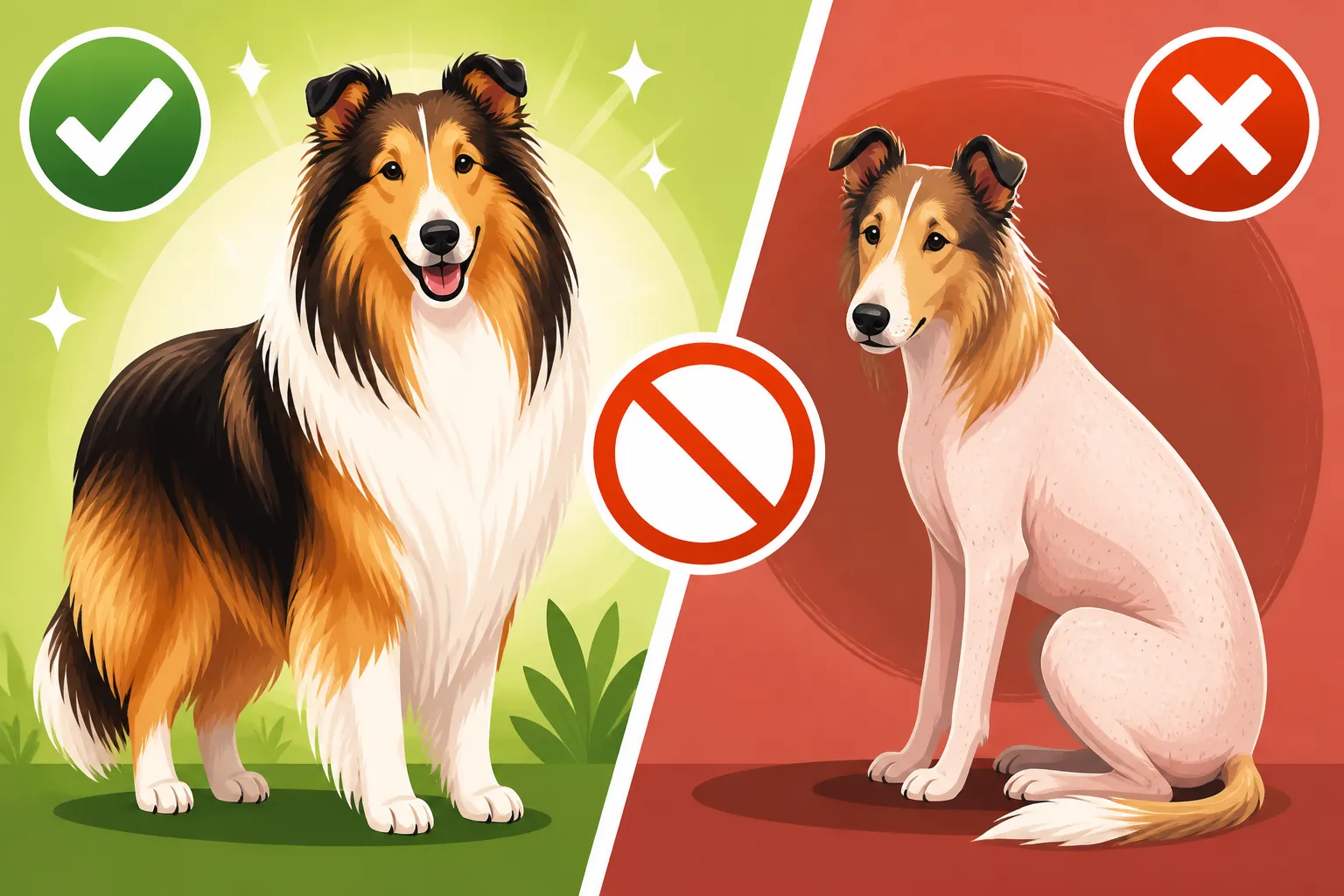
One of the most disheartening things I hear as a Collie enthusiast and long-time owner is when someone is considering shaving their beautiful, majestic dog. It often comes from a place of genuine concern – they believe it will help their beloved Collie stay cool in the summer, or perhaps they’re utterly overwhelmed by the sheer volume of coat. But here’s the crucial, unwavering truth: a Collie, whether rough or smooth, is never trimmed and absolutely never shaved, unless under extreme veterinary instruction. This guide will walk you through why this is the cardinal rule of Collie coat care and what truly happens when you go against nature's design.
Why the Temptation to Shave Arises in the First Place
Let's be honest, living with a Collie means living with coat. A lot of coat. It's magnificent, yes, but it can also feel like an endless battle against shedding, matting, and the perceived discomfort our dogs might experience in warmer weather. Many owners, particularly those new to the breed, look at their thick-coated Collie panting on a hot day and immediately think, "Wouldn't it be kinder to just shave it all off?"
This thought process is entirely understandable, especially if you're used to breeds with single coats or those that naturally tolerate clipping. You see other dogs sporting short haircuts, looking neat and cool, and you want the same relief for your Collie. The frustration of finding tumbleweeds of fur under the sofa, or the sheer effort involved in brushing out a thick undercoat, can make the clippers seem like a miraculous solution. People genuinely want to do right by their dogs, and sometimes the most intuitive solution, in this case, is actually the most damaging.
Overwhelmed by the Sheer Volume of Fur
The reality of owning a Rough Collie is that there will be fur. Everywhere. Even with diligent brushing, those beautiful locks shed, and twice a year, they truly "blow" their coats, turning your home into a furry wonderland. New owners often underestimate this aspect of Collie ownership, picturing a pristine Lassie-like dog and not quite grasping the commitment involved in maintaining that pristine look. The idea of a short, manageable coat becomes incredibly appealing when you're vacuuming daily and still feel like you're losing the fight.
Imagine a warm spring day, and your Collie is beginning to "blow" their undercoat. You brush and brush, and still, handfuls of soft, downy fur come out. You might even feel a sense of exasperation, wondering if the brushing is actually doing any good, or if it's just a losing battle against an endless supply of fluff. This is often the moment when the thought of just shaving it all off crosses an owner's mind, a desperate attempt to regain control and alleviate what feels like an unmanageable situation. It's a natural reaction to an overwhelming task, but one that unfortunately can lead to unintended consequences for your dog.
The Misconception of Cooling a Dog by Shaving
Perhaps the most common reason people consider shaving their Collie is the belief that it will make them cooler in hot weather. We humans shed layers of clothing to cool down, so why wouldn't the same logic apply to our dogs? This intuitive leap, while well-meaning, completely misunderstands the intricate design of a Collie's double coat and how it functions as a natural insulator and thermostat. It's easy to project our own comfort needs onto our pets, but their physiology, particularly for double-coated breeds, is quite different from ours.
The sight of a panting Collie on a summer afternoon, seeking out the coolest tile in the house, can tug at any owner's heartstrings. You want to offer relief, to make them more comfortable. In a world where we can simply take off a sweater or turn up the air conditioning, the idea of removing their "fur coat" seems like the logical equivalent. However, this line of thinking overlooks millions of years of evolution that have perfectly tailored the Collie's coat for temperature regulation, not just warmth, but also protection from heat.
The Anatomy of a Collie's Double Coat: Nature's Masterpiece
To truly understand why shaving a Collie is detrimental, we first need to appreciate the incredible engineering of their natural coat. Collies, like many northern breeds, possess a double coat, a marvel of natural insulation designed to protect them in a variety of climates, from chilly Scottish winds to warm summer days. This isn't just "hair"; it's a sophisticated system.
Think of it as two distinct layers working in harmony, each with its own crucial job. The combination provides a protective barrier against the elements, something a single coat simply cannot replicate. Understanding these layers helps us respect the natural function and resist the urge to interfere with them. It’s a testament to centuries of natural selection and selective breeding, creating a dog perfectly adapted to its environment.
The Guard Hairs: Protection and Water Resistance
The outer layer of a Collie's coat consists of long, coarse, and somewhat stiff hairs known as guard hairs. These are the hairs that give the Collie its distinctive outline, texture, and beautiful flow. More importantly, they are the first line of defense against the elements. They repel water, shrug off dirt, and block harmful UV rays from reaching the skin. They also prevent things like burrs and twigs from easily penetrating to the delicate undercoat and skin beneath.
These guard hairs are much like the shingles on a roof; they are designed to lie smoothly, overlapping to create a protective shield. When rain falls, it beads up and runs off these hairs, preventing the dog's skin from getting soaked and chilling them. In snow, the guard hairs help keep the snow from clumping directly on the skin, forming an insulating layer instead. They are tough, resilient, and crucial for your Collie's overall protection and health.
The Undercoat: Insulation and Temperature Regulation
Beneath those protective guard hairs lies the true workhorse of the Collie's coat: the soft, dense, woolly undercoat. This layer is much shorter and incredibly thick, acting as an insulating barrier that regulates the dog's body temperature. In winter, this undercoat traps warm air close to the body, keeping your Collie toasty. But here's the part many people miss: in summer, this same undercoat acts like an air conditioner.
When properly maintained and free of mats, the undercoat creates a layer of cool air next to the skin, preventing external heat from penetrating. It allows for air circulation, which helps dissipate heat and moisture. Imagine wearing a layer of insulated clothing in the summer – sounds counterintuitive, right? But for a double-coated dog, it's precisely how they manage heat. The dense undercoat acts as a buffer against both extreme cold and extreme heat, maintaining a stable microclimate around their skin. A healthy undercoat is also key to preventing issues like sunburn and insect bites.
What Happens When You Shave a Collie
So, if the double coat is such a magnificent system, what goes wrong when we override it with clippers? The consequences of shaving a Collie are far-reaching, impacting their physical health, comfort, and the long-term integrity of their coat. It's not a simple haircut; it's a disruption of their natural protective mechanisms.
Many owners who shave their Collies with good intentions quickly realize they've created more problems than they solved. The immediate relief they hoped for often turns into a host of new issues that are much harder to manage than the shedding they initially sought to avoid. The effects aren't just cosmetic; they delve deep into the dog's well-being.
Loss of Natural Temperature Regulation
When you shave a Collie, you strip away both layers of their protective coat. This means they lose their natural insulation. In summer, without the undercoat to trap cool air and the guard hairs to block the sun, your Collie's skin is directly exposed to the heat and harmful UV rays. This can actually make them hotter, as their body has to work harder to regulate its temperature without the natural buffer. It’s like removing the insulation from your house in an attempt to cool it down – you're actually making it more vulnerable to external temperatures.
Furthermore, the skin, now exposed, is much more susceptible to sunburn. Just like humans, dogs can get sunburnt, leading to pain, blistering, and increased risk of skin cancer over time. This is especially true for Collies with lighter colored skin or those with white markings. The coat is their built-in sunscreen, and removing it leaves them vulnerable to the sun's harsh rays, particularly in regions with intense sunlight.
Permanent Coat Damage and Poor Regrowth
This is perhaps one of the most heartbreaking consequences for owners: shaving can permanently damage a Collie's coat. When the guard hairs are clipped, they often grow back much softer, frizzier, and with a different texture, resembling the undercoat. The undercoat, which grows faster than the guard hairs, can then overpower the slower-growing guard hairs, leading to a woolly, uneven, and dull-looking coat that is prone to matting. This condition is often referred to as "clipper alopecia" or "post-clipping alopecia."
The coat may never return to its original texture, luster, or protective function. I've seen beautiful, flowing Collie coats turn into fuzzy, cottony messes after a single shave, and sometimes, the hair doesn't even grow back in certain areas. This isn't just an aesthetic issue; a damaged coat means compromised protection from elements, higher susceptibility to mats, and a constant battle to maintain it. It's a gamble with your Collie's natural beauty and health that rarely pays off.
Increased Risk of Skin Problems and Matting
With the protective guard hairs gone and the undercoat potentially growing back incorrectly, a shaved Collie's skin becomes far more vulnerable. Sunburn, as mentioned, is a real threat. But beyond that, the exposed skin is more prone to insect bites, irritations, and even skin infections because it lacks the protective barrier it once had. The disrupted growth cycle can also lead to issues like ingrown hairs or folliculitis.
Paradoxically, a shaved Collie can also become more prone to matting. Because the guard hairs are gone, and the undercoat might grow back thicker and softer, it lacks the structure to prevent tangles. What used to shed out naturally now becomes a dense, felted mess right against the skin. These mats are incredibly uncomfortable, can pull on the skin, and trap moisture, creating a breeding ground for bacteria and skin infections. You've essentially removed the system designed to prevent matting and replaced it with a coat that's much harder to maintain.
The Myth of Shaving for Heat Relief: Why It Backfires
The desire to provide heat relief is noble, but the approach of shaving a Collie is fundamentally flawed because it misunderstands how their natural coat works. Many people equate a thick coat with being hot, but for a double-coated breed, it's exactly the opposite.
This misconception is deeply ingrained, especially in hotter climates. It feels counterintuitive to think that more fur could keep a dog cooler, but once you delve into the science of their coat, it makes perfect sense. We have to shift our human-centric view of comfort to understand our dogs' unique needs.
The Coat as an Insulator and Air Conditioner
Imagine your Collie's double coat as a thermos. A thermos keeps hot liquids hot and cold liquids cold by providing an insulating layer. Your Collie's coat does the same. In winter, it traps body heat, keeping them warm. In summer, it traps a layer of cooler air next to their skin, preventing the external heat from penetrating. The guard hairs reflect sunlight, and the undercoat allows for crucial air circulation.
When you shave this protective layer, you remove this natural air-conditioning system. The sun's rays beat directly on their skin, and without the insulating layer, their body absorbs much more heat. This makes them feel hotter, not cooler, and puts them at a higher risk of overheating and heatstroke. Their body has to work much harder to cool itself down, without the benefit of its perfectly designed natural barrier. It's a critical difference that can have serious implications for their health in warm weather. Whether a Collie's Coat Protects It From Heat delves deeper into this topic.
Sunburn and Skin Damage
Beyond the heat, shaving exposes your Collie's delicate skin to direct sunlight. Collies, especially those with lighter coats or pinker skin underneath, are highly susceptible to sunburn. Sunburn can be painful, leading to red, inflamed, and blistered skin, much like a human sunburn. Repeated exposure increases their risk of skin cancers, which are far more difficult and costly to treat than simply managing a coat.
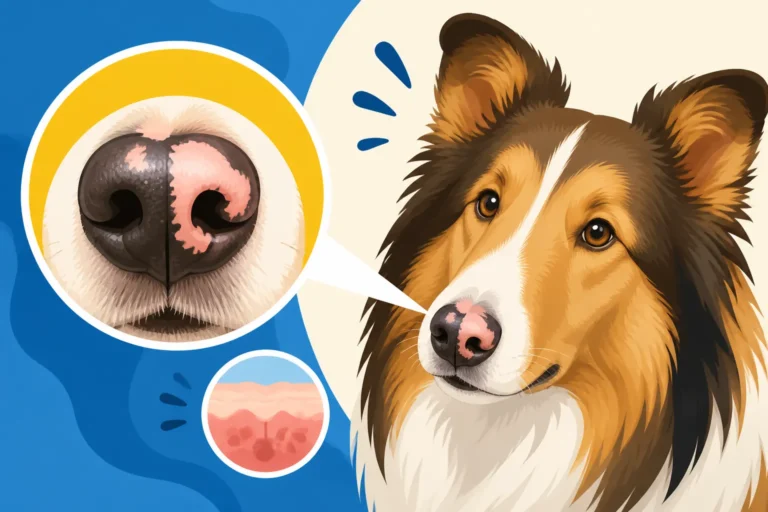
This risk is often overlooked until it's too late. Owners may not realize the extent of the sun's damage until their Collie is already suffering. The natural coat provides a physical barrier, absorbing and deflecting UV rays. Without it, your dog is left vulnerable to the very thing you were trying to protect them from – discomfort and health risks, but in a different, more serious form. Always remember that their fur is their primary shield. If you're concerned about sensitive skin or specific conditions like Collie Nose (nasal solar dermatitis), the coat offers crucial protection. What Collie Nose Actually Is is a good read on this.
Grooming a Collie Without a Shave: Healthy Alternatives
So, if shaving is out, what's a responsible Collie owner to do to keep their dog comfortable, healthy, and looking magnificent? The answer lies in consistent, proper grooming that works with the coat, not against it. It's about maintenance and understanding the tools and techniques that support their natural coat function.
It might seem like a lot of work, but with the right routine and equipment, managing a Collie's coat becomes a rewarding part of your bond. It's an investment in their comfort and health that pays dividends. Forget the clippers and embrace the brush – your Collie will thank you for it!
Regular Brushing: The Key to a Healthy Coat
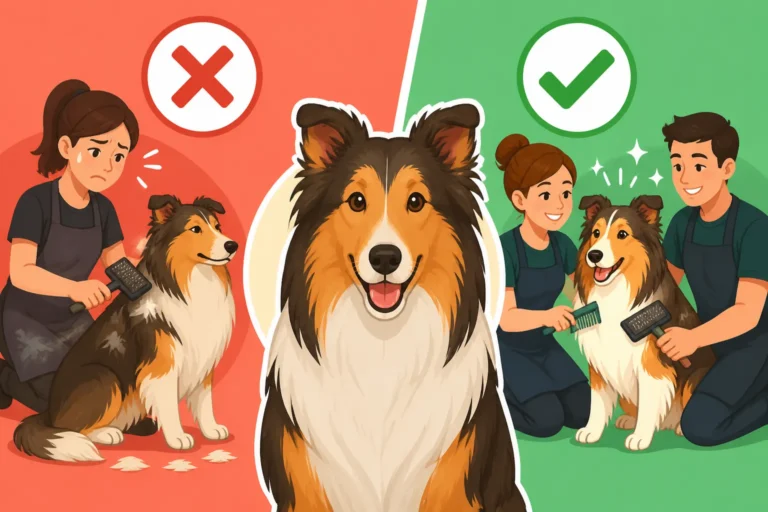
The single most important thing you can do for your Collie's coat and comfort is regular, thorough brushing. This means line brushing, getting down to the skin, and removing all the dead undercoat, especially during shedding seasons. This prevents mats, allows air circulation, and helps their natural temperature regulation work effectively. Aim for at least 2-3 times a week, and daily during heavy shedding periods.
A good line-brushing session involves separating the coat into small sections and brushing from the skin out, layer by layer. This ensures you're removing all the loose undercoat that would otherwise become felted. For a Rough Collie, you’ll need a selection of tools: a good pin brush, a slicker brush for tangles, and a wide-toothed metal comb to check your work. Removing this dead hair is what truly helps them stay cool in summer and prevents painful mats. Four Tools and Twenty Minutes: Brushing a Rough Collie provides a detailed guide on how to do this effectively.
Deshedding Tools and Techniques
Beyond standard brushing, investing in quality deshedding tools can make a significant difference. A good undercoat rake or V-rake is invaluable for gently pulling out loose, dead undercoat without damaging the guard hairs. Always use these tools on a clean, dry coat and with a light touch to avoid irritating the skin.
Professional groomers also employ high-velocity dryers, which are excellent for blowing out loose undercoat after a bath. These powerful dryers literally push the shedding hair out, making brushing much easier and more effective. While a significant investment, a high-velocity dryer can drastically cut down on drying time and shedding in your home. Companies like Chewy and Amazon offer a wide range of deshedding tools and high-velocity dryers that can be a game-changer for Collie owners. How Much Undercoat a Collie Drops illustrates just how much hair you're dealing with during these times.
Professional Grooming Services
If you find yourself overwhelmed or simply don't have the time, a professional groomer experienced with double-coated breeds is a fantastic resource. They have the right tools, techniques, and expertise to thoroughly deshed and maintain your Collie's coat without resorting to shaving. They can also tackle those tricky areas like the mane, frill, and petticoat, which are prone to matting.
A professional groomer will provide a thorough bath, blow-out with a high-velocity dryer, and complete deshedding service, often followed by a neatening trim around the feet and ears. This will leave your Collie feeling lighter, cleaner, and much more comfortable, without ever touching a clipper blade to their main coat. Just be sure to find a groomer who understands the nuances of a double coat and never shaves these breeds. Asking about their experience with Collies or similar breeds (like German Shepherds or Samoyeds) is a good starting point. What a Professional Groom Costs on a Rough Collie gives insight into this investment.
Specific Scenarios: When is a Trim Okay?
While the general rule is "never shave," there are specific instances where some judicious trimming might be necessary or beneficial. However, these are precise, targeted trims, not a full-body shave. It's important to understand the distinction and ensure any trimming is done for a specific purpose by an experienced hand.
These exceptions are few and far between and should always be approached with caution and knowledge of the Collie's coat. The goal is always to enhance comfort and hygiene without compromising the coat's natural function.
Sanitary Trims and Paw Pads
One area where a gentle trim is absolutely acceptable, and often necessary, is for hygiene. A "sanitary trim" involves carefully trimming the hair around your Collie's anus and genitals. This helps keep these areas clean, preventing fecal matter from clinging to the fur and reducing the risk of skin irritation or infection. Similarly, trimming the hair between their paw pads can improve traction, prevent ice and burrs from accumulating, and keep the paws cleaner.
These are small, targeted areas, and the trimming is done with safety clippers or blunt-nosed scissors, taking care not to nick the skin. This isn't about altering the coat's thermal properties, but purely about practical hygiene and comfort. It's a small but significant part of routine care that any Collie owner can learn or ask their groomer to perform.
Medical Necessity: Shaving for Surgery or Wounds
There are, of course, medical situations where shaving a portion of your Collie's coat is unavoidable. If your Collie needs surgery, stitches for a wound, or an ultrasound, the veterinary team will likely shave the area to ensure a clean, sterile field or clear access for equipment. This is a medical necessity, and while the fur will eventually grow back, the dog's health always comes first.
In these cases, the shaving is localized and serves a critical health purpose. Your vet isn't trying to give your Collie a new look; they're ensuring the best possible outcome for a medical procedure. The focus here is on healing and recovery, and the coat regrowth will simply be managed as part of the post-operative care. You might find yourself needing to keep the area protected as it grows back, perhaps with a soft recovery cone or a light pet-safe bandage.
Minor Tidying for Appearance or Show
For some owners, particularly those who show their Collies, a very minimal amount of "tidying" might be done to enhance the dog's natural outline. This typically involves light trimming of stray hairs around the ears, feet, and hocks to create a cleaner, more refined silhouette. This is a specialized skill, often performed by experienced show groomers, and it involves very subtle alterations to the coat's edges, not its body.
The key here is "minimal" and "tidying." The goal is to present the natural beauty of the Collie's coat, not to fundamentally change it. A Rough Collie's feet, for example, might have excess hair that can be carefully scissored to create a neat, round "cat foot" appearance. This is a far cry from shaving the body and preserves the integrity of the double coat. Whether a Show Collie Is Trimmed at All can give you more details on this specialized grooming.
Long-Term Effects and Recovery of a Shaved Coat
Even if you've already made the mistake of shaving your Collie, it's not the end of the world. Understanding the long-term effects and knowing how to support coat recovery can help mitigate some of the damage. Patience, proper nutrition, and diligent care are your best allies in helping their natural coat return.
It's a process that can take time, sometimes a year or more, depending on the individual dog and the extent of the shaving. But with dedicated effort, you can encourage healthy regrowth and restore much of your Collie's natural protection and beauty.
Uneven Regrowth and "Clipper Alopecia"
As mentioned earlier, one of the most common long-term effects is uneven regrowth, often resulting in a condition known as "clipper alopecia." The guard hairs may grow back much slower than the undercoat, or not at all in some patches. This leaves your Collie with a patchy, woolly, or even dull-looking coat that lacks its original texture and sheen. It can feel disheartening to see your once magnificent Collie looking so different.
The texture change is particularly frustrating, as the coat becomes softer, more prone to tangles, and less effective at repelling dirt and water. This woolly texture can be a magnet for burrs and debris and can matt much faster than a healthy double coat. Recovery is slow, and some dogs may never fully regain their original coat quality. It's a testament to how crucial those guard hairs are to the entire coat structure.
Supporting Coat Health and Regrowth
While there's no magic pill to instantly restore a shaved coat, you can support healthy regrowth through a combination of good nutrition and consistent care. Ensure your Collie is on a high-quality diet, perhaps one fortified with Omega-3 and Omega-6 fatty acids, which are known to promote skin and coat health. Products like fish oil supplements, readily available on platforms like Amazon or Chewy, can be beneficial. Some owners find that incorporating fresh, whole foods (like those offered by Ollie) as part of a balanced diet can also support overall vitality, which in turn reflects in coat quality.
Continue with regular, gentle brushing to stimulate circulation in the skin and help remove any dead hair that might be hindering new growth. Avoid harsh brushing that could irritate the recovering skin. Protect your Collie from excessive sun exposure during this time, as their skin is still vulnerable. Light, breathable dog apparel can offer some protection if they must be out in the sun, but supervision is key. Patience is paramount, as coat cycles are long, and it takes time for the natural balance to re-establish itself.
The Role of Patience and Professional Guidance
Above all, patience is crucial. The coat will not grow back overnight, and it may go through several awkward stages. Resist the urge to shave again if the regrowth is uneven or seems overwhelming; this will only perpetuate the problem. Instead, continue with your diligent brushing and dietary support.
If you are particularly concerned about your Collie's coat regrowth or skin health, consult with a veterinarian or a professional groomer specializing in double coats. They can offer advice, assess for any underlying skin conditions, and provide tailored recommendations for your specific situation. They might suggest specific shampoos, conditioners, or supplements to aid in the recovery process. Remember, the journey back to a healthy coat can be a long one, but it's worth the effort for your Collie's comfort and well-being.
The Smooth Collie: A Different Coat, Same Rules
It's important to remember that everything discussed regarding the Rough Collie's double coat also applies to its less heavily coated cousin, the Smooth Collie. While they might look like they have a much simpler coat to manage, they are still a double-coated breed.
The distinction between a Rough and a Smooth Collie lies purely in the length of their guard hairs, not the fundamental structure of their coat. Both varieties rely on their double coat for the same protective and thermoregulatory functions.
Still a Double Coat, Just Shorter
A Smooth Collie possesses the same two-layer system as a Rough Collie: a dense, soft undercoat and a layer of coarser guard hairs. The key difference is that the guard hairs of a Smooth Collie are much shorter, lying close to the body, giving them their sleek, streamlined appearance. This shorter outer coat is still designed to repel water, protect from dirt, and block UV rays.
Just because their coat is shorter doesn't mean it's less functional. It still provides insulation against cold and heat, and its integrity is just as crucial for their overall health. Therefore, the same principle applies: a Smooth Collie should never be shaved, as it would disrupt their natural temperature regulation and potentially damage their coat in the same way it would a Rough Collie's. The Smooth Collie Is the Same Dog With Less Work but fundamentally the same coat structure and needs.
Smooth Collies Shed Too!
While the shedding might not be as dramatic or as voluminous as a Rough Collie's, Smooth Collies absolutely shed, and they also "blow coat" twice a year. Their shorter hair can actually be more noticeable on upholstery and clothing because it's stiffer and tends to weave into fabric more easily.
Regular brushing, while perhaps not as time-consuming as for a Rough Collie, is still essential for a Smooth Collie to remove dead undercoat and maintain a healthy skin and coat. A slicker brush or a rubber curry comb can be very effective for a Smooth Collie. Skipping brushing or resorting to shaving would still lead to compromised temperature regulation, skin issues, and potential coat damage, just as with their long-haired counterparts.
Here's a quick comparison of a natural Collie coat versus a shaved one:
| Feature | Natural, Well-Maintained Collie Coat | Shaved Collie Coat |
|---|---|---|
| Temperature Regulation | Excellent insulation; traps cool air in summer, warm air in winter. Protects from both heat and cold. | Compromised; increased risk of overheating and hypothermia. No insulating air layer. |
| UV Protection | Natural barrier against harmful UV rays, preventing sunburn and reducing skin cancer risk. | Direct exposure to sun; high risk of sunburn and increased risk of skin cancer. |
| Water & Dirt Repellency | Guard hairs repel water and dirt, keeping skin cleaner and drier. | Reduced ability to repel water and dirt; skin more prone to getting wet and dirty. |
| Matting | Less prone to matting with regular brushing, as dead undercoat is removed. | Can be more prone to matting due to uneven regrowth of soft, woolly undercoat. |
| Skin Health | Protected from irritants, insect bites, and physical abrasions. | Vulnerable to insect bites, skin irritation, infections, and allergic reactions. |
| Aesthetics | Magnificent, flowing, breed-standard appearance. Healthy texture and sheen. | Often grows back patchy, woolly, dull, and with permanent texture changes. |
| Maintenance | Requires consistent brushing and occasional professional grooming. | Can become harder to maintain due to poor regrowth, increased matting, and skin issues. |
Disclaimer
This article is for general informational purposes only and does not constitute professional advice. Laws, prices and regulations vary by location and change over time. Consult a qualified professional for guidance on your specific situation.