Whether a Mildly Affected Collie Goes Blind
Mild Collie Eye Anomaly explains choroidal hypoplasia and long-term vision during veterinary exams for puppies aged five to seven weeks.

Mild Collie Eye Anomaly explains choroidal hypoplasia and long-term vision during veterinary exams for puppies aged five to seven weeks.
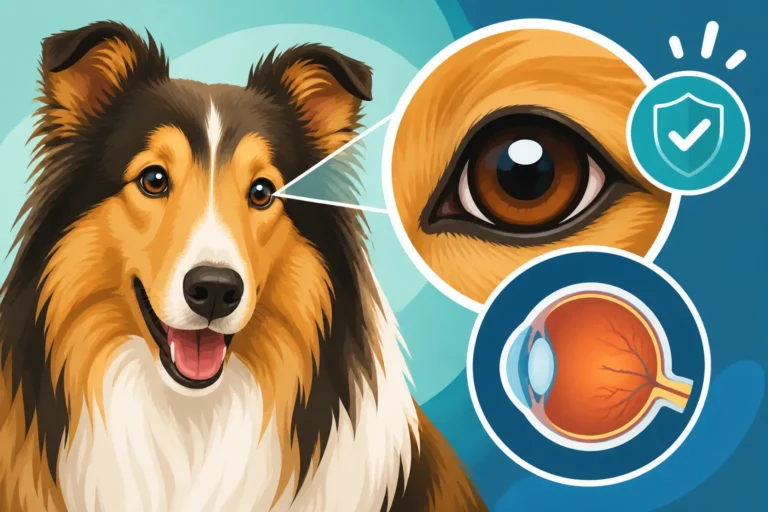
Collie eye anomaly and the go normal exam result explained through early puppy development, choroid thinning, and recessive genetics.

Collie eye exams at five to seven weeks reveal inherited Collie Eye Anomaly before pigment hides mild defects.
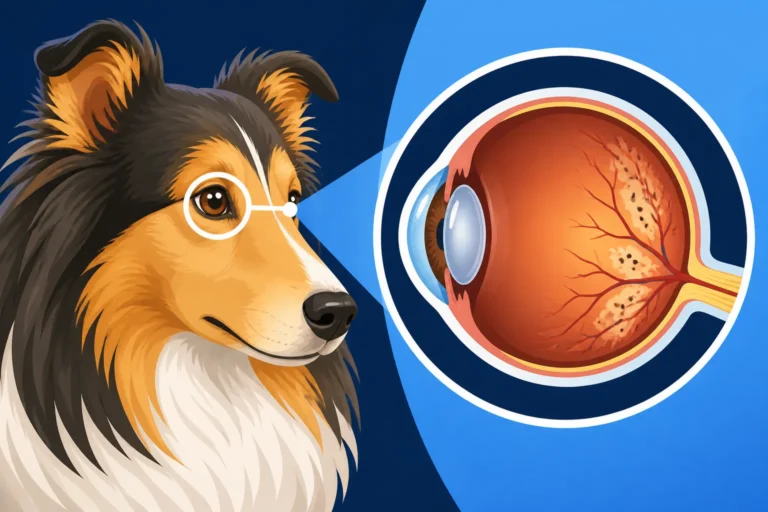
Collie Eye Anomaly is an inherited congenital disorder affecting the choroid and other structures at the back of the eye.

Safe worming practices for MDR1 Collies explain which medications avoid toxicity risks by bypassing the blood-brain barrier.

Collie owners learn how to communicate the MDR1 gene mutation and drug sensitivities effectively to their veterinary team.

The MDR1 gene mutation in Collies causes defective P-glycoprotein pumps, leading to severe drug toxicity risks and pharmacological sensitivities.

The MDR1 mutation in Collies stops the blood brain barrier protein from blocking toxic drugs from the central nervous system.

The MDR1 genetic mutation causes P-glycoprotein pump defects in Collies, disrupting normal drug metabolism and toxin defense.

Up to seventy percent of Collies carry the ABCB1 genetic mutation, which causes dangerous medication buildups in the brain.