Whether a Collie’s Dermatomyositis Risk Can Be Bred Down
Collie dermatomyositis risk and its polygenic inheritance explain whether breeders can reduce the inherited disease in dogs.
Know what to watch for.
Breed-specific conditions, screening and DNA tests, what surgery actually costs, and the daily habits that stretch a healthy lifespan.

Collie dermatomyositis risk and its polygenic inheritance explain whether breeders can reduce the inherited disease in dogs.

Dermatomyositis risk scoring in Collies explains the genetic predisposition, skin lesions, and early recognition of this inflammatory disease.
The Collie Health Foundation funds vital research, educational initiatives, and support programs to safeguard and advance canine well-being.

Cyclic Neutropenia inheritance patterns explain why both Collie parents must carry the gene, causing severe neutrophil deficiencies in puppies.

Gray Collie Syndrome causes cyclical neutropenia and severe immune defects, leaving affected puppies with very low survival rates.

Gray Collie Syndrome causes a silver coat and severe immune defects because AP3B1 gene mutations disrupt neutrophil development.
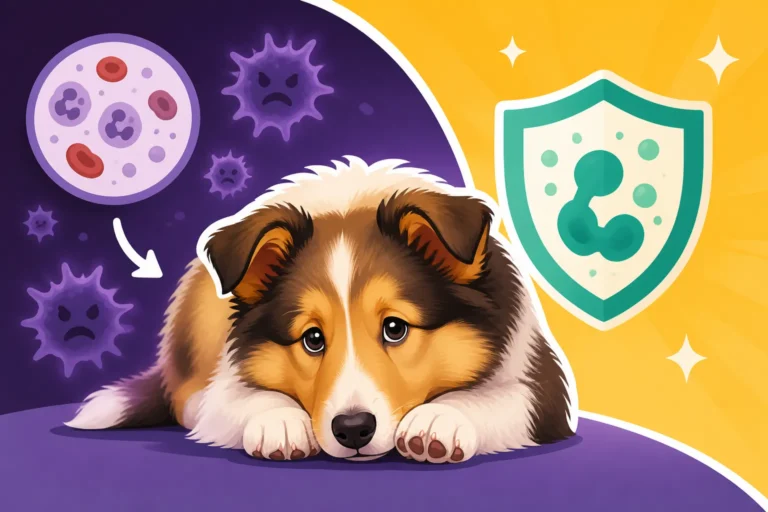
Cyclic neutropenia causes neutrophil counts to plummet every ten days in Collie puppies, causing severe immune system failure.
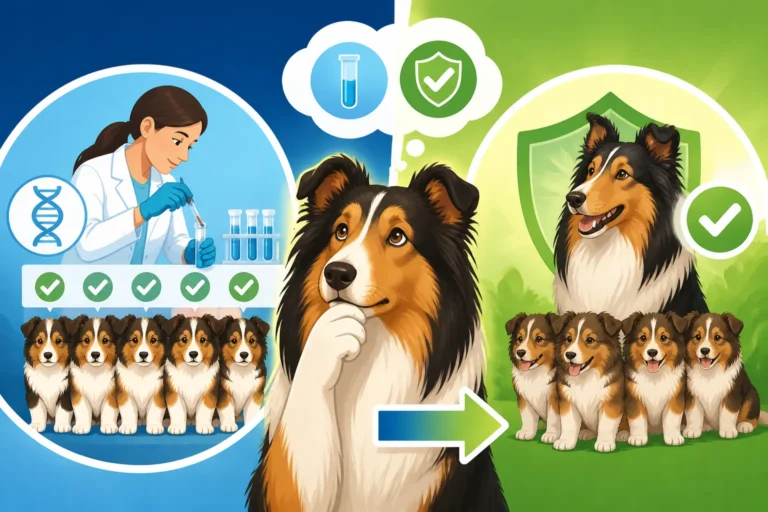
Early health testing for whole Collie litters reveals genetic conditions like MDR1 and Collie Eye Anomaly to protect dogs.
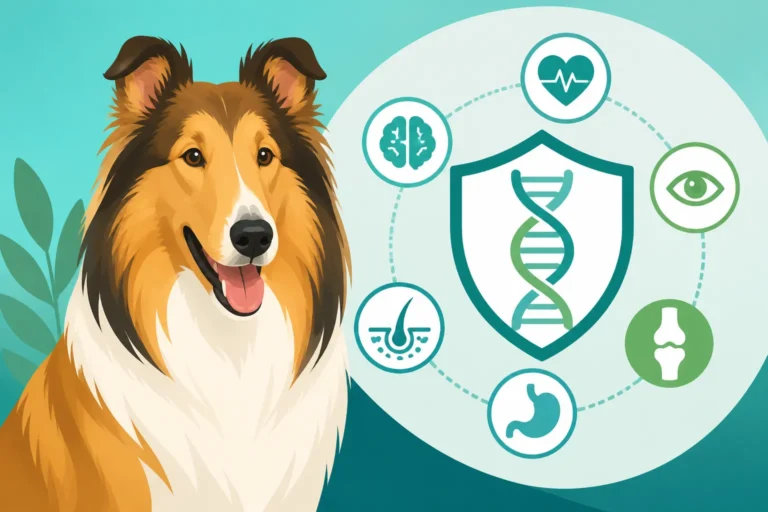
The Collie DNA health panel identifies inherited genetic mutations to help owners manage medical care and prevent crises.

Breeding two affected Collies with recessive genetic mutations guarantees one hundred percent of the resulting puppies will inherit the condition.