Whether a Collie Should Be Dried After Snow
Oh, the sheer joy of watching a Collie romp through fresh snow! Their beautiful coats look magnificent, tails wagging like fluffy plumes as they bound and play. It's a quintessential winter wonderland scene, right? But then your majestic snow-dog comes barreling back inside, tracking in not just melted slush, but an alarming collection of ice balls and thoroughly soaked fur. The immediate question then becomes: what on earth do I do with this soggy, icy fluff-monster, and how quickly? Leaving them to air dry after a snowy adventure isn't just a recipe for a messy house; it can lead to some real problems for their health and coat. This guide will walk you through why drying your Collie is crucial after snow exposure and the best ways to tackle that formidable task.
Why a Collie's Coat Is a Snow Magnet and a Challenge
Anyone who's ever lived with a Collie knows their coat is a thing of beauty, a marvel of natural engineering designed for protection. But in winter, this very design becomes both a blessing and a bit of a curse when snow gets involved.
The Double-Layered Wonder and Its Winter Woes
Collies possess a magnificent double coat. There's the harsh, straight outer guard coat, which is designed to shed water and protect from the elements. Underneath that, there's a soft, dense, and incredibly insulating undercoat. This combination is what keeps them warm even in chilly Scottish winds, but it's also a sponge for moisture and a magnet for snow.
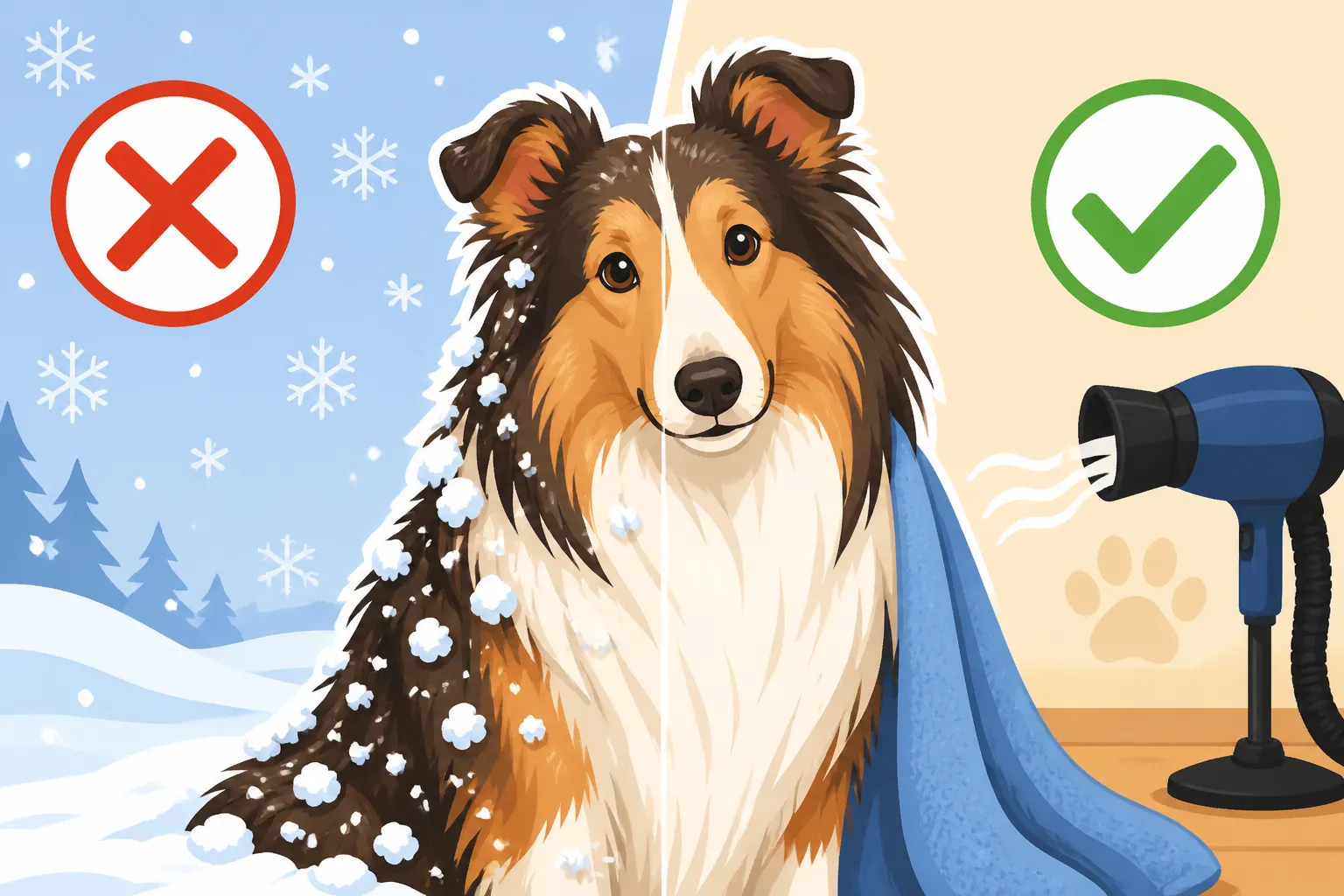
When your Collie dashes through snow, particularly the wet, clumping kind, those long outer hairs pick up flakes, and the dense undercoat absorbs water. Unlike a short-coated dog where snow might just brush off, a Collie's fur, especially the feathering on their legs, belly, and "petticoat" area, actually collects snow and packs it tightly against their skin. It's like tiny natural snowballs forming and clinging, making their coat incredibly heavy and wet. Whether Snow Balls Up in a Collie's Feathering is a real problem, often becoming icy within minutes. What started as light, fluffy snow quickly turns into dense, cold ice adhered to their body.
The "Snow Ball" Effect: When Flakes Become Ice Clumps
The "snowball effect" is a frustrating reality for Collie owners. You see those beautiful feathered legs and think, "How lovely and elegant!" Then your dog comes in from a snowy walk, and those very feathers are encrusted with hard, icy clumps. These aren't just a minor inconvenience; they can be quite large and pull on the skin, causing discomfort and even irritation.
Imagine trying to walk with dozens of golf-ball-sized ice cubes clinging to your hair, tugging every time you move. That's essentially what your Collie experiences. The fine texture of their undercoat, combined with the length of the guard hairs, creates the perfect texture for snow to stick, melt slightly from body heat, and then refreeze into solid, painful chunks. This is especially true on areas like the ruff around their neck, the "frill" on their chest, their britches, and of course, those majestic tails. These areas are prone to holding onto moisture and snow, and it's where you'll spend most of your post-snow cleanup time.
The Risks of Leaving a Collie Undried After Snow
You might think, "Oh, they're dogs, they'll just air dry." While your Collie's ancestors might have been rugged outdoor dogs, a modern pet Collie spending time indoors needs a bit more care, especially with a thoroughly wet coat. Leaving a dense, double-coated dog like a Collie to air dry after a snow adventure can lead to several uncomfortable, and even harmful, consequences.
Skin Irritation and Hot Spots
One of the biggest concerns for any dog with a thick coat is skin health, and Collies are no exception. When a Collie's dense undercoat gets wet and stays wet for an extended period, it creates a warm, damp environment right against their skin. This is the perfect breeding ground for bacteria and fungi. Without proper airflow, moisture gets trapped, and the skin can't breathe.
This trapped moisture and lack of air circulation can quickly lead to painful skin irritations, redness, and the dreaded hot spots. Hot spots, or acute moist dermatitis, are intensely itchy, raw, inflamed lesions that appear suddenly and can spread rapidly. Your Collie, trying to relieve the discomfort, will lick, chew, or scratch the area, making it worse and preventing healing. A mild dampness can escalate into a full-blown, painful infection that requires veterinary intervention, antibiotics, and sometimes even shaving the affected area. Whether a Collie Gets Hot Spots is a question many owners ask, and prolonged dampness is a key contributing factor.
Chilling and Hypothermia Concerns
While Collies are built for cooler weather, their natural insulation relies on their coat being dry and able to trap air. When that coat becomes thoroughly saturated with melted snow, its insulating properties are significantly compromised. Imagine wearing a heavy wool sweater that gets completely drenched – it would feel much colder than if you were wearing no sweater at all in the same conditions.
If your Collie is thoroughly soaked and then rests in a cool house, in a draft, or even goes back outside before drying, their body temperature can drop. Puppies, senior Collies, or those with underlying health conditions are particularly vulnerable to chilling or, in severe cases, hypothermia. Symptoms of chilling can include shivering, lethargy, and a general listlessness. While serious hypothermia might be rare for an adult Collie simply coming in from the snow, a prolonged chill can certainly make them uncomfortable, lower their immune response, and just generally make them feel unwell. It's an unnecessary risk when a good drying session can prevent it.
Mats and Tangled Nightmares
Every Collie owner knows the battle against mats. Their beautiful, flowing coats are prone to tangles, even with regular brushing. Add water into the mix, and you've got a recipe for disaster. When wet fur dries, it tends to clump and intertwine much more readily than dry fur. As your Collie moves around with a damp coat, the individual hairs rub against each other, causing tangles to form and tighten into dense, painful mats.
These aren't just superficial knots; deep mats can pull on the skin, restricting movement and causing significant discomfort. They can also hide skin issues, dirt, and parasites, making grooming even harder. Removing severe matting often requires professional grooming, sometimes even shaving sections of the coat, which no Collie owner wants to do to their beautiful dog. The time it takes to properly dry your Collie now is far less than the time and expense required to demat a severely tangled coat later. Prevention, in this case, is definitely better than cure. You can read more about common problem areas in Mane, Frill and Petticoat: the Parts of a Collie That Mat.
Best Practices for Drying Your Collie After Winter Play
Okay, so we've established that bringing in a snow-covered Collie means it's go-time for drying. But how do you tackle that magnificent coat efficiently and safely? It's all about technique, the right tools, and a little patience.
Immediate Snow Removal and Initial Towel Dry
The moment your Collie steps inside, the first step is damage control. Before they can shake, roll on your rug, or leave a trail of melting snow, grab a towel!
Start by gently picking off any large clumps of snow and ice from their coat, especially on their legs, belly, and behind the ears. For stubborn ice balls, particularly between their paw pads, a little lukewarm water can help. You can gently dip their paws in a shallow bowl or use a warm, damp cloth. Don't pull or yank at the ice, as this can be very painful and damage the fur and skin.
Once the bulk of the snow is off, it’s towel time. Use highly absorbent towels – microfibre towels designed for pets work wonders – and blot your Collie’s coat, rather than rubbing vigorously. Rubbing can actually create more tangles and mats, especially in the undercoat. Focus on absorbing as much surface water as possible. Get into the areas that tend to hold moisture, like the ruff, armpits, and under the tail. For a Smooth Collie, this might be enough, but for a Rough Collie, it's just the very first step in a longer process.
The Power of the Force Dryer
For Rough Collies, a high-velocity force dryer is an absolute game-changer, and honestly, it’s probably the most essential tool for efficient and thorough drying. These aren't just fancy hairdryers; they are specifically designed to push water out of a dog's double coat, rather than just blowing hot air on it.
A good force dryer will significantly cut down drying time and ensure that the dense undercoat is completely dry, preventing the skin issues and matting we discussed. When using one, always start on a low setting and keep the nozzle moving constantly to avoid concentrating heat on one spot. Use a cool or low-heat setting; high heat can be uncomfortable for your dog and potentially damage their skin and coat. Systematically work your way through their coat, using your free hand to lift sections of fur and ensure the air reaches down to the skin. Line drying, where you hold the fur up against the airflow, is key to getting the undercoat completely dry. You'll be amazed at how much water comes out! Investing in a good quality force dryer is highly recommended for any Rough Collie owner. Whether a Collie Owner Needs a High Velocity Dryer is a question with a resounding "yes" if you want to keep their coat healthy and your sanity intact during shedding seasons and snowy days.
Air Drying with Caution
While a force dryer is ideal for a Rough Collie, there might be times you consider air drying, or it might be sufficient for a Smooth Collie. However, proceed with extreme caution, especially with Rough Collies.
For a Smooth Collie, after a thorough towel dry, air drying in a warm, draft-free room might be acceptable. You should still monitor them closely to ensure they are completely dry to the skin.
For a Rough Collie, air drying alone after being soaked by snow is generally not advisable, especially if you're looking for a quick solution or if the indoor environment isn't exceptionally warm and dry. The sheer volume and density of their coat mean it takes an incredibly long time to fully air dry, and during that time, they are susceptible to all the risks mentioned earlier – matting, skin irritation, and chilling. If you absolutely must air dry a Rough Collie, ensure they are in a very warm room, perhaps with a dehumidifier, and that you are still regularly brushing through their coat to encourage airflow as it dries. Even then, it's best only after a significant force-drying session to get the majority of the moisture out. Never, ever leave a thoroughly damp Rough Collie to simply "drip dry" in a cooler part of the house or outdoors. It can take How Long a Collie Takes to Dry if left to air dry, and it's simply too long for their health.
Beyond Drying: Year-Round Winter Coat Care
Drying your Collie after snow isn't just a one-off event; it's part of a broader commitment to their year-round coat health, which becomes even more critical during winter. Being proactive with their grooming and having the right tools on hand will make those snowy escapades much more enjoyable for both of you.
Regular Grooming as Prevention
A healthy, well-maintained coat is your best defense against snow-related issues. Regular grooming throughout the year ensures your Collie's coat is free of mats, excessive dead undercoat, and is generally in good condition to repel moisture and manage snow accumulation.
Consistent line brushing, reaching all the way down to the skin, is vital. This removes loose undercoat that can otherwise trap moisture and contribute to matting when wet. A good brush-out session before going into the snow can help prevent snow from clinging as tenaciously, as there's less loose hair to bind to. Focus on those problem areas like behind the ears, armpits, britches, and tail, which are prone to matting even when dry, let alone after a snowy romp. Getting your Collie accustomed to a routine of regular grooming, perhaps even on a grooming table, will make the post-snow drying process much smoother. How Often a Rough Collie Should Be Brushed is a question that will pay dividends in managing snow. You can check out places like Chewy or Amazon for a wide selection of grooming tools to help with this, from sturdy pin brushes to undercoat rakes.
Protective Gear and Products
Sometimes, prevention means adding a little extra barrier. There are several products and pieces of gear that can significantly reduce the amount of snow and ice your Collie collects.
Paw balms, like Musher's Secret or other wax-based products, applied to paw pads and between toes before going out, can create a protective layer that helps prevent snow and ice from clinging. You can find these easily on Amazon or Chewy. Some owners even use dog boots, though getting a Collie to tolerate them can be a training adventure in itself! For very snowy conditions, or for Collies with incredibly dense feathering, some owners opt for lightweight dog coats or even full-body snow suits that cover the legs and belly. While a full snowsuit might seem extreme, it can drastically reduce the amount of wet snow that needs to be removed and dried, protecting those sensitive areas. Whether a Collie's Coat Protects It From Heat is often discussed, but in this context, protective gear helps against ice and wet.
Monitoring for Skin Issues
Even with the best drying and grooming practices, it's always wise to remain vigilant about your Collie's skin health, especially during winter when their coat is frequently exposed to moisture. Regularly check their skin underneath the thick fur, particularly after snowy outings.
Look for any signs of redness, flakiness, irritation, or tenderness. Gently part the fur to examine the skin surface. Pay close attention to areas that are hardest to dry or most prone to matting. If you notice persistent scratching, licking, or chewing at a particular spot, investigate it immediately. Early detection of skin issues means you can address them before they escalate into more serious problems. A healthy diet, perhaps supplemented with omega fatty acids (check brands like Ollie for specialized dog food, or a good quality fish oil from Chewy or Amazon), can also support overall skin and coat health, making it more resilient to environmental challenges. Remember, a Collie's coat is part of their identity, and keeping it healthy means keeping your Collie happy and comfortable.
| Drying Method | Pros | Cons | Best for |
|---|---|---|---|
| Towel Drying | Quick initial moisture removal, easily accessible | Insufficient for thick undercoat, can cause tangles if rubbed, leaves dog damp | First step for all Collies, primary for Smooth Collies with light snow |
| Human Hairdryer | Readily available | Too hot for dog's skin, weak airflow for double coats, can burn skin, causes static and frizz | Generally NOT recommended for Collies |
| Force Dryer | Highly efficient, dries to the skin, prevents mats | Requires investment, can be noisy (training needed), improper use can cause discomfort | Essential for Rough Collies, highly recommended for thorough drying |
| Air Drying | No equipment needed, natural | Very slow, high risk of matting, skin irritation, and chilling, leaves dog damp for hours | Only for Smooth Collies after light snow, or after significant force drying for Rough Collies in very warm, dry environments |
Disclaimer
This article is for general informational purposes only and does not constitute professional advice. Laws, prices and regulations vary by location and change over time. Consult a qualified professional for guidance on your specific situation.