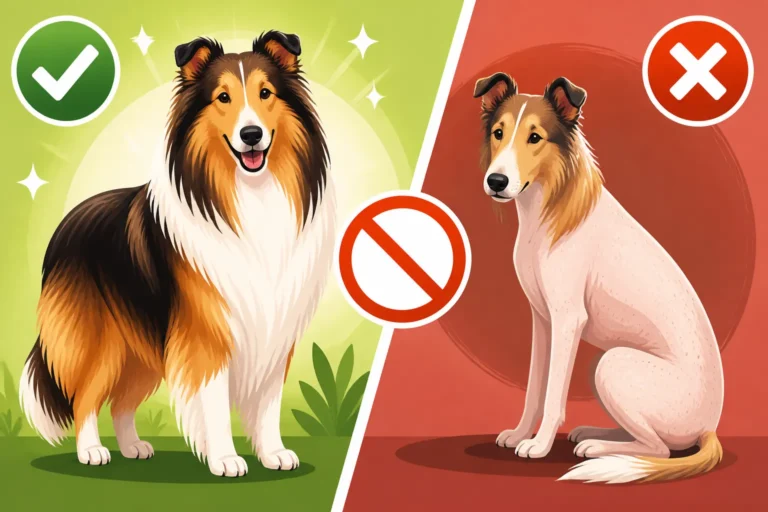
Whether a Show Collie Is Trimmed at All
For Collie owners who dream of stepping into the show ring, the question of grooming can be a source of real anxiety. You want your beautiful dog to look its absolute best, but the rules and expectations can feel like a minefield, especially when it comes to scissors. The truth is, while many breeds undergo extensive styling and clipping for conformation events, the Collie is held to a different, more natural standard. This guide is here to clarify exactly what grooming is acceptable and what is definitely not when preparing your Collie for the show ring, helping you present your magnificent dog authentically and confidently.
The Sacred Standard: Why a Collie's Coat Should Remain Untrimmed
It’s a common misconception that all show dogs need intricate cuts and styling. For many breeds, this is absolutely true; think of poodles with their sculpted rosettes or terriers with their hand-stripped coats. But a Collie, both the rough and the smooth variety, falls into a very different category. The entire essence of the Collie in the show ring is its natural, abundant beauty, and that means preserving its coat as nature intended.
Understanding the Breed Standard
The breed standard for Collies is quite specific about the coat. It describes a coat that is "profuse," "dense," "straight," and "harsh to the touch," with a soft, furry undercoat. It also details the "mane and frill" as very abundant, and the "feathering" on the legs and tail as profuse. When a judge evaluates a Collie, they are looking for adherence to this standard, and any signs of artificial alteration can be seen as a fault. The idea is to present a dog that exemplifies the breed's characteristics, not a dog that has been reshaped by shears. A Collie is meant to look like a working dog, capable of enduring the elements, and that requires its natural double coat to be intact. This philosophy emphasizes that the dog's structure and natural presentation are paramount, rather than its groomer's artistic interpretation. The standard is a blueprint for the ideal Collie, and a full, untrimmed coat is a huge part of that picture.
The Natural Beauty of the Collie Coat
Imagine a magnificent Rough Collie, its long, flowing mane framing its intelligent eyes, its elegant frill cascading down its chest, and its plumed tail carried proudly. This is the image the breed standard champions. The texture, length, and distribution of the coat are all part of the Collie’s unique silhouette and protective qualities. Any trimming of the main body coat, feathering, or frill would fundamentally alter this natural look and could even compromise the coat's ability to protect the dog from weather. It's about celebrating the inherent grandeur of the breed, not trying to improve upon it with scissors. Enthusiasts appreciate the authenticity of a natural coat, which speaks to the dog's heritage as a hardy herding animal. Attempting to "even out" or shorten the coat only detracts from this inherent beauty and the qualities the breed was developed for. Think of it this way: the coat is part of the Collie's identity, and a truly beautiful Collie in the ring is one whose coat is healthy, well-maintained, and utterly natural.
Minor "Tidying Up": Where a Gentle Hand is Allowed
While the general rule is "no trimming," there are a few very minor exceptions, more akin to tidying than actual trimming, that are permissible and even expected to present a clean, polished appearance in the show ring. These small adjustments are about neatness, not altering the coat's natural lines or length. It’s a fine line, and understanding where that line is can make all the difference.
Tidying Up for a Clean Presentation
The most common areas where a bit of judicious tidying is done are the feet, hocks, and sometimes the ears. The goal is to make the dog look clean and well-groomed, not clipped.
- Feet: You might gently trim the hair between the paw pads to prevent slipping and to keep debris from accumulating. This also helps in showing a tight, well-knuckled foot, which is desirable. The hair around the circumference of the paw can be neatened to give a "cat-foot" appearance, but this isn't about shortening the top coat on the foot, rather just tidying stray hairs that make the foot look messy or too large. Many groomers use blunt-nosed scissors or even thinning shears very carefully for this. If you are ordering new grooming tools, check out the selection on Amazon for specific types of shears. Whether a Collie's Feet Should Be Trimmed goes into more detail on this specific area.
- Hocks: A few wispy hairs on the back of the hocks can be very carefully scissored to create a cleaner line and define the angulation, but again, this is minimal and not meant to remove significant amounts of coat. The emphasis is always on tidiness, not reshaping.
- Ears: Sometimes, a small amount of hair on the very tips of the ears can be trimmed or thinned to help them tip properly, especially in younger dogs, or to present a clean, alert ear carriage. This is usually done with thinning shears and is incredibly subtle, often imperceptible to the casual observer. The goal is to enhance the natural ear set, not to create a completely different shape. You can read more about ear care in Ears, Feet and the Small Jobs on a Collie.
It’s about making the dog look well-kept and highlighting its natural structure without resorting to actual clipping or major length reduction. It’s a testament to the idea that a truly beautiful Collie doesn't need much "fixing."
Whiskers and Vibrissae: To Clip or Not to Clip?
Ah, the great whisker debate! For many show dogs, especially those that require a very clean-faced look, whiskers (vibrissae) are routinely trimmed. These specialized hairs on a dog's muzzle, above the eyes, and on the chin serve an important sensory function, helping dogs navigate their environment, especially in low light. For a Collie, there isn't a strict rule in the breed standard explicitly forbidding or requiring their removal.
However, in the context of showing a Collie, the prevailing philosophy leans towards leaving them intact. Removing whiskers can detract from the natural, untouched appearance that judges appreciate. While not necessarily a disqualifying fault, a Collie with trimmed whiskers might look less "natural" than one with them intact. Furthermore, from a welfare perspective, many owners prefer not to remove them, recognizing their role in the dog's sensory perception. If you're unsure, consulting with experienced Collie breeders or handlers is always a good idea, but generally, the advice for Collies is to leave the whiskers alone. The subtle elegance of a Collie's head is often enhanced by its natural whiskers, contributing to that soft, intelligent expression the breed is known for. Whether Trimming a Collie's Whiskers Is Acceptable discusses this in a broader context.
The Risks and Consequences of Improper Trimming
Thinking about taking a clipper to your show Collie's coat might seem like a quick fix for a messy patch or an uneven area, but for this breed, it can lead to some significant and long-lasting problems that will definitely impact your chances in the show ring. It's a mistake that takes months, if not years, to rectify.
Damaging Coat Texture and Growth
The Collie's coat is a marvel of natural engineering. It's a double coat, meaning it has a harsh, straight outer guard coat and a soft, dense undercoat. This combination provides insulation, protection from elements, and contributes to the breed's distinctive appearance. When you trim or shave a Collie's coat, especially with clippers, you're not just shortening it; you're often damaging the delicate balance between these two layers.
- Uneven Regrowth: The outer guard hairs grow back slower than the undercoat. This can result in a coat that grows back unevenly, with a fluffy, cottony texture that lacks the desired harshness. This "puppy coat" texture is considered a serious fault in the show ring.
- Color Change: Sometimes, especially in sable Collies, trimming can cause the coat to grow back a different shade, often lighter or with less rich pigmentation.
- Coat Health Issues: Shaving can disrupt the coat's natural cycle and even lead to skin problems, as the protective outer layer is removed. It can make the dog more susceptible to sunburn and can sometimes cause alopecia (hair loss) that may or may not fully resolve. Remember, A Collie Is Never Trimmed and Never Shaved for a reason; it's detrimental to their coat health and aesthetics.
- Matting: Paradoxically, a shaved or improperly trimmed coat can be more prone to matting as the undercoat becomes dominant and lacks the structured support of the guard hairs. This can be a nightmare to maintain, leading to more frequent, challenging grooming sessions. A matted Collie often requires extensive work and can incur higher grooming fees. What a Professional Groom Costs on a Rough Collie and Whether a Groomer Charges Extra for a Matted Collie can give you an idea of the expense and effort involved.
These issues aren't temporary. It can take many coat cycles for the natural texture and growth pattern to return, and sometimes, it never fully recovers its original glory. It's a risk simply not worth taking for a show Collie.
The Judge's Perspective on Altered Coats
Judges in the conformation ring are highly trained individuals who know the breed standard inside and out. They are looking for the ideal specimen of a Collie, and that includes an unadulterated, naturally presented coat. Any evidence of trimming or shaving beyond the very minor tidying mentioned above will be immediately noticeable and will be considered a significant fault.
- Loss of Points: An altered coat directly impacts how a judge scores your dog. They are looking for natural breed characteristics, and a clipped coat suggests that the dog isn't naturally exhibiting the required coat quality or that an attempt has been made to hide a fault.
- Disqualification (Rare, but Possible): While outright disqualification for trimming might be rare unless it's excessively obvious or an attempt to defraud, it will certainly prevent your dog from placing well. It sends a message that the owner either doesn't understand the breed standard or is trying to manipulate the dog's appearance, neither of which bodes well in a judging scenario.
- Ethical Considerations: Beyond the rules, there's an ethical component. Showing a dog means presenting its natural attributes. Artificially changing its appearance goes against the spirit of conformation showing. Judges want to see a dog's true form, not a modified one.
Ultimately, trying to "improve" a Collie's coat with scissors for the show ring will almost always backfire. The best strategy is to embrace and maintain the coat your Collie naturally possesses.
Maintaining a Show-Ready Coat Without Scissors
Since extensive trimming is out, the secret to a successful show Collie lies in meticulous, consistent care that enhances its natural coat. This means a commitment to regular grooming, proper nutrition, and understanding your Collie's unique coat needs.
Daily Care and Brushing Regimen
A show-ready Collie coat isn't achieved overnight; it's the result of diligent, consistent care. This is where you'll spend most of your grooming time.
- Brushing, Brushing, Brushing: Regular brushing is paramount. For a Rough Collie, this means several times a week, if not daily, especially when the dog is in full coat or going through a "coat blow" season. A good line brushing technique ensures you reach all the way down to the skin, preventing mats and removing loose undercoat. You'll need specific tools for this, like a good quality pin brush, a slicker brush for certain areas, and a sturdy metal comb. You can find comprehensive sets of grooming tools on platforms like Chewy or Amazon. Which Four Brushes a Collie Owner Needs and How to Line Brush a Collie are essential reading for mastering this.
- Spot Checks for Mats: Pay close attention to areas prone to matting: behind the ears, under the "mane" where the collar sits, in the "armpits," and on the "petticoats" (the abundant hair on the hindquarters). These areas often need extra attention. Catching small mats early makes them much easier to resolve without cutting. If you are struggling with mats, Mane, Frill and Petticoat: the Parts of a Collie That Mat offers valuable insights.
- Regular Baths: While not daily, a Collie needs regular baths to keep its coat clean and healthy. The frequency depends on your dog's activity level and how close you are to a show date. Always ensure the coat is thoroughly dried to prevent skin issues and matting. A high-velocity dryer is a game-changer for drying a Collie efficiently. How Long a Collie Takes to Dry is a good resource here. Use a high-quality shampoo and conditioner specifically designed for double coats.
This consistent routine not only keeps the coat in pristine condition but also strengthens the bond between you and your Collie, making show preparation a more enjoyable experience for both of you.
Professional Grooming for Maintenance, Not Modification
Even with diligent home care, many show Collie owners enlist the help of professional groomers, but their role is very different from those who groom breeds that require clipping or sculpting. For a show Collie, a professional groomer is a partner in maintenance, not a stylist.
- Bathing and Drying Expertise: Professionals have the facilities, tools, and expertise to give a Collie a thorough bath and, crucially, a complete blow-dry. Getting a Collie fully dry, especially a Rough Collie in full coat, can be an hours-long endeavor at home. A professional groomer can ensure the coat is dried properly, preventing mildew, skin irritation, and matting from damp undercoat.
- Deep Deshedding: During coat blow seasons (which happen roughly twice a year, as explained in The Three Weeks Twice a Year When a Collie Buries Your House), a professional deshedding service can be invaluable. They can remove vast amounts of dead undercoat more efficiently than most owners can at home, helping to prevent mats and promote healthy new growth.
- Minor Tidying and Finishing Touches: A professional groomer experienced with Collies will know exactly where those minor tidying-up touches are needed—around the feet, hocks, and ears—without ever compromising the integrity of the main coat. They can give your dog that last bit of polish that makes all the difference in the ring.
- Health Checks: A good groomer will also be an extra set of eyes for potential skin issues, lumps, or parasites that might be hidden beneath all that beautiful fur.
When choosing a groomer for a show Collie, make sure they are experienced with the breed and understand the "no trimming" rule. Many will explicitly refuse to shave or clip a Collie's body coat, which is exactly what you want. Think of them as coat custodians, helping you maintain the magnificent natural coat your Collie was born with, not change it.
The Role of Nutrition in Coat Health
Beyond external care, what goes into your Collie's body plays a huge role in the health and luster of its coat. A dull, sparse, or brittle coat can sometimes be an indicator of nutritional deficiencies, regardless of how much you brush it.
- High-Quality Diet: Feeding a premium dog food that is rich in quality protein and healthy fats is fundamental. Look for foods where meat is the first ingredient and that contain omega-3 and omega-6 fatty acids, which are crucial for skin and coat health. Brands like Ollie, known for their fresh, human-grade ingredients, can contribute significantly to a glowing coat.
- Supplements: Some owners choose to supplement their Collie's diet with fish oil (like salmon or sardine oil), coconut oil, or other skin and coat supplements. These can often enhance shine and reduce shedding. Always consult your vet before adding any new supplements to ensure they are appropriate for your specific dog. Whether a Collie Needs Supplements for Its Coat delves into this topic.
- Hydration: Ensuring your Collie has constant access to fresh, clean water is also vital for overall health, including skin and coat condition. Dehydration can lead to dry, flaky skin and a dull coat.
A healthy coat from the inside out means less breakage, more resilience, and that gorgeous shine that catches a judge's eye. Investing in good nutrition is an investment in your Collie's show-ring success and overall well-being.
| Grooming Action | Show Collie Acceptability | Impact on Coat / Judging | Notes |
|---|---|---|---|
| Body Trimming (Clipping/Scissoring) | Never Acceptable | Severe fault; damages coat texture, causes uneven regrowth, can alter color. | Focus on natural length and profuseness. |
| Shaving | Never Acceptable | Extreme fault; destroys natural double coat, can lead to skin issues, often irreversible coat damage. | Will almost certainly prevent placement. |
| Trimming Between Paw Pads | Acceptable (Minor Tidying) | Essential for cleanliness, traction, and to present a neat, tight foot. | Use blunt-nosed scissors or small thinning shears. |
| Trimming Around Foot Circumference | Acceptable (Minor Tidying) | Creates a tidy "cat-foot" appearance by neatening stray hairs, not shortening top coat. | Very subtle, focuses on clean lines. |
| Tidying Hocks | Acceptable (Minor Tidying) | Cleans up wispy hairs for a defined, clean line to show angulation. | Minimal scissoring with thinning shears. |
| Tidying Ear Tips | Acceptable (Minor Tidying) | Helps enhance natural ear set and tipping; extremely subtle. | Usually with thinning shears, only on wispy tips. |
| Trimming Whiskers/Vibrissae | Generally Not Recommended | Detracts from natural appearance, removes sensory hairs. | Not explicitly forbidden, but best left intact. |
| Sanitary Trim | Acceptable (Minor Tidying) | Keeps the area clean and hygienic. | Minimal, not visible from outside the coat. Whether a Collie's Sanitary Area Is Trimmed |
| Bathing & Blow-Drying | Essential | Maintains coat cleanliness, health, and volume. | Thorough drying is crucial to prevent mats and skin issues. |
| Regular Brushing | Essential | Prevents mats, removes dead undercoat, distributes oils, promotes healthy growth. | Daily or several times a week, line brushing to the skin. |
Disclaimer
This article is for general informational purposes only and does not constitute professional advice. Laws, prices and regulations vary by location and change over time. Consult a qualified professional for guidance on your specific situation.