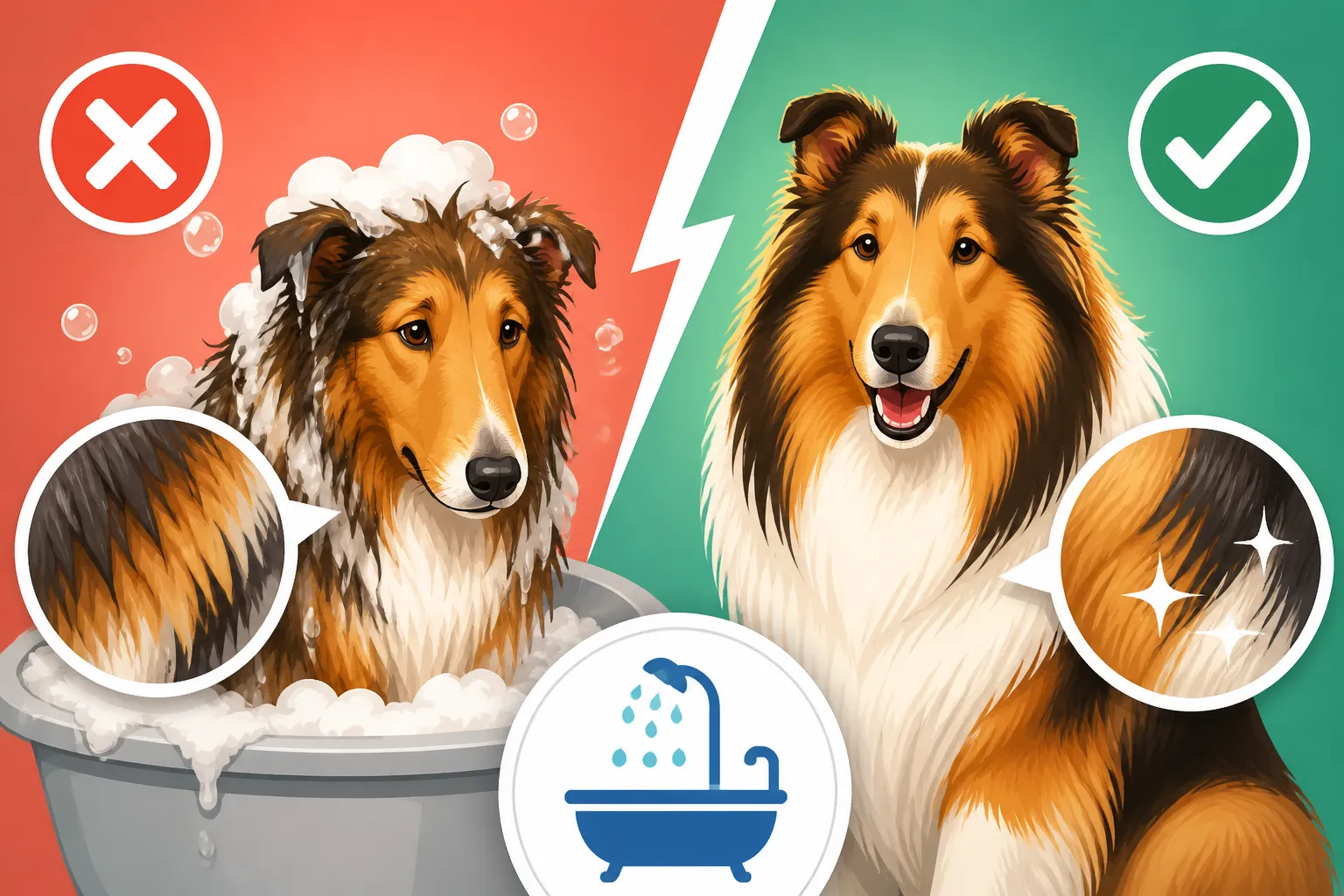
Whether Bathing a Collie Too Often Ruins the Coat
One of the biggest worries for any Collie owner is how to keep that glorious coat looking its best without accidentally ruining it. You hear so many conflicting opinions out there about bathing frequency, especially for a dog with such an iconic double coat. This guide is here to clear up the confusion and help you understand how to bathe your Collie effectively and safely, ensuring their magnificent fur remains healthy and beautiful.
The Collie Coat: A Marvel of Nature and Why It Matters for Bathing
Before we even talk about lathering up, it's crucial to appreciate the Collie's coat for what it is: a finely tuned marvel of natural engineering. This isn't just fluffy fur; it's a sophisticated system designed to protect them from the elements, whether they're herding sheep in a Scottish downpour or enjoying a sunny afternoon in your backyard. Understanding its structure is the first step in caring for it properly.
Understanding the Double Coat: Guard Hairs and Undercoat
Your Collie sports a magnificent double coat, a feature common in many working breeds. The outer layer, known as the guard hairs, is long, coarse, and typically straight. These hairs are designed to shed water, dirt, and debris, acting like a natural raincoat and shield. They contribute significantly to that elegant silhouette Collies are known for, giving them their characteristic "mane" and "petticoat." Beneath this protective outer layer lies the undercoat. This is where things get really dense – a soft, woolly, and incredibly thick layer that provides insulation. It keeps your Collie warm in winter and surprisingly, helps to keep them cool in summer by trapping air. When your Collie "blows coat" twice a year, it's this undercoat that comes out in prodigious amounts. Getting to grips with this undercoat during grooming, especially during a The Three Weeks Twice a Year When a Collie Buries Your House, is absolutely essential, and bathing plays a role in managing it.
Consider for a moment what this double layer means for bathing. When you douse your Collie in water, you're not just wetting the surface. You need to penetrate through those guard hairs to reach the dense undercoat and the skin beneath. If you don't, you risk leaving soap residue or, even worse, not properly cleaning the skin, which can lead to its own set of problems. Conversely, if you don't rinse thoroughly enough, that residue can irritate the skin and dull the coat, no matter how good your shampoo is. The challenge, then, isn't just getting them wet; it's getting them clean and rinsed right down to the roots.
The Natural Oils: Your Collie's Built-in Protection
Beyond the physical structure of the hair itself, your Collie's skin produces natural oils that are vital for coat health. These oils coat the individual hairs, contributing to their water-resistant qualities and giving the coat its characteristic luster and softness. Think of it like a natural conditioner and sealant all in one. These oils prevent the skin from drying out, reduce flakiness, and help maintain the skin's barrier function against environmental irritants.
Now, here's where the concern about "ruining the coat" often comes into play. The fear is that frequent bathing, especially with harsh products, strips these beneficial oils away. And there's definitely truth to that concern if you're not careful. If you over-strip these oils, you can leave the skin dry and itchy, making the coat brittle, dull, and more prone to matting. A dry coat can also lose its ability to repel dirt and water effectively. This is why the type of shampoo you use and the method of bathing are far more important than the simple frequency. You're aiming to clean without depleting these essential natural defenses.
The Misconception: Does "Too Often" Really Ruin a Collie's Coat?
Let's get straight to the heart of the matter. The idea that bathing a Collie "too often" inherently ruins their coat is a widely held belief, but it's often based on a misunderstanding of what actually causes damage. The truth is, the frequency of bathing is less of a culprit than how you bathe and what products you use. You could bathe your Collie once a month with the wrong approach and still cause more damage than someone bathing their dog weekly with proper technique and products.
The Real Danger: Harsh Products and Incomplete Drying
The primary dangers to your Collie's magnificent coat aren't the water itself, but rather the abrasive chemicals found in many low-quality shampoos and the consequences of improper drying. Think about it: our own hair and skin don't get "ruined" by showering daily, but they certainly can if we use harsh, stripping soaps or don't dry our hair properly. The same principle applies to your Collie. Many inexpensive dog shampoos contain sulfates and other harsh detergents that are fantastic at cutting grease and grime, but they do so by stripping all the natural oils, both good and bad, from the coat and skin. This leaves the skin vulnerable and dry, leading to irritation, itching, and a dull, brittle coat that's more susceptible to static and matting.
Beyond the shampoo, incomplete drying is a silent coat killer. With a Collie's dense undercoat, it's incredibly easy to leave damp spots, especially in hidden areas like armpits, behind the ears, or deep in the "ruff" around their neck. Damp fur creates a perfect breeding ground for bacteria and yeast, leading to hot spots, skin infections, and that dreaded "wet dog" smell that just won't go away. These conditions can cause intense itching, leading your Collie to scratch and chew, which further damages the coat and skin. Furthermore, when the undercoat remains damp, it compacts and mats very quickly, becoming incredibly difficult to brush out later. This is why How to Dry a Collie Properly is just as important, if not more so, than the washing itself.
The Role of Skin Health in Coat Integrity
A healthy coat begins with healthy skin. It's an undeniable fact. If your Collie's skin is dry, irritated, flaky, or inflamed, you can bet their coat will reflect that. The natural oils we discussed earlier are produced by glands in the skin. If those glands are overstimulated by harsh products or if the skin itself is compromised, the quality and quantity of those oils will suffer. This creates a vicious cycle: unhealthy skin leads to a poor coat, which in turn offers less protection for the skin.
Think of conditions like dandruff, excessive shedding outside of a normal coat blow, or a persistent dullness to the coat. These are often indicators of underlying skin issues, which can be exacerbated by inappropriate bathing. For instance, if your Collie is prone to allergies or Whether a Collie Gets Skin Infections Under Its Coat, using a hypoallergenic or medicated shampoo as directed by your vet, even if it means bathing more frequently, might actually improve their coat health by addressing the root cause of the irritation. The key is balance: you want to clean the skin and coat without disrupting its natural protective barrier. Ignoring skin problems in favor of "less bathing" can lead to far greater coat damage and discomfort for your dog in the long run.
Crafting a Collie-Friendly Bathing Routine
So, if frequency isn't the primary enemy, then what is the secret to bathing a Collie effectively? It all comes down to careful preparation, product selection, proper technique, and, most importantly, diligent drying. Approach bathing as a ritual, not a chore, and you'll be well on your way to maintaining that stunning Collie coat.
Selecting the Right Products for Your Collie's Skin and Coat
This is arguably the most critical step in preventing coat damage. Skip the human shampoos, no matter how gentle they claim to be; our pH levels are different from a dog's, and they can be far too harsh. Look for shampoos specifically formulated for dogs, ideally those that are soap-free, sulfate-free, and pH-balanced. Hypoallergenic options are excellent for Collies with sensitive skin. Many reputable brands offer formulas designed for sensitive skin, moisturizing, or even deshedding, which can be particularly helpful during The Three Weeks Twice a Year When a Collie Buries Your House. For instance, you can find a wide range of suitable shampoos on platforms like Chewy or Amazon.
Beyond shampoo, a good conditioner is non-negotiable for a Collie. It helps to restore moisture, smooth the cuticle of the hair, and detangle the coat, making brushing much easier post-bath. This is especially important for a long-coated breed where mats can form quickly. Again, choose a dog-specific conditioner. Some owners even use leave-in conditioning sprays between baths to keep the coat hydrated and prevent static. If you're unsure Which Shampoo Suits a Collie's Coat for your specific dog, especially if they have skin issues, a quick chat with your veterinarian or a professional groomer can provide invaluable recommendations. They might suggest a medicated shampoo if there's an active skin condition.
Mastering the Bathing Process: From Wetting to Rinsing
Before any water touches your Collie, make sure their coat is thoroughly brushed. This step is non-negotiable. Mats, when wet, tighten and become virtually impossible to remove without cutting them out, which is something we want to avoid! A good line brush session beforehand with Four Tools and Twenty Minutes: Brushing a Rough Collie will remove loose undercoat and tangles. Once brushed, thoroughly saturate your Collie's coat with lukewarm water, working from the neck down, ensuring every single hair and the skin beneath is soaked.
Apply shampoo by diluting it first (this helps it distribute better and rinse easier) and work it into a rich lather, massaging gently but deeply to reach the skin. Pay close attention to areas that get particularly dirty, like the legs, belly, and under the tail. Don't forget the mane and petticoat! Once lathered, the rinsing stage is paramount. You need to rinse, and then rinse again, and then rinse one more time. Imagine you're trying to rinse out every last bubble and trace of product. Residual shampoo can irritate the skin and leave a sticky film that attracts dirt faster. Take your time, feel the coat, and run your hands over their skin to ensure no slick spots remain. A detachable showerhead or hose attachment can be a lifesaver here for getting deep into that dense fur.
The Absolute Necessity of Thorough Drying
This cannot be stressed enough: thorough drying is absolutely critical for a Collie. Towel drying alone is simply not enough for a double-coated breed. You'll remove some surface water, but the undercoat will remain damp for hours, or even days, creating that perfect environment for skin problems and matting. This is where a high-velocity dog dryer comes in. If you own a Collie, this tool is not a luxury; it's a necessity. You can find excellent options on Amazon or Chewy. These dryers force air through the coat, separating the hairs and pushing out water, significantly reducing drying time and minimizing the risk of skin issues.
When using a high-velocity dryer, work in sections, starting from the back and moving forward, holding the nozzle a safe distance from the skin. Use a brush simultaneously, such as a sturdy pin brush, to help straighten the coat and ensure air penetrates all the way to the skin. Take breaks if your Collie gets stressed, and always keep an eye on their comfort. Pay extra attention to those thick areas like the ruff, haunches, and tail. Ensure your Collie is 100% dry, right down to the skin, before you consider them finished. If you're wondering Whether a High Velocity Dryer Is Worth It for a Collie, the answer is a resounding yes for coat health and your sanity! Proper drying also helps fluff out that gorgeous coat, giving it volume and shine.
When and How Often to Bathe Your Beloved Collie
So, after all that, what's the actual answer to "how often?" The truth is, there's no hard-and-fast rule. It depends entirely on your individual Collie's lifestyle, coat type, and any specific skin conditions they might have. Some Collies might need a bath every two weeks, while others might be perfectly fine with one every couple of months.
Addressing the "Stinky Collie" Dilemma
Let's be honest, Collies can get pretty stinky sometimes. They love to roll in things, get muddy on walks, or simply accumulate that general "dog smell" over time. If your Collie smells, it's a clear sign they need a bath! Don't defer a bath just because you're worried about "ruining" their coat. A smelly dog usually means dirty skin, and dirty skin is far more detrimental to coat health than a well-executed bath. A proper bath with the right products will alleviate the odor and benefit their skin.
Sometimes, a persistent odor can also be a sign of an underlying health issue, like a skin infection or allergies. If your Collie smells even after a thorough bath, or develops a strong, yeasty odor, it's time for a vet check-up to rule out medical causes. For everyday dirt and grime, though, a good bath is the solution. You might find that a Collie who spends a lot of time outdoors exploring or interacting with other dogs simply needs more frequent bathing than a more sedentary indoor companion. Don't hesitate to bathe them if they are genuinely dirty, but always follow the best practices for product choice and drying.
Balancing Cleanliness with Coat Preservation
For many Collies, a bath every 4-8 weeks is a good general guideline, assuming they aren't getting excessively dirty between washes. This allows enough time for the natural oils to replenish while still keeping the coat clean and fresh. During shedding seasons, when they are blowing their undercoat, more frequent bathing can actually be beneficial. A bath can help loosen and release all that dead hair, making the subsequent brushing sessions much more effective. This reduces the amount of loose hair floating around your house and prevents mats from forming from trapped undercoat.
Remember, the goal isn't just to make them clean, but to maintain the integrity of their coat and skin. If you notice their coat becoming dull, greasy, or if they start scratching more than usual, it might be an indicator that their bathing schedule or products need adjustment. Conversely, if their skin becomes dry or flaky, you might be bathing too often with the wrong products, or not using enough conditioner. Pay attention to your individual dog and let their coat and skin be your guide. For specific guidance on frequency, you can refer to resources like How Often a Collie Needs a Full Bath.
Grooming Beyond the Bath: Maintaining the Coat Between Washes
Bathing is just one part of the overall coat care puzzle for a Collie. What you do between baths is just as important, if not more so, for preventing damage and keeping that coat in top condition. Regular brushing, at least a few times a week, is absolutely essential. This helps to distribute natural oils, remove loose hair and dirt, and prevent mats from forming. Neglecting brushing between baths is a surefire way to end up with a matted, unhealthy coat, regardless of your bathing frequency.
Tools like a good slicker brush, a sturdy pin brush, and a wide-toothed comb are your best friends. How to Line Brush a Collie is a technique every Collie owner should master to ensure you're reaching deep into the undercoat. Spot cleaning is another valuable technique; if your Collie only has muddy paws or a dirty patch on their belly, you don't need a full bath. A quick rinse of the affected area with plain water or a dog-specific cleansing wipe, followed by thorough drying, is often all that's needed. By combining thoughtful bathing with consistent daily grooming, you can confidently maintain your Collie's stunning coat without fear of "ruining" it.
| Factor | Impact on Bathing Frequency | Considerations |
|---|---|---|
| Lifestyle (Indoor vs. Outdoor) | More outdoor time = more frequent baths | Active Collies playing in dirt, mud, or water will need more frequent cleaning. |
| Coat Condition & Health | Healthy coat = less frequent; Dry/itchy = careful product choice/frequency | A dull, greasy, or smelly coat indicates a need for a bath. Dry or irritated skin means gentle products are key. |
| Shedding Season | More frequent during coat blows | Helps remove dead undercoat, preventing mats and excessive household hair. |
| Allergies/Skin Issues | May require specific medicated baths | Follow vet instructions; therapeutic bathing can be crucial for skin health. |
| Product Quality | Harsh products = less frequent; Gentle products = more frequent possible | The wrong shampoo strips oils; a good, moisturizing one protects the coat. |
| Drying Method | Inadequate drying = risk of skin issues, matting | A high-velocity dryer makes more frequent bathing feasible and safer for the coat. |
Disclaimer
This article is for general informational purposes only and does not constitute professional advice. Laws, prices and regulations vary by location and change over time. Consult a qualified professional for guidance on your specific situation.