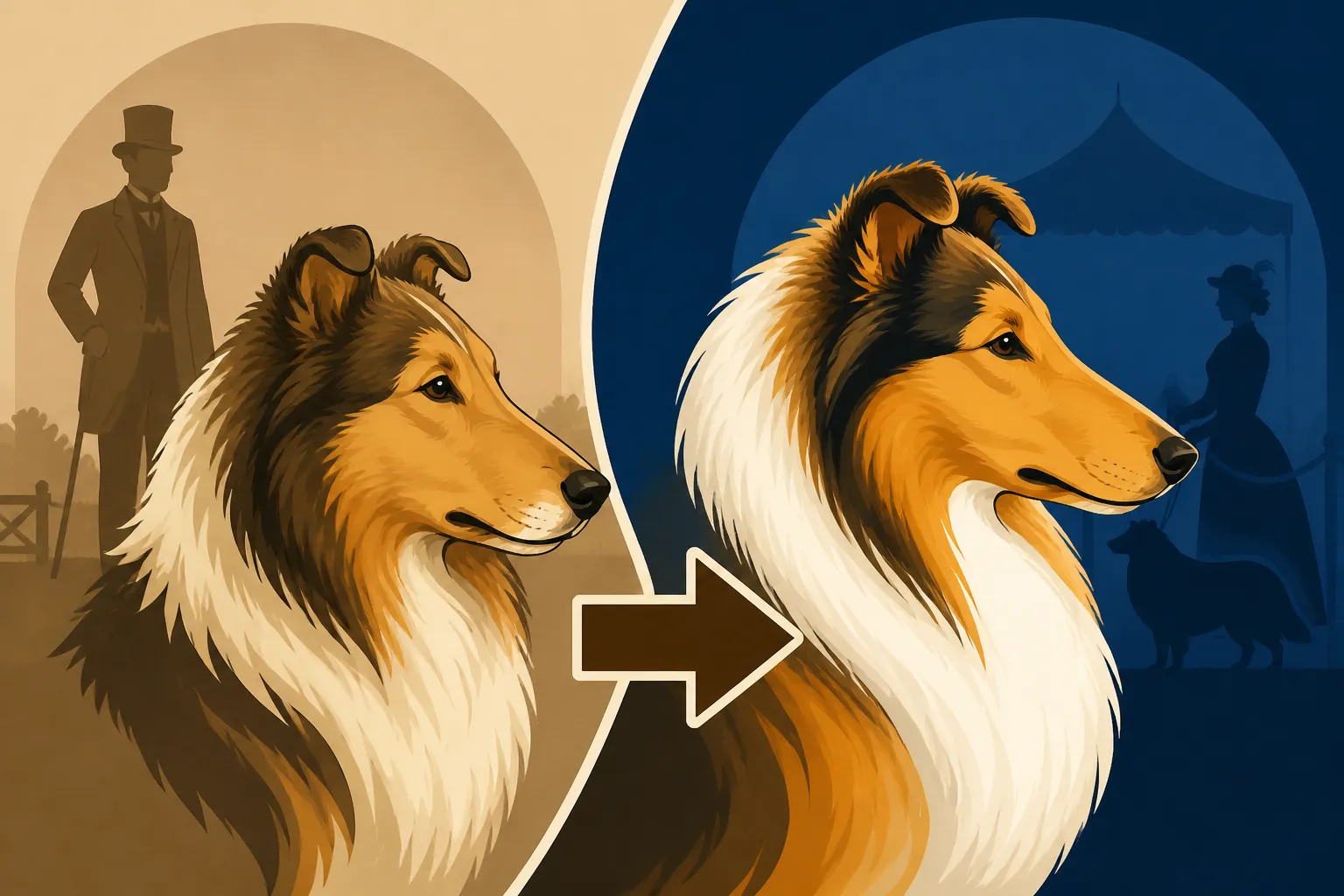
Whether the Victorian Show Ring Changed the Collie’s Head
Many Collie owners look at old photographs or illustrations of their beloved breed from a century or more ago and notice something striking: the heads look remarkably different. It can be quite a shock to see how much the breed's appearance, particularly its skull and muzzle, has evolved from the sturdy, broad-faced working dogs of yesteryear to the refined, elegant profiles we often admire today. This guide delves into the fascinating and sometimes controversial journey of the Collie's head, exploring how the Victorian show ring irrevocably shaped one of the most distinctive features of this iconic breed.
The Collie Before the Fancy: A Working Dog's Head
Before the advent of dog shows and formalized breed standards, Collies were first and foremost working dogs. Their purpose dictated their form, and that form was diverse, robust, and utilitarian. These were dogs bred to manage sheep across the rugged Scottish Highlands, requiring specific physical attributes for their demanding tasks.
Form Dictated by Function
The early Collies, often referred to as "Colley" dogs, were stocky, medium-sized animals. Their heads were proportionate to their bodies, strong and functional, designed for endurance and effectiveness in a harsh environment. They needed powerful jaws to grip if necessary (though they were primarily "loose-eyed" drovers, guiding with presence rather than force), and broad skulls to house intelligent brains capable of complex problem-solving. Imagine a shepherd out on a blustery moor, needing a dog that could face down a stubborn sheep or protect the flock, not one bred purely for aesthetic appeal. Their heads reflected this practicality: often wider, shorter in muzzle, and with a less pronounced stop than what we see today. They were built for the job, and their heads were just one more tool in their working arsenal.
A Spectrum of Appearances
It's crucial to understand that there wasn't a single, uniform "Collie" look. These were landrace dogs, bred for ability within specific regions, leading to considerable variation. Some might have had heads that were a bit longer, others shorter, but none possessed the extreme refinement that would later become fashionable. Their eyes were expressive, but not necessarily set in the almond-shaped, slightly oblique fashion dictated by later show standards. Their ears, while often tipped, weren't subject to the same strict aesthetic demands. They were simply good dogs doing good work, and their appearance varied from valley to valley. This diversity allowed for natural selection to favor dogs best suited to their local conditions and the specific tasks their shepherds required. Their robust heads were perfectly suited for scanning the horizon, navigating rough terrain, and communicating with their human partners.
The Victorian Era: The Genesis of the "Refined" Head
The mid-to-late 19th century marked a pivotal moment for many dog breeds, and the Collie was certainly no exception. Queen Victoria's admiration for the breed, particularly during her time at Balmoral, brought the Collie into the public eye and, more importantly, into the show ring. This shift from working dog to show dog initiated a rapid and dramatic transformation in the breed's appearance, with the head becoming a focal point of refinement. Queen Victoria Made the Collie Fashionable in the 1860s
The Pursuit of Elegance and "The Long Head"
Once Collies entered the exhibition halls, judges and breeders began to favor certain aesthetic traits over sheer working utility. The concept of "elegance" became paramount, and in the Collie, this translated significantly into the head. Breeders actively sought to lengthen the skull and muzzle, narrowing the overall width of the head and creating a more delicate, chiseled appearance. This wasn't a gradual evolution; it was a concerted effort driven by the desire for a distinct, aristocratic look that would set the show Collie apart. The phrase "the longer the head, the better" became a mantra in some circles, pushing the boundaries of what was naturally proportionate. It led to an almost greyhound-like elegance in some lines, a stark contrast to their working ancestors. This deliberate selection for specific head traits redefined the breed's silhouette and gave us the beginnings of the "Lassie" look that would later dominate popular imagination.
The Influence of Breed Standards and Early Judges
The formalization of breed clubs and the establishment of written breed standards played a critical role in standardizing this new "ideal" head. Judges, interpreting these burgeoning standards, rewarded dogs that exhibited the desired refinement, further incentivizing breeders to select for these traits. This created a feedback loop: judges favored long, narrow heads, breeders strove to produce them, and the breed standard eventually codified these preferences. It's not that these early breeders intended harm, but rather that their focus shifted to an aesthetic vision. The pressure to win in the show ring often meant prioritizing outward appearance, sometimes at the expense of the diverse, robust traits that had defined the working Collie for centuries. This era effectively cemented the "wedge" head as the hallmark of a show-quality Collie, and the path away from the broader, more utilitarian head was set. Many enthusiasts today still debate whether The Collie's Long Head Came From Show Breeding was a net positive for the breed.
The "Lassie" Effect: Solidifying the Ideal
While the Victorian era laid the groundwork, the mid-20th century saw the Collie's head cemented in public consciousness thanks to a single, beloved fictional character: Lassie. The dog that played Lassie, a male Collie named Pal, had a strikingly beautiful, refined head that perfectly encapsulated the emerging show ring ideal. A Dog Named Pal Played Lassie and Changed the Breed Forever
The Iconic "Lassie" Look
The image of Lassie, with her perfectly proportioned, long, and elegant head, became the gold standard. Every child wanted a Lassie, and every breeder aspired to produce one. This widespread popularity, fueled by films and television, amplified the aesthetic preferences established in the Victorian show ring. The public's perception of what a Collie "should" look like became almost exclusively tied to Lassie's appearance. This meant the fine, clean lines of her skull and muzzle, her intelligent eyes, and her perfectly tipped ears became the benchmark. Suddenly, the nuanced differences in working Collies versus show Collies were largely ignored by the general public, who now had a singular, idealized image in mind. This popular demand further intensified selective breeding for these traits, sometimes overlooking other vital aspects of health and temperament. The breed's popularity soared, as did the demand for puppies that resembled the on-screen hero. This phenomenon had a huge impact on the breed, and some even argue Whether Lassie Gave the Collie a False Reputation.
The Pressure on Breeders
For breeders, the Lassie phenomenon was a double-edged sword. On one hand, it brought unprecedented attention and demand for the breed. On the other, it placed immense pressure to produce dogs that conformed to this incredibly specific, highly stylized image. The show ring continued to reward extreme refinement, and now the public's buying habits followed suit. If a puppy didn't have that classic Lassie head, it might be harder to sell. This sometimes led to a focus on head type above all else, with less emphasis on the functional structure that characterized the original working Collies. It's a testament to the power of media, shaping not just perceptions, but the very genetic makeup of a beloved breed. While this era brought the Collie into millions of homes, it also reinforced a very narrow aesthetic path for its development.
The Modern Collie Head: Current Standards and Features
Today's Collie breed standard meticulously describes the desired head, reflecting a legacy of refinement that spans over a century. While there are slight variations between kennel clubs around the world, the core characteristics remain largely consistent, focusing on balance, expression, and the distinctive "wedge" shape.
The Balanced Wedge
The modern Collie head is often described as a "blunt, clean-cut, well-filled wedge." This means it should be smooth and tapering from the ears to the tip of the black nose, without any prominent cheekbones or a noticeable "snipy" or pointed muzzle. The length of the skull and the length of the muzzle should be roughly equal, providing a harmonious balance. The stop (the transition from forehead to muzzle) should be slight but perceptible. When you view a Collie from the side, the top lines of the skull and muzzle should run parallel, maintaining that elegant, unbroken wedge shape. The overall impression is one of refinement and intelligence, fitting for a dog that is both beautiful and historically bright. The standard aims for an elegant yet strong head, capable of housing an intelligent brain without appearing fragile.
The Importance of Expression
Beyond mere shape, the Collie's head is prized for its "expression." This comes from the combination of the eyes, ears, and overall shape, conveying intelligence, alertness, and a certain sweet sensibility. The eyes are particularly critical; they should be medium-sized, almond-shaped, and set somewhat obliquely, giving the dog a thoughtful, almost soulful gaze. The ears, ideally, are small, not too close together, and should "tip" naturally, with about two-thirds erect and the top third folding forward. This combination creates the hallmark Collie expression – one that communicates readiness, gentle wisdom, and a deep bond with its human companions. This unique expression is often what draws people to the breed, seeing a living, breathing connection in those intelligent eyes. It's a feature that breeders work tirelessly to preserve, as it's seen as the soul of the breed.
The Consequences of Refinement: Health and Functionality
While the pursuit of the "elegant" head has given us the beautiful Collie we know today, it hasn't been without its challenges. The intensive selection for specific aesthetic traits, particularly concerning the head, has raised concerns about the potential impact on the breed's health and functionality.
Structural and Health Concerns
The narrowing of the skull and the lengthening of the muzzle, while creating a refined look, can sometimes lead to structural issues. One of the most significant concerns revolves around the eyes. The shape and set of the eyes, when pushed to extremes, can exacerbate conditions like Collie Eye Anomaly (CEA). While CEA is a genetic condition, a narrow skull with deep-set eyes can potentially make visual impairments more challenging for an affected dog or even alter how the condition manifests. Collie Eye Anomaly Affects Most Collies, So Ask How Badly Furthermore, extreme refinement can sometimes be linked to dental issues, with overcrowding of teeth in a narrower jaw. Breathing can also be a subtle concern if the nasal passages become too constricted, though this is less common than in extreme brachycephalic breeds. The quest for aesthetic perfection must always be balanced with robust health.
Divergence from Working Ability
Another consequence of prioritizing show ring aesthetics, particularly the head, has been a divergence from the working origins of the breed. The broad, powerful head of the old working Collie was built for durability and strength in the field. A more delicate, refined head, while beautiful in the ring, might not possess the same resilience. This isn't to say modern Collies can't be good working dogs – many excel in various canine sports and retain their herding instincts – but the emphasis shifted from field performance to conformation. This led to a split, in some cases, between "show lines" and "working lines," where dogs from working backgrounds often retained some of the broader, less refined head characteristics of their ancestors, simply because those features were still serving a practical purpose. This demonstrates how human selection for appearance can gradually reshape a breed away from its original purpose, highlighting the constant tension between form and function in purebred dogs.
The Ongoing Debate: Type, Health, and the Future
The discussion around the Collie's head, its evolution, and the choices breeders make is an ongoing and passionate one within the breed community. It touches on fundamental questions about what it means to preserve a breed, balancing tradition, aesthetics, and health.
Balancing Aesthetics with Well-being
Responsible breeders today understand the importance of striking a balance. While they still strive for the elegance and distinctive expression defined by the breed standard, there is a renewed emphasis on health, temperament, and structural soundness. This means looking beyond just the head and considering the whole dog. A beautiful head is meaningless if the dog suffers from health issues or lacks the sound structure to live a full, active life. Breeders carefully select breeding pairs not just for their conformity to the standard's head type, but also for comprehensive health clearances, including genetic testing. This holistic approach ensures that the breed continues to thrive, preserving its iconic look while safeguarding its well-being for future generations. Many passionate individuals and organizations are working to educate the public and support breeders in making these crucial decisions. For example, Chewy offers a wide range of breed-specific educational materials and tools that can help owners understand their Collie's unique needs.
Preserving the Essence of the Collie
Ultimately, the goal is to preserve the true "essence" of the Collie – that combination of intelligence, beauty, and gentle loyalty that has captivated hearts for centuries. This includes maintaining the distinctive head, but within healthy and functional parameters. It's a continuous journey of careful breeding decisions, education, and open dialogue among enthusiasts. As owners, we can support this by choosing puppies from breeders who prioritize health and temperament alongside adherence to the breed standard. We can also provide our Collies with appropriate care, from high-quality food (often found on platforms like Chewy) to regular grooming with the right tools. The Collie's head, a testament to its unique history, remains a defining feature, and its future rests on thoughtful stewardship. Understanding Whether the Collie's Skull Has Narrowed Over Time and its implications is vital for this stewardship.
| Feature | Pre-Victorian Working Collie Head | Modern Show Collie Head (Lassie Era Onward) |
|---|---|---|
| Overall Shape | Broader, sturdier, less refined | Elegant, blunt, clean-cut wedge |
| Muzzle Length | Often shorter, more substantial | Longer, tapering, equal to skull length |
| Stop | More pronounced or less defined | Slight but perceptible |
| Cheekbones | Potentially more prominent | Smooth, well-filled, no prominence |
| Eyes | Diverse, expressive | Almond-shaped, medium, set obliquely |
| Expression | Alert, functional | Intelligent, thoughtful, gentle |
| Primary Focus | Functionality, working ability | Aesthetic elegance, breed standard |
When you're looking for specialized brushes to keep that beautiful head looking its best, or even a comfortable snood to keep their elegant frill clean while eating, browsing a pet supply retailer like Chewy can offer many options tailored to long-nosed breeds. Similarly, understanding the long history of the breed's appearance can help us appreciate the variety of What an Adult Male Collie Weighs and What a Collie Weighs and How Tall It Stands today, knowing that their overall build, not just their head, evolved.
Disclaimer
This article is for general informational purposes only and does not constitute professional advice. Laws, prices and regulations vary by location and change over time. Consult a qualified professional for guidance on your specific situation.