Whether the Rough and Smooth Collie Are Separate Breeds in Britain
For anyone welcoming a Collie into their life, or even just admiring them from afar, it’s easy to get lost in the nuances of breed descriptions. One common point of confusion, especially for those of us in the UK, revolves around the Rough and Smooth Collies: are they considered truly separate breeds or just different presentations of the same beloved dog? This guide will clear up that distinction, focusing on the official stance within Great Britain and what it means for these beautiful dogs.
One Breed, Two Coats: The Underlying Truth
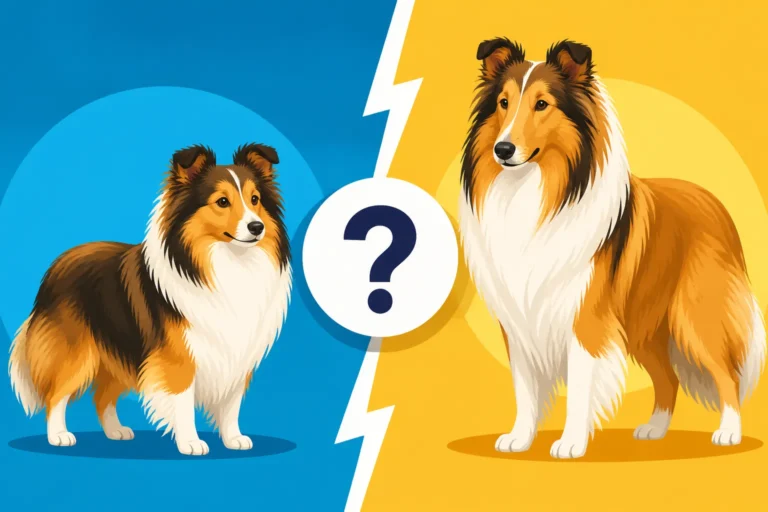
It's a question that pops up a lot, whether you're at a dog show, talking to breeders, or simply chatting with another Collie enthusiast in a local park: "Are Rough and Smooth Collies the same breed?" The simple, resounding answer, particularly in Britain, is yes. They are not separate breeds but rather two distinct varieties of the same breed, the Collie. Think of it like different hair colors in humans – we're all still human, just with different looks!
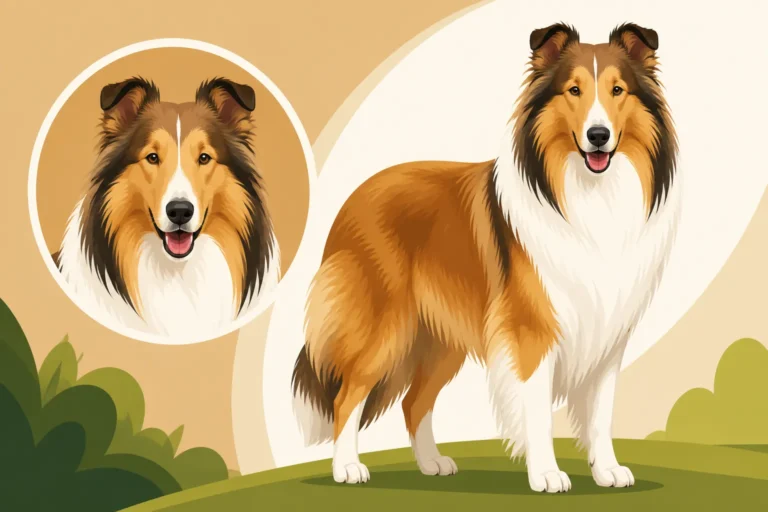
This distinction might seem minor, but it's really quite significant. It underscores their shared genetic heritage, their core temperament, and the vast majority of their physical characteristics beyond the length of their glorious coats. When you meet a Rough Collie with its flowing mane and a sleek Smooth Collie with its short, dense fur, you’re looking at dogs that share a common ancestral past and fundamentally the same breed standard, save for that crucial coat difference. They are both quintessential Collies, embodying the intelligence, loyalty, and herding instinct that defines the breed. Understanding this helps immensely when you delve into their history, health, and how they're recognized in the dog world.
A Shared Heritage: Where the Two Coats Began
To truly grasp why Rough and Smooth Collies are considered varieties rather than separate breeds, we need to take a little trip back in time to their origins. The Collie, in its earliest forms, was primarily a working dog in the Scottish Highlands, used for herding sheep. These were robust, intelligent dogs, valued for their ability to manage flocks across challenging terrain. The emphasis was on utility, not appearance, and coat variations naturally occurred within the working population.
The rough-coated variety likely developed as a protective measure against the harsh Scottish weather, providing insulation from cold, wind, and rain. The smooth-coated dogs, while perhaps less common in the coldest, wettest regions, still proved highly capable herders, possibly favored for their easier maintenance in certain conditions or for driving cattle where a shorter coat might offer less to snag. Both types worked side-by-side, sharing the same pastures and bloodlines. It wasn't until the breed began to gain popularity outside of working farms – notably thanks to Queen Victoria's admiration in the 1860s – that more attention was paid to their appearance and these coat types began to be formally distinguished. You might be interested in learning about The Collie Was a Scottish Droving Dog Before It Was a Show Dog. The transition from a pure working dog to a beloved companion and show dog brought a refinement of the breed, but their shared working roots remained the bedrock of their identity.
The Kennel Club UK's Official Stance on Collie Varieties
When it comes to official recognition and classification in Great Britain, the Kennel Club (KC) is the governing body. And their stance is clear: the Rough Collie and the Smooth Collie are indeed recognized as two distinct varieties of the same breed, not as separate breeds entirely. This means they share a single breed standard, with specific allowances made for the coat difference.
This unified approach reflects their shared ancestry and fundamental characteristics. While they are judged separately in the show ring, often having their own challenge certificates and champion titles, they are still fundamentally connected under the umbrella of "Collie." This is quite different from some other breeds where coat type might define entirely separate breeds (e.g., the Belgian Shepherd varieties). For example, the Kennel Club's breed information will list "Collie (Rough)" and "Collie (Smooth)" as distinct entries, but they are both derived from the singular origin. This consistent framework ensures that breeders and owners understand that, despite visual differences, they are working with the same core genetic material and temperament profile. It's a testament to their strong, shared identity that even after generations of selective breeding, the Kennel Club recognizes their inseparable bond. You can often find a wide array of products for both varieties, from grooming tools specifically designed for dense coats to those for shorter ones, by checking reputable online retailers. For example, sites like Chewy offer a comprehensive selection for all your Collie's needs, whether rough or smooth.
Practical Implications for British Owners and Breeders
Understanding that Rough and Smooth Collies are varieties, not separate breeds, has several practical implications for British owners and breeders. This isn't just a technicality; it influences everything from breeding decisions to show participation and even general discussions about the breed's health and temperament.
Breeding Considerations
For breeders in the UK, the fact that Rough and Smooth Collies are varieties of the same breed means that they can, in fact, be bred together. A Rough Collie can be mated with a Smooth Collie, and vice-versa, producing litters that can contain both rough and smooth-coated puppies. This is a crucial point that highlights their genetic closeness. When two dogs carrying the genes for different coat lengths are bred, the outcome can be a mix of both. This practice is sometimes undertaken to bring in specific desired traits, maintain genetic diversity, or simply because a breeder appreciates both varieties. You can find more information about this in Whether a Litter Can Hold Both Collie Coats or Whether Rough and Smooth Collies Can Be Bred Together.
This inter-variety breeding also means that health concerns are often shared across both coat types. Conditions like Collie Eye Anomaly (CEA) or the MDR1 mutation, for instance, are not exclusive to one coat variety but are breed-wide concerns that need to be addressed by responsible breeders of both Rough and Smooth Collies. This is why thorough genetic testing, regardless of coat type, is so vital.
Showing and Competition
While they are the same breed, Rough and Smooth Collies are generally judged separately in Kennel Club licensed dog shows in Britain. This is a practical necessity given the significant difference in coat presentation. A Rough Collie's extensive coat requires different grooming and presentation than a Smooth Collie's sleek, low-maintenance one. If they were to compete directly against each other, the judges would have an impossible task. Therefore, they have their own classes, challenge certificates, and paths to becoming champions.
However, the underlying breed standard – encompassing structure, movement, temperament, and overall type – is largely identical. Judges are looking for the same fundamental Collie qualities, simply presented in two different "packages." This means that success in one variety often requires an understanding of the overall Collie breed type, not just the specific coat. If you’re considering showing, you’ll need to familiarize yourself with the nuances of preparing each coat type, from brushing out tangles in a Rough Collie's dense undercoat to maintaining the pristine sleekness of a Smooth. Many groomers offer services for both, and for at-home care, essential tools can be found from retailers such as Chewy, making it easier to maintain your dog's specific coat requirements.
Community and Resources
For owners, recognizing them as varieties means that many breed-specific resources, clubs, and communities cater to both. The Collie Club of America, for example, represents both Rough and Smooth Collies under its umbrella, though it's important to remember that their rules and classifications are specific to the US. In Britain, breed clubs and rescue organizations typically serve the entire Collie breed, often having members and dogs of both varieties. This creates a strong, unified community for Collie enthusiasts.
When seeking advice, a veteran owner of a Smooth Collie will often have valuable insights for a Rough Collie owner, and vice versa, on topics that transcend coat length, such as training, diet, or common health issues. Of course, there are specific grooming requirements that differ significantly, as highlighted in articles like What Separates a Rough Collie From a Smooth and The Smooth Collie Is the Same Dog With Less Work. But for much of daily life with a Collie, whether you have a Rough or a Smooth, the experience is wonderfully similar.
Comparing Official Kennel Club Views: UK vs. Global
It's interesting to note that while the UK Kennel Club maintains the "variety" distinction, other major kennel clubs around the world sometimes approach the Rough and Smooth Collie classification differently. This can occasionally lead to confusion for those new to the breed or looking at global pedigrees.
The Federation Cynologique Internationale (FCI)
The FCI, which is the international federation of kennel clubs, often influences how breeds are recognized across many European and international countries. The FCI generally recognizes the Rough Collie and the Smooth Collie as distinct breeds, rather than varieties. This is a significant departure from the UK's stance. For instance, they might be listed as "Collie Rough" (standard 156) and "Collie Smooth" (standard 296). This separation, while seemingly a subtle difference in terminology, impacts how these dogs are registered, bred, and shown in countries adhering to FCI regulations.
The American Kennel Club (AKC)
The American Kennel Club (AKC) actually aligns more closely with the UK Kennel Club's position, recognizing the Rough and Smooth Collie as two varieties of the same breed. They are both registered simply as "Collie," with a distinction made for their coat type within the registry and show entries. This means that, similar to Britain, inter-variety breeding is permissible and the core breed standard is shared.
Why the Differences?
These variations in recognition stem from historical decisions made by each kennel club, sometimes influenced by when and how the breed was introduced and established in their respective countries, as well as differing philosophies on breed classification. Some clubs prioritize genetic purity and distinct lines, leading to separate breed designations for even minor differences, while others emphasize shared heritage and fundamental characteristics, opting for "variety" status.
The table below offers a quick comparison of how these major kennel clubs categorize Rough and Smooth Collies:
| Kennel Club | Classification of Rough and Smooth Collie | Key Implication |
|---|---|---|
| The Kennel Club (UK) | Varieties of the same breed | Share breed standard, can be interbred, shown separately. |
| American Kennel Club (AKC) | Varieties of the same breed | Share breed standard, can be interbred, shown separately. |
| Fédération Cynologique Internationale (FCI) | Separate breeds | Separate breed standards, typically not interbred, shown as distinct breeds. |
For a British owner, the most important takeaway is that within the UK, your Rough or Smooth Collie is recognized as part of one cohesive breed. This simplifies understanding health predispositions, temperament traits, and the overall "Collie experience" within the local context. If you're importing a dog from an FCI-member country, or considering breeding across borders, these distinctions become much more critical. You might find it useful to read Whether the Kennel Club Splits the Two Collie Varieties for more local context.
Ultimately, whether they are called varieties or separate breeds by different organizations, what truly matters is the health, welfare, and wonderful companionship these dogs bring into our lives. No matter the length of their glorious coats, a Collie is a Collie, through and through.
Disclaimer
This article is for general informational purposes only and does not constitute professional advice. Laws, prices and regulations vary by location and change over time. Consult a qualified professional for guidance on your specific situation.