Whether an American Collie Is Bigger Than a British One
An American Collie is generally taller than a British Collie when you compare the breed standards, but that does not mean every American dog is bigger than every British one. The standards use different height ranges, while real dogs vary in build, sex, and family line. Here’s how to compare them without mistaking a broad trend for a guarantee.
What American and British Collie Mean
They are usually the same breed, not two separate breeds
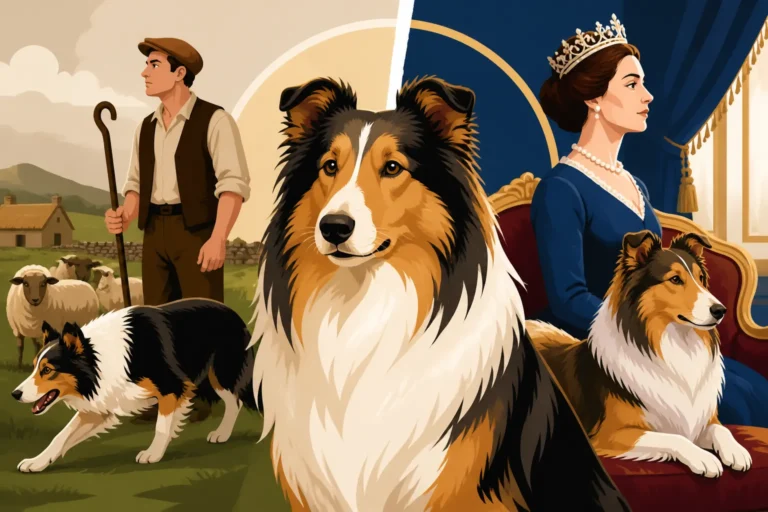
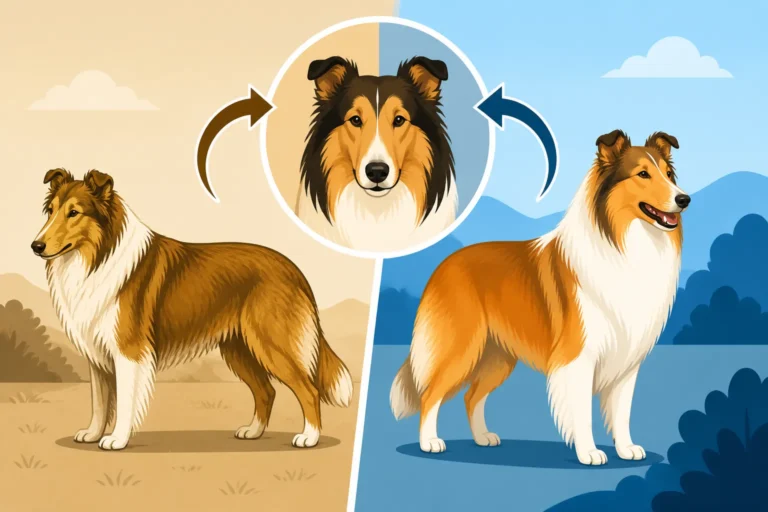
In this comparison, “American Collie” usually means a Collie bred to the American Kennel Club standard, while “British Collie” means one bred to the UK Kennel Club standard. Those labels describe breeding and judging traditions, not two officially separate breeds. Both Rough and Smooth Collies appear in each tradition; their coats differ, but they share the same basic breed identity. For a closer look at the coat varieties, see Rough and Smooth Are Two Varieties of One Collie.
There is an important naming wrinkle: in everyday conversation, “Collie” can also mean a Border Collie, especially in the UK. That is a different breed from the Rough or Smooth Collie discussed here. If someone says “British Collie,” it is worth asking whether they mean a UK-bred Rough or Smooth Collie, or a Border Collie. The answer changes the comparison significantly. The Collie Against a Border Collie explains the distinction between those breeds.
Country of birth alone is not a perfect guide, either. A dog born in Britain may have ancestors from American lines, and a dog born in the United States may come from British stock. When you are comparing two particular dogs, their measured height and body condition tell you more than their passport or pedigree location.
The standards provide the clearest size comparison
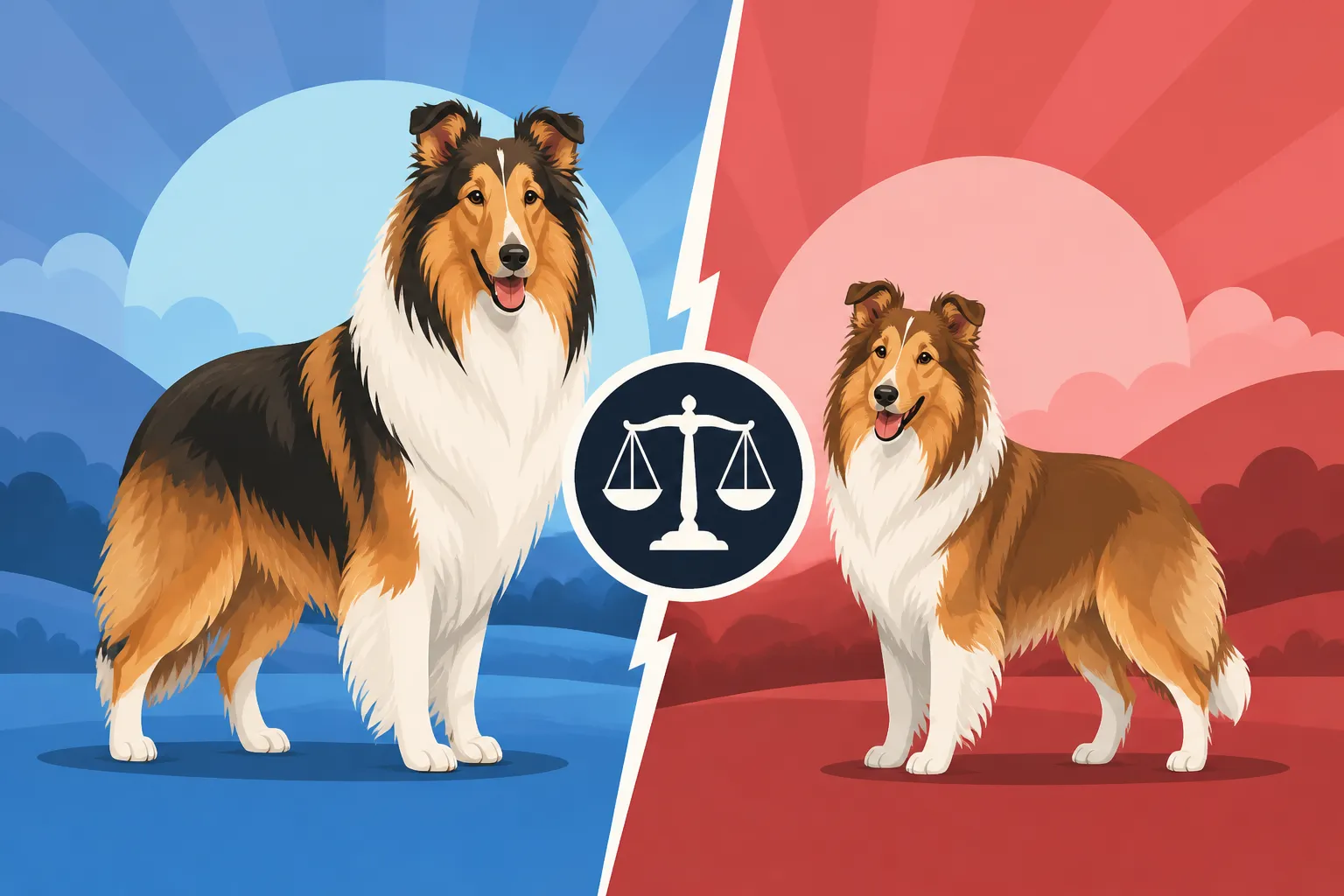
Breed standards describe the ideal size for show-ring evaluation. The American and UK standards set different preferred height ranges, with the American standard generally calling for a taller dog. These ranges are most useful as a comparison of ideals—not a promise that every individual dog will fit neatly inside them.
| Standard | Dogs at the shoulder | Bitches at the shoulder | What the figures indicate |
|---|---|---|---|
| American Kennel Club | 24–26 inches | 22–24 inches | Taller preferred height range |
| UK Kennel Club | 22–24 inches | 20–22 inches | Smaller preferred height range |
The figures are measured at the shoulder, not from the top of the head. That distinction matters when looking at a tall-coated Collie standing in a photo: coat, posture, and camera angle can make the dog appear larger or smaller than it measures. A reliable comparison uses a level surface and a careful measurement from the ground to the top of the shoulder.
You can see a fuller overview of height alongside weight in What a Collie Weighs and How Tall It Stands. Keep in mind that the table compares standards, not a survey of every Collie in either country. Individual dogs can fall outside their home country’s ideal range and still be healthy, comfortable companions.
How Much Bigger Is an American Collie
The difference is usually clearest in height
Comparing the middle of each standard’s range, an American-standard dog is about two inches taller than a UK-standard dog, and the same approximate difference applies to bitches. But the ranges meet at their edges: an American dog at the lower end of its range may be the same height as a British dog at the upper end.
That overlap is why broad statements such as “American Collies are always bigger” can mislead. Picture two adult male Collies standing side by side. One measures 24 inches and the other also measures 24 inches. One may fit the lower end of the American range, while the other sits at the top of the UK range. Their country-associated standards differ, but their actual height does not.
The reverse can happen, too. A British-bred Collie may be taller than a particular American-bred dog because individual height depends on inheritance from both parents and variation within the family. If a breeder or rescue gives you a dog’s height, ask how and when it was measured rather than relying on a general label.
Weight is less straightforward than height
Height is relatively easy to compare because both standards give defined ranges. Weight is more complicated. A Collie’s body weight reflects its height, bone, muscle, sex, age, and condition; it is not a simple country-by-country rule. The UK breed standard does not set a weight range in the same way that it specifies height, so claims that all British Collies weigh a particular amount should be treated cautiously.
American Collies are sometimes described as heavier or more substantial, but that impression can come from several things besides actual weight. A fuller coat can make a dog look broad, while bone and body condition can change how solid it appears. A fit Collie with a thick ruff may look much larger than a leaner dog of similar height, even when the scale says otherwise.
For a pet owner, body condition matters more than whether a dog matches a national average. You should be able to feel the ribs under a light covering, and the dog should have a visible waist when viewed from above. If your Collie’s weight is changing, ask your veterinarian to assess its body condition and growth rather than trying to judge beneath the coat alone. How Much a Collie Weighs offers more context for interpreting size.
Why Two Collies Can Look So Different
Sex and family line influence the individual dog
Within either standard, males are expected to be taller than females. That does not mean every male outweighs every female, but it is a useful starting point when comparing adults. Age also matters: a growing youngster is not directly comparable to a fully mature dog, and Collies can take time to develop their adult frame and coat.
Family line adds another layer. Some lines produce dogs toward the lower end of a standard’s height range; others tend toward the upper end. Breeders may also select for particular features and overall type, so two dogs from the same country can look quite different. For a puppy, the parents’ measured height and the size of mature relatives are more informative than a confident prediction based only on the puppy’s current paws or coat.
If you are choosing a puppy, ask the breeder what adult relatives are like in height and build, and whether those relatives are measured or simply described as “large.” A thoughtful answer should include variation: siblings from the same litter can mature to different sizes. It is sensible to plan for a medium-to-large herding dog rather than buying equipment or setting expectations around a precise adult weight.
Coat and grooming can exaggerate size
Rough Collies have a long outer coat and a dense undercoat, while Smooth Collies have a shorter coat. That difference can make Rough Collies look broader and more imposing, particularly around the neck, chest, and hindquarters. The coat changes the outline you see; it does not change the dog’s height at the shoulder.
A coat that is damp, matted, or unevenly groomed can further distort the silhouette. So can a photograph taken from below or with the dog standing close to the camera. When comparing dogs online, look for a clear side view with the dog standing squarely on a level surface, and remember that visual estimates are not a substitute for measurement.
Routine coat care can help you assess your dog’s shape more accurately, because you can feel the body beneath the hair while brushing. If you are gathering basic grooming supplies, retailers such as Chewy may be one place to compare options, but the important part is choosing tools suited to the coat and learning how to use them gently. A slicker brush or comb should not be used to force through painful tangles.
Comparing a Particular Dog in Real Life
Measure height consistently
To compare two Collies, measure both in the same way. Have each dog stand naturally on a firm, level floor with its legs positioned comfortably beneath it. Use a measuring tool or a proper height-measuring stick to find the top of the shoulder, also called the withers. Measuring to the top of the head or ears will give a misleading result.
It helps to have a second person keep the dog relaxed and standing squarely. A dog that is crouching, leaning, stretching, or turning away can produce an inaccurate measurement. Take the measurement more than once and record it with the date. For a puppy, repeat it as the dog grows, but do not treat short-term changes as a reliable forecast of final adult size.
If you are preparing for a harness, crate, or travel setup, use the manufacturer’s measuring instructions rather than choosing by breed label. A harness should fit securely without restricting movement, and a crate should allow the dog to stand, turn, and lie down comfortably. Chewy and other pet retailers may list sizing guidance, but measuring the individual dog remains the safer starting point.
Compare health and fit, not just a national label
A bigger dog is not automatically healthier, stronger, or better suited to a particular home. A well-proportioned Collie should move comfortably and maintain a healthy body condition. A dog that is unusually thin, overweight, stiff, or reluctant to exercise deserves attention for its own circumstances, not a comparison with an American or British ideal.
Size can matter for everyday logistics. A taller or heavier dog may need more room in a car, a sturdier bed, or different equipment sizing. Yet temperament, training, exercise needs, coat care, and health history will often have a greater effect on daily life than a small difference in height. If your decision is between a Collie and a Border Collie, compare the breeds themselves rather than assuming a country label answers the question. Whether the Collie Is Bigger Than a Border Collie addresses that separate comparison.
For a puppy or rescue, ask for an adult dog’s measurements if available, and check that any equipment fits the actual animal. If you are shopping for a tape measure, grooming tool, or other routine supplies, Chewy may offer options to compare; confirm product dimensions and suitability rather than assuming one size fits all Collies. Whether a Collie Suits a First Time Owner can also help you think beyond size when deciding whether the breed fits your household.
The Practical Answer for Owners and Puppy Buyers
Use the standard as a guide, not a guarantee
If you are asking which type is bigger in general, the American-standard Collie is typically expected to stand taller than a UK-standard Collie. The difference is reflected in the height ranges set by the respective standards. But because the ranges overlap and individual dogs vary, there is no reliable rule that every American Collie will be taller or heavier than every British Collie.
When evaluating a specific dog, prioritize its actual shoulder height, body condition, and comfort in movement. For a puppy, look at the parents and mature relatives, but allow for uncertainty. For an adult dog, measure rather than guessing from the coat or country of origin. A breeder’s description can be useful context, but a tape measure provides a more direct answer.
The same care applies when choosing everyday gear. Collie sizing can vary from dog to dog, so measure the neck, chest, and body according to the item’s fitting directions. If comparing options through Chewy or another retailer, use the listed size chart and check return or exchange details before buying. A well-fitting item should suit the individual dog, whether it comes from an American or British line.
Keep breed identity and size in perspective
“American” and “British” are shorthand for different standard traditions, not dependable labels for an individual dog’s eventual size. Rough and Smooth Collies are both found in each tradition, and a dog’s coat variety does not determine whether it follows one country’s size pattern. The key distinction is the height range each standard favors, with the American range generally higher.
If the phrase “British Collie” is being used to mean a Border Collie, clarify that before comparing measurements. Border Collies are a different breed, and the comparison should not be mixed up with a UK-bred Rough or Smooth Collie. The Collie Against the Border Collie and the Sheltie provides broader breed context, while Whether the Collie Is Bigger Than a Border Collie focuses on the size question.
For most homes, the best question is not “Which country’s Collie is bigger?” but “What size is this dog, and can I meet its care and activity needs?” Measure the dog, consider its health and body condition, and plan for normal individual variation. That approach is more useful than assuming a national label predicts exactly what will stand beside you on the leash.
Disclaimer
This article is for general informational purposes only and does not constitute professional advice. Laws, prices and regulations vary by location and change over time. Consult a qualified professional for guidance on your specific situation.