Whether a Collie Mix Can Still Carry MDR1
A Collie mix can carry the MDR1 mutation even if the dog looks nothing like a Collie. The variant is inherited, not identified by coat, size, or behavior, so a mixed-breed label does not settle the question. This guide explains how ancestry affects risk, what a DNA result means, and how to share useful information with your veterinarian.
Why a Collie mix can inherit MDR1
The mutation comes from genes, not appearance
MDR1 is the commonly used name for a variant in the ABCB1 gene. The gene helps produce a protein that limits certain substances from reaching the brain. When the gene variant affects that process, some medications can cause serious reactions, depending on the dog’s genotype, the drug, and the circumstances of use. For a closer look at the biology, see What the MDR1 Mutation Actually Does to a Collie.
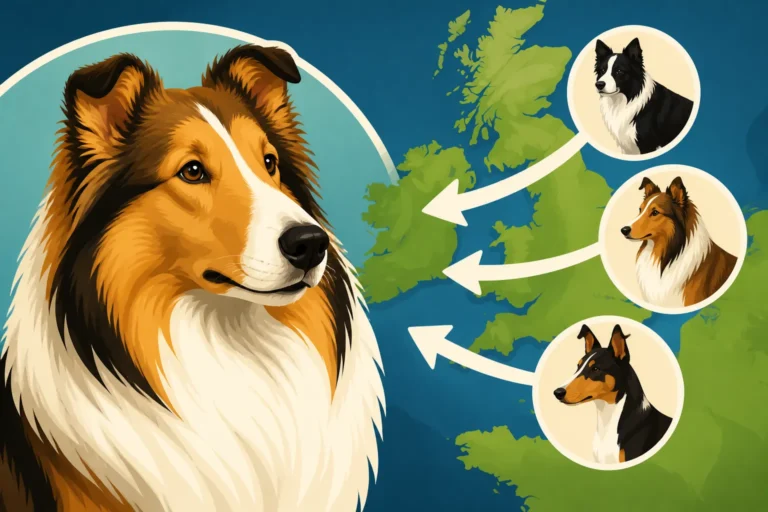
A mixed-breed dog can inherit the variant if it came down through a parent with the mutation. That parent may be a Collie, a Collie mix, or a dog whose ancestry is not obvious from appearance. A dog might have short hair, a solid-colored coat, floppy ears, or features associated with another breed and still carry the variant.
That uncertainty is often frustrating for adopters. A rescue’s paperwork may list several breeds, or simply say “herding mix,” without any reliable family history. A dog’s appearance can suggest possible ancestry, but it cannot confirm whether the dog carries MDR1. Even a dog that looks unmistakably Collie cannot be diagnosed by looks alone; Whether an MDR1 Collie Looks Any Different explains why outward appearance is not a dependable clue.
One copy and two copies are not the same result
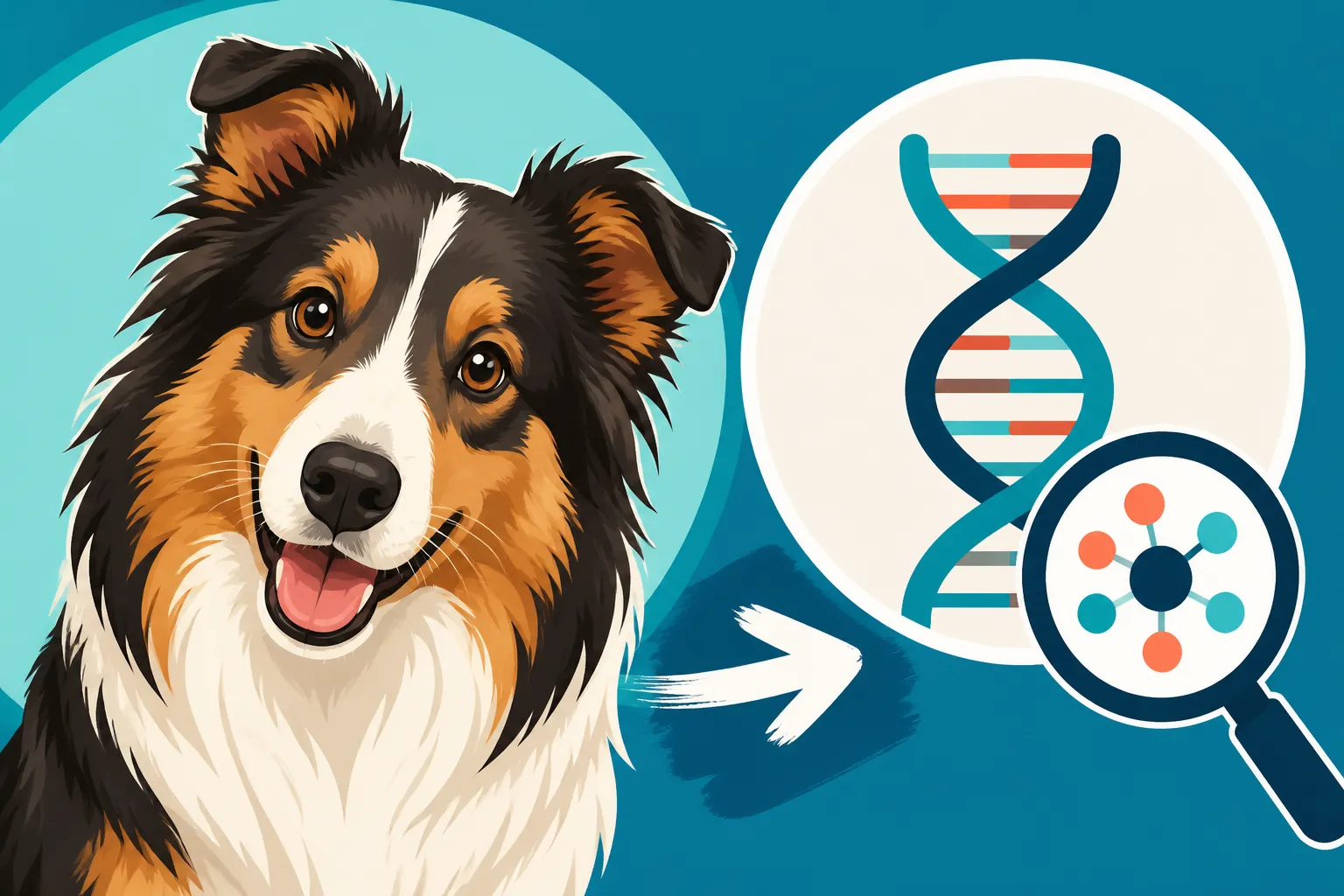
A dog inherits one copy of the ABCB1 gene from each parent. A DNA test can generally identify whether the dog has no copies of the tested variant, one copy, or two copies. Dogs with one copy can still have increased sensitivity to certain drugs; two copies may increase the concern further. The result is not a simple “safe” or “unsafe” label, because risk depends on the specific medication and situation.
This is why MDR1 is not something to dismiss just because a dog is a mix, or because a relative seemed fine after a medication. A dog’s response cannot reliably predict another dog’s response, and a lack of past trouble does not prove that a dog is clear. The practical question is the dog’s own test result and the medication being considered.
| Parent genotypes | Possible puppy results | What it means |
|---|---|---|
| No copies × one copy | No copies or one copy | Puppies may inherit the variant from the parent with one copy |
| One copy × one copy | No copies, one copy, or two copies | Puppies may inherit zero, one, or two copies |
| One copy × two copies | One copy or two copies | Every puppy inherits at least one copy |
| No copies × two copies | One copy | Every puppy inherits one copy |
| No copies × no copies | No copies | Puppies do not inherit this variant from these parents |
These are possible inheritance patterns, not a way to identify an individual dog without testing. If you are comparing family history or a breeder’s records, The Three Genetic Tests a Collie Breeder Owes You offers broader context on health testing. For a mixed-breed dog with unknown parents, a direct test is the more useful answer than trying to reconstruct ancestry from a photograph or a breed label.
How to decide whether testing makes sense
Unknown ancestry is a reason to ask, not to panic
A Collie mix does not automatically have MDR1, and the word “mix” does not make the possibility disappear. If a dog has known Collie ancestry, or if its background is uncertain and it may have herding-breed ancestry, it is reasonable to ask a veterinarian whether testing would be useful. A vet can help weigh the dog’s history, planned medications, and any previous test records.
This is especially relevant when adopting an adult dog. The prior owner or rescue may have medical paperwork, but records can be incomplete or refer to a different dog in the household. If the dog’s result is not documented, do not treat a verbal guess or a breed estimate as a genetic result. The questions in Whether a Rescue Collie Should Be MDR1 Tested First also apply to a rescue mix when ancestry or records are unclear.
Testing is a planning tool, not an emergency diagnosis. You do not need to assume that your dog is ill just because testing is being discussed. Instead, the goal is to give the veterinary team information before a medication decision has to be made quickly. If you are trying to understand testing logistics, Which Lab Runs the Collie MDR1 Test and Whether a Cheek Swab Is Enough for a Collie MDR1 Test cover common questions about test providers and sample collection.
A breed estimate cannot replace a DNA result
Breed identification tests and MDR1 tests answer different questions. A breed estimate may suggest that a dog has ancestry from Collies or other breeds, but it does not directly establish whether the dog carries the ABCB1 variant. Conversely, an MDR1 result identifies the tested variant without giving a complete account of the dog’s breed ancestry or overall health.
So, if an online report says “Collie mix,” treat that as a clue about possible lineage—not a diagnosis. And if an adoption listing does not mention Collie at all, that absence does not prove the dog is clear. Breed descriptions are often based on appearance or limited history, while inherited variants can travel through multiple generations and mixed-breed pairings.
If cost is part of the decision, ask the testing provider or veterinary clinic what the test involves and what is included; fees and processes can differ. The article What an MDR1 Test Costs for a Collie discusses the kinds of details to clarify, though your own clinic or testing provider is the place to confirm current charges. If you order other pet supplies through Chewy, you can also keep the product packaging or order record for any medication or preventive you have purchased. That record can help your vet identify the exact item, but it does not tell you whether the dog has MDR1 or whether a product is appropriate.
What to do with an MDR1 result
Share the result before medication is given
Once you have a result, save a copy somewhere you can reach quickly. Add it to the dog’s medical records, and tell the regular veterinary clinic, emergency clinic, groomer, boarding facility, and anyone else who may be involved in care. A result can be easy to forget when you are worried or in a hurry, so a note in your phone or a printed record in the dog’s folder can help.
When you contact the veterinarian, be specific: say whether the dog has zero, one, or two copies of the variant, and share the test report if available. If you have a medication question, provide the exact drug name and formulation rather than asking only whether “this medicine” is safe. Your vet needs to consider the particular drug, dose, route, the dog’s health, and the reason treatment is needed.
Chewy order histories, pharmacy labels, and product boxes may help you identify what a dog has received in the past. Keep them as supporting records, not as proof of safety. A product being sold for pets or having been tolerated previously does not establish that it is suitable for a dog with a particular MDR1 result. For help preparing that conversation, see How a Collie Owner Tells the Vet About MDR1.
Do not make medication changes on your own
An MDR1 result does not mean a dog can never receive medication. It does mean the veterinary team should know the result and evaluate the options carefully. Some drugs may be avoided, adjusted, or used with additional precautions depending on the dog and the medical need. Do not stop a prescribed medicine, change a dose, or substitute an over-the-counter product without speaking to the veterinarian.
This matters because medication choices are not always straightforward. A drug name may appear in different products, combinations, or concentrations, and the same active ingredient can be used in different ways. A pharmacist or veterinarian can help identify whether a concern applies to the particular product and how to manage it safely. For questions about sedation, see Whether an MDR1 Collie Can Take Any Sedative; the answer should be based on a veterinary assessment, not a blanket rule.
If you are unsure whether a dose was already given, or your dog may have taken something accidentally, call a veterinarian or animal poison-control service promptly. Have the package, the amount involved, and the dog’s approximate weight ready if you know them. Do not wait for symptoms before asking for advice. If a medication or preventive came from Chewy, the package or order details may help you relay the product name accurately, but contact a veterinary professional for instructions.
Common questions about MDR1 in Collie mixes
Can a Collie mix carry MDR1 if only one parent was a Collie?
Yes, it is possible, but the parent’s breed label alone does not reveal its genotype. A Collie parent might have no copies, one copy, or two copies of the variant. The puppy’s chance of inheriting it depends on the actual genotypes of both parents, not simply on whether one parent is called a Collie.
If the Collie parent’s test result is known, that can help clarify possible inheritance. If it is not known—or if the dog’s parentage is uncertain—the mix’s own genetic test is the clearest way to learn its result. Do not assume that a dog is clear because it has only one Collie parent, and do not assume it carries the variant solely because of that parent.
If my dog seems healthy, does it still need testing?
A healthy appearance does not answer whether a dog carries MDR1. The variant is about sensitivity to certain medications, so a dog may show no obvious signs in everyday life and still have a result worth sharing with a veterinarian. Likewise, a dog that has taken medication without a known reaction is not necessarily clear.
Testing is a decision to discuss with your vet, particularly when family history is unknown or medication planning is likely. If your dog already has a result, keep it with the medical record and mention it before treatment. If not, ask whether a test would change the care plan. The aim is not to label every Collie mix as high risk; it is to replace guesswork with useful information when possible.
Should I avoid all preventives and treatments until I know?
No. Do not withhold needed care or skip a preventive solely because you suspect your dog might have Collie ancestry. Instead, tell the veterinarian about the uncertainty and ask for advice before giving a medication when you have a concern. Your vet can determine whether testing is appropriate and help select a safe plan for the dog in front of them.
That approach is more practical than trying to screen every product label yourself or relying on general breed advice. Keep records of what your dog has received, including the product name and date if known. Whether you purchased an item from Chewy, a clinic, or another retailer, its label can help your veterinarian identify it—but the dog’s MDR1 status and the clinician’s guidance should direct the decision.
Disclaimer
This article is for general informational purposes only and does not constitute professional advice. Laws, prices and regulations vary by location and change over time. Consult a qualified professional for guidance on your specific situation.