Whether Stress Triggers a Collie’s Skin Flare
It’s a truly frustrating experience, isn't it? You’re trying your best to give your Collie a wonderful life, but then you notice a rash, some thinning hair, or raw spots on their skin. It leaves you scratching your head, wondering what could possibly be causing it, especially when everything else seems fine. This guide is here to shed some light on the intricate connection between stress and skin health in Collies, helping you understand if emotional strain could be triggering or worsening those puzzling skin flares.
Understanding Skin Flares in Collies: Beyond the Obvious
Collies, with their stunning coats and intelligent eyes, are unfortunately predisposed to certain health conditions, and skin issues can be a significant concern for many owners. It’s not always straightforward to pinpoint the cause, as so many factors can play a role, from genetics to diet to environmental allergens. Before we dive into stress, it’s important to understand the landscape of Collie skin health.
The Basics of Collie Dermatomyositis (DMS)
One of the most notable skin conditions in Collies, and one that often causes a great deal of distress for owners, is Dermatomyositis (DMS). This isn't just a simple rash; it's an inherited inflammatory disease affecting the skin, muscles, and sometimes even the blood vessels. For a detailed dive into this condition, you might want to read our article on Dermatomyositis and the Collie Risk Panel.
DMS typically manifests as lesions around the eyes, ears, muzzle, bony prominences like elbows and hocks, and sometimes on the tail tip. These lesions can appear as redness, scaling, hair loss, crusting, and even ulcerations. Imagine seeing those beautiful ears starting to lose hair, or crusty patches developing on your Collie’s nose – it's heartbreaking. While the underlying cause is genetic, the severity and onset can vary greatly, and external factors are often suspected of exacerbating the condition. Understanding How Dermatomyositis Risk Is Scored in a Collie can also provide more insight into the genetic predisposition.
Common Triggers for Collie Skin Issues
Beyond genetic predispositions like DMS, Collies can experience skin problems from a variety of more common sources, just like any other dog. Allergic reactions, for instance, are a huge culprit. Your Collie might be allergic to certain ingredients in their food, pollen in the air, dust mites in your home, or even flea bites. These allergies often present as generalized itchiness, redness, and recurring ear or paw infections.
Parasites, though less common with modern preventatives, can still cause significant skin irritation. Flea allergy dermatitis is intensely itchy, leading to obsessive scratching, biting, and subsequent skin damage. Bacterial or fungal infections, often secondary to allergies or immune suppression, can also cause localized redness, pustules, and hair loss. Distinguishing between these various causes and a potential stress-induced flare can feel like detective work, requiring careful observation and often veterinary assistance. It’s crucial to rule out these more straightforward causes first before attributing everything to stress.
The Complex Link Between Stress and Skin Health
Now, let's talk about stress. We all know how stress can wreak havoc on our own bodies, manifesting in everything from digestive issues to breakouts. It turns out our canine companions are no different. The connection between the brain, the immune system, and the skin is a well-established scientific concept, often referred to as the "brain-skin axis." When a Collie experiences stress, it sets off a cascade of physiological responses that can absolutely impact their skin health.
How Stress Impacts a Collie's Immune System
When your Collie feels stressed, their body automatically kicks into a "fight or flight" response, similar to humans. This involves the release of hormones like cortisol and adrenaline. While these hormones are essential for acute responses to danger, prolonged or chronic elevation of cortisol can have a suppressive effect on the immune system. Think of it this way: the body is so focused on dealing with the perceived threat that it temporarily down-prioritizes other functions, including maintaining a robust immune defense.
A weakened immune system means your Collie is less equipped to fight off minor infections, heal small wounds, or keep existing inflammatory conditions, like DMS, in check. This can lead to flare-ups of underlying skin problems or make your Collie more susceptible to new ones. For a Collie with a genetic predisposition to Dermatomyositis, stress can act like a match igniting a dormant fire, intensifying the existing inflammatory processes and making the skin lesions more severe or widespread. It’s a vicious cycle where stress makes the skin worse, and the discomfort of the skin issue itself can then further stress the dog.
Identifying Stressors in Your Collie's Life
It's easy to assume our dogs are happy-go-lucky all the time, but Collies, being highly intelligent and sensitive creatures, can be surprisingly susceptible to stress. Their keen perception means they are often very in tune with their environment and even their owner's moods. You might find our discussion on Whether a Collie Is Sensitive to Household Tension quite illuminating here.
Common stressors for Collies can range from obvious events to subtle, persistent irritations. Here are some examples:
- Changes in Routine: Collies thrive on predictability. A sudden change in your work schedule, feeding times, or walking routes can be incredibly unsettling.
- Environmental Changes: Moving to a new home, renovating, or even rearranging furniture can disrupt their sense of security. Loud noises from construction, thunderstorms, or fireworks are also big triggers.
- Social Dynamics: The arrival of a new baby or pet, or even the loss of a family member (human or animal), can cause profound stress. Being left alone for too long can also lead to issues like separation anxiety. Our article on How Long a Collie Copes Alone explores this further.
- Lack of Mental or Physical Stimulation: While Collies don't need to run marathons, they are working dogs that require mental engagement. A bored Collie can become a stressed Collie. Consider our post, Forty Five Minutes a Day, and Half of It in Its Head, for ideas.
- Negative Training Experiences: Harsh training methods can be deeply damaging to a Collie's sensitive psyche, leading to anxiety and fear.
- Vet Visits or Grooming Sessions: For some Collies, these necessary experiences can be highly stressful, especially if they've had a previous negative encounter.
- Underlying Pain or Illness: Sometimes, a dog may seem stressed, but the real underlying issue is chronic pain or an undiagnosed illness. They might be subtly hiding their discomfort. It's often said Whether a Collie Hides Pain more than other breeds, so vigilance is key.
Pinpointing the exact stressor can be challenging, but observing your Collie's behavior closely and keeping a diary of potential triggers alongside skin flare-ups can be incredibly helpful.
Recognizing Stress-Induced Skin Flares in Collies
So, how do you tell if that new patch of redness or hair loss on your Collie might be linked to stress rather than, say, a flea bite or a food allergy? It often comes down to a combination of visual cues on the skin and observable changes in your Collie's behavior. It’s a puzzle with many pieces, and sometimes, stress is the missing link.
Visual Cues of a Stress-Related Skin Flare
Stress-induced skin flares, particularly if they are exacerbating an underlying condition like Dermatomyositis, tend to have some tell-tale signs. While a vet diagnosis is always paramount, you can certainly be an astute observer at home.
- Location: Pay close attention to where the lesions appear. If they show up prominently on areas commonly affected by DMS – around the eyes, lips, ears (especially the tips), bridge of the nose, and bony points like the elbows, hocks, and tail – and seem to worsen during periods of stress, it’s a strong indicator. For example, if your Collie typically has mild ear tip crusting, but after a particularly loud thunderstorm, those crusts become more inflamed and spread, stress is a likely factor.
- Appearance: The skin might appear more inflamed, redder, or have increased scaling and crusting than usual. Hair loss might become more noticeable, or previously stable areas might start to show new lesions. You might also notice secondary issues like excessive licking or chewing at affected areas, leading to further irritation or even secondary bacterial infections, complicating the picture.
- Timing: Is there a correlation between stressful events and the worsening of the skin condition? Perhaps your Collie's skin looks its best when life is calm and consistent, but any disruption to their routine or a period of anxiety (like when you go on vacation and they're with a pet sitter) leads to a rapid decline in skin health. This temporal link is often a strong clue. Unfortunately, Whether a Collie's Skin Lesions Scar Permanently is a real concern with conditions like DMS, making early intervention and stress management even more critical.
Behavioral Signs Your Collie Is Stressed
The skin rarely tells the whole story on its own. It's essential to look at the full picture of your Collie's well-being. Behavioral changes are often the first, and sometimes most obvious, indicators of stress.
Look for a combination of these signs alongside any worsening skin condition:
- Changes in Appetite or Thirst: Your Collie might suddenly eat more or less, or drink an unusual amount of water.
- Excessive Licking or Chewing: Beyond the specific skin lesions, stressed Collies might lick their paws, flanks, or other areas excessively, even if those areas aren't visibly irritated initially. This self-soothing behavior can actually lead to hot spots or other skin problems.
- Pacing or Restlessness: An anxious Collie might pace, struggle to settle, or seem hyper-vigilant.
- Increased Vocalization: Excessive barking, whining, or howling can be a sign of stress. If your Collie suddenly starts barking at everything, you might want to look into The Bark Is the Trait Collie Owners Underestimate for more insights.
- Destructive Behaviors: Chewing on furniture, digging, or scratching at doors can all stem from anxiety.
- Hiding or Withdrawal: A normally social Collie might retreat, hide under furniture, or become less interactive.
- Changes in Body Posture: A tucked tail, flattened ears, lip licking, yawning (when not tired), or a stiff body can all be subtle signs of discomfort or anxiety.
- House Soiling: Accidents indoors, especially if your Collie is reliably house-trained, can signal distress.
- Increased Shedding: While Collies shed a lot naturally, a sudden increase or continuous heavy shedding outside of their normal "coat blow" periods can also be stress-related.
If you observe several of these behavioral changes coinciding with a skin flare, it's a strong indication that stress is playing a role.
Here's a quick comparison of general Collie stressors and potential signs they might manifest:
| Common Stressor | Potential Behavioral Signs | Potential Skin Manifestations (Exacerbated) |
|---|---|---|
| Routine Changes/New Environment | Pacing, whining, withdrawn, accidents indoors, reduced appetite | Increased redness, scaling, new hair loss patches, more intense itching |
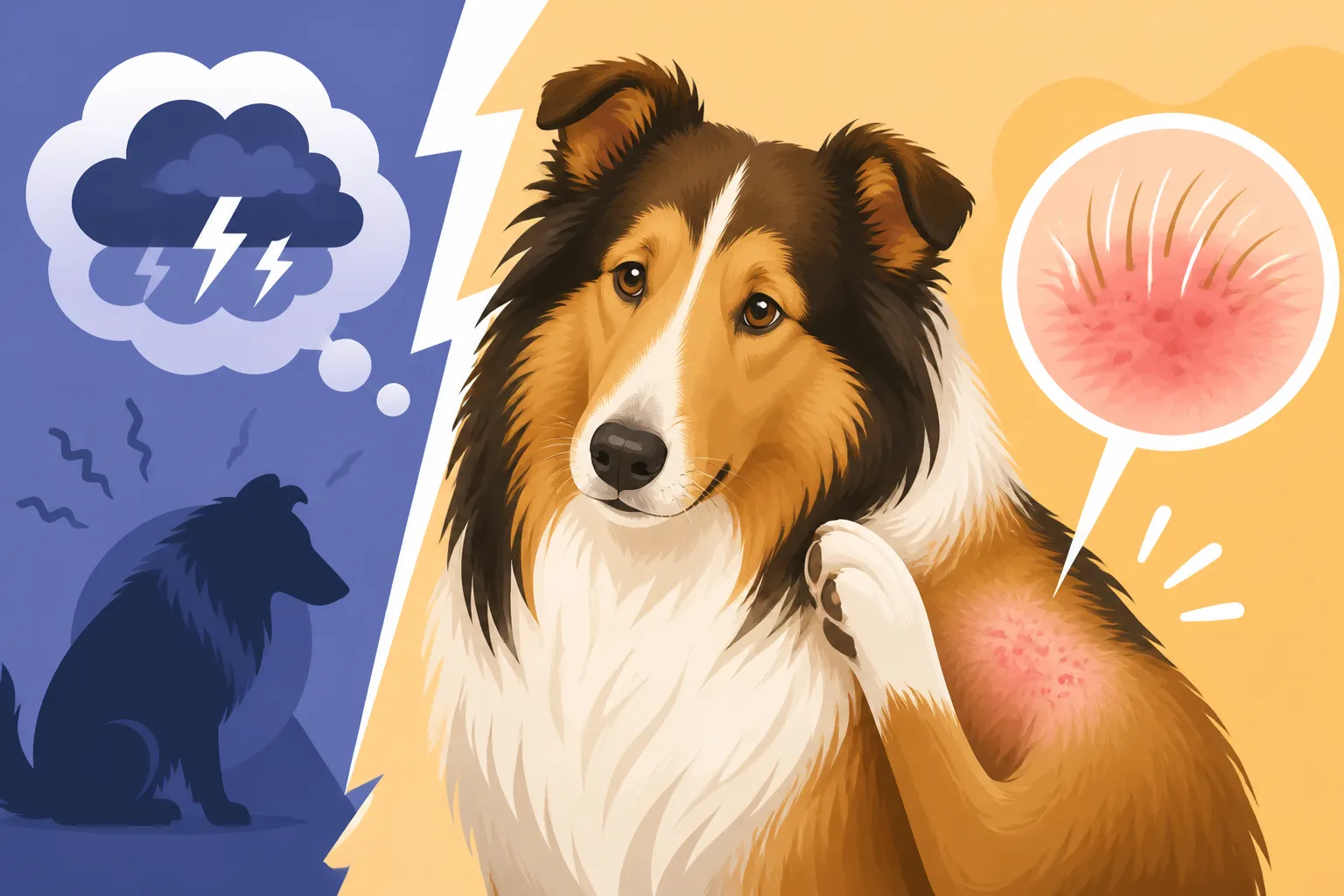
| Loud Noises (Thunderstorms, Fireworks) | Trembling, hiding, clingy behavior, excessive panting, increased vocalization | Flare-up of existing DMS lesions, localized hot spots from excessive licking |
| Separation Anxiety/Being Left Alone | Destructive chewing, howling, pacing, attempts to escape, excessive drooling | Persistent paw licking (leading to irritation), skin chewing, localized dermatitis |
| Lack of Mental/Physical Stimulation | Boredom behaviors (chewing inappropriate items), restlessness, attention-seeking barking | Generalized itchiness, dull coat, secondary infections from constant scratching |
| Unfamiliar People/Animals | Shyness, growling, hiding, avoiding eye contact, urination | Increased severity of existing skin lesions, stress-induced alopecia |
| Pain/Underlying Illness | Lethargy, limping, guarding behavior, changes in posture, reduced interaction | Worsening of any pre-existing skin condition due to immune suppression |
Managing Stress and Supporting Skin Health in Collies
Recognizing the connection between stress and skin flares in your Collie is the first crucial step. The next is taking action. This involves a multi-pronged approach: working with your veterinarian, creating a calming home environment, and implementing long-term strategies for overall well-being.
Creating a Calming Environment for Your Collie
A predictable, safe, and enriching environment is paramount for a sensitive Collie. Establishing a solid routine helps immensely, as Collies often thrive on knowing what to expect. This means consistent feeding times, walks, and bedtime. Our guide on Whether a Collie Needs a Predictable Routine can offer more structure here.
Consider creating a designated "safe space" for your Collie – a cozy crate, a quiet corner with their bed, or a specific room where they can retreat when feeling overwhelmed. This sanctuary should be respected by all family members, especially children. Provide plenty of appropriate mental stimulation with puzzle toys, interactive feeders, and short, fun training sessions to keep their intelligent minds engaged without over-stimulating them. A few minutes of brain work can be as tiring as a long walk.
Reduce exposure to known stressors where possible. If thunderstorms are a trigger, create a den, use calming music, or consider a thundershirt. For noise-sensitive Collies, a white noise machine can help muffle external sounds. Enrichment items like KONGs filled with frozen peanut butter or lick mats can provide a healthy distraction and release calming endorphins during stressful periods.
Working with Your Vet to Address Skin Issues
If your Collie is experiencing a skin flare, especially one you suspect is stress-related, a visit to your veterinarian is absolutely essential. They can rule out other causes through diagnostic tests like skin scrapes, fungal cultures, or allergy tests. If Dermatomyositis is suspected or already diagnosed, they can discuss management options.
Your vet might recommend specific topical treatments, medicated shampoos, or oral medications to control inflammation and secondary infections. For chronic or recurring issues, a referral to a veterinary dermatologist might be in order. The costs associated with specialized veterinary care, including diagnostics and long-term medications, can add up quickly. This is where pet insurance can be a real lifesaver. Providers like Healthy Paws offer comprehensive coverage that can help offset the financial burden of managing chronic conditions or unexpected flare-ups. Knowing that you have support for vet bills, whether it's for a routine check-up that flags an issue or a full workup for a persistent skin problem, can significantly reduce your own stress as an owner. Discussing What a Collie's Dermatologist Referral Costs with your vet and understanding your insurance coverage upfront is always a good idea.
Long-Term Strategies for a Happier, Healthier Collie
Beyond immediate environmental adjustments and vet care, a holistic, long-term approach is key to supporting your Collie's overall health and resilience against stress-induced flares.
- Consistent Exercise: Regular physical activity, tailored to your Collie's age and fitness level, is crucial. It helps release pent-up energy, promotes good circulation, and provides mental stimulation. A good walk in nature or a game of fetch can do wonders for their mood.
- Balanced Nutrition: A high-quality diet provides the building blocks for healthy skin and a strong immune system. Discuss with your vet if any supplements might be beneficial for skin health, such as omega-3 fatty acids. You might also want to read up on Whether a Collie Needs Supplements for Its Coat.
- Ongoing Training and Mental Enrichment: Keep your Collie's mind active with positive reinforcement training, trick classes, or even dog sports like Rally or Obedience. This builds their confidence and strengthens your bond. Mental stimulation helps them cope better with changes and challenges.
- Regular Grooming: For Rough Collies, consistent brushing isn't just about looking good; it's vital for skin health. It helps remove dead hair, distributes natural oils, and allows you to regularly inspect their skin for any early signs of issues.
- Proactive Vet Care: Regular check-ups with your veterinarian allow for early detection and intervention of any health concerns, preventing them from becoming major stressors or exacerbating existing conditions. This proactive approach is particularly important for breeds prone to specific health issues.
By understanding the delicate balance between a Collie's emotional state and their physical health, especially their skin, you can take meaningful steps to ensure they live a life that is as comfortable and stress-free as possible. It takes vigilance, patience, and a strong partnership with your vet, but seeing your Collie thriving is absolutely worth it.
Disclaimer
This article is for general informational purposes only and does not constitute professional advice. Laws, prices and regulations vary by location and change over time. Consult a qualified professional for guidance on your specific situation.