Whether a Collie Litter Should Be Screened for Deafness
Bringing a new litter of Collie puppies into the world is one of the most exciting, yet nerve-wracking, experiences for any breeder or dedicated owner. You pour your heart and soul into their care, watching them grow, hoping for nothing but robust health and happy lives. One concern that often creeps into the minds of those raising Collie pups, especially with certain color patterns, is the possibility of deafness. It's a silent condition that can go unnoticed in the early, bustling weeks of a large litter, leaving owners unprepared and puppies potentially at a disadvantage. This guide is here to walk you through the nuances of deafness in Collies, why screening is not just a good idea but often a necessity, and how you can ensure your precious pups get the best start in life, hearing or not.
Understanding Deafness in Collies
Deafness in Collies, like in many breeds, isn't a monolithic condition. It can manifest in different ways and stem from various causes, some of which are more prevalent in our beloved breed than others. Understanding these distinctions is the first step toward appreciating why screening a litter for deafness is such a critical consideration. It's not just about hearing or not hearing; it's about delving into the biological blueprint of these dogs.
Congenital vs. Acquired Deafness
When we talk about screening a puppy litter for deafness, we're primarily concerned with congenital deafness. This means the puppy is born deaf, or develops deafness very early in life, typically due to abnormalities in the inner ear that occur during development in the womb or shortly after birth. For Collies, this is often linked to genetic factors, which we'll explore in a moment. Congenital deafness can be unilateral (affecting one ear) or bilateral (affecting both ears). A puppy with unilateral deafness might appear to hear perfectly fine in a normal home environment, as they compensate remarkably well with their good ear, making early detection without specific testing incredibly challenging.
On the other hand, acquired deafness occurs later in a dog's life. This can be due to a myriad of reasons, such as chronic ear infections, trauma to the head, certain medications that are ototoxic (damaging to the ear), old age, or even some types of tumors. While acquired deafness is a concern for all dogs as they age, it's not what we're looking for when screening a young litter. Our focus in puppyhood is on catching those inherent, developmental issues that might be passed down or are a result of specific genetic combinations.
The Role of Genetics and Merle Coloring
Here's where it gets particularly interesting, and frankly, a bit complicated, for Collies. The merle gene (M) is a dilution gene that creates beautiful dappled coats, blue eyes, and sometimes even marbled irises in many breeds, including Collies. Blue merle Collies are stunning, no doubt. However, the merle gene, especially when a dog inherits two copies of it (known as "double merle" or "homozygous merle"), is strongly associated with an increased risk of both hearing and vision impairments.
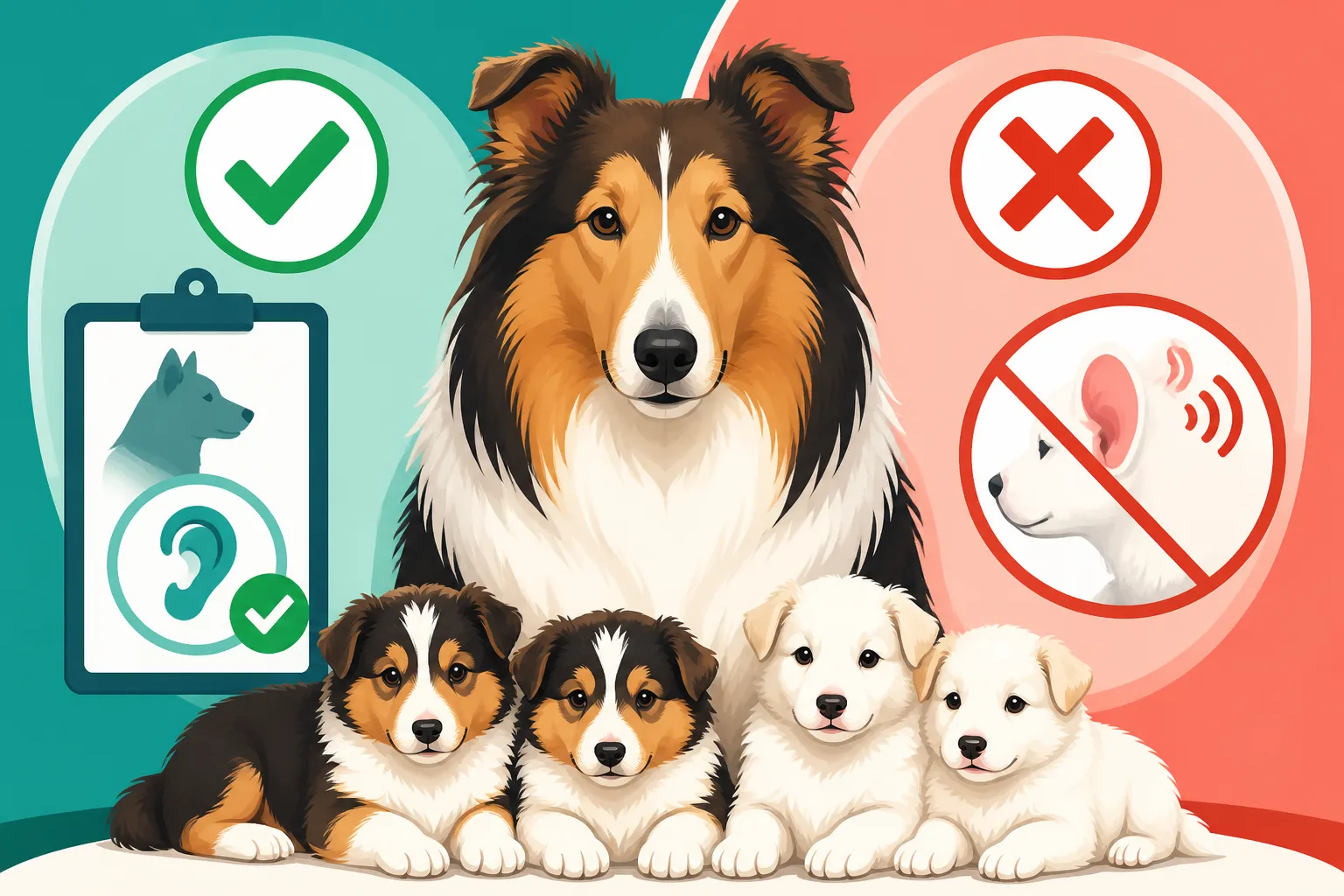
A double merle Collie puppy, inheriting a merle gene from both parents, often presents with a predominantly white coat. This isn't just a cosmetic trait; it's a visual indicator of a lack of pigment in the inner ear, which is crucial for normal hearing development. These pups can be profoundly deaf, blind, or both. Even a single copy of the merle gene can, in rare instances, be associated with deafness, though the risk is significantly lower than with double merles. Responsible breeders are acutely aware of these genetic risks and avoid breeding two merle-patterned dogs together precisely to prevent the birth of double merle puppies, which often face severe health challenges. This is why discussions around Whether Merle to Merle Breeding Makes a Collie Deaf are so important within the breed community.
Why Screening a Collie Litter for Deafness Matters
You might think, "Why go through all the trouble and expense if a puppy seems to hear okay?" The truth is, early detection of deafness in a Collie litter is not just about identifying a problem; it's about promoting well-being for the individual dog, providing peace of mind for future owners, and making responsible decisions for the breed's future. It's a proactive step that speaks volumes about a breeder's commitment.
Early Detection and Responsible Placement
Imagine bringing home a sweet, seemingly healthy Collie puppy, only to realize weeks or months later that they are completely deaf. This can be a significant shock for new owners who may not be equipped or prepared for the unique challenges and joys of raising a deaf dog. Early screening, particularly with a reliable test, means puppies can be accurately assessed before they go to their forever homes.
Knowing a puppy is deaf from the outset allows a breeder to:
- Educate prospective owners: They can find families specifically prepared and willing to provide a loving home for a deaf dog, understanding the commitment involved in training with visual cues and ensuring a safe environment.
- Provide appropriate guidance: Breeders can offer resources, training tips, and support to these special families, helping them prepare for their new family member.
- Ensure safer transitions: A deaf puppy needs specific supervision and training from day one. Knowing their status helps owners implement these strategies immediately, preventing accidental injuries or behavioral issues that might arise from misunderstanding the dog's lack of hearing. For example, a deaf Collie might not hear a car approaching or a call from their owner, making secure fencing and leash training paramount.
Informing Future Breeding Decisions
For breeders, screening a Collie litter for deafness offers invaluable data for their breeding program. If a puppy from a specific pairing is found to be congenitally deaf, especially unilaterally, it raises important questions about the genetic makeup of the parents. While the merle-to-merle breeding is a known risk, sometimes deafness can appear in litters without an obvious double merle combination, pointing to other recessive genes or genetic modifiers.
This information allows a breeder to:
- Re-evaluate parent dogs: It prompts a thorough review of the health history and genetic tests of the sire and dam. Could there be a hidden carrier?
- Make informed choices: If a genetic link is suspected, the breeder can adjust future breeding plans to avoid repeating problematic pairings, thus actively working to reduce the incidence of deafness in the breed. This aligns with the broader goal of responsible breeding, often discussed in resources like The Three Genetic Tests a Collie Breeder Has Already Paid For.
- Contribute to breed health databases: Sharing test results, even for clear-hearing puppies, contributes to a larger pool of data that benefits the entire Collie community. This transparency helps track prevalence and identify potential trends.
The BAER Test: The Gold Standard for Hearing Assessment
When it comes to definitively screening a Collie litter for deafness, there's one test that stands head and shoulders above all others: the Brainstem Auditory Evoked Response, or BAER test. It's the most reliable method we have, offering an objective look at a puppy's hearing ability.
What is a BAER Test and How Is It Performed?
The BAER test is a non-invasive, objective neurophysiological test that measures the electrical activity in the brain in response to auditory stimuli. In simpler terms, it checks if sound signals are actually reaching the brain from the inner ear. Think of it like an EKG for the brain's hearing pathways.
Here’s a simplified breakdown of how it's usually performed:
- Preparation: The puppy will typically have small electrodes gently placed on their head – one near each ear, one on the top of the head, and a ground electrode. Sometimes a mild sedative is used to ensure the puppy stays calm and still, although many relaxed puppies can be tested without it.
- Sound Stimuli: Miniature earphones are placed into each ear canal, delivering a series of quiet click sounds. These clicks are designed to stimulate the auditory nerve.
- Measurement: The electrodes pick up the tiny electrical responses generated by the brainstem as it processes these sounds. These responses are then amplified and displayed as a waveform on a computer screen.
- Individual Ear Testing: Crucially, each ear is tested independently. This is vital for detecting unilateral deafness, which would otherwise be easily missed.
The entire procedure usually takes only a few minutes per puppy once they are set up. It’s a safe and effective diagnostic tool.
Interpreting BAER Test Results
The results of a BAER test are quite straightforward for the veterinary professional performing it:
- Normal Hearing: A distinct, repeatable waveform will be present for each ear. This indicates that sound signals are successfully traveling from the ear to the brain.
- Unilateral Deafness: A waveform will be present in one ear, but completely absent in the other. This means the puppy can hear from one side but is deaf in the other. As mentioned, these puppies often behave as if they have full hearing.
- Bilateral Deafness: No discernible waveform will be present for either ear. This indicates complete deafness in both ears.
The beauty of the BAER test is its objectivity. It doesn't rely on a puppy's behavioral response, which can be unreliable, especially in a distracting environment or when testing a very young or sleepy pup. It measures a physiological response, giving a clear yes or no answer for each ear. It's truly the most definitive way to know your Collie's hearing status.
Practicalities and Timing of the Test
The optimal time to perform a BAER test on a Collie litter is typically between 6 to 8 weeks of age. By this point, the puppies' ear canals are usually open, and their auditory system is sufficiently developed to provide accurate results. Testing too early might yield inconclusive results.
Finding a facility to perform the BAER test often involves a bit of searching. It usually requires specialized equipment and a trained veterinary neurologist or a veterinarian with expertise in audiology. Your regular vet might not have the equipment in-house but can certainly refer you to a specialist clinic, a university veterinary teaching hospital, or even a mobile testing service that travels to breeders. It's worth inquiring about this well in advance of the puppies reaching testing age.
As for the cost, BAER testing can feel like a significant upfront expense, especially for an entire litter. However, consider it an investment in the health and future of your puppies, and a testament to your responsibility as a breeder. It pales in comparison to the emotional and potential financial costs if an undiagnosed deaf puppy were to face challenges later in life. For new owners, it's also worth noting that pet insurance providers like Healthy Paws often cover diagnostic tests like the BAER test if they are deemed medically necessary, though pre-existing conditions (like congenital deafness if diagnosed before enrollment) are typically excluded. This highlights the value of early testing and ensuring comprehensive insurance is in place for new pups.
Alternative Approaches and Considerations for Collie Owners
While the BAER test is the definitive method, it's not always accessible to every breeder or owner. Sometimes, circumstances or location make specialized testing difficult. In such cases, or as a supplement to testing, understanding behavioral observations and ethical considerations becomes paramount.
Behavioral Observations
Even without a BAER test, careful observation can give you clues, though these are far from foolproof. Remember, a unilaterally deaf puppy is very difficult to spot through observation alone.
Here are some behavioral cues to watch for in a Collie puppy, especially from 6-8 weeks onward:
- Lack of Startle Response: Does the puppy startle or react to sudden loud noises, like a clap, a dropped item, or a squeaky toy behind them, when they are not looking? Test each puppy individually, away from the litter's general commotion.
- Unusual Sleep Patterns: Deaf puppies might sleep more soundly and be harder to rouse, as they aren't disturbed by ambient noises.
- Vocalization Differences: Some deaf puppies might bark or whine excessively because they cannot regulate the volume of their own voice, while others might be unusually quiet.
- Response to Vibration: They might respond more to vibrations through the floor or touch than to sound.
- Reliance on Sight and Smell: You might notice a deaf puppy seems more attuned to visual cues or smells, compensating for their lack of hearing.
It's absolutely crucial to perform these observations in a quiet, distraction-free environment, and to avoid making air currents or visual cues that the puppy could be responding to instead of sound. Always remember, these are observational clues, not definitive diagnoses. They should prompt further investigation rather than stand as a final judgment.
Ethical Considerations for Deaf Collies
Discovering a Collie puppy is deaf can be disheartening, but it is not a death sentence, nor does it mean they cannot lead a full, joyful life. Many deaf Collies thrive in loving homes, and with the right approach, they can be just as well-adjusted and happy as their hearing counterparts.
Key ethical considerations for breeders and prospective owners include:
- Commitment to Training: Deaf dogs are highly trainable, but their training relies entirely on visual cues and hand signals. This requires patience, consistency, and a willingness to learn new communication methods. Many resources exist for training deaf dogs, and they can learn just as many commands as hearing dogs.
- Safety Protocols: A deaf Collie cannot hear dangers like approaching cars, the doorbell, or a warning shout. They need secure, fenced yards, always being on a leash when outside, and potentially a bright, easily visible collar or vest that indicates their deafness to others.
- Enrichment and Socialization: Deaf dogs still need plenty of mental stimulation, exercise, and appropriate socialization with other dogs and people. Puzzle toys, scent work, and visual games are excellent for mental enrichment.
- Advocacy and Education: Owners of deaf Collies often become advocates, educating others about the capabilities and needs of deaf dogs. They can share their experiences and help break down misconceptions.
- Support Systems: There are wonderful online communities and rescue organizations dedicated to deaf dogs. Connecting with these groups can provide invaluable support, advice, and a sense of community for owners. Pet insurance options like Healthy Paws can also offer support for any health issues that may arise over a deaf Collie's lifetime, ensuring financial stress doesn't impact their quality of care. The most important thing is that these dogs are given every opportunity to live a wonderful life.
It's a testament to the resilient and adaptable nature of Collies, and to the dedication of their human companions, that a diagnosis of deafness, while challenging, opens the door to a unique and deeply rewarding bond.
| Feature / Method | BAER Test | Behavioral Observation (Clap Test, etc.) |
|---|---|---|
| Reliability | Gold standard, objective, highly accurate | Subjective, prone to error, difficult to detect unilateral |
| Detection of Unilateral Deafness | Yes, precisely identifies affected ear | Extremely difficult, often missed |
| Required Equipment | Specialized veterinary audiology equipment | None, relies on common household sounds |
| Expertise Needed | Trained veterinary neurologist or audiologist | Knowledgeable owner/breeder with careful technique |
| Cost | Moderate to high (per puppy, but can be done per litter) | Free (excluding time and effort) |
| Timing | 6-8 weeks of age for optimal results | Can be attempted earlier, but less reliable. Best at 6-8 weeks+ |
| Outcome | Definitive diagnosis (normal, unilateral, bilateral) | Suggestive evidence, requires confirmation for certainty |
| Benefit for Breeders | Informed placement, accurate breeding data, reputation | Basic screening, but risks misdiagnosis or missed cases |
Ultimately, screening a Collie litter for deafness is a responsible and compassionate choice. It empowers breeders to make ethical decisions, ensures puppies find homes where their unique needs are understood and met, and contributes to the ongoing health and well-being of the entire Collie breed. Embracing technologies like the BAER test, alongside diligent observation and unwavering commitment, allows us to give every single one of these beautiful dogs the best possible start. For further reading on comprehensive health practices, you might find articles such as What the Collie DNA Health Panel Covers or Whether a Collie Should Wear a Medical Tag to be of interest.
Disclaimer
This article is for general informational purposes only and does not constitute professional advice. Laws, prices and regulations vary by location and change over time. Consult a qualified professional for guidance on your specific situation.