Bladder Stones in a Collie
Finding out your beloved Collie might have bladder stones can be incredibly distressing. It’s a condition that often presents with confusing, painful symptoms, leaving you worried about your dog’s comfort and long-term health. This guide is here to walk you through everything you need to know about bladder stones in Collies, from understanding what they are and spotting the signs, to navigating diagnosis, treatment, and most importantly, how to prevent them.
Understanding Bladder Stones in Collies: What Are We Dealing With?
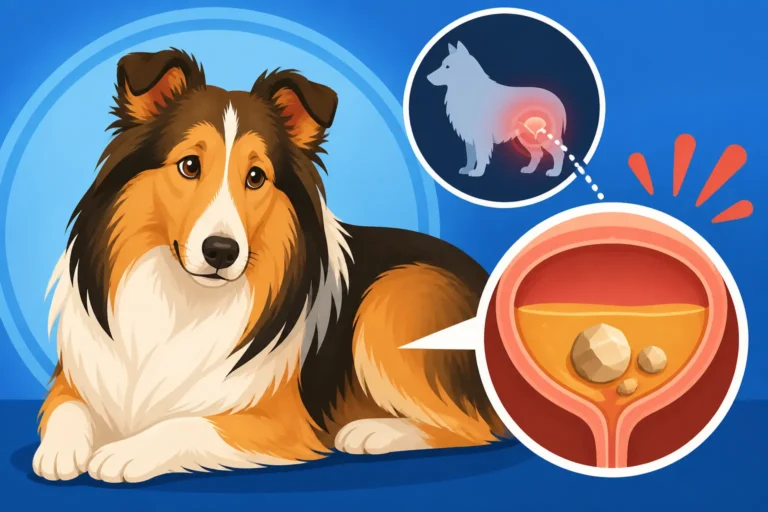
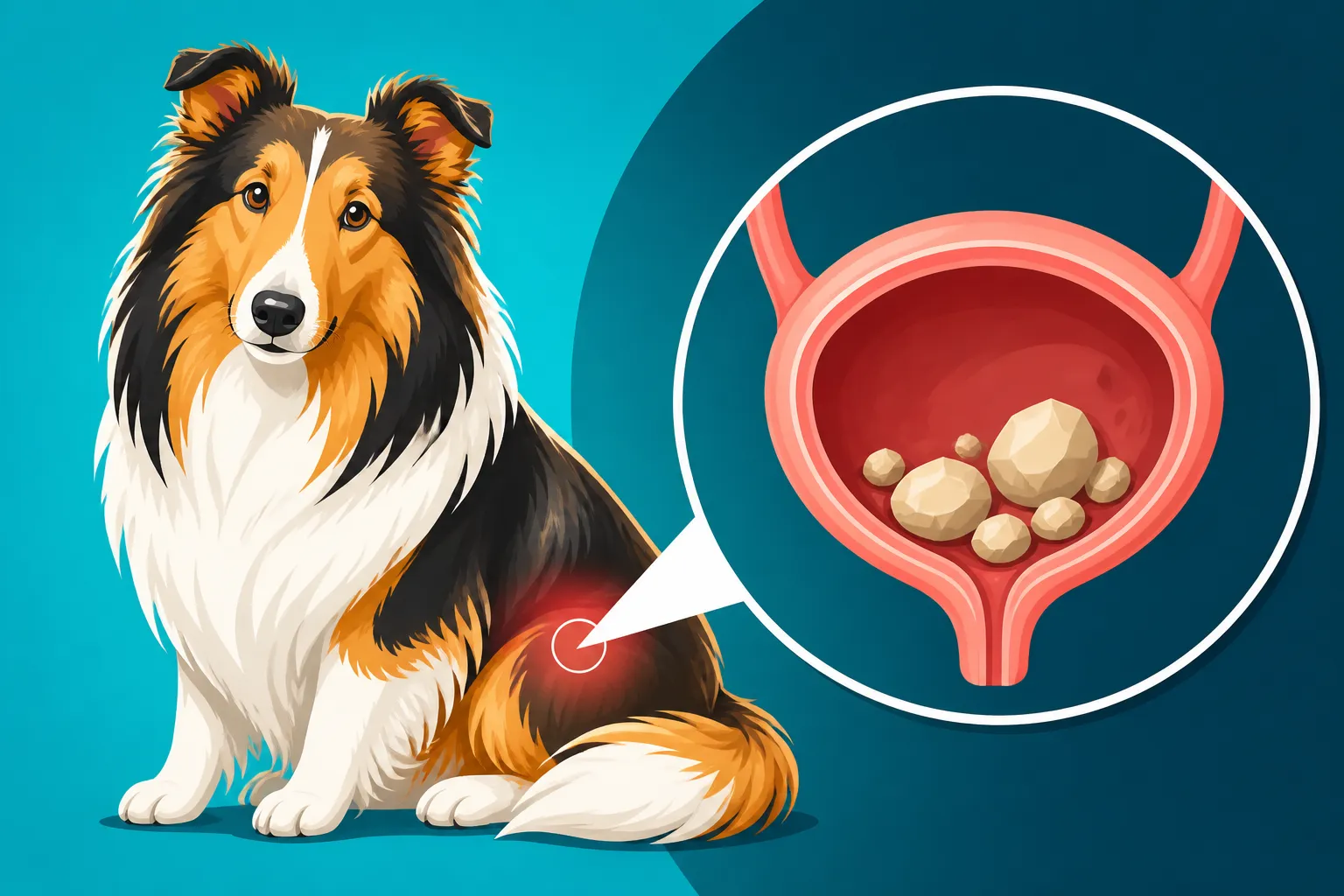
Bladder stones, also known as uroliths, are solid mineral formations that develop in a dog's urinary bladder. They can range in size from tiny grains of sand to large, golf-ball-sized stones, and their presence can cause significant discomfort and serious health issues. For us Collie owners, it's particularly important to understand this condition, as certain factors can potentially make our beautiful, often stoic, dogs more susceptible.
The Basics of Uroliths: Different Types and How They Form
Think of bladder stones like kidney stones in humans, but residing in the bladder. They're typically formed when minerals in your dog's urine become too concentrated and crystallize. Over time, these tiny crystals can clump together and grow, forming actual stones. There are several types of bladder stones, and identifying the specific type is absolutely crucial for proper treatment and prevention, as each type responds differently to various interventions. The most common types seen in dogs are struvite and calcium oxalate stones, but urate, cystine, and silicate stones can also occur.
Struvite stones often form in the presence of a urinary tract infection (UTI). Certain bacteria in the urinary tract produce an enzyme that raises the urine's pH, making it more alkaline. This alkaline environment then promotes the crystallization of magnesium ammonium phosphate, which is what struvite is made of. It's a bit of a vicious cycle: the infection helps the stones form, and the stones can then harbor bacteria, making the infection harder to clear. Calcium oxalate stones, on the other hand, tend to form in acidic urine and are not typically associated with bacterial infections. Their formation is more linked to metabolic factors, diet, and genetics.
Why Our Collies Might Be Prone: Breed-Specific Considerations
While bladder stones can affect any dog breed, some breeds have a higher predisposition to certain types of stones due to genetic factors or common breed characteristics. For instance, breeds like Miniature Schnauzers and Bichon Frise are well-known for calcium oxalate stones, and Dalmatians are notorious for urate stones. For Collies, there isn't a universally cited overwhelming genetic predisposition to a specific type of bladder stone, unlike some other breeds. However, their deep chests can be a factor in conditions like Bloat in a Deep Chested Collie, and generally, a dog's overall health and genetics play a role in their susceptibility to various issues, including urinary health.
What this means for us Collie owners is that while our dogs might not have a clear genetic "bullseye" for bladder stones, we still need to be vigilant. Factors that influence stone formation, like urinary tract infections, diet, hydration levels, and individual metabolism, are just as relevant. A Collie with recurrent UTIs, for example, would be at higher risk for struvite stones, regardless of breed-specific predispositions. It's about looking at the whole picture of your dog's health and lifestyle. This is why having a robust pet insurance plan like those offered by Healthy Paws can be incredibly helpful; it covers unexpected illnesses that aren't necessarily breed-specific but can still arise.
Spotting the Signs: Your Collie's Distress Signals
Collies are often quite stoic dogs, and they can sometimes hide discomfort remarkably well. This makes it even more important for us to be observant and recognize the subtle clues that might indicate a problem like bladder stones. Early detection can make a world of difference in treatment outcomes and your dog's comfort.
Changes in Urination Habits: The First Red Flags
One of the most common and noticeable signs of bladder stones is a change in your Collie's urination habits. If you notice any of these, it's definitely time to pay closer attention:
- Increased Frequency: Your Collie might need to go outside more often than usual, or even ask to go out, only to produce a small amount of urine. They might also start having accidents in the house, even if they're perfectly house-trained. This frequent straining with little output is a classic sign of irritation or obstruction.
- Straining to Urinate (Stranguria): This is a really painful one to watch. Your dog might crouch for a long time, push, and struggle to urinate, or even cry out during the process. You might see them repeatedly attempting to urinate, without much success. This straining is a clear indicator that something is blocking the normal flow or causing intense pain in the bladder or urethra.
- Bloody Urine (Hematuria): Seeing blood in your Collie's urine can be alarming, and it's a definite sign that something is wrong. The irritation and inflammation caused by bladder stones can damage the lining of the bladder, leading to bleeding. The urine might appear pinkish, reddish, or even dark brown.
- Dribbling or Incontinence: While not as common as straining, some dogs with bladder stones might dribble urine or become incontinent, especially if the stones are causing chronic irritation or affecting bladder function.
Pain and Discomfort: More Obvious Indicators
Beyond urination changes, your Collie might show other signs of pain and discomfort that point to bladder stones. Because Collies are so attuned to their owners, you might notice subtle shifts in their demeanor. If you're looking for Signs a Collie Has a Bladder Stone, keep an eye out for these:
- Lethargy and Reduced Activity: A dog in pain often won't want to play, go for walks, or engage in their usual activities. If your normally energetic Collie seems unusually tired or reluctant to move, it could be a sign of internal discomfort.
- Loss of Appetite: Pain and illness can definitely put a damper on their appetite. If your Collie is turning up their nose at mealtime, especially if they're usually a keen eater, it's a concern.
- Abdominal Pain or Tenderness: Some dogs might show signs of pain when their abdomen is touched, or they might spontaneously guard their belly area. They might whimper, snap, or move away if you try to pet them near their bladder.
- Restlessness or Difficulty Getting Comfortable: A dog in discomfort might pace, shift positions frequently, or struggle to find a comfortable spot to lie down, much like a human with a bladder infection.
Emergency Situations: When to Act Immediately
While all the signs above warrant a vet visit, there's one situation that requires immediate, emergency medical attention: complete urinary obstruction. This happens when a stone (or multiple stones) completely blocks the urethra, preventing any urine from passing. This is excruciatingly painful and life-threatening.
If your Collie is straining intensely but producing absolutely no urine, or if they are repeatedly attempting to urinate with no success, becoming increasingly distressed, lethargic, or showing signs of vomiting, you need to get them to an emergency vet immediately. A blocked urethra means toxins are building up in their body, which can quickly lead to kidney failure and rupture of the bladder. This is one of those times where having an established relationship with your vet and knowing what to do if you need to travel to an emergency clinic for What a Collie Owner Should Carry to an Emergency Visit can be life-saving. Don't wait; every minute counts.
Getting a Diagnosis: Uncovering the Truth About Bladder Stones
Once you've noticed suspicious symptoms in your Collie, the next crucial step is getting an accurate diagnosis from your veterinarian. This isn't just about confirming stones are present; it's about identifying their type and assessing the overall health of your dog's urinary system.
The Vet Visit: What to Expect During Examination
When you bring your Collie to the vet with suspected bladder stone symptoms, the veterinarian will start with a thorough physical examination. They will gently palpate your dog's abdomen, paying close attention to the bladder area. Sometimes, if the stones are large enough, the vet might actually be able to feel them through the abdominal wall, though this isn't always the case, especially with smaller stones or a very muscular or tense dog.
They'll also ask you a lot of questions about your Collie's symptoms, including when they started, how frequently your dog is urinating, if you've seen blood, any changes in appetite or behavior, and their overall health history. Don't be shy about detailing everything you've observed, even if it seems minor. The more information you can provide, the better equipped your vet will be to form a clear picture of what's going on. This initial consultation is vital for guiding the subsequent diagnostic steps.
Diagnostic Tools: From Urinalysis to Imaging
After the physical exam, your vet will likely recommend a series of diagnostic tests to confirm the presence of stones and determine their type.
-
Urinalysis and Urine Culture: A urine sample will be collected, ideally through a sterile method called cystocentesis (where a needle is used to draw urine directly from the bladder). This allows for a clean sample, free from environmental contaminants. The urinalysis will check for things like pH level (which can indicate the likelihood of certain stone types), presence of blood cells, protein, and crystals. If crystals are seen, their shape can sometimes suggest the type of stone (e.g., coffin-lid shapes for struvite, envelopes for calcium oxalate). A urine culture is equally important, as it will identify any bacterial infections present and determine which antibiotics will be most effective. This is especially critical for struvite stones, which are often linked to UTIs.
-
Radiographs (X-rays): X-rays are a common and effective way to detect most types of bladder stones. Struvite, calcium oxalate, and silicate stones are typically "radiopaque," meaning they show up clearly on X-rays because of their mineral content. However, not all stones are visible. Urate and cystine stones, for example, are often "radiolucent," meaning they don't block X-rays and can be missed on standard radiographs. This is a key limitation to be aware of.
-
Ultrasound: For stones that are radiolucent or to get a clearer picture of the bladder wall and surrounding structures, an ultrasound is invaluable. Ultrasound can detect all types of bladder stones, regardless of their mineral composition. It allows the vet to see the size, number, and exact location of the stones, as well as assess the thickness and health of the bladder wall itself. It can also help identify if there are any other issues within the urinary tract.
-
Bloodwork: While not directly used to diagnose bladder stones, What a Collie's Bloodwork Costs and what it reveals is essential for evaluating your Collie's overall health, especially kidney function. Bladder stones, particularly if they cause obstruction, can impact kidney health. Blood tests also help ensure your Collie is healthy enough for any necessary medical treatments or anesthesia if surgery is required. Comprehensive bloodwork is a standard part of assessing a sick dog.
By combining these diagnostic tools, your veterinarian can pinpoint the problem and create the most effective treatment plan for your Collie. This multi-faceted approach ensures that even elusive stones are identified and addressed appropriately. It's a testament to modern veterinary care that we have so many ways to help our Collies when they're facing these painful issues.
| Diagnostic Tool | What it Checks For | Pros | Cons |
|---|---|---|---|
| Urinalysis | pH, blood, protein, crystals, infection | Quick, affordable, indicates stone type likelihood | Can be contaminated, microscopic crystals only |
| Urine Culture | Identifies specific bacteria and antibiotic sensitivity | Essential for UTI-related stones | Takes 24-48 hours for results |
| Radiographs (X-ray) | Visualizes most mineral-dense stones, their size/location | Non-invasive, widely available | Cannot see radiolucent stones (urate, cystine), limited soft tissue detail |
| Ultrasound | Visualizes all stone types, bladder wall, surrounding organs | Non-invasive, excellent soft tissue detail, no radiation | Requires trained operator, more expensive than X-ray |
| Bloodwork | Overall health, kidney function, pre-surgical assessment | Provides holistic health picture | Does not directly diagnose stones |
Navigating Treatment Options: What Comes After a Diagnosis
Once your veterinarian has pinpointed the type of bladder stone affecting your Collie, the next step is to discuss treatment options. This can feel overwhelming, but remember, your vet is there to guide you through the best course of action for your specific dog.
Dissolving Stones Through Diet and Medication: The Non-Surgical Route
For some types of bladder stones, particularly struvite stones, surgical removal isn't always the first or only option. These stones can often be dissolved through a combination of a specialized diet and medication.
-
Prescription Dissolution Diets: These diets are formulated to change the pH of the urine and reduce the concentration of the minerals that form struvite stones. They are typically low in protein, phosphorus, and magnesium. The goal is to create an acidic urine environment that breaks down the stones over time. Your vet will prescribe a specific brand, such as Hill's Prescription Diet s/d or Royal Canin Urinary SO. It's crucial to feed only this diet – no treats, no table scraps, no other food – for it to be effective. This can be a challenge, especially if your Collie is used to variety, but consistency is key. Dissolution diets usually need to be fed for several weeks to several months, with regular rechecks to monitor progress.
-
Antibiotics: Since struvite stones are almost always associated with a bacterial urinary tract infection, a long course of antibiotics is essential. Even after the initial symptoms subside, your vet will likely keep your Collie on antibiotics for an extended period (sometimes several months) to ensure the infection is completely eradicated and doesn't contribute to new stone formation during the dissolution process.
-
Urine Acidifiers: In some cases, if the diet alone isn't sufficiently acidifying the urine, your vet might prescribe a urine acidifier medication. This helps to further optimize the urinary environment for stone dissolution.
It's important to note that calcium oxalate stones cannot be dissolved with diet and medication. Once they form, they must be removed, usually surgically. This distinction highlights why accurate stone identification is so critical from the beginning.
Surgical Intervention: When Operation Is Necessary
For stones that can't be dissolved (like calcium oxalate stones) or for cases where dissolution diets aren't effective, surgery becomes the primary treatment option. This procedure, called a cystotomy, involves surgically opening the bladder to remove the stones.
- Cystotomy Procedure: Your Collie will undergo general anesthesia for this procedure. The surgeon will make an incision into the abdomen, locate the bladder, and carefully open it. All visible stones will be removed, and the bladder will be thoroughly flushed to ensure no tiny stones or grit remain. Sometimes, a catheter is passed down the urethra to ensure it's clear of any smaller stones. The bladder is then carefully stitched closed, followed by the abdominal layers.
- Post-Operative Care: After surgery, your Collie will need pain management, antibiotics, and strict rest. You'll need to monitor their urination carefully, watching for any signs of straining or bloody urine. A cone collar will be essential to prevent them from licking the incision site. Recovery typically takes a few weeks, and your vet will schedule follow-up appointments to check the incision and ensure proper healing. While surgery can seem daunting, it often provides immediate relief from pain and eliminates the source of the problem. Many Collies recover very well and quickly return to their normal selves.
- Alternative Removal Methods: For very small stones, some vets might explore less invasive options like voiding hydropulsion (where the bladder is flushed with sterile fluid to try and push small stones out through the urethra) or laser lithotripsy (using a laser to break down stones into smaller pieces that can be passed). These methods are not suitable for all cases or all types of stones, and their availability can vary. Your vet will discuss if these are viable options for your Collie.
Managing Pain and Infection: Supporting Your Collie's Recovery
Regardless of the treatment route, managing your Collie's pain and any associated infections is a top priority. Bladder stones are painful, and a UTI adds further discomfort.
- Pain Relief: Your vet will prescribe appropriate pain medication, such as NSAIDs (non-steroidal anti-inflammatory drugs), to keep your Collie comfortable during the diagnosis, treatment, and recovery phases. Make sure to administer these exactly as prescribed. If you have an Whether an MDR1 Collie's Seizure Drugs Need Adjusting, it's vital to discuss any medication with your vet, as some pain medications can interact with the MDR1 gene.
- Antibiotics: As mentioned, antibiotics are crucial if a UTI is present. It's vital to complete the entire course of antibiotics, even if your Collie seems to feel better, to prevent the infection from recurring.
- Supportive Care: Provide a comfortable, quiet place for your Collie to rest. Ensure they have constant access to fresh water to encourage hydration, which helps flush the urinary system. Offer small, frequent meals if their appetite is low. Your dedication to their comfort can greatly aid their recovery. Considering Whether Pet Insurance Is Worth It on a Collie can definitely ease the financial burden of these treatments, allowing you to focus on your dog's recovery without added stress. Many owners find policies from providers like Healthy Paws invaluable in these situations.
Preventing Future Stones: A Proactive Approach to Collie Health
Successfully treating bladder stones is a huge relief, but the journey doesn't end there. The most critical aspect of long-term management is preventing recurrence. Without proactive measures, your Collie could develop stones again, leading to repeat discomfort and costly treatments. This part of the journey requires your consistent attention and collaboration with your veterinarian.
Dietary Management: Choosing the Right Food
Diet plays an enormous role in preventing bladder stones. The specific dietary recommendations will depend entirely on the type of stone your Collie had. This is why accurately identifying the stone type during diagnosis is so incredibly important.
-
For Struvite Stones: The goal is to maintain an acidic urine pH and reduce the components that form struvite. This typically means feeding a prescription urinary diet formulated for prevention (like Hill's Prescription Diet c/d Multicare or Royal Canin Urinary SO). These diets are balanced to avoid excessive protein, phosphorus, and magnesium, and encourage proper urine pH. It's not just about what they should eat, but also what they shouldn't. Avoid feeding high-protein treats, human foods, or supplements unless specifically approved by your vet. Even a small amount of an inappropriate food can upset the delicate balance these diets aim to achieve. This diligent approach is critical to prevent new struvite crystals from forming. For more details, you can ask Whether a Collie's Diet Prevents Stones.
-
For Calcium Oxalate Stones: Prevention strategies for calcium oxalate stones focus on creating a dilute urine and controlling calcium and oxalate intake. Prescription diets designed for calcium oxalate prevention (often the same multi-care diets used for struvite prevention, or specific oxalate-focused formulas) help to manage mineral levels and promote a healthier urine environment. It's often recommended to avoid foods high in oxalates (like spinach, sweet potatoes, and organ meats) and maintain moderate calcium intake. Sometimes, potassium citrate is prescribed to make the urine less acidic, which can inhibit calcium oxalate formation. Again, strict adherence to the diet and vet recommendations is paramount.
-
General Dietary Advice: Regardless of stone type, ensuring your Collie receives appropriate nutrition is vital. Consider How Much an Adult Collie Eats and ensure their portion sizes are correct to maintain a healthy weight, as obesity can be a risk factor for various health issues, including urinary problems. Always discuss any changes to your Collie's diet or any supplements you're considering with your veterinarian.
Hydration is Key: Encouraging Water Intake
One of the simplest yet most effective ways to prevent bladder stones, regardless of their type, is to keep your Collie well-hydrated. Dilute urine means that minerals are less concentrated, making it harder for crystals and stones to form.
- Constant Access to Fresh Water: This sounds obvious, but ensuring your Collie always has access to multiple bowls of fresh, clean water is essential. Change the water frequently and keep the bowls sparkling clean.
- Adding Water to Food: Many vets recommend adding a bit of water or low-sodium broth to your Collie's kibble, especially if they're on a dry food diet. This increases their overall fluid intake significantly.
- Water Fountains: Some dogs are enticed by the movement of water from a pet fountain, which encourages them to drink more. Experiment to see what your Collie prefers.
- Wet Food: If your vet approves and it fits their dietary plan, incorporating wet food can naturally increase your Collie's water intake.
- Monitoring Intake: It's a good idea to have a general idea of How Much Water a Collie Drinks a Day. If you notice a significant drop, investigate why. A well-hydrated Collie will have clear or pale yellow urine and will urinate regularly without straining.
Regular Monitoring and Lifestyle Adjustments
Prevention is an ongoing process that involves regular vigilance and adjustments to your Collie's routine.
- Regular Vet Check-ups: Even if your Collie seems completely fine after treatment, regular follow-up appointments with your vet are crucial. This often includes periodic urinalysis and potentially imaging (X-rays or ultrasound) to monitor their urinary health and catch any signs of new crystal or stone formation early. Early detection of recurrence means easier and less invasive intervention.
- Monitor Urination: Continue to pay close attention to your Collie's urination habits. Keep an eye out for any straining, increased frequency, or blood in the urine. Promptly report any concerns to your vet.
- Stress Reduction: While not a direct cause, stress can impact a dog's overall immune system and health, potentially making them more susceptible to issues. A happy, calm Collie is generally a healthier Collie.
- Exercise and Activity: Maintaining a healthy, active lifestyle supports overall health, including urinary function. Just be mindful of their coat if exercising in heat; Whether a Collie Overheats in Its Coat is a valid concern in warmer weather.
Living with a Collie who has had bladder stones means being a bit more proactive and mindful of their health, but with consistent care and your vet's guidance, you can significantly reduce the risk of recurrence and ensure your beloved companion leads a comfortable, happy life. This commitment to their well-being is a huge part of being a responsible Collie owner, and knowing that you have pet insurance, like Healthy Paws, backing you up for ongoing needs can provide immense peace of mind.
Disclaimer
The information provided in this article is for educational purposes only and is not a substitute for professional veterinary advice. Always consult with a qualified veterinarian for any health concerns or before making any decisions about your pet's medical care.