The Weeks a Collie Puppy First Shows Dermatomyositis
Bringing home a new Collie puppy is a truly special experience, filled with boundless joy and fluffy cuddles. But that early magic can quickly turn to anxiety if you start noticing unusual skin or coat changes. It's incredibly distressing to see your little one struggling, and for Collies, these signs can sometimes point to a serious genetic condition called Dermatomyositis (DM). Understanding when this disease typically first appears and what to look for is absolutely vital, helping you recognize it early and seek appropriate care for your precious pup.
Understanding Dermatomyositis in Collie Puppies
Dermatomyositis (DM) is a hereditary, immune-mediated inflammatory disease that primarily affects the skin, muscles, and sometimes blood vessels. While it can occur in several breeds, Collies, Shetland Sheepdogs, and some related breeds are particularly predisposed due to specific genetic markers. It’s a frustrating condition because its severity can range from mild, almost unnoticeable skin lesions to severe muscle atrophy and systemic illness, making it a tricky diagnosis for even experienced veterinarians if they aren't familiar with the breed's specific vulnerabilities.
The core issue in DM is an immune system gone awry, attacking the body's own tissues. In Collies, this is tied to specific genes, making genetic testing a cornerstone of both diagnosis and responsible breeding. Unlike an infection, which might respond quickly to antibiotics, DM is a chronic condition that requires careful management and often lifelong treatment. Seeing your playful puppy suddenly develop patches of hair loss or raw skin is alarming, and the uncertainty of what it means adds immense stress to any owner.
The emotional toll of a DM diagnosis can be significant. You invest so much love, time, and hope into your new companion, and discovering a lifelong condition can feel overwhelming. It's important to remember that this isn't something you caused; it's a genetic lottery that unfortunately sometimes lands on our beautiful Collies. The key is to arm yourself with knowledge and work closely with your veterinary team to give your pup the best quality of life possible.
Early Signs and When to Watch for Dermatomyositis
One of the most challenging aspects of Dermatomyositis is the variability in its onset and presentation. While some puppies show overt signs quite early, others might have subtle issues that are easily missed or mistaken for something else. However, there are typical windows and specific indicators that Collie owners absolutely need to be aware of.
The Typical Age Range for Onset
For most Collie puppies affected by Dermatomyositis, the first noticeable signs tend to emerge relatively early in life, generally between the ages of 7 weeks and 6 months. This is a critical developmental period, and it’s when their immune system and genetic predispositions often begin to manifest clinically. Think about your puppy during this time: they're growing rapidly, exploring their world, and their adult coat is beginning to come in. This rapid development can sometimes highlight the underlying genetic issue.
However, it's not a strict timeline. Some Collies might show incredibly subtle signs as late as one or two years of age, or even occasionally beyond, though this is less common for the initial presentation. These later-onset cases can be particularly confusing, as the dog may have appeared perfectly healthy through puppyhood and adolescence. For instance, a pup might have very mild skin changes around their eyes at 10 weeks, which then seem to clear up, only to return with greater severity months later. This on-again, off-again nature makes early detection difficult without a keen eye and proactive veterinary care. If you're wondering, "The Weeks a Collie Puppy First Shows Dermatomyositis" can truly vary, but the younger end of that spectrum is most common.
Skin Lesions: The Most Common First Indicators
When DM first appears, it almost invariably starts with changes to the skin and coat. These aren't just random patches of irritation; they have a characteristic distribution that can serve as a strong clue. As a Collie owner, you should regularly examine your puppy, paying close attention to specific areas.
The most common places to find these tell-tale lesions are:
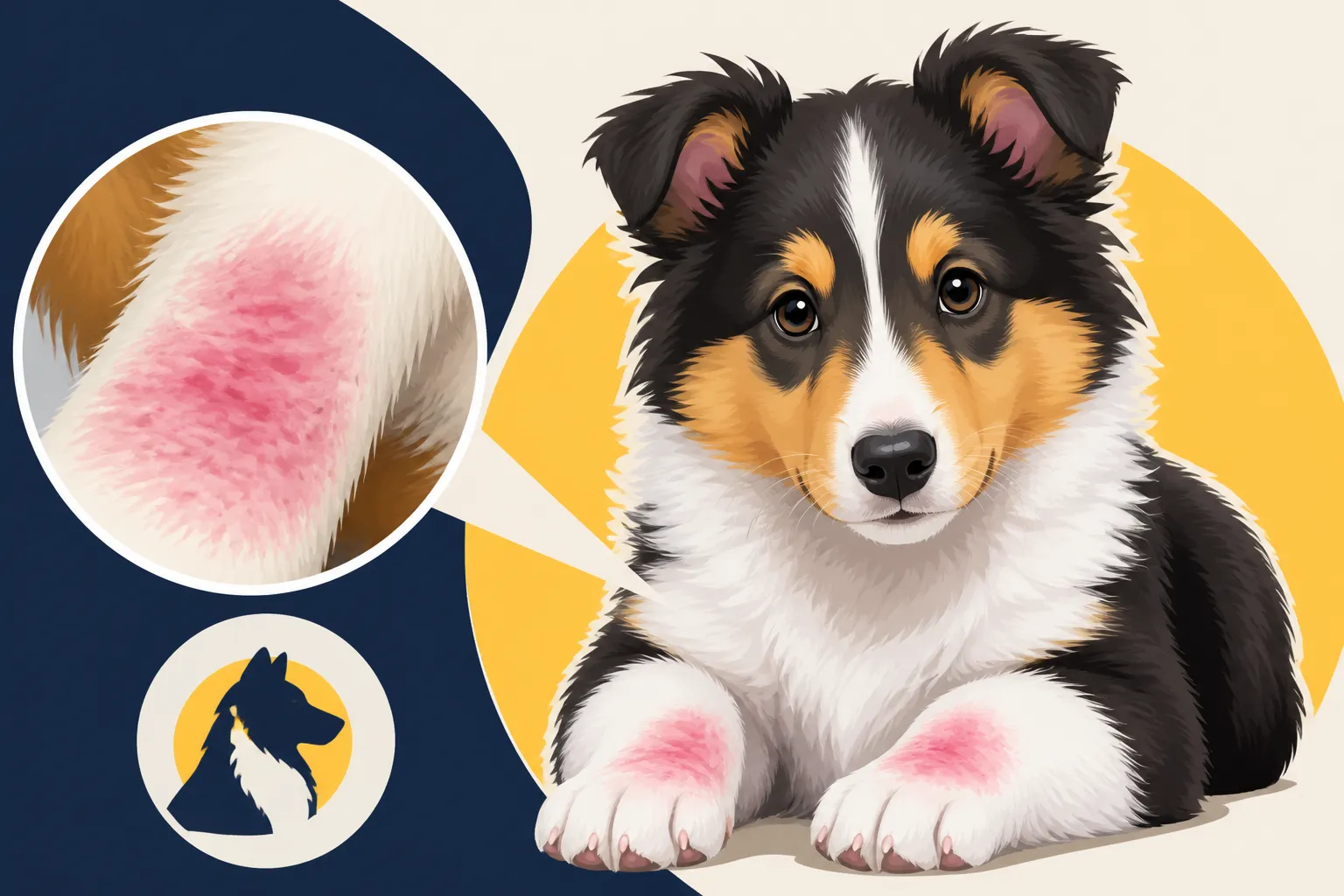
- The face: Look around the eyes (especially the outer corners), on the bridge of the nose, and over the muzzle. You might notice redness, crusting, scaling, or thinning hair. Sometimes, it looks almost like a sunburn or a persistent rash that just won't clear up.
- The ears: The tips and margins of the ears are frequently affected, showing hair loss and sometimes thickened or crusted skin. These areas are prone to trauma, so a DM lesion here might be mistaken for a scrape or frostbite.
- Bony prominences: This includes the elbows, hocks (ankles), and sometimes the tail tip. These areas experience more friction and minor trauma, which can exacerbate the skin lesions. Picture your puppy lounging on a hard floor; those pressure points are vulnerable.
The appearance of these lesions can vary. Initially, you might see just slight hair thinning or a change in texture. As the condition progresses or flares, you could see more pronounced redness, scaling, crusts, and even small ulcers or sores that sometimes scar permanently. This scarring can lead to permanent bald patches. The frustrating part is that these lesions can wax and wane, making diagnosis harder. One week, the puppy might have prominent crusts around their eyes, and the next, they seem to have improved, only for the issue to flare again. This intermittent nature is a hallmark of the disease. If you want to know more about whether a Collie's skin lesions scar permanently, it's definitely something to research further.
Muscle Weakness and Atrophy: A More Severe, Later Sign
While skin lesions are almost always the first sign, Dermatomyositis isn't just a skin condition. It’s a systemic disease, and in more severe cases, it can affect the muscles. Muscle involvement, known as myositis, is generally seen after or concurrently with the skin lesions, and typically indicates a more serious progression of the disease.
When muscle atrophy occurs, you might notice:
- Difficulty chewing or swallowing: The muscles of mastication (chewing) can be affected, making eating difficult and sometimes leading to weight loss. Your puppy might drop food or seem hesitant to chew hard kibble.
- Generalized muscle weakness: This can manifest as an unusual gait, reluctance to exercise, or difficulty getting up or lying down. A puppy that was once full of boundless energy might seem unusually tired or stiff after play.
- Visible muscle wasting: This is most noticeable in the muscles of the head (temples) and limbs. You might be able to feel the bones more prominently, especially on the head. If you find yourself asking whether a Collie with Dermatomyositis loses muscle, the answer is unfortunately, yes, in more severe cases.
It's crucial to understand that not all Collies with DM will develop severe muscle atrophy. Many will primarily show skin lesions, which can still be challenging to manage but may not impact their mobility or overall quality of life as severely. However, if you observe any signs of muscle weakness or wasting alongside skin changes, it's an immediate red flag requiring urgent veterinary attention.
Differentiating DM from Other Puppy Skin Issues
As a responsible Collie owner, recognizing the early signs of Dermatomyositis is critical, but it's equally important to understand that not every bump or patch of hair loss means DM. Puppies, just like human children, are prone to a variety of skin irritations, infections, and allergic reactions. The challenge lies in knowing when to worry and when to simply treat a common ailment.
Common Puppy Ailments That Mimic DM
Many conditions can present with skin issues that might initially look similar to Dermatomyositis. Misdiagnosis is common, leading to ineffective treatments and prolonged discomfort for the puppy. Some common culprits include:
- Puppy Pyoderma: This is a bacterial skin infection, often appearing as red bumps, pustules, and crusts, particularly on the belly, groin, and underarms. It’s very common in puppies due to their developing immune systems and propensity for rough-and-tumble play. Unlike DM, pyoderma typically responds well to antibiotics.
- Ringworm (Dermatophytosis): A fungal infection that causes circular patches of hair loss, redness, and scaling. These lesions can occur anywhere on the body and are highly contagious. A veterinarian can usually diagnose ringworm with a special fungal culture or by observing under a UV light (Wood's lamp).
- Demodectic Mange: Caused by microscopic mites that live in hair follicles. Localized demodex often appears as small patches of hair loss around the face and forelegs, without much itchiness. Generalized demodex is more severe. A skin scraping examined under a microscope can confirm this diagnosis.
- Allergies: Environmental allergies (atopy) or food allergies can cause itching, redness, and secondary skin infections. However, the pattern of lesions might differ from DM, and itchiness is usually a prominent feature, whereas DM lesions are not typically itchy in their primary form.
- Flea Bites: Even a few fleas can cause significant irritation, leading to red bumps, scabs, and hair loss, especially over the hindquarters and tail base. A thorough flea check and appropriate preventative can rule this out.
It's easy to see how these conditions could be confused with DM, especially in the early stages. For instance, a small patch of hair loss on a Collie's temple might be dismissed as a rough-housing injury or localized mange. This is why thorough examination and professional veterinary assessment are indispensable.
The Importance of a Definitive Diagnosis
Because of the potential for confusion with other skin conditions, and the serious implications of a DM diagnosis, getting a definitive answer is paramount. Relying solely on visual inspection can lead to incorrect treatment, delaying the appropriate management for DM.
The gold standard for diagnosing Dermatomyositis involves several steps:
- Clinical Examination: Your veterinarian will conduct a thorough physical exam, noting the location, type, and distribution of all skin lesions, and assessing for any signs of muscle involvement.
- Skin Biopsy: This is the most critical diagnostic tool. A small sample of affected skin is taken (usually under local anesthesia or light sedation) and sent to a specialized veterinary dermatopathologist. The pathologist looks for specific microscopic changes characteristic of DM, such as inflammation around hair follicles and blood vessels. This is generally the definitive test. While a Collie's skin biopsy costs can be a concern, it's an essential step.
- Genetic Testing: For Collies, there's a specific DNA test available that identifies the genetic markers associated with an increased risk of Dermatomyositis. This test, often referred to as part of the broader Collie DNA Health Panel, can help confirm a suspicion of DM in an affected dog and is crucial for breeders to make informed decisions. Knowing the specific risk factors, like those covered in the Dermatomyositis and the Collie Risk Panel and How Dermatomyositis Risk Is Scored in a Collie, can guide management and future breeding choices. Even if a puppy has the genetic markers, it doesn't guarantee they will develop DM, but it significantly increases their risk. This test is available through labs like Canine HealthCheck.
- Exclusion of Other Diseases: Your vet may also run tests to rule out other common skin conditions, such as skin scrapings for mites, fungal cultures for ringworm, or blood work to check for underlying systemic issues.
Never hesitate to seek a second opinion or ask for a referral to a veterinary dermatologist if your primary vet is unsure. A specialist can offer deeper expertise and access to advanced diagnostic tools, ensuring your Collie puppy gets the most accurate diagnosis and treatment plan from the start.
Living with a Dermatomyositis Diagnosis
Receiving a diagnosis of Dermatomyositis for your Collie puppy can be daunting, but it's important to remember that many affected dogs can live full, happy lives with proper management. This is a chronic condition, meaning there's no "cure," but it can be effectively controlled.
Management and Treatment Approaches
Managing Dermatomyositis often involves a multi-faceted approach aimed at reducing inflammation, preventing secondary infections, and protecting the skin. The specific treatment plan will depend on the severity of your Collie's condition.
Common treatment strategies include:
- Corticosteroids: Medications like prednisone are often used to suppress the immune system and reduce inflammation during flare-ups. The goal is to use the lowest effective dose to minimize side effects, as long-term steroid use can have significant impacts.
- Pentoxifylline: This medication improves blood flow to the skin and can help with healing and reducing inflammation. It's often used in conjunction with steroids or as a sole agent in milder cases.
- Topical Treatments: Medicated shampoos, ointments, or sprays can help soothe the skin, prevent secondary bacterial infections, and promote healing of lesions.
- Sun Protection: Sunlight can exacerbate DM lesions. Protecting your Collie from direct sun exposure, especially during peak hours, is vital. This might mean keeping them indoors, walking them early or late in the day, or even using canine-specific sunscreens or protective clothing. If you're concerned about Whether Sun Makes a Collie's Dermatomyositis Worse, the answer is a resounding yes, so proactive protection is key.
- Stress Reduction: Stress can also trigger flare-ups. Maintaining a calm, predictable environment and avoiding situations that cause your Collie undue anxiety can be beneficial. It's worth considering Whether Stress Triggers a Collie's Skin Flare and implementing calming routines.
- Antibiotics: If secondary bacterial infections develop in the damaged skin, antibiotics will be prescribed to clear them up.
- Supplements: Omega-3 fatty acids and Vitamin E are sometimes recommended for their anti-inflammatory and skin-supportive properties, though their efficacy specifically for DM needs to be discussed with your vet.
It's a process of trial and error to find the best regimen for your individual Collie. Regular communication with your veterinarian and potentially a veterinary dermatologist is crucial to adjust treatments as needed. Understanding what a Collie's dermatologist referral costs or what treating a Collie's skin flare costs can help you budget for the ongoing care.
Prognosis and Long-Term Care
The prognosis for Collies with Dermatomyositis varies widely. Many dogs with milder skin-only forms can live a normal lifespan with diligent management, experiencing occasional flare-ups that are usually controllable. However, those with severe muscle involvement may face a more challenging prognosis due to difficulty eating, breathing, or moving, which can significantly impact their quality of life.
Living with a DM-affected Collie means committing to lifelong care. This typically includes:
- Regular Veterinary Check-ups: Your vet will need to monitor your Collie's condition, adjust medications, and watch for any side effects. These check-ups are vital for proactive management.
- Medication Adherence: Consistent administration of prescribed medications is essential to keep the disease under control and prevent severe flares. This often means Whether a Collie's Dermatomyositis Needs Lifelong Medication.
- Environmental Management: Continuing sun protection and stress reduction measures will be ongoing efforts.
- Monitoring for Secondary Issues: Keeping an eye out for infections or changes in muscle function is part of daily life.
For many owners, the financial aspect of long-term care for a chronic condition like DM can be a significant concern. This is where pet insurance can be an absolute lifesaver. A reputable provider like Healthy Paws can help cover the costs of diagnostics, medications, and specialist visits, alleviating much of the financial burden and allowing you to focus on your dog's health without constant worry about bills. When you’re dealing with unexpected flares or needing advanced treatments, knowing you have support from Healthy Paws can make a world of difference.
Breeding Considerations
Given that Dermatomyositis is a hereditary condition, responsible breeding practices are paramount to reduce its prevalence in the Collie population. If your Collie has been diagnosed with DM, they should absolutely not be bred. This applies to dogs with even mild forms of the disease, as they still carry the genetic predisposition.
For breeders, genetic testing is a vital tool. Utilizing the available DNA tests to screen breeding stock for the specific risk alleles associated with DM (part of the What the Collie DNA Health Panel Covers) is a critical step towards producing healthier puppies. Reputable breeders will openly share these test results and strive to make informed breeding decisions to lower the risk. While Whether a Collie's DMS Risk Comes From Three Genes is a complex topic that researchers are still unraveling, understanding the current genetic scoring system is a key part of the puzzle for responsible breeders. It's not always a simple "clear or affected" outcome; there are risk scores involved, and even two "low risk" Collies can, under certain circumstances, produce an affected puppy, which underscores the complexity of this inherited condition.
Here's a quick overview of potential DM signs and typical onset:
| Category | Common Onset Age Range | Primary Location of Lesions | Appearance of Lesions | Other Key Features |
|---|---|---|---|---|
| Dermatomyositis | 7 weeks to 6 months | Face (eyes, nose, muzzle), ear tips, bony prominences | Redness, scaling, crusting, hair loss, sometimes ulcers, scarring | Usually not itchy, can wax and wane, muscle weakness in severe cases |
| Puppy Pyoderma | Young puppyhood | Belly, groin, underarms, sometimes body | Red bumps, pustules, crusts, may be itchy | Responds well to antibiotics |
| Ringworm | Any age (common in pups) | Anywhere, often circular patches | Circular hair loss, scaling, redness, scabs | Contagious, identifiable with fungal culture |
| Demodectic Mange | Young puppyhood | Face, forelegs (localized); widespread (generalized) | Patches of hair loss, no significant itchiness (localized) | Diagnosed via skin scraping |
Early detection and working with your vet, potentially involving specialists and considering pet insurance like Healthy Paws, will give your Collie the best chance at managing this condition effectively.
Disclaimer
The information provided in this guide is for informational purposes only and is not intended to be a substitute for professional veterinary advice, diagnosis, or treatment. Always seek the advice of your veterinarian or other qualified animal health provider with any questions you may have regarding a medical condition. Never disregard professional veterinary advice or delay in seeking it because of something you have read here.