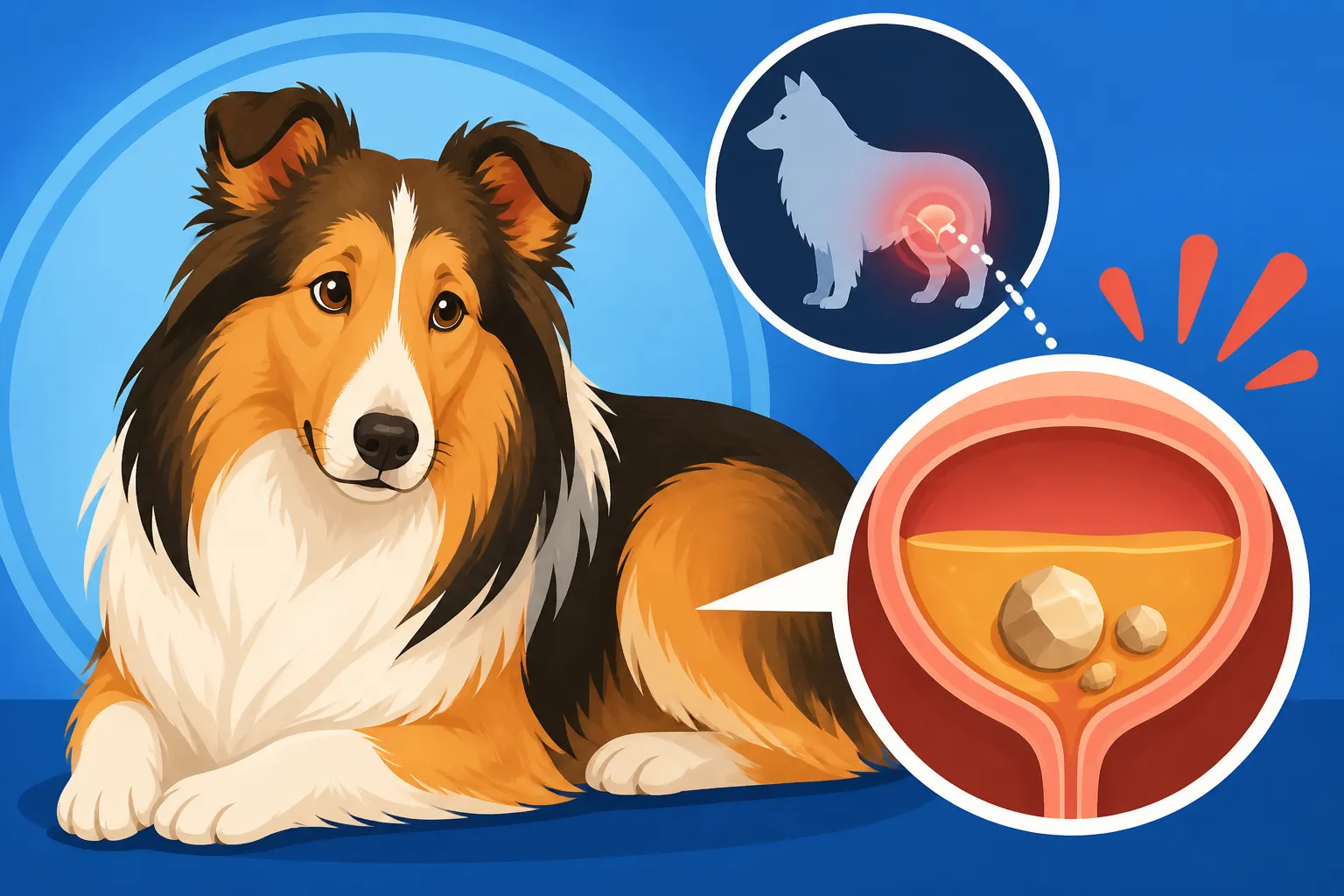
Signs a Collie Has a Bladder Stone
It's incredibly unsettling when your usually cheerful and stoic Collie starts acting differently, especially when it comes to something as basic as urinating. You might notice little changes – a bit more squatting than usual, a tiny spot of red in the snow, or even a sudden accident indoors from your perfectly house-trained companion. These subtle shifts can leave you worried, trying to decipher what's going on, and wondering if it's something serious. This guide is here to walk you through the key signs that might indicate your beloved Collie is suffering from bladder stones, offering insights into what to look for and what steps to take next.
Understanding Bladder Stones in Your Beloved Collie
Bladder stones, also known as uroliths, are solid mineral formations that can develop in a dog's urinary bladder. They can range in size from tiny grains of sand to pebble-sized formations, or even larger, and can cause immense discomfort and serious health issues for your furry friend. While no specific breed is entirely immune, and Collies don't have a unique predisposition compared to some other breeds, understanding the general risk and how these stones form is crucial for any responsible pet parent.
Imagine your Collie's bladder as a small, expandable balloon designed to hold urine. Normally, urine is a liquid waste product, but sometimes, due to various factors like diet, genetics, urinary tract infections, or imbalances in urine pH, certain minerals can crystallize. Over time, these tiny crystals can clump together, growing into stones. It’s a bit like how stalactites and stalagmites form in a cave, slowly building up mineral layers. There are several types of bladder stones, but the most common ones seen in dogs, including Collies, are struvite and calcium oxalate. Struvite stones often form in conjunction with a urinary tract infection, as certain bacteria can alter the urine's pH, creating an ideal environment for these crystals to develop. Calcium oxalate stones, on the other hand, tend to form in more acidic urine and can sometimes be linked to genetic predispositions or certain dietary factors. Knowing the type of stone is vital for effective treatment and prevention strategies, which your vet will help determine through diagnostic testing.
The Silent Whispers: Recognizing the Subtle Signs of Bladder Stones
Collies, with their intelligent and often resilient nature, can sometimes be masters at hiding discomfort. This means that as an owner, you need to be particularly observant to catch the early, subtle signs that something might be amiss. Don't wait for your Collie to be visibly screaming in pain; by then, the problem is often quite advanced. Early detection can make a world of difference in treatment outcomes and your dog's comfort.
One of the most common signs you might notice is a change in urination habits. Your Collie might start straining to urinate, looking uncomfortable, hunching over more than usual, or even crying out softly. You might also observe them trying to urinate much more frequently, but only producing small trickles or even nothing at all, despite their efforts. This urgency and discomfort come from the irritation the stones cause in the bladder lining, or because a stone is partially blocking the urethra. It's easy to dismiss these early signs as just an "off day" or a mild infection, but persistent changes warrant immediate attention.
| Symptom Category | Specific Signs to Watch For in Your Collie | Urgency Level |
|---|---|---|
| Urination Habits | Straining or struggling to pee (dysuria) | High |
| Frequent urination, small amounts (pollakiuria) | High | |
| Urinating in unusual places (house-soiling in a trained dog) | Moderate to High | |
| Licking the genital area excessively | Moderate | |
| Urine Appearance | Blood in urine (hematuria) – pink, red, or rust-colored | High |
| Cloudy or strong-smelling urine | Moderate | |
| Behavioral Changes | Restlessness or difficulty getting comfortable | Moderate |
| Lethargy, decreased activity, disinterest in play | Moderate | |
| Loss of appetite or decreased water intake | Moderate | |
| Crying, whimpering, or vocalizing during urination | High | |
| Physical Discomfort | Tenderness or pain in the abdomen when touched | High |
| Hunching or stiff posture | Moderate to High |
Pay close attention to the quality of their urine. Blood in the urine, medically termed hematuria, is a strong indicator of bladder irritation or damage, often caused by stones scraping against the bladder wall. This might appear as a pinkish tint, streaks of red, or a general cloudy, reddish hue. Sometimes, the blood is microscopic and not visible to the naked eye, but your vet will detect it with a urinalysis. You might also notice their urine seems cloudier than usual or has a stronger, more pungent odor, which could point to an accompanying infection.
Beyond the urinary specifics, consider your Collie's general demeanor. Is your energetic herding dog more subdued than usual? Are they reluctant to play fetch or go for their regular walks? A decrease in appetite or water intake can also be a subtle sign of discomfort. Sometimes, dogs with bladder stones might just seem generally "off," quiet, or irritable. They might try to relieve themselves in inappropriate places, even if they're perfectly house-trained. This isn't usually a sign of behavioral regression but rather an urgent need to go that they can't control, or an association of pain with their usual potty spot. Remember, your Collie's tendency to be stoic means these behavioral changes, even if subtle, are critical clues. It’s why you might want to look into "Whether a Collie Hides Pain" for more context on this breed's coping mechanisms.
Taking Action: What to Do When You Suspect Bladder Stones
If you've noticed any of these signs in your Collie, even if they seem minor, don't delay. The discomfort will only escalate, and complications like complete urinary obstruction can become life-threatening emergencies. Your first step should always be to contact your veterinarian immediately. Explain all the symptoms you've observed, even the ones that seemed insignificant at the time. The more information you provide, the better equipped your vet will be to diagnose the issue quickly.
When you bring your Collie in, your vet will likely start with a thorough physical examination. They might palpate your dog's abdomen, feeling for tenderness or an enlarged bladder. A urinalysis will be a crucial diagnostic tool. This involves collecting a urine sample (often done by the vet via cystocentesis, a sterile method that involves drawing urine directly from the bladder with a needle) to check for blood, crystals, bacteria, and to measure the urine's pH. If bacteria are present, a urine culture will be performed to identify the specific type of bacteria and determine which antibiotics will be most effective. This is particularly important because, as mentioned, struvite stones are often linked to urinary tract infections.
To definitively diagnose bladder stones and determine their size, number, and location, imaging tests are necessary. X-rays are often the first choice because many types of stones (like struvite and calcium oxalate) are radiopaque, meaning they show up clearly on an X-ray film. However, some types of stones are radiolucent (e.g., urate stones) and might not be visible on X-rays. In these cases, or for a more detailed view, an ultrasound may be recommended. An ultrasound can visualize even small stones, assess the bladder wall's thickness, and check for any blockages. During this process, don't hesitate to ask your vet questions. You might want to ask "How a Collie Owner Tells the Vet About MDR1" to ensure you're effectively communicating all breed-specific health concerns. It's always a good idea to ensure your Collie's chart is flagged at the clinic to highlight any predispositions or sensitivities, like those covered in "Whether a Collie's Chart Should Be Flagged at the Clinic".
Beyond Diagnosis: Treatment Options and Long-Term Prevention for Your Collie
Once bladder stones are diagnosed and their type is identified, your vet will discuss the best course of action. Treatment approaches vary significantly depending on the type of stone, its size, and whether there's an accompanying infection. For some stone types, like struvite, medical dissolution through a specialized diet and antibiotics can be very effective. These prescription diets are formulated to change the urine pH and reduce the concentration of minerals that form struvite stones, often dissolving them over several weeks or months. This is a topic that is explored further in "Whether a Collie's Diet Prevents Stones". Regular re-evaluation with X-rays or ultrasound will be necessary to monitor the dissolution progress.
However, not all stones respond to medical dissolution. Calcium oxalate stones, for instance, typically cannot be dissolved with diet and usually require surgical removal. This procedure, called a cystotomy, involves surgically opening the bladder to remove the stones. In some cases, very small stones might be flushed out through a procedure called urohydropropulsion, but this depends on the size of the stones and the anatomy of your Collie. Facing potential surgical costs can be daunting, which is why many Collie owners consider pet insurance from providers like Healthy Paws to help cover unexpected medical expenses. It’s worth checking out "Whether Pet Insurance Is Worth It on a Collie" to understand the financial implications. If surgery is needed, you'll also want to know "What a Collie's Emergency Visit Costs".
Regardless of the treatment method, preventing recurrence is paramount. Bladder stones have a notorious tendency to come back if the underlying causes aren't addressed. Your vet will outline a long-term management plan, which often includes:
- Prescription Diet: This is often the cornerstone of prevention. Depending on the stone type, your Collie will likely be on a special diet for life to control urine pH and mineral content.
- Increased Water Intake: Encouraging your Collie to drink more water helps dilute their urine, making it harder for crystals to form. This can be achieved by adding water to their food, offering filtered water, or even using a pet fountain.
- Regular Urinalysis: Your vet will likely recommend routine urinalysis checks (every few months initially, then possibly less frequently) to monitor urine pH, specific gravity, and check for any new crystals or signs of infection.
- Prompt Treatment of UTIs: Any future urinary tract infections must be treated aggressively and quickly, as they can be a trigger for certain stone types.
- Monitoring Symptoms: Continue to be vigilant for any of the signs discussed above. Early intervention is always best.
For older Collies, these health concerns become even more critical. General health checks, like those discussed in "Caring for a Collie Past Nine" and "Whether an Old Collie Needs Bloodwork Twice a Year", are important for catching issues like bladder stones or other age-related conditions early. Investing in good nutrition and proactive veterinary care from a provider like Healthy Paws can truly extend the comfortable lifespan of your cherished companion.
Disclaimer
The information provided in this guide is for general informational purposes only and does not constitute veterinary medical advice. Always consult with a qualified veterinarian for any health concerns or before making any decisions related to your Collie's health and treatment.