Why a Collie’s Chest Shape Raises Bloat Risk
Few things strike fear into the heart of a Collie owner quite like the mention of "bloat," medically known as Gastric Dilatation-Volvulus, or GDV. It's a sudden, terrifying, and often fatal condition that can turn a perfectly healthy afternoon into a desperate race against time. The fact is, our beloved Collies, with their elegant, deep chests, are unfortunately among the breeds at a higher risk for this catastrophic event. This guide will meticulously break down why their unique conformation plays such a significant role and, crucially, what you can do to protect your loyal companion.
Understanding Gastric Dilatation-Volvulus (GDV) in Dogs
Before we delve into the specifics of why a Collie's chest shape matters, it's vital to truly grasp what GDV is and the sheer speed with which it can devastate a dog. This isn't just an upset stomach; it's a severe medical emergency.
What Exactly is Bloat and Why is it So Dangerous?
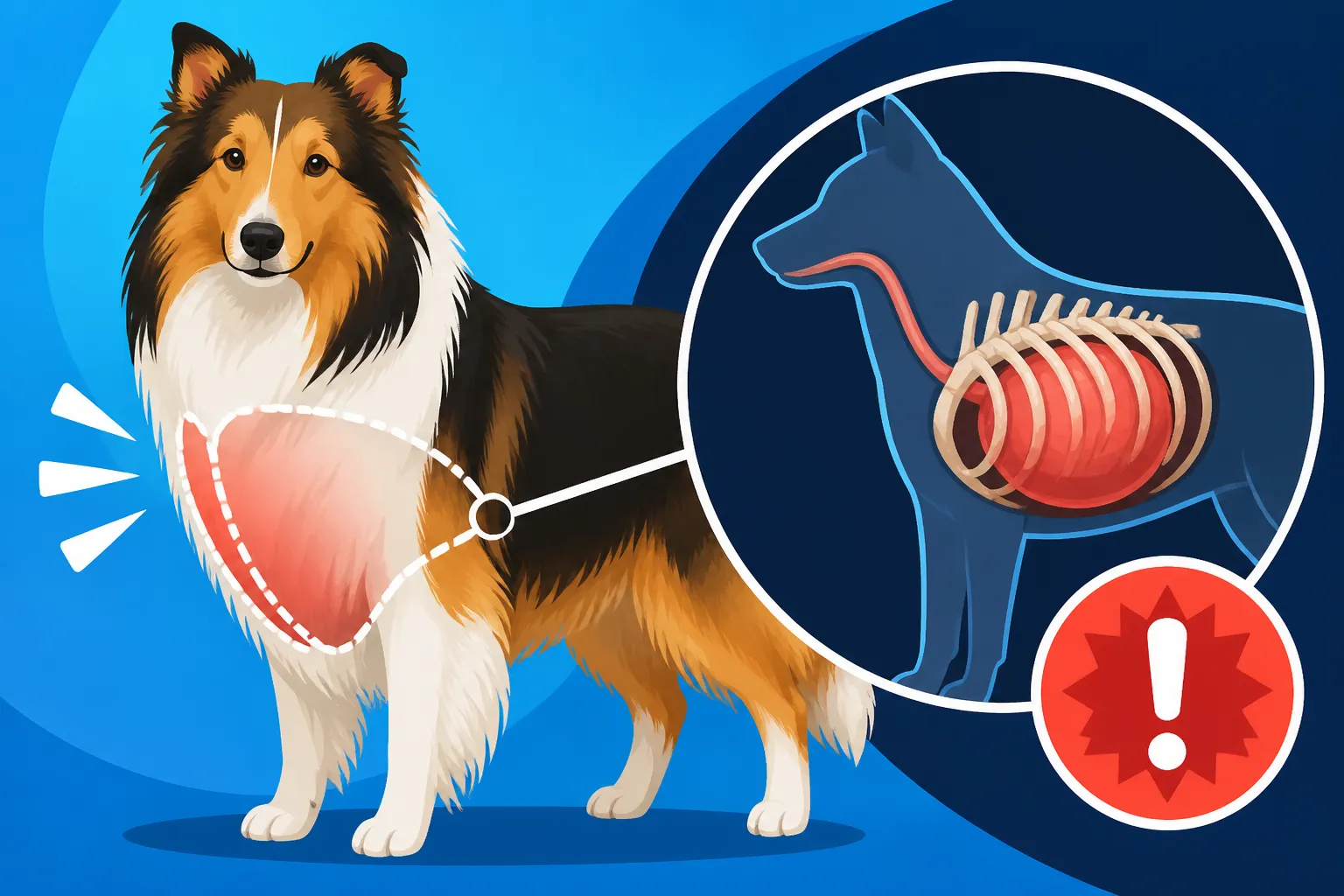
At its most basic, GDV involves two primary events: gastric dilatation and volvulus. Gastric dilatation means the stomach fills abnormally with gas, sometimes fluid or food, causing it to swell dramatically. This alone is incredibly painful and problematic, putting pressure on surrounding organs and the diaphragm, making it hard for your dog to breathe. However, the situation becomes truly life-threatening when the second part, volvulus, occurs. This is when the distended stomach twists upon its axis, effectively pinching off both the entry (esophagus) and exit (duodenum) points.
When the stomach twists, several critical things happen almost immediately. Blood supply to the stomach wall is cut off, leading to tissue death. The spleen, often attached to the stomach, can also become twisted and damaged. The blocked blood flow quickly leads to systemic shock, severely impacting heart function, breathing, and overall circulation. Toxins start to build up as tissues die, and these toxins can be released into the bloodstream, causing further organ damage. It’s a cascading failure that can overwhelm a dog's system incredibly rapidly, making it one of the most urgent veterinary emergencies imaginable.
The Rapid Progression of Bloat
One of the most terrifying aspects of bloat is its speed. It rarely presents as a slow-developing illness. Instead, a dog can go from seemingly fine to critically ill in a matter of an hour or two. This rapid progression is precisely why immediate action is paramount. The initial distension with gas can start almost imperceptibly, but once the stomach twists, the clock truly starts ticking. Every minute that passes increases the likelihood of irreversible damage to the stomach tissue, other organs, and the onset of profound shock.
Owners often report seeing their dog fine one moment, perhaps just finished eating or playing, and then suddenly exhibiting discomfort, restlessness, and attempts to vomit. If you notice these signs, there is no time to "wait and see" if it improves. The damage is cumulative, and the longer the twisting persists, the lower the chances of a successful outcome, even with swift surgical intervention. This is why knowing How Fast Bloat Kills a Collie is crucial for every owner, emphasizing the need for immediate veterinary attention.
The Collie's Distinctive Anatomy and Bloat Risk
When we talk about bloat risk, certain breeds are mentioned more frequently than others, and our Collies are definitely on that list. This isn't because of a flaw in the breed, but rather a consequence of their beautiful, majestic build, which, unfortunately, comes with an anatomical predisposition.
The Deep, Narrow Chest Conformation
Take a moment to look at your Collie. Admire their regal stance, the elegant curve of their neck, and that characteristic deep chest. This "deep-chested" conformation, where the chest is significantly deeper than it is wide, is a hallmark of the breed standard. While visually striking and contributing to their athletic appearance, it's also a primary anatomical factor contributing to GDV risk.
Imagine the stomach as a balloon hanging within the abdominal cavity. In a dog with a shallow, broad chest, the abdominal cavity might be more compact, offering less space for the stomach to move or rotate freely. However, in a deep-chested breed like the Collie, that greater vertical depth provides more "swinging room" for the stomach. This increased space means the stomach is less constrained by surrounding organs and the rib cage. It can distend more easily with gas and, crucially, has a greater propensity to rotate or flip over on itself, initiating the devastating volvulus.
How This Shape Contributes to Torsion
Think of it this way: a deep-chested dog's stomach is suspended somewhat like a pendulum. When it fills with gas, it expands not just outwards but also downwards. This expansion, combined with the extra space around it, allows it to become unstable. Activities like running, rolling, drinking large amounts of water, or even just shifting position after a meal can cause this gas-filled "pendulum" to swing, potentially leading to the twist.
The ligaments that normally anchor the stomach in place are simply not designed to withstand the forces exerted by a severely distended and actively twisting organ in such a cavernous space. Once the twist begins, it creates a self-perpetuating cycle: the twist prevents gas from escaping, leading to more distension, which in turn makes the twist tighter and more stable. This is the tragic reality of how a Collie's inherent physical beauty, its deep chest, can inadvertently contribute to one of its greatest health risks. Understanding this mechanical predisposition is key to appreciating why certain preventative measures are so important for these wonderful dogs.
Beyond Chest Shape: Other Contributing Factors to Bloat
While a Collie's deep chest is a major anatomical predisposer, bloat isn't solely determined by conformation. Several other factors, many of which are within an owner's control, can significantly increase or decrease the risk of GDV. It's a complex interplay of genetics, environment, and daily habits.
Eating Habits and Speed
How your Collie eats can be just as important as what they eat. Dogs who gulp down their food quickly are prone to swallowing a considerable amount of air along with their meal. This ingested air can contribute to the initial gastric dilatation, making the stomach distend with gas and increasing its instability. Think of it like a rapid inflation of that metaphorical balloon we discussed earlier.
Furthermore, feeding one large meal per day seems to carry a higher risk than multiple smaller meals. A large volume of food can cause the stomach to stretch more significantly, again creating that "pendulum" effect that makes twisting more likely. To mitigate this, many Collie owners find success with strategies such as using slow-feeder bowls, which have obstacles that force the dog to eat more deliberately. Another highly effective approach is to Whether a Collie's Meals Should Be Split into two or three smaller portions throughout the day, rather than one large one. This reduces the sheer volume of food and gas entering the stomach at any one time, lessening the chance of excessive distension.
Exercise, Stress, and Other Environmental Factors
The timing of exercise around meals is another crucial element. Vets and experienced owners widely advise against strenuous activity, like running or vigorous play, immediately before or after eating. The physical jostling and movement can encourage a distended stomach to twist. Imagine shaking that full, gas-filled balloon – it's more likely to spin. A general rule of thumb is to allow at least an hour before and after meals for quiet digestion. For a deeper dive, you might want to read Whether a Collie Should Rest After Eating.
Stress also plays a role in canine health, and bloat is no exception. Anxious or highly excitable dogs may be more prone to GDV. Stress can affect gut motility and increase air swallowing. While you can't eliminate all stress, maintaining a calm feeding environment and a predictable routine can help. Age is another factor; while bloat can occur at any age, middle-aged to senior dogs tend to be at a higher risk. This is possibly due to changes in stomach ligament laxity or overall physiological changes as they age. Genetics also contribute; if a Collie's close relatives have suffered from GDV, their risk is inherently higher, suggesting a hereditary component beyond just chest conformation.
Diet Composition and Bloat Link
For many years, there was intense debate and research into whether specific diet ingredients contributed to bloat. Some older studies suggested links to things like soy, certain fat levels, or corn in dog foods. However, current veterinary consensus largely indicates that the type of ingredients may be less critical than the way the food is consumed and the overall physical activity around meal times.
What is consistently emphasized now is the importance of a high-quality, consistent diet appropriate for your Collie's life stage and activity level. Rapid changes in diet can sometimes upset a dog's digestive system, potentially leading to gas or discomfort, which might contribute to risk factors. While there isn't a single "anti-bloat" food, feeding a diet that promotes healthy digestion and avoids excessive gas production is always beneficial. When considering food choices, it's worth understanding Whether a Collie Needs a Large Breed Formula as these are often formulated with controlled growth rates and nutrient profiles that can be beneficial for deep-chested breeds, though not specifically "bloat-proof." The focus should be on consistent feeding practices rather than an exhaustive search for a magic ingredient.
Recognizing the Early Warning Signs of Bloat
One of the greatest challenges in preventing fatalities from bloat is recognizing it quickly. Collies, like many dogs, can be stoic and try to hide their discomfort until symptoms become severe. As a Collie owner, becoming hyper-vigilant for subtle changes in behavior is literally life-saving.
Subtle Behavioral Changes to Watch For
The earliest signs of bloat are often behavioral, before any noticeable physical distension might occur. Your normally calm and composed Collie might suddenly become restless, pacing around the house, unable to settle down, or constantly shifting positions. They might seem anxious or uneasy, even if there's no obvious external trigger. You might observe them looking back at their flank, as if trying to understand the source of their internal discomfort.
Another common early sign is excessive drooling, often accompanied by repeated attempts to vomit. Crucially, in bloat, these attempts usually produce little to no actual vomit, or perhaps just foamy saliva. This non-productive retching is a strong indicator that something is severely wrong internally and that the stomach's exit is blocked. If your Collie is drooling, trying to throw up repeatedly with no success, and showing general agitation, do not hesitate – this is an emergency. These subtle cues, if recognized, can buy precious time.
Physical Manifestations and Progression
As bloat progresses, the physical signs become more pronounced and harder to miss, but by this stage, the condition is often critical, and the window for successful intervention is rapidly closing. The most obvious physical manifestation is abdominal distension, where the belly appears visibly swollen, particularly on the left side, although it can be generalized. This distended abdomen will feel tight and painful to the touch. Your Collie might whine or flinch if you try to gently palpate their belly.
Along with distension, their breathing will likely become rapid and shallow as the enlarged stomach presses against the diaphragm, making it difficult for the lungs to fully expand. Their gums might appear pale or even blueish if their circulation is severely compromised. As shock sets in, they may become weak, collapse, or struggle to stand. Their heart rate will likely be elevated, and their pulse weak. These are all late-stage, dire signs. It's imperative not to wait for your Collie to show a visibly distended abdomen or collapse before seeking veterinary help. If you're seeing Signs a Collie Is Bloating that include any of these physical symptoms, it's already an extreme emergency.
Immediate Actions and Veterinary Intervention
When bloat is suspected, there is no room for hesitation or "wait and see." This is a true veterinary emergency where every minute counts, and prompt, decisive action can be the difference between life and death.
The Critical Importance of Time
Let me be absolutely clear: if you suspect your Collie is experiencing bloat, drop everything and call your veterinarian immediately. Do not try to induce vomiting, administer antacids, or attempt any home remedies you might have read about online. These actions are not only ineffective but can waste precious minutes and even worsen the situation by delaying professional treatment. Your vet needs to know you're coming so they can prepare for your arrival, assembling the team and equipment needed for a GDV emergency.
The survival rate for GDV decreases dramatically with every hour that passes after the stomach twists. Early recognition and immediate transport to an emergency veterinary clinic are the most critical factors in a positive outcome. This is where having a plan in place, knowing the nearest emergency clinic, and having their number readily available, can literally save your dog's life. Think of it like a human heart attack – you don't call a friend; you call emergency services. Your Collie's bloat is no different.
What to Expect at the Emergency Vet
Once you arrive at the emergency clinic, the veterinary team will move with urgency. Their first priority will be to stabilize your Collie. This typically involves placing intravenous (IV) catheters to administer fluids and medications to combat shock, pain, and any cardiac arrhythmias that may have developed. Oxygen therapy might also be initiated to help with breathing difficulties.
Diagnosis is usually confirmed with an X-ray of the abdomen, which will clearly show if the stomach is distended and, crucially, if it has twisted. If GDV is confirmed, the next step is often decompression of the stomach to relieve gas pressure, sometimes by passing a tube down the esophagus if the twist isn't too severe, or in more urgent cases, by surgically inserting a needle or trocar through the abdominal wall into the stomach.
Following stabilization, surgery is almost always required to untwist the stomach (derotation). During this surgery, the veterinary team will also assess the health of the stomach wall and the spleen, removing any necrotic tissue if necessary. A critical part of the surgery for bloat in Collies and other at-risk breeds is a procedure called gastropexy. This involves surgically tacking the stomach to the abdominal wall, which significantly reduces the chance of the stomach twisting again in the future, though it doesn't prevent future gas distension (dilatation). This is a complex surgery, and it’s important to understand Whether a Collie Survives Bloat Surgery depends heavily on the severity of the condition and how quickly it's treated. Post-operative care is also intensive, involving pain management, monitoring for complications, and careful reintroduction of food and water. Having pet insurance like Healthy Paws can be a huge relief in these dire situations, as emergency surgeries and extended hospital stays can incur substantial costs.
Preventative Strategies for Collie Owners
While the thought of bloat is terrifying, the good news is that Collie owners aren't powerless. There are proactive steps you can take to significantly reduce your dog's risk, focusing on managing their environment, diet, and activity.
Modifying Feeding Routines
One of the most impactful preventative measures revolves around how your Collie eats. Instead of feeding one large meal a day, break it down into two or three smaller meals spread throughout the day. This reduces the volume of food in the stomach at any one time, minimizing distension. If your Collie is a "gulper," eating too quickly and swallowing air, a slow-feeder bowl is an absolute game-changer. These bowls have internal ridges or obstacles that make it impossible for your dog to take large mouthfuls, forcing them to eat more slowly and ingest less air. Another method for slow eaters is to spread their meal across a large baking sheet, making them "forage" for each kibble.
While some older advice suggested elevated feeding bowls, current research is mixed, and some studies even suggest they might slightly increase risk in certain breeds. It's generally best to feed your Collie at ground level unless your veterinarian specifically recommends an elevated bowl for an unrelated medical condition, such as neck pain. Finally, limit strenuous play or exercise for at least an hour before and after meals. Also, avoid allowing your Collie to drink a large amount of water immediately after eating. Offer smaller amounts more frequently instead.
Managing Exercise and Stress
Beyond mealtime, managing your Collie's overall activity and stress levels can contribute to bloat prevention. As mentioned earlier, the rule of avoiding strenuous exercise an hour before or after eating is paramount. This includes rough play, running, or anything that causes them to bounce around significantly. A gentle walk on a leash is fine, but intense activity should be reserved for times when their stomach isn't digesting a full meal.
Creating a calm and predictable environment for your Collie, especially around meal times, can also help. Stress and anxiety can lead to increased air swallowing and altered gut motility. If your Collie is prone to stress, particularly around food, consider feeding them in a quiet, undisturbed area away from other pets or household commotion. Regular, moderate exercise throughout the day is still vital for their overall health and well-being, but the key is timing it appropriately around meals.
Considering a Prophylactic Gastropexy
For many Collie owners, the ultimate preventative measure is a prophylactic gastropexy. This elective surgical procedure involves surgically tacking the stomach to the abdominal wall, similar to what's done during emergency bloat surgery. The crucial difference is that it's performed before a bloat episode occurs, usually when the dog is healthy.
The primary benefit of a prophylactic gastropexy is that it effectively prevents the stomach from twisting (volvulus) in the future. It doesn't prevent the stomach from dilating (filling with gas), but it dramatically reduces the risk of the life-threatening twist that turns simple gas into a dire emergency. Many veterinarians recommend performing this procedure when a Collie is already undergoing another surgery, such as spaying or neutering. This allows them to recover from both procedures simultaneously, making the experience less stressful for the dog and often more cost-effective for the owner. It's an excellent discussion to have with your vet, especially if your Collie has a high risk profile due to family history or extreme deep-chested conformation. Organizations like the Collie Health Foundation advocate for breed-specific health awareness, including preventative measures for conditions like bloat. Considering the potential costs of an emergency bloat surgery, which can run into thousands of dollars, a prophylactic gastropexy can be a wise long-term investment in your Collie's health and your peace of mind. Many pet insurance providers, such as Healthy Paws, offer coverage for emergency care, but it's important to discuss with them if a prophylactic surgery might be covered as well, or if it counts as a pre-existing condition if not done early.
Here's a quick overview of key preventative measures:
| Preventative Measure | Description | Impact on Bloat Risk |
|---|---|---|
| Smaller, More Frequent Meals | Dividing daily food into 2-3 portions instead of one large meal. | Reduces the volume of food and gas in the stomach at any given time, lessening distension and instability. |
| Slow-Feeder Bowls | Bowls designed with obstacles to slow down eating speed. | Decreases the amount of air swallowed during meals, thereby reducing initial gastric dilatation. |
| Restrict Exercise Around Meals | Avoiding strenuous activity for at least an hour before and after eating. | Minimizes stomach movement and jostling of a full stomach, reducing the chance of twisting. |
| Reduce Stress | Providing a calm feeding environment and consistent routine. | Helps to regulate gut motility and may reduce air swallowing associated with anxiety. |
| Prophylactic Gastropexy | Surgical procedure to tack the stomach to the abdominal wall. | Significantly reduces the risk of stomach volvulus (twisting), though not dilatation. Often performed with spay/neuter. Consider Whether a Collie's Gastropexy Can Share Its Neuter Anesthesia. |
| Monitor Water Intake | Avoiding large amounts of water immediately after meals. | Prevents rapid filling and distension of the stomach with liquid, which could contribute to instability. |
| Genetic Awareness | Knowing if bloat runs in your Collie's family lines. | While not a preventative action, it raises your awareness and reinforces the importance of other preventative measures. It can also influence the decision to pursue a prophylactic gastropexy. Consider it as part of understanding What Most Collies Die Of. |
Implementing these strategies can dramatically increase your Collie's safety and well-being. It's about being a diligent owner and understanding the specific needs that come with their unique breed characteristics. For long-term peace of mind regarding veterinary expenses, including potential emergency treatments or even prophylactic procedures, many Collie owners find that pet insurance, such as a comprehensive plan from Healthy Paws, offers invaluable support. It truly is worth researching Whether Pet Insurance Is Worth It on a Collie for serious conditions like bloat.
Disclaimer
The information provided in this article is for educational and informational purposes only, and does not constitute veterinary advice. Always consult with a qualified veterinarian for any health concerns or before making any decisions about your Collie's care and treatment. Early diagnosis and intervention are critical for conditions like bloat.