Signs a Collie Is Bloating
It's one of the most terrifying emergencies a dog owner can face: bloat. This condition, known medically as Gastric Dilatation-Volvulus (GDV), strikes swiftly and without much warning, turning a happy, healthy Collie into a critically ill patient in a matter of hours, sometimes even less. The speed at which it progresses, and the devastating consequences if not addressed immediately, make recognizing the subtle and overt signs of bloat an absolute necessity for every Collie guardian. This guide will walk you through what to look for, so you can act fast and potentially save your beloved dog's life.
Understanding Bloat and Why Collies Are at Risk
Bloat is a terrifying, rapid-onset condition that every Collie owner needs to understand, not just in theory, but in practice. It's often misunderstood, or thought of as something only affecting giant breeds, but our deep-chested Collies are unfortunately right there on the list of at-risk dogs. Knowing the mechanics and inherent risks is the first step in being prepared.
The Mechanics of Bloat and GDV
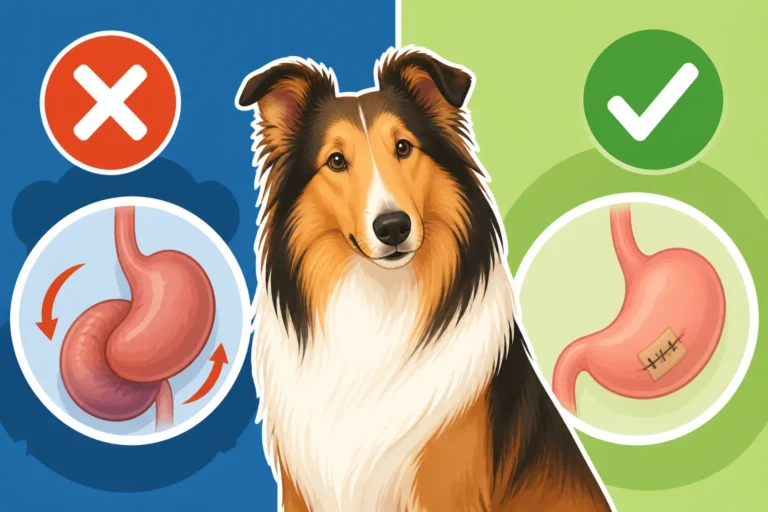
Gastric Dilatation-Volvulus, or GDV, isn't just a fancy term for an upset stomach; it's a life-threatening emergency. The initial stage, dilatation, occurs when a dog's stomach fills rapidly with gas, fluid, or food, expanding like a balloon. This alone is incredibly painful and uncomfortable. However, the true danger comes with the "volvulus" part – the stomach then twists upon itself, sometimes 180 degrees, sometimes even more. This twisting effectively cuts off the entrance and exit points of the stomach, trapping the gas and preventing anything from moving in or out. It also severely impacts blood flow to the stomach wall, leading to tissue death, and puts immense pressure on major blood vessels, which can send a dog into shock.
The speed at which this process unfolds is what makes bloat so terrifying. One moment, your Collie might seem fine, perhaps a little restless, and the next they could be in severe distress. Without intervention, the lack of blood flow, the pressure on organs, and the buildup of toxins will quickly become fatal. It’s a race against the clock from the very first sign, and every minute counts.
Why Collies Are Predisposed
While any dog can bloat, certain breeds, including our beautiful Collies, have a significantly higher risk due to their physical conformation. Collies are considered a deep-chested breed, meaning their chest is relatively narrow and long, extending far down their torso. This anatomical characteristic creates more space for the stomach to shift and twist when it becomes distended with gas. It's like having a large, empty room where an object has more freedom to move around and get tangled, versus a small, confined space.
Beyond their chest shape, other factors might contribute to a Collie's risk. Eating very quickly, eating one large meal a day instead of smaller, more frequent ones, high-stress situations, or even certain exercise routines can increase the likelihood. It's a complex interplay of genetics, anatomy, and environmental triggers, but the deep chest remains a primary anatomical risk factor. This is why understanding Why a Collie's Chest Shape Raises Bloat Risk is so crucial for every owner.
The Speed and Severity of the Condition
The phrase "time is of the essence" was practically coined for bloat. Once the stomach twists, the clock starts ticking rapidly. The pressure from the distended stomach can quickly restrict breathing, impair blood flow to other vital organs, and lead to irreversible damage. Toxins begin to build up in the body, and the risk of the stomach wall rupturing, or the spleen becoming compromised, increases with every passing minute.
Many experienced veterinarians will tell you that they've seen cases go from mild discomfort to full-blown life-threatening crisis in under an hour. This means that if you even suspect bloat, you absolutely cannot afford to "wait and see." Delaying veterinary attention, even for what seems like a short time, can dramatically decrease your Collie's chances of survival. Knowing How Fast Bloat Kills a Collie is not about scaring you, but empowering you with the knowledge that swift action is your best weapon.
Early, Subtle Signs of Bloat in Your Collie
One of the greatest challenges with bloat is that its initial signs can be incredibly subtle, easily mistaken for general tummy upset, or even just a bad mood. This is where your intimate knowledge of your Collie's normal behavior becomes your most powerful diagnostic tool. You know your dog best, and paying attention to slight deviations can be life-saving.
Changes in Demeanor and Comfort
Before the more dramatic physical signs appear, your Collie might just seem "off." They might become unusually restless, unable to settle in a comfortable position, constantly shifting or pacing. This restlessness often stems from an internal discomfort or pain that they can't articulate. Imagine a growing, nagging belly ache that keeps getting worse – that's often what they're experiencing.
Alternatively, some Collies might become withdrawn or lethargic, seeming unusually quiet or disinterested in their usual activities. A normally playful or attention-seeking dog might hide away, avoid interaction, or seem generally miserable. They might stand with an arched back, or appear to be trying to stretch out their abdomen, as if attempting to relieve pressure. Any significant, unexplained shift in your Collie's typical disposition, especially coupled with other signs, should raise a red flag. Remember that Whether a Collie Hides Pain can be a factor here, making subtle signs even harder to spot.
Abdominal Discomfort and Swelling
While the dramatic, hard distention comes later, early abdominal discomfort can manifest in less obvious ways. Your Collie might repeatedly look at their flank or abdomen, as if curious or bothered by something. They might gently paw at their stomach area or refuse to let you touch their belly, even if they usually enjoy rubs. This sensitivity to touch is a significant indicator of internal pain.
You might also notice a slight, though not yet rock-hard, swelling or tightness in the abdominal area. This can be particularly tricky to spot in a Rough Collie with its thick coat, but a careful palpation (gently feeling their belly) might reveal a change from its normal soft, pliable state. Sometimes, a full tummy after a meal can seem distended, but with bloat, the distention often feels more rigid and doesn't dissipate over time as normal digestion would.
Unusual Eating or Drinking Habits
Another subtle sign to watch for involves your Collie's interaction with food and water. They might attempt to eat or drink but then suddenly stop, as if nauseated or unable to swallow. This can be particularly telling if they are normally enthusiastic eaters. They might approach their bowl, sniff, and then turn away, or take a few bites and then back off, looking uncomfortable.
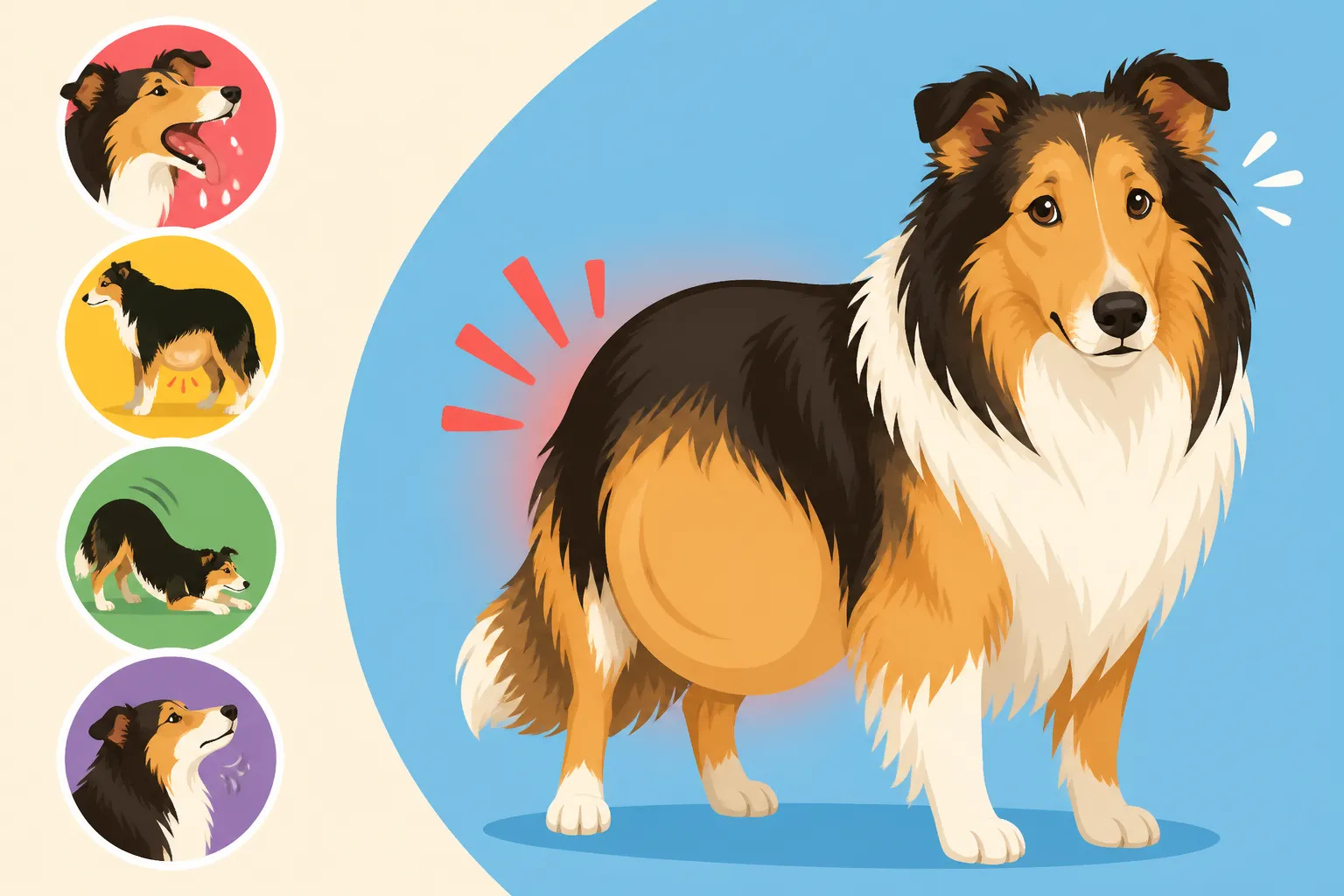
Excessive drooling can also occur, which is a common sign of nausea in dogs. They might also engage in unproductive attempts to vomit – bringing up only foamy saliva or nothing at all. This retching, especially without producing actual food or stomach contents, is a critical red flag that we'll discuss more in the next section, but even early, less forceful attempts should be noted. If your Collie is usually a hearty eater and suddenly becomes finicky or shows any signs of distress around food, it's worth investigating further.
Obvious, Urgent Signs of Bloat
While early detection is ideal, there are certain signs of bloat that are unmistakable and demand immediate, emergency veterinary attention. These signs indicate that the condition has progressed significantly and your Collie is in severe danger. Recognizing these overt symptoms can mean the difference between life and death.
Distended Abdomen and Hardness
This is perhaps the most classic and terrifying sign of bloat: a visibly swollen, often rock-hard abdomen. The distention will typically appear on the left side of your Collie's body, just behind the rib cage, but as the stomach continues to expand and twist, it can make the entire abdomen look and feel taut and full. It will often feel incredibly firm, like a drum, and may even sound hollow if you gently tap it.
Unlike a full belly after a large meal, this distention won't soften or reduce with time. It will continue to expand, putting immense pressure on your Collie's diaphragm, making breathing difficult, and constricting blood flow. The sight of this hard, swollen belly on your usually slender Collie is an immediate call to action. Do not delay, assume it will pass, or try home remedies. This is an emergency demanding a rapid response from you and your veterinarian.
Retching Without Vomit
This is arguably the most critical and specific sign of GDV. Your Collie will appear to be trying to vomit, going through the motions of heaving and gagging, but nothing or only a small amount of foamy saliva or mucus comes up. This "unproductive retching" indicates that the stomach's exit is blocked, making it impossible for them to expel the contents.
If your Collie is repeatedly retching, straining, and convulsing with their abdomen, but not actually producing vomit, it is a very strong indicator of bloat. This isn't just a sign of nausea; it's a symptom of a mechanical obstruction that is characteristic of the twisted stomach in GDV. This sign, even without a hugely distended abdomen yet, should trigger an immediate emergency vet visit.
Visible Distress and Collapse
As bloat progresses and the internal pressure mounts, your Collie will show increasingly severe signs of distress. They might pace frantically, pant heavily, drool excessively, or whine in pain. Their gums might appear pale or bluish, indicating poor circulation and oxygenation. Their heart rate may become rapid, and their pulse weak, as they go into shock.
In the most severe and advanced stages, a Collie with bloat may collapse, be unable to stand, or show signs of extreme weakness and lethargy. Their breathing will be shallow and rapid, and they might become unresponsive. At this point, the situation is incredibly critical, and survival rates drop significantly. Witnessing your vibrant Collie in such profound distress is harrowing, but it underscores the need for immediate action at the very first subtle hint of trouble. This kind of collapse means your dog is at the absolute brink, and emergency transport is vital.
Differentiating Bloat from Other Abdominal Issues
It’s easy to panic when you see your Collie showing signs of discomfort, especially when bloat is a known risk. However, not every upset stomach is bloat, and it's important to understand the differences, even if your first instinct should always be to consult your vet. Distinguishing bloat from other common conditions can be challenging, but there are some key pointers.
Distinguishing from Gastric Upset
Many dogs experience occasional gastric upset, which can manifest as vomiting, diarrhea, or a general reluctance to eat. With typical gastric upset, your Collie might vomit food, bile, or grass, and will usually produce actual vomit. While they might seem uncomfortable, they typically won't have the rigid, drum-like abdominal distention that accompanies bloat. Their discomfort might be intermittent, and they may still be able to pass gas or have bowel movements.
Bloat, on the other hand, is characterized by that unproductive retching (trying to vomit but nothing comes up) and the firm, enlarging abdomen. If your Collie is vomiting repeatedly but producing material, it's more likely a general stomach bug or dietary indiscretion. However, if the vomiting stops producing anything, or if it shifts to unproductive retching, that's a signal to take seriously. It's better to be overly cautious and get it checked, especially with a deep-chested breed like a Collie.
Ruling Out Colic or Other Abdominal Pain
Other conditions can cause abdominal pain in dogs, such as pancreatitis, ingestion of foreign objects, intestinal blockages, or severe constipation, which might be mistaken for bloat. These issues can also cause restlessness, pain, and sometimes distention, but typically lack the rapid progression and the specific "unproductive retching" of GDV. For instance, a dog with an intestinal blockage might vomit repeatedly, but they will likely produce contents. Their abdomen might be tender, but often not uniformly rigid or drum-like in the same way as bloat.
A Collie experiencing colic might exhibit cramping and discomfort, appearing hunched or restless, but again, the defining features of GDV – the specific retching and rapid, severe distention – are usually absent. It's the combination of signs, especially the unproductive retching, coupled with the rapid worsening of condition, that points most strongly to bloat. When in doubt, it’s always safest to err on the side of caution and treat it as a potential emergency.
The Critical Importance of Veterinary Consultation
Given the overlap in symptoms and the life-threatening nature of bloat, consulting a veterinarian at the first suspicion is paramount. Even if you're unsure, a quick call to your regular vet or the nearest emergency clinic can provide vital guidance. They might ask specific questions to help differentiate the symptoms over the phone, though often, they will recommend bringing your Collie in for an immediate examination.
Veterinarians have diagnostic tools like X-rays that can quickly confirm whether the stomach is distended and, more importantly, whether it has twisted. Early diagnosis allows for prompt medical stabilization and, if necessary, surgical intervention, which significantly improves the prognosis. Never try to diagnose or treat bloat at home; it’s a medical emergency that requires professional expertise and equipment. Your quick call and immediate action are the absolute best things you can do for your dog.
What to Do Immediately if You Suspect Bloat
The moment you suspect your Collie might be bloating, every second counts. This is not a situation where you can afford to wait to see if things improve. Your immediate actions can directly impact the outcome for your beloved dog.
Emergency Contact and Transport
First and foremost, contact your veterinarian or the nearest emergency veterinary clinic immediately. Don't waste time looking up symptoms online or calling friends. A direct phone call is essential. Explain your concerns clearly and concisely, mentioning "Collie" and "suspected bloat" at the outset. They will likely advise you to bring your dog in right away, giving you instructions on how to proceed.
While on the phone, ask for directions if you're unfamiliar with the emergency clinic, and consider having someone else drive so you can monitor your Collie. Gently assist your dog into the car, trying to keep them as calm and comfortable as possible. Avoid any rough handling or jostling. Speed is critical, but safety for both you and your pet is also important. Knowing What a Collie Owner Should Carry to an Emergency Visit can save precious minutes once you arrive.
Pre-Surgical Considerations and Stabilizing Your Collie
Upon arrival at the emergency clinic, the veterinary team will immediately assess your Collie. They will likely attempt to stabilize your dog by addressing shock, pain, and decompressing the stomach if it's severely distended. This might involve placing an IV catheter for fluids and medications, and attempting to pass a tube into the stomach to relieve gas (gastric decompression). In some cases, a needle may be used to release gas directly from the stomach through the abdominal wall, a procedure called trocharization, to alleviate immediate pressure.
Once stabilized, if GDV is confirmed, surgery will be recommended. This involves untwisting the stomach and, in many cases, performing a gastropexy – a procedure where the stomach is surgically attached to the abdominal wall to prevent future twisting. While daunting, this surgery offers the best chance of survival. The veterinary team will discuss the risks and prognosis with you, but the window for successful intervention is very narrow.
Financial Preparedness for Bloat Emergencies
Bloat surgery and emergency care can be incredibly expensive, often ranging from several thousand dollars depending on the complexity, post-operative care, and location. This is a tough reality, and the financial stress can add immensely to the emotional burden during such a crisis. Many Collie owners find peace of mind with pet insurance plans, such as those offered by Healthy Paws, which can significantly help with the unexpected costs of emergency procedures like bloat surgery.
Having an emergency fund set aside specifically for your pet is another wise step. Knowing that a reputable pet insurance provider like Healthy Paws might alleviate some of the financial burden, or having savings dedicated to such unforeseen events, allows you to focus solely on your Collie's medical needs without added stress. Discussing What a Collie's Emergency Visit Costs can help you prepare proactively.
Preventative Measures and Ongoing Vigilance
While bloat can strike suddenly, there are proactive steps Collie owners can take to minimize the risk, and perhaps most importantly, to stay vigilant for any early warning signs. Prevention and preparedness are your best allies in protecting your furry family member.
Dietary and Feeding Practices
How and what your Collie eats can play a significant role in bloat prevention. Instead of feeding one large meal a day, consider splitting their daily food intake into two or three smaller meals. This reduces the amount of food and air ingested at one time, lessening the risk of stomach distention. Many vets recommend this approach, and it’s a common strategy for owners of deep-chested breeds. This directly relates to the advice found in articles like Whether a Collie's Meals Should Be Split.
Using a slow-feeder bowl can also be beneficial, especially if your Collie tends to "hoover" their food too quickly. These bowls have obstacles that force your dog to eat around them, slowing down their ingestion. Some owners also opt for feeding wet food or adding water to dry kibble, although some sources suggest this could potentially contribute to gas production in some dogs, so discuss this with your vet. Ensuring fresh water is always available is important, but preventing large gulps of water immediately after eating or heavy exercise is also key.
Managing Exercise Around Meals
It's a common piece of advice, and for good reason: avoid strenuous exercise around meal times. A good rule of thumb is to avoid high-intensity play or exercise for at least an hour before and two hours after your Collie eats. Strenuous activity, especially running or jumping, can increase the likelihood of the stomach twisting if it's full of food, water, and gas. Think of it like a full sack jostling around – it’s more prone to twisting.
Instead, encourage a relaxed environment before and after meals. A quiet potty break or a leisurely stroll on a leash is fine, but intense games of fetch, agility training, or a vigorous run should be reserved for times when your Collie’s stomach is empty. This simple adjustment to your routine can significantly reduce the mechanical stress on your Collie's digestive system. More details can be found in discussions around Whether a Collie Should Rest After Eating.
Considering a Preventive Gastropexy
For Collies, particularly those with a family history of bloat or those whose owners are deeply concerned about the risk, a prophylactic gastropexy is a serious consideration. This surgical procedure involves permanently attaching the stomach to the abdominal wall, physically preventing it from twisting. While it doesn't prevent the stomach from dilating (filling with gas), it eliminates the more deadly "volvulus" component.
Many veterinarians recommend performing a gastropexy at the same time a Collie is spayed or neutered, as it allows for one anesthesia event. This procedure can offer immense peace of mind, though it's important to discuss the benefits, risks, and costs with your veterinarian. It is a proactive step that can dramatically improve the prognosis if your Collie were ever to experience stomach dilation. For more in-depth information, you might find Whether a Collie Should Have a Preventive Gastropexy particularly helpful.
| Sign | Likely Bloat (GDV) | More Likely General Stomach Upset |
|---|---|---|
| Abdominal Swelling | Rapidly distended, firm, drum-like abdomen, especially on left side | Mild, soft distention (if any), often resolves over time |
| Retching/Vomiting | Repeated, unproductive retching (dry heaves, foamy saliva only) | Productive vomiting (food, bile, grass), may be repeated |
| Pain Level | Severe, increasing rapidly, dog in obvious distress | Mild to moderate, may be intermittent, dog generally uncomfortable but not collapsing |
| Pacing/Restlessness | Extreme, continuous pacing, unable to settle, arching back | Mild, occasional restlessness, may find comfortable positions |
| Breathing | Rapid, shallow, labored breathing | Normal or slightly increased, not typically labored |
| Gum Color | Pale, grayish, or bluish (sign of shock) | Pink (normal), possibly slightly paler if nauseated |
| Progression | Very rapid, worsening quickly (minutes to hours) | Slower onset, may resolve on its own or with simple remedies |
Remember, this table is a guide, not a substitute for veterinary care. If you observe any combination of signs leaning towards bloat, especially unproductive retching and a distended abdomen, seek immediate veterinary attention. Timely intervention is crucial for a positive outcome. Knowing What Most Collies Die Of helps us understand the importance of addressing serious conditions like bloat quickly and decisively.
Disclaimer
The information provided in this article is for educational purposes only and should not be considered a substitute for professional veterinary advice, diagnosis, or treatment. Always seek the advice of your veterinarian or other qualified animal health provider with any questions you may have regarding a medical condition or treatment plan for your Collie.