Whether a Collie Needs Sunscreen on Its Muzzle
It’s a common misconception that our beautiful, luxuriantly coated Collies are somehow immune to the sun's harsh rays. After all, look at all that glorious fur! But many Collie owners are surprised and concerned to learn that their dog’s muzzle, especially the sensitive nose, is incredibly vulnerable to sunburn and long-term damage. This guide will walk you through why your Collie's muzzle needs protection, how to spot sun damage, and the best ways to keep that precious nose safe and healthy.
Why a Collie's Muzzle is Uniquely Vulnerable to Sun
You might look at your Rough Collie's magnificent ruff and think they're completely covered, a furry fortress against the elements. However, a closer look at their face, particularly the muzzle and nose, tells a different story. These areas, often less pigmented or covered with finer hair, are not as protected as the rest of their body.
The Delicate Nature of a Collie's Nose
The part of your Collie that is most exposed and least protected is undoubtedly their nose. A dog's nose, or planum nasale, is typically moist, devoid of fur, and often black or dark brown. This pigmentation offers some natural protection, but it’s not absolute. For Collies, especially those with lighter pigmentation on their nose, or even those with a "Dudley nose" (a pink or liver-colored nose), the risk skyrockets. Even black noses can suffer UV damage over time, leading to dryness, cracking, and even more serious conditions. Think of it like your own nose – it's often the first place you get burned, even if the rest of your face has some color.
Moreover, certain conditions can make a Collie's nose even more susceptible. A common concern that often starts on the nose is a condition known as What Collie Nose Actually Is. This autoimmune skin disease, also called Discoid Lupus Erythematosus (DLE), often presents as depigmentation, scaling, crusting, and ulceration on the nasal planum. Sun exposure is a known trigger and aggravator of DLE, making sun protection crucial for prevention and management.
Pigmentation and Protection Levels
Collies come in a variety of beautiful colors: sable, tricolor, blue merle, and white. While the coat color itself doesn't directly dictate muzzle vulnerability, the pigmentation of the skin underneath the fur and on the nose and eyelids does. Dogs with lighter skin and lighter-colored noses, sometimes seen in blue merles or even some sables with "butterfly" noses (partially pigmented), have less melanin. Melanin is the natural pigment that acts as a shield against UV radiation. Less melanin means less natural protection, making these Collies prime candidates for sunburn.
This isn't just about a pretty pink nose; it’s about their health. Just like fair-skinned people are more prone to sunburn, so are fair-skinned dogs. The delicate skin around their nostrils and on the bridge of their nose, where the fur thins out, is particularly at risk. This is why even a mostly dark-nosed Collie can still suffer a sunburn if the lighter, less pigmented areas are exposed for too long without protection.
The Illusion of a Thick Coat
It’s tempting to believe that your Rough Collie's abundant double coat provides all the protection they need. And for much of their body, it largely does. The dense outer coat and insulating undercoat are fantastic at regulating temperature and providing a physical barrier. However, this impressive fur doesn't cover every inch of their body equally. The hair on their muzzle, particularly the bridge of the nose and around the eyes, is significantly shorter and sparser than the hair on their neck or back.
This thinner hair allows UV rays to penetrate directly to the skin, bypassing the protective layer you might assume is there. It’s like wearing a long-sleeved shirt but forgetting your hat – your arms are covered, but your face is still exposed. This is especially true if your Collie enjoys sunbathing on their back, exposing their stomach and groin, or if they love to lounge with their nose pointed directly at the sky. A shaved Collie, for whatever reason, is even more vulnerable, as their entire body loses this natural barrier. The mantra here is, don't let the grandeur of their coat trick you into thinking they're immune to the sun.
Recognizing Sun Damage and Its Risks
Understanding that your Collie’s muzzle is vulnerable is the first step. The next is knowing what to look for when sun damage occurs and grasping the long-term implications. Sunburn isn't just uncomfortable; it can lead to chronic health issues.
Understanding Collie Nose (Discoid Lupus Erythematosus)
One of the most concerning conditions associated with sun exposure in Collies is Discoid Lupus Erythematosus (DLE), often referred to as "Collie Nose" or "Nasal Solar Dermatitis." This isn't just a simple sunburn; it's an autoimmune disease where the dog's immune system mistakenly attacks healthy skin cells, specifically those on the nose. While DLE can occur on other parts of the body, it most commonly manifests on the nasal planum.
The symptoms of DLE can be quite distressing:
- Depigmentation: The black nose may fade to a gray or pinkish color.
- Crusting and scaling: The skin becomes dry, flaky, and crusty.
- Erosions and ulcers: In severe cases, open sores and bleeding can occur, which are painful and prone to secondary infections.
- Loss of normal cobblestone appearance: The texture of the nose often becomes smooth and shiny.
Sun exposure is a significant trigger and can exacerbate existing DLE, causing flare-ups and worsening symptoms. If you notice these changes, especially after periods of sun exposure, it's critical to consult your veterinarian. Early diagnosis and management, which invariably includes rigorous sun protection, can help prevent the condition from progressing and keep your Collie more comfortable. For comprehensive information, you can read more about What Collie Nose Actually Is.
Identifying Early Signs of Sunburn
Before DLE sets in, or as a standalone issue, a Collie's muzzle can simply get sunburned. Just like us, dogs can experience painful acute sunburns. It's often difficult to spot under their fur, but the muzzle and nose are usually unmistakable.
Here’s what to look for:
- Redness: The most obvious sign, especially on pink or lightly pigmented areas.
- Tenderness: Your Collie might pull away when you try to touch their nose or muzzle.
- Heat: The affected area might feel warm to the touch.
- Dryness or flaking: Similar to how human skin peels after a sunburn.
- Blistering (rare but serious): In severe cases, blisters can form, which are very painful and prone to infection.
- Licking or rubbing: Your Collie might incessantly lick or rub their nose/muzzle, indicating discomfort or irritation.
If you suspect your Collie has a sunburn, get them out of the sun immediately. Cool compresses can offer temporary relief. For severe burns, blistering, or signs of pain, a vet visit is essential. Untreated sunburns can lead to infections or increase the risk of more serious long-term conditions. It's not just discomfort; a sunburn can signify future problems. Many owners might wonder, Whether a Collie's Nose Gets Sunburned, and the answer is a resounding yes!
The Long-Term Threat of Skin Cancer
Perhaps the most serious long-term risk of repeated sun exposure to a Collie's muzzle is the increased chance of developing skin cancer. Just as with humans, cumulative UV radiation damage can cause mutations in skin cells, leading to cancerous growths. These cancers can range from relatively benign to aggressive and life-threatening.
Common types of skin cancer seen on a dog's nose or muzzle include:
- Squamous Cell Carcinoma: This is often found on sparsely haired, unpigmented skin, making the Collie's nose and muzzle a prime target. It can appear as a persistent sore that doesn't heal, a red patch, a crusty lesion, or even a raised mass. It's locally invasive and can metastasize if not treated promptly.
- Hemangiosarcoma: While often internal, this aggressive cancer can also manifest on the skin, appearing as dark red or bluish-black masses, sometimes associated with sun exposure.
- Melanoma: Though often benign in dogs, malignant melanoma can occur, especially on pigmented areas.
Early detection is key for successful treatment. Regularly inspect your Collie’s nose and muzzle, feeling for any lumps, bumps, or changes in texture or color. If you notice any suspicious lesions that don't heal, grow, or change in appearance, consult your veterinarian immediately. Pet insurance providers like Healthy Paws are often a lifeline for owners facing expensive treatments for conditions like skin cancer, helping to manage the financial burden when unexpected health issues arise.
Applying Sunscreen Safely to Your Collie's Muzzle
If your Collie has a vulnerable muzzle, or if you simply want to be proactive about their sun safety, sunscreen is a tool you can use. However, it's absolutely crucial to use the right kind of sunscreen and apply it correctly to avoid inadvertently causing more harm than good.
Choosing the Right Sunscreen for Dogs
This is where many owners make a critical mistake: reaching for their own human sunscreen. Never use human sunscreen on your dog unless specifically advised by your vet, as many human formulations contain ingredients that are toxic to dogs if licked or absorbed.
When selecting a sunscreen for your Collie, look for products specifically formulated for pets. If a pet-specific product isn't available, or you need an immediate solution, look for human sunscreens that meet the following criteria:
- Active Ingredients: Opt for sunscreens containing titanium dioxide or zinc oxide, as these are physical blockers and generally considered safer. However, even these can be toxic in high doses if ingested, so careful application and distraction are key. Zinc oxide, in particular, can be quite toxic if consumed.
- PABA-free: Para-aminobenzoic acid (PABA) can be toxic to dogs.
- Fragrance-free: Added fragrances can be irritating or cause allergic reactions.
- Non-comedogenic: Less likely to clog pores.
- Water-resistant: This helps it stay on, especially if your Collie licks their nose.
- SPF 15 or higher: Provides adequate protection.
Brands like Epi-Pet Sun Protector Spray for Pets, My Dog Nose It! Sun Protection Balm, or Sit Stay Forever are examples of products specifically designed for canines. Always check the ingredient list thoroughly and if in doubt, consult your vet before applying anything to your Collie. Remember, a quick call to your vet can save you a lot of worry and potentially a costly emergency visit down the line, which even a robust plan from Healthy Paws might not retroactively cover.
Step-by-Step Application for Wary Collies
Applying sunscreen to a dog who isn't keen on having their face touched can be a challenge. Patience and positive reinforcement are your best friends.
- Introduce it gradually: Let your Collie sniff the tube or bottle. Reward calm behavior with praise and treats.
- Patch test: Before full application, apply a tiny amount to an inconspicuous area of skin (like inside their ear flap) and wait 24 hours to check for any redness or irritation.
- Choose the right moment: Apply sunscreen when your Collie is calm and relaxed, perhaps after a walk or during cuddle time.
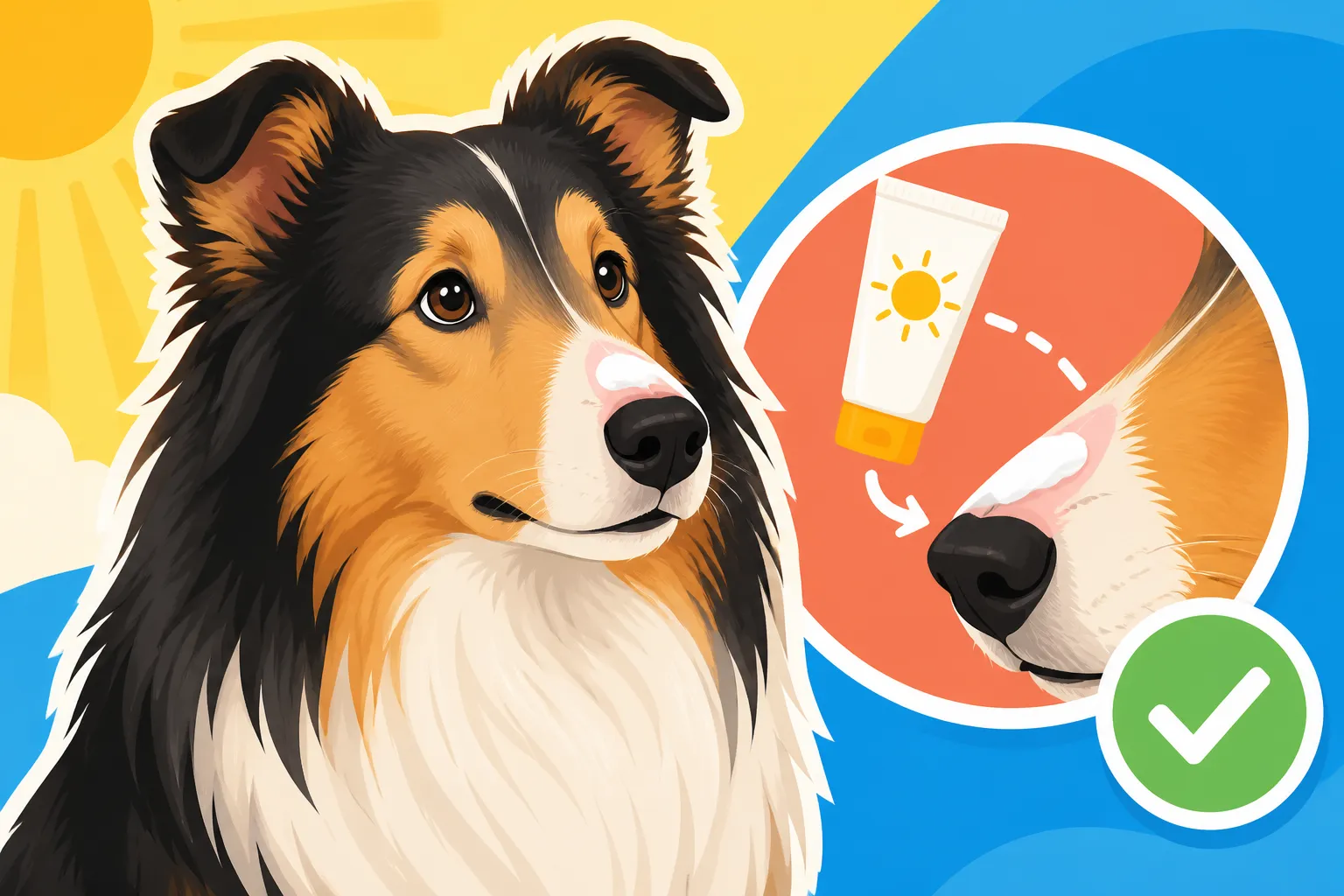
- Small amounts are key: Squeeze a pea-sized amount onto your fingertip.
- Target vulnerable areas: Gently dab the sunscreen onto the bridge of their nose, around the nostrils (being careful not to get it in the nostrils), and any pink or sparsely-haired areas on their muzzle. You might also consider the tips of their ears if they are lightly pigmented.
- Rub in thoroughly: Make sure it’s absorbed and not just sitting on top of the fur, where it can be easily licked off.
- Distract and reward: Immediately after application, distract your Collie with a favorite toy, a puzzle feeder, or a long-lasting treat (like a bully stick or Kong filled with peanut butter) for 10-15 minutes to allow the sunscreen to absorb before they can lick it off.
- Reapply: Depending on the product and your Collie's activity level, reapply every 2-4 hours, especially after swimming or heavy panting.
Consistency is key. The more you make it a positive experience, the more cooperative your Collie will become. And it's an important routine, just like regular brushing or dental care.
What to Avoid in Canine Sunscreen
Knowing what to avoid is just as important as knowing what to look for when choosing sunscreen for your Collie. Many ingredients common in human sunscreens are harmful if ingested by dogs, and since they will inevitably try to lick their muzzle, ingestion is a real risk.
Here’s a crucial list of ingredients and types of sunscreens to steer clear of:
- Zinc Oxide: While a physical blocker, zinc oxide can cause gastrointestinal upset, red blood cell damage (hemolytic anemia), and even kidney damage if ingested in large enough quantities. It's often found in diaper rash creams too, so be careful.
- PABA (Para-aminobenzoic acid): Known to cause stomach upset and other adverse reactions in dogs.
- Octinoxate, Oxybenzone, Homosalate, Octisalate, Octocrylene, Avobenzone: These are common chemical UV filters found in human sunscreens. They can be irritating to dog skin and eyes, and their long-term effects when ingested by pets are not well-studied but generally considered risky.
- Fragrances and Dyes: These are unnecessary additives that can cause allergic reactions or skin irritation in sensitive Collies. Always opt for fragrance-free, dye-free formulas.
- Propylene Glycol: A common additive that can be toxic in large amounts.
- High Alcohol Content: Can be very drying and irritating to a dog's sensitive skin.
If you ever suspect your Collie has ingested a harmful substance or is having a reaction to a product you’ve applied, contact your veterinarian or a pet poison control center immediately. Having pet insurance from providers like Healthy Paws can give you peace of mind that you can seek emergency care without financial hesitation.
Here’s a quick reference table to help you:
| Ingredient Type | Generally Dog-Safe (with caution) | Avoid Entirely in Dog Sunscreen |
|---|---|---|
| Active UV Filters | Titanium Dioxide (physical blocker) | Zinc Oxide (toxic if ingested), Octinoxate, Oxybenzone, Homosalate, etc. |
| Other Ingredients | Aloe Vera (pure, in small amounts) | PABA, Fragrances, Dyes, Propylene Glycol, High Alcohol Content |
| Formulation Notes | Water-resistant, SPF 15+, Non-comedogenic | Scented products, sprays that can be easily inhaled, highly greasy formulas |
Alternative Sun Protection Strategies
Sunscreen is a great tool, but it's just one piece of the puzzle for protecting your Collie's muzzle and overall skin health. A multi-pronged approach that includes environmental management and other protective measures will give them the best defense against harmful UV rays.
Shade: The First Line of Defense
This might seem obvious, but consistently providing ample shade is the simplest and most effective way to protect your Collie from the sun. Whether in your backyard, at the park, or on a hike, seek out shaded areas.
Here’s how to maximize shade for your Collie:
- Designated shaded outdoor areas: Ensure your yard has a large, consistently shaded spot where your Collie can relax. This might be under a tree, a covered patio, or an outdoor umbrella.
- Indoor breaks: Bring your Collie indoors during peak sun hours. This isn't just for their skin; it also helps prevent overheating, especially for a dog with a thick double coat.
- Portable shade: If you're at the beach or a park with no natural shade, bring your own! A large beach umbrella, a pop-up tent, or even a specialized dog canopy can provide a safe haven from the sun.
- Avoid prolonged sunbathing: Many Collies love to stretch out in a sunny spot, but encourage them to move into the shade after a short period. This might involve calling them over for a treat in the shade or gently redirecting them.
Remember, even on cloudy days, UV rays can penetrate clouds and still cause damage. So, shade isn't just for bright, sunny afternoons. It's a year-round consideration for sensitive pups. Think about Whether a Collie Should Be Kept Out of Midday Sun – absolutely, especially between 10 AM and 4 PM when UV radiation is strongest.
Protective Gear and Timing
Beyond sunscreen and shade, there are other practical ways to minimize your Collie's sun exposure, especially for their delicate muzzle.
- UV-protective clothing: While a full body suit might be overkill for most Collies due to their heavy coats, specialized sun-protective gear can be very effective for specific areas. Dog hats with brims or visors are available and can shield a Collie's nose and eyes from direct sunlight. Some even offer neck protection. Getting your Collie accustomed to wearing a hat from a young age can make it an accepted part of your routine.
- Timing walks and outdoor activities: Adjust your schedule to avoid peak sun hours. Early morning and late evening walks are not only cooler and more comfortable for your Collie (reducing the risk of overheating), but also significantly reduce their exposure to intense UV radiation. This also helps with issues like Whether a Collie Overheats in Its Coat.
- Limit car travel during peak sun: If your Collie loves to stick their head out the window, that open window fun can lead to severe sunburn on their muzzle and face. Consider using sunshades on car windows or limiting window time during sunny drives.
By incorporating these habits into your daily routine, you create a comprehensive sun protection plan that complements any sunscreen application, ensuring your Collie stays safe and comfortable.
Diet and Overall Skin Health
While diet won't prevent sunburn directly, a healthy, balanced diet rich in essential nutrients plays a vital role in supporting overall skin health, which can, in turn, enhance its resilience and ability to heal.
- Omega-3 Fatty Acids: These "good fats" found in fish oil (like salmon or sardine oil) are fantastic for skin and coat health. They can help reduce inflammation, improve skin barrier function, and potentially make skin more resilient. Many high-quality dog foods include omega-3s, but supplements can be added under veterinary guidance.
- Antioxidants: Vitamins E and C, along with other antioxidants, help combat cellular damage caused by free radicals, which are produced by UV radiation. Fresh fruits and vegetables (dog-safe ones, of course!) can be good sources, as can quality dog foods.
- Hydration: Ensuring your Collie has constant access to fresh, clean water is paramount for overall health, including skin hydration and elasticity.
A Collie with healthy skin is better equipped to handle minor environmental stressors and recover from any incidental damage. If your Collie already has a skin condition like DLE, supporting their skin health through diet and appropriate supplements (again, vet-approved) is even more critical. Healthy skin is the foundation for a healthy dog, and a balanced diet is a cornerstone of that foundation. It also contributes to a vibrant coat and can help manage shedding, a common concern discussed in The Three Weeks Twice a Year When a Collie Buries Your House.
Disclaimer
This article is for general informational purposes only and does not constitute professional advice. Laws, prices and regulations vary by location and change over time. Consult a qualified professional for guidance on your specific situation.