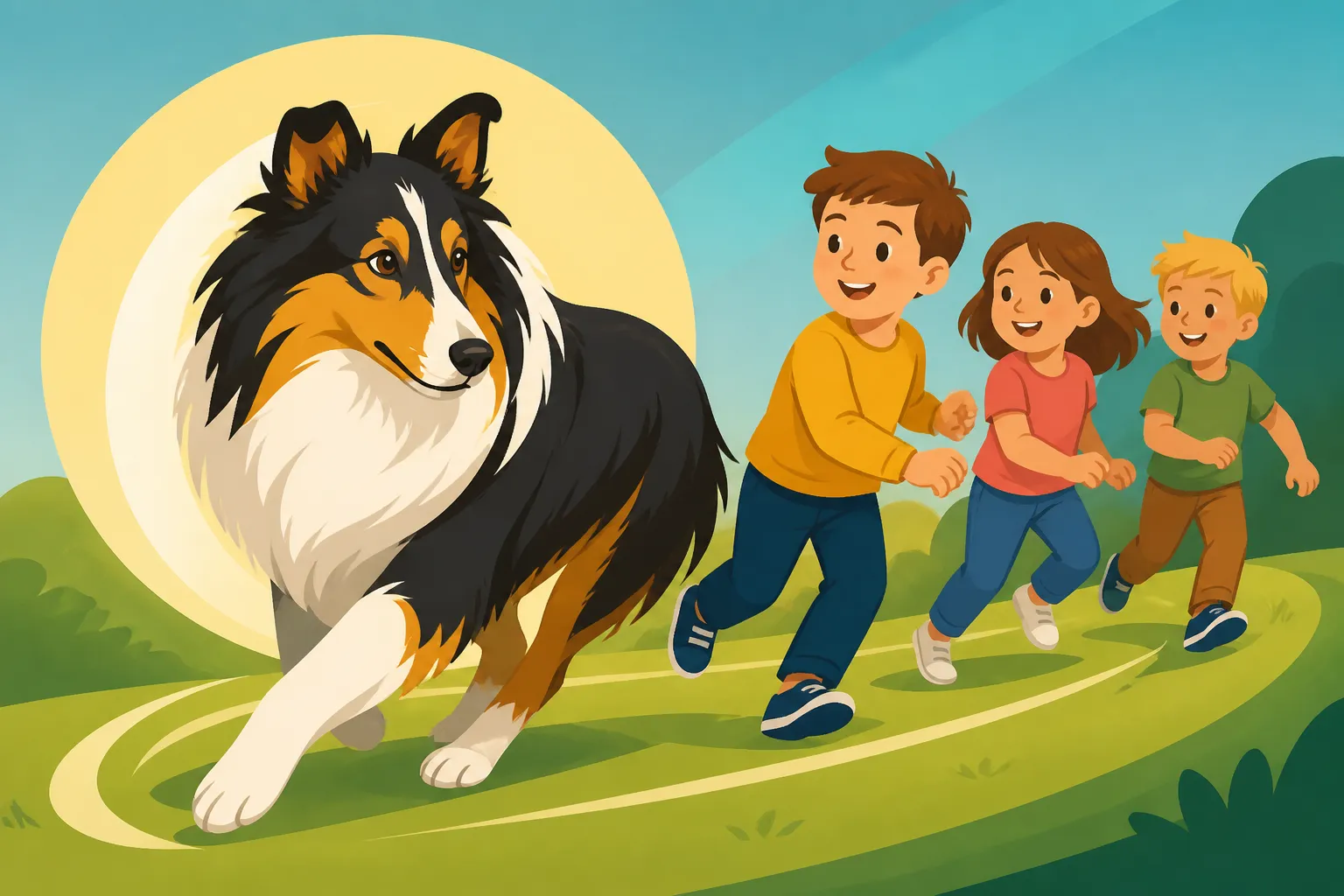
Why a Collie Herds Your Children
It's a scene many Collie owners know all too well: your beautiful, intelligent dog, with all the best intentions, suddenly starts to circle your children, perhaps nudging them or even giving a gentle, insistent nip at their heels. This behavior, while utterly natural for a herding breed, can be perplexing, frustrating, and even a little concerning for families who aren't prepared for it. This guide is here to shed light on exactly why your Collie feels compelled to herd your little ones and, more importantly, how you can gently and effectively redirect this deep-seated instinct into more appropriate and less chaotic channels.
Understanding the Deep-Seated Herding Instinct in Collies
Collies, both Rough and Smooth, were originally bred for a very specific job: gathering and moving livestock, primarily sheep, across the rugged Scottish landscape. This isn't just a fun fact about their history; it's a fundamental part of their genetic makeup, hardwired into their very being. When you bring a Collie into your home, you're not just getting a fluffy companion; you're bringing in generations of selective breeding for traits like intelligence, biddability, and, crucially, a powerful herding drive. This instinct doesn't just vanish because there aren't sheep in your living room.
Think of it this way: for centuries, their ancestors were praised and depended upon for their ability to control and guide flocks. They developed specific behaviors to accomplish this, such as gathering, driving, circling, and even nipping at the heels of stubborn sheep. These aren't signs of aggression; they're finely tuned predatory sequences (without the kill instinct) designed to make a large, often unwilling, group of animals move where the dog, and thus the shepherd, wanted them to go. This instinct is so profound that even Collies who have never seen a sheep will display these behaviors in the right circumstances.
What we perceive as "bad behavior" – chasing, barking, nipping – is, to your Collie, simply doing its job. It's an expression of an innate desire to organize, to control movement, and to keep its "flock" together. Understanding this foundational truth is the first step toward managing the behavior with patience and empathy. It’s not your Collie being disobedient; it’s your Collie being a Collie. Their minds are constantly looking for patterns of movement, for things that need to be "gathered" or "managed," and in a busy household, who moves more unpredictably than children?
The Historical Role of the Collie as a Droving Dog
Before the Collie became the beloved family pet we know today, largely thanks to Queen Victoria Made the Collie Fashionable in the 1860s and the iconic Lassie, they were working dogs of the highest order. Imagine the vast, open moors of Scotland, with a shepherd relying on a single dog or a small team to manage hundreds of sheep. These dogs had to be tough, intelligent, and possess an incredible amount of stamina and instinct. Their job wasn't just to keep the sheep from wandering off; it was to drive them to new pastures, bring them in for shearing, or move them to market. This required precision, focus, and a keen eye for movement.
The specific type of herding instinct varied. Some Collies were "boundary workers," keeping the flock within a set perimeter, while others were "gathering dogs," bringing scattered sheep back to the shepherd. Regardless of the exact style, the core job remained the same: managing the flow and location of other living beings. This job was not for the faint of heart, and it certainly wasn't a casual task. The lives and livelihoods of shepherds depended on their dogs' abilities, meaning only the most effective herders were bred, further cementing these traits into the breed's genetic code.
These historical demands shaped the Collie into the sensitive, observant, and often independent problem-solver that we see today. They learned to anticipate movement, to read the body language of the flock, and to make quick decisions. When you see your Collie staring intently at a child running across the yard, or positioning itself to cut off their path, it's not being aggressive; it's engaging in a pattern of behavior that has been refined over centuries. It's an echo of its ancestors working the highlands, making sure every "sheep" stays where it should. What a Collie Herded in Scotland provides a fascinating look into their original purpose.
What the Herding Instinct Looks Like in a Modern Home
In the absence of sheep, the herding instinct often manifests in a variety of ways that can be quite noticeable in a domestic setting. It's not always a full-on "round 'em up" scenario, but can be subtle at first. You might see your Collie shadowing family members, particularly children, as they move from room to room, creating a kind of invisible perimeter. This is their way of keeping their "flock" together. They might block doorways or hallways, subtly trying to direct traffic or prevent someone from leaving the "group."
More overtly, the behavior can include circling, where the dog runs around a person or group, attempting to gather them. This is often accompanied by low, insistent barking, which is another classic herding sound used to get sheep moving. Why a Collie Barks covers how common this is. Then there's the famous "heel nipping" or "ankle biting," which, while startling, is typically a light, non-injurious nip meant to redirect movement, not to harm. It's a quick, sharp command from a dog that means "move that way!" or "stop moving!"
It’s important to distinguish these natural herding behaviors from genuine aggression. A herding nip is usually swift, targeted at the lower legs, and lacks the intent to cause injury you'd see in a truly aggressive bite. The dog's body language often remains open and alert, rather than stiff or fearful. They're focused on the task, not on conflict. Recognizing these signs helps you understand your dog's motivation and respond appropriately, without unfairly labeling them as aggressive or "naughty." It's just their inner shepherd coming out to play.
Recognizing Herding Behavior in Your Home
So, how do you know if your Collie is actually herding, rather than just being playful or a bit boisterous? It’s all in the details of their actions and the context. Herding behavior tends to be repetitive, focused, and often directed at moving objects or individuals, especially those who move quickly or unpredictably. If your dog only does this when the kids are running wild, but is perfectly calm when they're sitting quietly, that's a strong indicator.
One of the most common signs is the "gather" or "collect" behavior. Your Collie might try to push people, particularly children, into a corner or closer together. They might use their body to bump or lean against a child, subtly trying to shift their direction. Another key indicator is the "eye." Collies are masters of the "herding eye," a focused, intense stare that can communicate intent to move or control. They'll fixate on their "charge" with an unwavering gaze, often lowering their head slightly, ready to spring into action if the "sheep" (your child) makes a sudden move.
It’s easy to misinterpret these actions as simply being over-excited or even protective. However, the intent behind herding is different. It’s about control and organization of movement, not necessarily protection in the traditional sense, though it can sometimes look like it. By observing closely, you can start to differentiate between playful chasing and the purposeful, instinct-driven behavior of a Collie trying to herd its family flock.
Common Herding Cues and Actions Collies Display
Collies have a whole repertoire of movements and vocalizations that stem from their herding roots. The most obvious, of course, is the circling motion. You'll see them running in wide arcs around children, narrowing the circle, attempting to gather them into a smaller group. This is often accompanied by characteristic herding barks – short, sharp, and insistent, designed to get attention and dictate movement. It's not an alarm bark, nor a playful bark; it's a "move it!" bark.
Then there’s the nudging and bumping. A Collie might run alongside a child, gently pushing them with their shoulder or muzzle to guide them in a particular direction. They might even try to get in front of a child to block their path, forcing them to stop or change direction. This is all part of their strategic approach to managing a flock. And, as mentioned, the infamous heel nipping. Why a Collie Nips at Heels delves deeper into this specific behavior, but know that it's a quick, often open-mouthed, and typically gentle nip at the calves or ankles, designed to get attention and initiate movement. It’s an inherited response to an animal (or child) moving away too fast or in the wrong direction.
Finally, you might notice your Collie exhibiting what looks like stalking behavior. They might crouch low, moving slowly and deliberately, with their eyes fixed on their "prey." This isn't a hunting stalk, but rather a preparatory move to control a situation. They're observing, planning their next move to cut off an escape route or redirect a wandering family member. All these behaviors, when seen together, paint a clear picture of a dog deeply engaged in its ancestral calling.
Differentiating Play from Purposeful Herding
Sometimes, it’s a fine line between enthusiastic play and genuine herding behavior. Both can involve chasing, barking, and running. However, there are key distinctions that can help you understand your Collie’s motivation. Play is generally reciprocal; the dog and child take turns chasing, and there’s often a "play bow" or relaxed, wiggly body language. The dog might bring toys into the equation, or solicit interaction with an open mouth and wagging tail.
Herding, on the other hand, tends to be one-sided in its objective. The Collie is trying to control the movement, not necessarily engage in a game of chase. While they might appear excited, their body language is often more focused and less overtly "playful." Their eyes are intense, their movements are purposeful, and there's a repetitive nature to the actions. The dog isn't inviting the child to play; it's trying to direct them. If the child stops running, does the dog try to re-engage the chase, or does it try to position itself to prevent further running, perhaps nudging them into a corner?
Consider the outcome your Collie seems to be aiming for. Is it to get the child to interact with a toy, or to keep the child contained and moving in a specific way? If it’s the latter, you’re likely witnessing a pure expression of their herding instinct. Understanding this difference is crucial because the way you respond to play should be very different from how you respond to an instinct-driven herding attempt. One is encouraged, the other needs redirection.
Why Collies Target Children
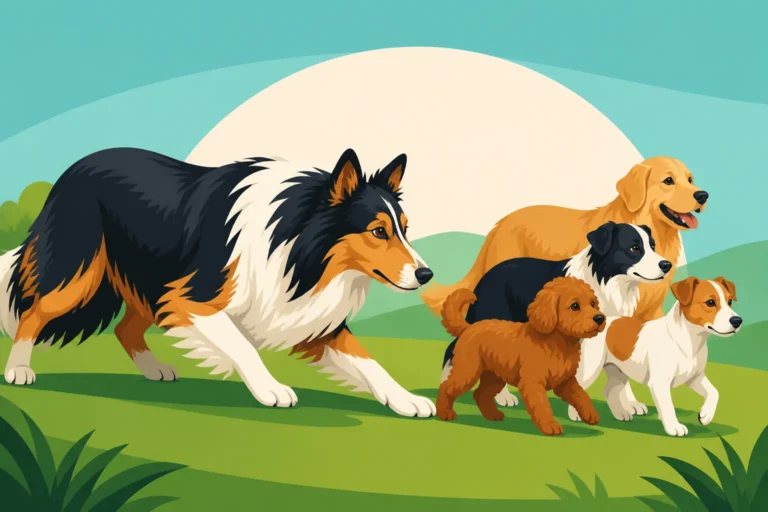
It might seem unfair that children are often the primary targets of a Collie's herding instinct. After all, they're part of the family! But from a Collie's perspective, children often present the perfect "flock" material. They're smaller, they move erratically, they make high-pitched noises, and they tend to run. All of these characteristics trigger a Collie's ingrained drive to gather and control.
Imagine a flock of sheep. They are smaller than the dog, they scatter, they bleat, and they bolt. Sound familiar? Children, especially toddlers and young ones, exhibit many of these same behaviors. A child darting across the yard, giggling and screaming, is like a prime target for a Collie's finely tuned herding radar. The dog isn't being malicious; it's simply responding to the most obvious "livestock" available in its environment.
Furthermore, children might not understand or respect a dog's personal space in the same way an adult might. They might inadvertently provoke the herding instinct by running directly away from the dog, or by making sudden, unpredictable movements that a Collie perceives as needing "management." This combination of innate canine instinct and often unpredictable child behavior creates the perfect storm for herding attempts within the home.
Children's Movements Triggering Instincts
Children's movements are practically tailor-made to activate a Collie's herding instincts. Think about it: a young child, full of boundless energy, tends to run, skip, and dart about without much predictable pattern. This isn't how adults typically move. From a Collie's perspective, this erratic, scattering motion is exactly what a disobedient or wandering sheep would do. Their instinct screams, "Gather them! Keep them together! Don't let them stray!"
High-pitched squeals and laughter also play a role. These sounds, while joyous to human ears, can register as excited or alarmed "bleating" to a herding dog, further confirming that this "flock" needs supervision. The combination of rapid, unpredictable movement and excited vocalizations creates a powerful stimulus for a Collie to spring into action, attempting to round up its perceived charge. They aren't trying to scare the child; they're trying to contain them.
It's not just running; even quick, sudden turns or changes in direction can trigger the instinct. A child pivoting quickly to chase a ball, or suddenly deciding to run back inside, can be seen as an attempt to break from the "flock." The Collie's immediate response will often be to cut off that movement, get in front, or try to direct the child back to the group. It’s an involuntary, deeply ingrained response to stimuli that have meant "work" for countless generations of their ancestors.
The Perception of Children as "Small Animals"
For a Collie, there isn't a vast conceptual difference between a small, fast-moving child and a small, fast-moving lamb. Both are perceived as "animals" that need to be managed and kept safe within the group. Their size, their relative vulnerability, and their tendency to move in a less controlled manner than adults all contribute to children being categorized, in a Collie's mind, as prime candidates for herding.
This isn't to say your Collie doesn't recognize your child as a human member of the family; rather, it's about how their primal instincts classify certain types of stimuli. The part of their brain that says "this needs to be herded" lights up when confronted with a small, active entity. It's a testament to the power of their breeding that this instinct is so strong, overriding other considerations. They see a "flock" that needs their expertise, and they're just trying to do their best to keep everyone safe and together.
This perception is why simply telling a Collie "no" isn't always effective. You're asking them to override a deeply programmed instinct. It requires understanding, redirection, and consistent training to help them understand that, in this particular "flock" (your family), they are not the designated shepherd. Rather than seeing them as being disobedient, see them as a dog trying to fulfill a very ancient, very powerful biological imperative.
The Potential Risks and Frustrations of Herding Behavior
While a Collie's herding behavior is instinctual and usually not aggressive, it can still lead to a host of problems and frustrations for both the family and the dog. For parents, there’s the constant worry about safety, especially with very young children. Even a gentle nip can startle a child, cause them to fall, or, if repeated, create a fear of the family dog. This can undermine the bond between child and pet, which is something every family wants to foster.
Beyond safety, the sheer persistence of herding can be incredibly annoying and disruptive. Imagine trying to have a peaceful afternoon in the backyard, only for your Collie to constantly circle your kids, bark, and try to "collect" them. It can make playtime stressful and can lead to children avoiding the dog, or even being hesitant to invite friends over. This isn't the harmonious family life most people envision with a dog.
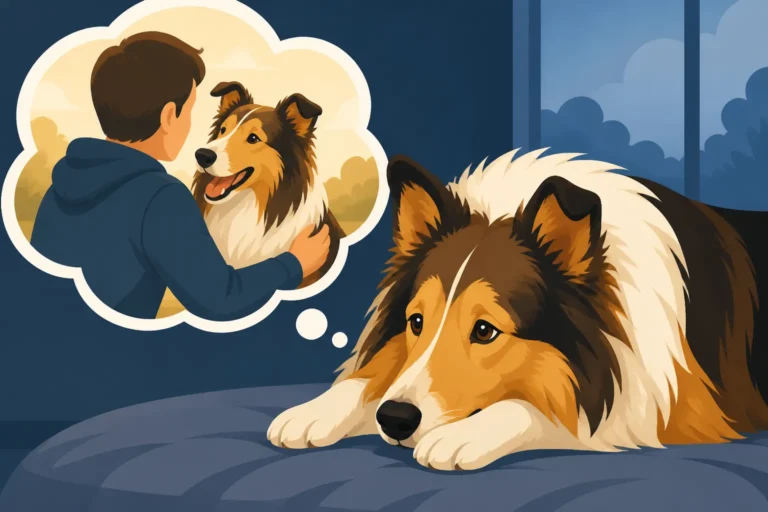
For the Collie themselves, unchecked herding can also be detrimental. If their attempts are met with constant scolding or punishment, it can lead to anxiety, confusion, and a breakdown in trust. They're just doing what feels natural, and being reprimanded for it can be deeply distressing. It's a cycle that needs to be broken with understanding and appropriate redirection, not just punishment.
Safety Concerns for Children
Even the most well-intentioned herding nip from a Collie can be a safety concern, particularly for toddlers and very young children who are less stable on their feet. A sudden nip or bump could easily cause a child to lose their balance and fall, potentially resulting in bumps, scrapes, or more serious injuries. While the intent might not be to harm, the physical consequence can still be problematic. Small children's skin is delicate, and even a "playful" nip can leave a mark or break the skin, especially if the dog gets carried away.
Beyond direct physical injury, there's the psychological impact. A child who is constantly being chased, barked at, or nipped by the family dog can develop a significant fear of dogs, or at least a fear of their dog. This can lead to a child actively avoiding the Collie, which can be heartbreaking for a dog that truly means no harm and simply wants to interact. Such an environment doesn't foster a positive relationship between child and pet, and can create a home where stress rather than joy defines their interactions. Whether a Collie Should Be Supervised With Toddlers covers this vital aspect in more detail.
It's also important to remember that not all children react the same way. What one child might brush off, another might find terrifying. A persistent herding dog can turn a fun game of tag into a stressful ordeal, making the backyard or even living room feel like a challenging place to play freely. As responsible dog owners, we have a duty to ensure our children feel safe and comfortable in their own home, and that means managing the dog's natural instincts effectively.
The Frustration for Owners and Dogs
Living with a Collie that constantly herds can be genuinely frustrating. Imagine hosting a barbecue or a birthday party, and your dog is relentlessly trying to herd all the children into a tight group, barking the whole time. It's embarrassing, disruptive, and can quickly wear on your nerves. Guests might not understand the instinct and could view your dog as aggressive or poorly behaved, leading to awkward conversations and perhaps even avoiding future visits.
For the dog, this situation is also a source of frustration. They have a powerful urge to perform a job, and if that urge isn't being met or redirected, it can lead to anxiety and misbehavior. A Collie that is constantly trying to herd and being told "no" or removed from the situation without an alternative outlet can become confused, anxious, or even develop destructive behaviors out of pent-up energy and unfulfilled instinct. They need to do something with that drive.
This constant push and pull can also strain the owner-dog relationship. It's hard to feel truly bonded when you're always having to correct or manage a behavior that seems relentless. It becomes a source of tension rather than joy. Finding ways to understand and redirect these instincts is not just about human convenience; it's about the dog's welfare and the overall harmony of the household. It's about finding a win-win solution where everyone feels comfortable and understood.
Effective Strategies to Manage Herding Behavior
Okay, so we understand why Collies herd and what it looks like. Now for the crucial part: how do we manage it? The good news is that with consistency, patience, and the right approach, you can absolutely teach your Collie that herding the kids is not part of their job description in your home. It's not about punishing the instinct out of them, but about redirecting that powerful drive into appropriate channels and teaching them alternative, desired behaviors.
The core of effective management lies in prevention, clear communication, and providing suitable outlets. You want to avoid situations where the herding instinct is highly triggered, teach your Collie what you do want them to do instead, and ensure they have plenty of mental and physical stimulation. Remember, Collies are smart and eager to please; they just need to understand the rules of this new "flock" they're part of.
This isn't a quick fix. It will require ongoing effort, especially during your Collie's puppy and adolescent phases. But the payoff is immense: a well-adjusted, happy Collie that lives harmoniously with your children, and a peaceful household where everyone can relax and enjoy each other's company. Let's dive into some practical, actionable strategies you can start implementing today.
Management and Prevention Techniques
The easiest way to manage herding behavior is to prevent it from happening in the first place, especially when you're first establishing boundaries or working with a young Collie. This often means carefully managing interactions between your Collie and children, particularly when children are engaged in activities that are likely to trigger the herding instinct, such as running, shouting, or playing boisterously. Supervision is key, but prevention goes a step further.
One effective tool is physical separation. If you know the kids are going to be running around in the yard, provide your Collie with a designated safe space indoors, perhaps with a high-value chew toy, or put up a baby gate to create a barrier. This isn't a punishment; it's simply removing the opportunity for the behavior to occur, which prevents the Collie from practicing the unwanted behavior and becoming reinforced by it. Utilizing heavy-duty baby gates, readily available on platforms like Amazon, can be a game-changer for managing space.
Leash management is also incredibly useful, even indoors. If your Collie is particularly prone to herding, having them on a drag leash (a lightweight leash that they can drag around without supervision, making it easy to gently guide them) can give you the control you need to interrupt nascent herding attempts before they escalate. It allows for gentle redirection without needing to physically grab or chase your dog, which can inadvertently reinforce their herding drive. This preventative approach buys you time to teach alternative behaviors.
Teaching Alternative Behaviors
Simply telling your Collie "no" when they try to herd isn't enough; you need to teach them what you want them to do instead. This is where positive reinforcement training shines. Instead of herding the children, perhaps you want your Collie to lie down on their mat, or come to you for a game of fetch. Start by teaching these alternative behaviors in calm, low-distraction environments, then gradually introduce them when the kids are present but not yet triggering the herding instinct.
A "place" command is incredibly useful. Teach your Collie to go to a specific mat or bed and stay there, even when distractions are present. Reward them heavily for calm duration on their place. When the kids start to get rambunctious, you can calmly send your Collie to their place. This gives them a clear job – "stay here and be calm" – which can satisfy their need for structure and direction. Reward frequently for staying put. What Motivates a Collie explains how crucial positive reinforcement is.
Another great alternative is a "settle" command. This teaches your Collie to relax and lie down. Practice this throughout the day, rewarding calm, relaxed behavior. When the herding instinct starts to bubble up, ask for a "settle." It gives them an acceptable, calm behavior to engage in instead of chasing. The goal is to make the alternative behavior more rewarding than the herding. Consistency here is paramount.
Positive Reinforcement and Redirection
Positive reinforcement is the absolute cornerstone of training Collies, especially when addressing instinctual behaviors. These dogs are incredibly sensitive and intelligent, and Harsh Handling Breaks a Collie and It Does Not Come Back. Instead, you want to reward the behaviors you like and redirect the ones you don't. When your Collie chooses a calm behavior over herding, even for a split second, that's your cue to praise and reward generously.
Redirection means steering your Collie's attention and energy away from the children and onto an appropriate activity. If you see them starting to fixate or stalk a child, immediately interrupt with a cheerful voice and offer a toy, a quick training exercise, or a short game of fetch. The key is to intervene before the herding behavior fully takes hold. If you wait until they're already circling and nipping, it's much harder to redirect.
Keep high-value treats handy and be ready to engage. A quick game of tug or a short burst of obedience commands like "sit," "stay," and "come" can be enough to break their focus on the children and re-engage their minds on you. Consistency in redirecting is vital; every time you successfully divert their attention, you're reinforcing the idea that you are the one who provides engaging, rewarding activities, not the children.
Training and Enrichment to Redirect Instincts
Simply managing and preventing herding is a good start, but it doesn't address the underlying instinct. Collies thrive on mental and physical challenges. Ignoring these needs can lead to a frustrated dog who has to find an outlet for its energy, and that outlet might just be your children. By providing appropriate training and enrichment, you can harness that powerful herding drive and channel it into constructive and enjoyable activities.
Remember, a tired Collie is a good Collie, but a mentally tired Collie is even better. These dogs are thinkers. They need problems to solve, tasks to accomplish, and a sense of purpose. Providing this kind of outlet will not only reduce the likelihood of them herding your kids but will also make them a more content, balanced, and responsive companion.
This section will explore how you can actively engage your Collie's mind and body to satisfy their instinctual needs in ways that are compatible with family life. From structured training sessions to interactive toys, there are many ways to keep your clever Collie happily occupied and less inclined to play shepherd to your human flock.
Structured Obedience and Rally Training
Collies absolutely excel at structured obedience and rally training, and these activities are fantastic for redirecting their innate intelligence and desire to work. Regular training sessions provide mental stimulation, strengthen your bond, and give your Collie a "job" to do that involves listening to you rather than their own herding impulses. Commands like "stay," "heel," "come," and "down" can be incredibly useful tools for managing their behavior around children.
Enrolling in a local obedience class can be a great starting point, or exploring online programs like those offered by BAXTER & Bella. These structured environments teach you how to effectively communicate with your Collie and provide them with challenges that engage their minds. The focus and precision required in obedience work can be a wonderful outlet for their natural focus and desire to perform tasks.
Rally obedience takes this a step further, combining obedience exercises with a course-like setup, which can appeal to a Collie's problem-solving nature. The constant engagement and variety keep them mentally stimulated and physically active, fulfilling a part of their working dog heritage in a fun, non-herding context. It gives them a productive way to use their brainpower and energy, making them less likely to invent their own "jobs" (like herding kids).
Engaging in Canine Sports and Activities
Collies are natural athletes and intelligent problem-solvers, making them excellent candidates for a variety of canine sports. These activities are phenomenal for channeling their energy and instincts in appropriate ways. Herding instinct tests, for example, can be a way to give them a taste of their ancestral purpose in a controlled, safe environment, potentially with actual sheep. This often satisfies that deeply ingrained drive without impacting the kids. Whether a Collie Should Try Herding Sheep is a useful read here.
Beyond herding, Collies can shine in agility, scent work, and even fast CAT (Coursing Ability Test) if appropriate for their physical structure. Agility uses their athleticism and problem-solving skills, requiring them to navigate obstacles quickly and accurately. Scent work, where they use their noses to find hidden scents, taps into a different kind of mental engagement that is incredibly tiring and fulfilling. These activities provide a purpose and a constructive outlet for their energy and intelligence.
Even simpler games like advanced fetch or hide-and-seek with toys or treats can provide significant mental and physical enrichment. The key is to make these activities challenging and engaging enough to truly tire out your Collie's clever mind. A dog that has spent an hour working through a scent puzzle or learning new agility maneuvers is far less likely to have the residual energy or inclination to herd the children. Forty Five Minutes a Day, and Half of It in Its Head emphasizes the importance of mental work.
Providing Appropriate Toys and Mental Stimulation
While physical exercise is important, mental stimulation is often the missing piece for herding breeds. Your Collie needs activities that challenge their brain and allow them to "work" in a non-destructive, non-herding way. Puzzle toys are excellent for this. Fill them with kibble or treats, and your Collie has to figure out how to manipulate the toy to get the reward. This provides sustained mental engagement, satisfying their need to solve problems. Brands like Kong and Outward Hound offer a wide range of durable puzzle toys, often found on Amazon, that can keep a Collie busy for a good while.
Interactive feeders, snuffle mats, and slow feeders also serve this purpose, turning mealtime into a mental exercise rather than a quick gulp-and-go. This slows down their eating and engages their brain in a productive task. Rotate toys regularly to keep things fresh and exciting, preventing boredom. A bored Collie is often a mischievous Collie, seeking its own entertainment, which can often involve herding the household's smallest members.
Beyond toys, consider short, frequent training sessions throughout the day, even just 5-10 minutes at a time. Practice new tricks, review old commands, or teach them the names of their toys. This constant mental engagement helps fulfill their intellectual needs and reinforces your role as the leader who provides direction and purpose. The more you engage their minds in acceptable activities, the less they will feel the need to create their own.
When to Seek Professional Help
Sometimes, despite your best efforts, the herding behavior can be persistent, intense, or even escalate beyond gentle nips. If you're finding it difficult to manage the behavior on your own, if the nips are becoming harder or more frequent, or if your Collie is showing signs of anxiety or aggression related to the herding, it's absolutely time to call in a professional. There's no shame in seeking expert guidance; in fact, it's a sign of a responsible and caring owner.
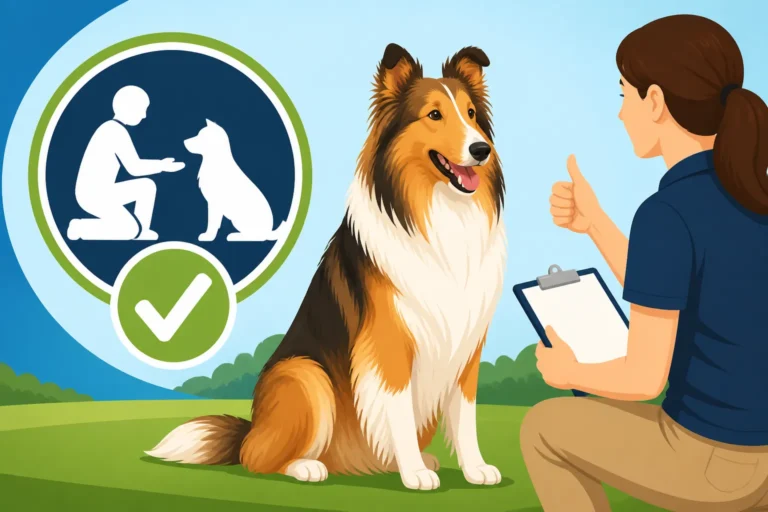
A certified professional dog trainer or a veterinary behaviorist can provide invaluable insight and tailored strategies. They can assess your Collie's specific situation, identify any underlying issues, and help you develop a comprehensive training plan that addresses the root cause of the behavior, not just the symptoms. They can also provide hands-on guidance, showing you exactly how to implement techniques and read your dog's subtle cues.
Don't wait until the situation becomes unbearable or dangerous. Early intervention from a professional can make a huge difference in managing herding behavior and ensuring a safe, happy environment for everyone in your family. They can help bridge the communication gap between you and your Collie, leading to a much more harmonious household.
Consulting a Certified Professional Dog Trainer
When herding behavior becomes a significant challenge, a certified professional dog trainer (CPDT) is often the first step. Look for trainers who use positive reinforcement methods and have experience with herding breeds. They can observe your Collie in their home environment, pinpoint triggers, and help you implement management strategies and alternative behaviors tailored to your specific situation. They can teach you how to effectively communicate with your Collie, ensuring your commands are clear and consistent.
A good trainer will help you establish clear boundaries and expectations for your Collie. They might introduce specific exercises to build impulse control and focus, such as "leave it" or advanced "stay" commands in the presence of moving children. They can also guide you in setting up appropriate enrichment activities that truly satisfy your Collie's mental and physical needs. The goal is not to suppress the instinct, but to channel it into acceptable outlets.
Beyond the immediate behavior, a trainer can help you understand your Collie's body language better, allowing you to anticipate herding attempts and intervene proactively. This proactive approach, combined with consistent training, is key to success. Remember, you're not failing your dog by seeking help; you're investing in a more harmonious relationship for everyone.
Working with a Veterinary Behaviorist
In some cases, especially if the herding behavior is unusually intense, accompanied by significant anxiety, or if there's any concern about actual aggression, a veterinary behaviorist might be necessary. A veterinary behaviorist is a veterinarian with specialized training in animal behavior, meaning they can diagnose and treat behavioral issues from both a medical and behavioral perspective. They can rule out any underlying health issues that might be contributing to the behavior and can prescribe medication if necessary to help manage anxiety or reactivity.
They can offer a more in-depth assessment of your Collie's temperament and behavior patterns. For instance, if your Collie is showing signs of being overly stressed or anxious around children, which then manifests as herding attempts, a behaviorist can provide a holistic treatment plan that might include behavioral modification techniques, environmental adjustments, and potentially pharmaceutical support. This integrated approach can be particularly effective for complex cases.
A behaviorist can also help you understand the long-term implications of the behavior and create a comprehensive plan for ongoing management. They often work in conjunction with dog trainers, providing the medical and deeper psychological understanding while the trainer focuses on implementing the practical training. If you've tried everything else and are still struggling, a veterinary behaviorist can be a lifeline.
Living Harmoniously with a Herding Breed
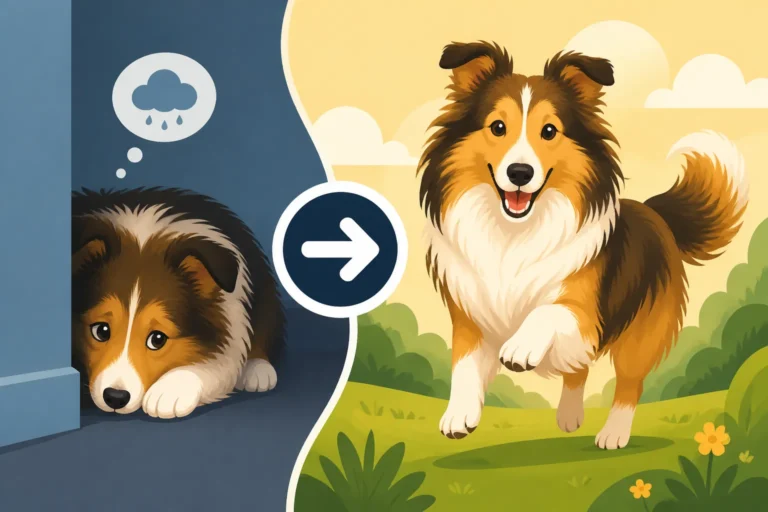
Bringing a Collie into your home means embracing their unique heritage and understanding their ingrained instincts. While the herding drive can present challenges, it's also a testament to their intelligence, responsiveness, and desire to be part of a cohesive "flock" – your family. Learning to live harmoniously with a herding breed isn't about eradicating their core nature, but about understanding, redirecting, and appreciating it.
It's a journey of mutual learning and respect. Your Collie learns the rules of your household, and you learn how to provide outlets for their instincts in ways that fit your lifestyle. When successfully managed, a Collie's herding drive transforms from a potential nuisance into a source of pride, showcasing their incredible intelligence and willingness to work with you.
With the right approach, your Collie can be a wonderful, gentle, and protective family member who knows that their job isn't to herd the kids, but to be their loving companion. It's about building a solid foundation of trust, communication, and providing enriching experiences that celebrate what makes a Collie so special.
Embracing the Collie's Nature
You chose a Collie for a reason, likely drawn to their beauty, intelligence, and gentle nature. Part of embracing this wonderful breed means acknowledging their deep-seated herding instincts. Rather than fighting against it, learn to work with it. Understand that your Collie isn't trying to be naughty when they chase your kids; they're trying to do a job that their ancestors have done for centuries. This shift in perspective is crucial for building a positive relationship.
Embrace their love for activity and mental stimulation. Instead of viewing their energy as a problem, see it as an opportunity for engagement. Plan regular, challenging games and training sessions. Whether a Collie Needs a Job to Be Content is a resounding yes, and providing that job, even if it's just learning new tricks or solving puzzles, will lead to a much happier, more fulfilled dog. This breed thrives on having a purpose and feeling useful.
Part of embracing their nature also means being their advocate. Educate your children and any guests about your Collie's instincts and how to interact respectfully. Teach children not to run from the dog, as this triggers the chase instinct. Instead, teach them to "be a tree" (stand still and be boring) if the dog starts to herd. This prevents them from inadvertently fueling the very behavior you're trying to manage.
Creating a Secure and Predictable Environment
Collies, like many intelligent working breeds, thrive on predictability and clear boundaries. A secure and structured environment helps them understand their role and reduces anxiety, which can sometimes exacerbate herding tendencies. Establish a consistent daily routine for feeding, walks, playtime, and training. This predictability provides a sense of security and helps your Collie understand what to expect.
Clear house rules are also essential. If you don't want your Collie on the furniture, be consistent every single time. If certain areas are off-limits when children are playing, use baby gates or closed doors to enforce these boundaries. Inconsistency only confuses your clever Collie, making them more likely to test limits or revert to instinct-driven behaviors. They need to know what's expected of them at all times.
A secure environment also means a physically safe one. Ensure your yard is fenced and secure to prevent wandering or chasing anything beyond your property. Within the home, create dedicated safe spaces for your Collie, like a comfortable crate or a designated mat in a quiet corner, where they can retreat and relax away from the commotion of children. This allows them to decompress and prevents overstimulation, which can trigger unwanted behaviors.
Building a Strong Bond Through Trust and Training
Ultimately, the most powerful tool you have in managing your Collie's herding instinct is the strong bond you build through trust and consistent, positive training. When your Collie trusts you implicitly, and views you as the source of all good things – treats, praise, games, and guidance – they are much more likely to look to you for direction rather than relying solely on their instincts.
Every positive training session, every successful redirection, every calm moment shared, builds on this foundation of trust. Your Collie learns that listening to you leads to good outcomes, and that you will provide appropriate ways for them to express their natural drives. This isn't just about obedience; it's about partnership. The First Year With a Collie Puppy is a crucial time to establish this bond and lay the groundwork for future cooperation.
Invest time in understanding your Collie, celebrating their unique traits, and providing them with a life that fulfills their physical and mental needs. A well-exercised, mentally stimulated, and deeply bonded Collie is a joy to live with, and one that understands that their role in your family is to be a beloved companion, not a sheepdog for the children. This commitment to their well-being ensures a lifetime of happiness for everyone involved.
Disclaimer
This article is for general informational purposes only and does not constitute professional advice. Laws, prices and regulations vary by location and change over time. Consult a qualified professional for guidance on your specific situation.