Whether a Collie Is Calmer Than a Border Collie
Bringing a new dog into your life is a huge decision, and for many aspiring Collie owners, there's often a bit of confusion, or even trepidation, when comparing them to their high-octane cousins, the Border Collies. You might be wondering if a Collie will really be a more relaxed companion than a Border Collie, or if you're just trading one kind of intense herding energy for another. This guide aims to clear up those misconceptions and give you a realistic, empathetic look at the distinct temperaments of both breeds, helping you understand what "calm" truly means in the world of Collies.
Understanding the Herding Dog Spectrum
When we talk about herding dogs, it’s easy to lump them all into one category of boundless energy and intense focus. While it’s true that both Collies and Border Collies share a lineage rooted in working with livestock, their methods and inherent drives have diverged significantly over generations. This divergence is precisely why one breed is often perceived as much "calmer" than the other, and it's essential for prospective owners to understand these foundational differences. It's not just about energy; it's about how that energy is directed.
The Intensity of the Border Collie Drive
Imagine a dog born with a laser focus, an unyielding desire to control movement, and an intelligence that often borders on uncanny. That's your quintessential Border Collie. Their herding style is intense, characterized by a low, predatory crouch, an unblinking "eye" on the flock, and lightning-fast reflexes. They don't just move sheep; they think about moving sheep. This genetic hardwiring means they are always looking for a "job," something to manage, organize, or perfect. If there are no sheep, they will instinctively turn that intensity onto anything else that moves: squirrels, children, vacuum cleaners, or even shadows on the wall. This drive, while incredible to watch in action, translates into a constant need for mental and physical engagement in a pet home. A Border Collie who isn't given a constructive outlet for this intense drive isn't just bored; they're often frustrated, leading to behaviors like incessant barking, destructive chewing, or obsessive chasing. You'll find yourself needing to provide a level of stimulation that many dog owners simply aren't prepared for.
The Collie's More Reserved Herding Style
In contrast, the Collie, particularly the Rough Collie that most people envision, developed a slightly different role on the Scottish highlands. While they were certainly adept at moving and guarding sheep, their style was often less about intense, predatory control and more about broad, sweeping movements, keeping the flock together, and working closely with the shepherd. Think of it as management rather than micro-management. They were the shepherd's loyal companion and helper, rather than the independent, high-speed operator. This historical context explains why a Collie’s drive, while present, is typically more subdued. They are observant and intelligent, certainly, but their default mode isn't to constantly seek out a "job" with the same frenetic urgency as a Border Collie. While they absolutely benefit from mental stimulation and activity, their inherent need to "work" often manifests more as a desire to be involved with their family, to keep track of everyone, and to maintain order in their household rather than a relentless pursuit of a task. They’re still herding dogs, but the "throttle" is usually set much lower. You might even hear that A Collie Is the Rare Herding Dog That Does Not Need a Job, which points to this nuanced difference.
Activity Levels and Exercise Needs
One of the most common reasons people consider a Collie over a Border Collie is the assumption of a lower energy level. While this generally holds true, it's crucial to understand what "lower energy" actually means for a Collie. It doesn't mean they're couch potatoes, but rather that their exercise requirements are often more manageable and less perpetually demanding than their Border Collie counterparts. Understanding these distinctions will help you gauge if your lifestyle truly aligns with either breed.
The Border Collie's Unending Energy
Border Collies are often described as having an "off" switch that rarely gets flipped. Their stamina is legendary. They can run, jump, and fetch for hours on end and still look at you expectantly, wagging their tail, ready for more. This isn't just physical energy; it's a deep-seated mental need to be active and engaged. A simple walk around the block twice a day isn't going to cut it for most Border Collies. They thrive on activities like agility, flyball, competitive obedience, or, ideally, actual herding work. If these intense needs aren't met, a Border Collie can become destructive, hyperactive indoors, or develop neurotic behaviors. They might pace endlessly, bark excessively, or try to "herd" anything that moves within the house, from children to other pets. Many owners find themselves needing to dedicate several hours daily to strenuous physical and mental exercise to keep a Border Collie truly content. This level of commitment is immense and can be a shock to those unprepared for it.
A Collie's Thoughtful Exercise Requirements
Collies, while certainly active dogs, possess a more moderate energy level. They enjoy walks, playing in the yard, and engaging in family activities, but they don't typically require the same high-intensity, non-stop exertion as a Border Collie. For most Collies, a good 45-60 minutes of varied exercise spread throughout the day is often sufficient. This could include a brisk walk, a game of fetch, or some structured playtime in the yard. They appreciate consistency and routine, and while they can certainly excel in dog sports like obedience or rally, they don't require them to feel fulfilled in the same way. What's more, a significant portion of a Collie's exercise can be mental. They are thoughtful problem-solvers who enjoy puzzle toys, learning new tricks, and simply being involved in the day-to-day happenings of the household. So, while How Much Exercise a Collie Needs Daily might seem like a lot, it’s often more about quality and engagement than sheer duration and speed. They are quite content to curl up at your feet after a good outing, rather than bouncing off the walls. This is where the perception of "calmer" often originates – their contentment often comes without the same relentless, high-impact demands.
Trainability and Mental Stimulation
Both Collies and Border Collies are renowned for their intelligence, but how that intelligence manifests in trainability and their need for mental stimulation differs significantly. This isn't a measure of which breed is "smarter," but rather how they process information, respond to commands, and what kind of mental challenges truly satisfy them. Understanding these nuances is key to a harmonious relationship with either breed.
Border Collies: Masters of Learning, Cravers of Work
Border Collies are often at the top of lists for canine intelligence, and for good reason. They are incredibly quick learners, able to grasp complex commands and sequences with astonishing speed. They don't just learn what to do; they often seem to understand why they're doing it. This makes them ideal candidates for advanced obedience, agility, and competitive dog sports where intricate patterns and rapid decision-making are required. However, this high intelligence comes with a catch: they need to use their brains. A bored Border Collie is a destructive or obsessive Border Collie. They thrive on challenges, problem-solving, and continuous learning. Training isn't just about teaching them commands; it's a vital form of mental exercise that keeps them fulfilled. If you aren't actively engaging their minds, they will find their own "jobs," which might include rearranging your furniture, herding your guests, or fixating on light reflections. This intense need for mental work is often underestimated by new owners. Organizations like BAXTER & Bella, with their comprehensive online puppy training programs, can be invaluable for Border Collie owners looking for structured ways to channel their dog's formidable intelligence and prevent undesirable behaviors from taking root.
Collies: Intelligent but Less Demanding Learners
Collies are also highly intelligent dogs, capable of learning a vast array of commands and tricks. They are keen observers and eager to please their families, making them generally easy to train with positive reinforcement. However, their learning style is often described as more thoughtful and less frantic than a Border Collie's. They might not pick up a new cue in three repetitions, but once they've got it, they've got it reliably. They excel in obedience, rally, and can certainly enjoy agility, but they don't typically possess the same obsessive drive for constant mental work. Their satisfaction often comes from working with their owner, rather than simply mastering a task for its own sake. They enjoy engaging their minds with puzzle toys (you can find a great variety on Amazon), short training sessions, and learning household routines. For a Collie, a good mental workout might involve a sniffing game in the yard, practicing their "stay" during dinner prep, or figuring out how to get to that dropped treat under the couch. They are less likely to invent their own destructive "jobs" if under-stimulated, though a bored Collie might resort to excessive barking or mild mischief. The key difference is the intensity and frequency of their mental demands – a Collie's brain needs exercise, but not with the same relentless, high-stakes urgency of a Border Collie. How Long a Collie Takes to Learn a New Cue is often a steady, rather than a lightning-fast, process.
Adaptability to Family Life and Home Environment
Choosing a dog means envisioning how they'll fit into your daily life, your home, and your family dynamics. While both Collies and Border Collies are deeply devoted to their people, their inherent drives and sensitivities lead to different levels of adaptability within a typical pet home, particularly concerning children, other pets, and general household activity.
The Border Collie in a Pet Home
Bringing a Border Collie into a bustling family home without a clear understanding of their needs can be challenging. Their intense herding instinct, while a marvel on the farm, can translate into undesirable behaviors in a domestic setting. They might instinctively "herd" children by nipping at their heels, circling them, or trying to prevent them from running freely. This isn't aggression; it's simply their ancient instinct kicking in, but it can be distressing for both children and parents. They can also be quite sensitive to loud noises, sudden movements, and household chaos, which a busy family often produces. While they bond fiercely with their family, their intense focus can sometimes lead to resource guarding or fixating on one person. Moreover, their need for constant engagement means they may struggle with being left alone for long periods, potentially leading to separation anxiety or destructive behaviors. They truly thrive in homes where their "job" is clearly defined and consistently provided, ideally with experienced handlers who understand their complex needs. A Border Collie isn't usually a dog that can simply "fit in"; the family often needs to adapt significantly to them.
The Collie's Grace in a Domestic Setting
Collies, on the other hand, often fit into a family environment with a remarkable grace and a more natural sense of calm. Their herding instinct is typically much softer. While they will still keep an eye on their "flock" (your family members), it's more about being present and watchful than actively controlling movement. They are famously gentle with children, often acting as patient, watchful guardians rather than relentless herders. Why a Collie Herds Your Children is usually a gentle nudge or a soft circle, not a sharp nip. They tend to be more tolerant of typical household noise and activity, though they are still sensitive dogs who appreciate a predictable routine. Collies form strong bonds with their entire family, often following you from room to room simply to be near you. They are less prone to separation anxiety if properly exercised and mentally stimulated, and are generally content to relax once their needs are met. While no dog enjoys being left alone for excessive periods, a Collie is often more amenable to a typical working schedule than a Border Collie. Their calm demeanor and inherent desire to be a central, yet unobtrusive, part of the family make them excellent companions for many different types of households, from quiet couples to busy families. They are truly built to be family dogs.
Emotional Sensitivity and Handling
Both Collies and Border Collies are highly intelligent and sensitive creatures, but their responses to emotional pressure, stress, and different handling methods can vary considerably. Understanding these sensitivities is paramount to building trust and fostering a strong bond with either breed, and particularly critical when comparing their relative "calmness." A calm dog isn't just about low energy; it's also about a stable, confident emotional state.
Border Collie Responses to Pressure
Border Collies are incredibly intelligent and often highly sensitive to their environment and their handler's emotions. They learn quickly, but they can also shut down or become anxious under harsh training methods or inconsistent handling. Because they are so driven and perfectionistic, any perceived failure or correction can be deeply impactful. They thrive on clear, consistent, and positive reinforcement, but even then, their intense nature can sometimes lead to anxiety in new situations or if they feel they are failing to understand their "job." If a Border Collie is overwhelmed, they might respond by becoming frantic, barking excessively, or engaging in displacement behaviors like spinning or licking. They are often highly attuned to their owner's stress, which can then amplify their own. This means that managing their emotional state often requires a calm, assertive, and highly consistent handler who can provide clear direction without causing undue pressure. It's not uncommon for Border Collies to develop sound sensitivities or become reactive if not properly socialized and confidently handled from a young age. Their intensity extends to their emotional landscape.
The Collie's Delicate Nature and Positive Reinforcement
Collies are famously gentle and sensitive dogs. They are incredibly attuned to their owners' moods and respond best to kindness, patience, and positive reinforcement. Harsh Handling Breaks a Collie and It Does Not Come Back is a truth every Collie owner knows deeply. A sharp word or a firm correction can cause a Collie to withdraw, become fearful, or even shut down in training. They are not dogs that tolerate heavy-handed methods, and doing so will only erode trust and make them anxious, not calmer. Instead, Collies flourish with praise, treats, and gentle encouragement. They love to please and will try their best when they feel secure and understood. Their sensitivity means they do best in homes with a relatively calm atmosphere, as they can become stressed by constant shouting or conflict. While they are resilient, a consistent, loving approach is vital for their emotional well-being. This sensitivity, when respected, contributes to their inherent "calmness" – they are less likely to escalate into frantic behaviors because they are typically not operating from a place of intense pressure or anxiety, provided their environment is stable and supportive. A Collie Reads a Room Better Than It Reads a Command, meaning their emotional radar is often finely tuned, guiding their reactions and overall demeanor.
Socialization and Interactions with Others
How a dog interacts with strangers, other dogs, and other animals is a huge factor in their perceived "calmness" and how easily they integrate into various social situations. Both Collies and Border Collies require thoughtful socialization, but their natural inclinations and responses to new encounters often differ, leading to distinct experiences for their owners.
Border Collie Approaches to Strangers and Other Dogs
Border Collies, by nature, can be reserved or even wary of strangers. Their intense focus on their work (or their person) often means they don't have much attention left for casual greetings. While proper socialization can help them be polite and comfortable, they are rarely the "everyone is my best friend" type of dog. They might ignore strangers entirely, or if not well-socialized, they can become reactive out of suspicion or a desire to control the interaction. This wariness can extend to other dogs as well. While many Border Collies can live harmoniously in multi-dog households or enjoy appropriate play, their herding instinct can sometimes lead them to try and "herd" other dogs, which not all canines appreciate. Their play style can be intense and focused, sometimes perceived as pushy by more relaxed breeds. Without careful management and ongoing positive exposure, a Border Collie might develop leash reactivity or become overwhelmed in busy dog parks. This intensity in their social interactions, even when not aggressive, can contribute to a less "calm" overall impression, as they are constantly processing and reacting to their environment with high vigilance.
The Collie's Poised Social Graces
Collies are generally known for their gentle and friendly nature, making them much more outwardly "calm" in social settings. They are typically polite with strangers, often approaching with a soft tail wag and a gentle sniff, rather than exuberant jumping or deep suspicion. While they might not be effusive with everyone, their inherent good manners usually prevail. With proper socialization, they are typically comfortable in a variety of environments, from quiet walks to busier parks, though they prefer dignified interactions over chaotic ones. When it comes to other dogs, Collies are often quite sociable and enjoy polite play. Their play style is generally less intense and more cooperative than a Border Collie's, making them good companions for many different breeds. Whether a Collie Gets On With Other Dogs is typically a resounding yes, provided they are introduced properly. They tend to be good at reading canine body language and are less likely to initiate conflict. This ability to navigate social situations with a calm, unassuming presence contributes significantly to their overall "calm" reputation. While they still need socialization as puppies and throughout their lives, their natural temperament makes these experiences often smoother and less fraught with the intense reactions you might see in a Border Collie.
What "Calm" Really Means for a Collie
After diving deep into the nuances of both breeds, it's clear that the answer to "whether a Collie is calmer than a Border Collie" is a resounding yes, but with important context. A Collie's calmness isn't about being lazy or unintelligent; it's about a fundamentally different way of interacting with the world.
| Feature | Border Collie | Collie |
|---|---|---|
| Herding Drive | Intense, eye-focused, constant desire for work | Reserved, watchful, management-oriented |
| Activity Level | High-stamina, unending energy, requires intense daily exercise | Moderate, enjoys walks and play, can settle indoors |
| Mental Stimulation | Craves complex tasks, easily bored, masters intricate patterns | Intelligent, enjoys learning, thrives on companionship & routine |
| Family Adaptability | Can herd children, sensitive to chaos, needs clear job | Gentle with children, watchful, integrates smoothly |
| Emotional Response | Sensitive to pressure, can become anxious/reactive under stress | Highly sensitive, withdraws from harshness, thrives on positive reinforcement |
| Social Interaction | Reserved with strangers, can be wary, intense play | Generally friendly, polite, enjoys social interaction |
| Noise Sensitivity | Often sensitive to loud noises and sudden movements | Sensitive, prefers calm environment but more tolerant of typical household noise |
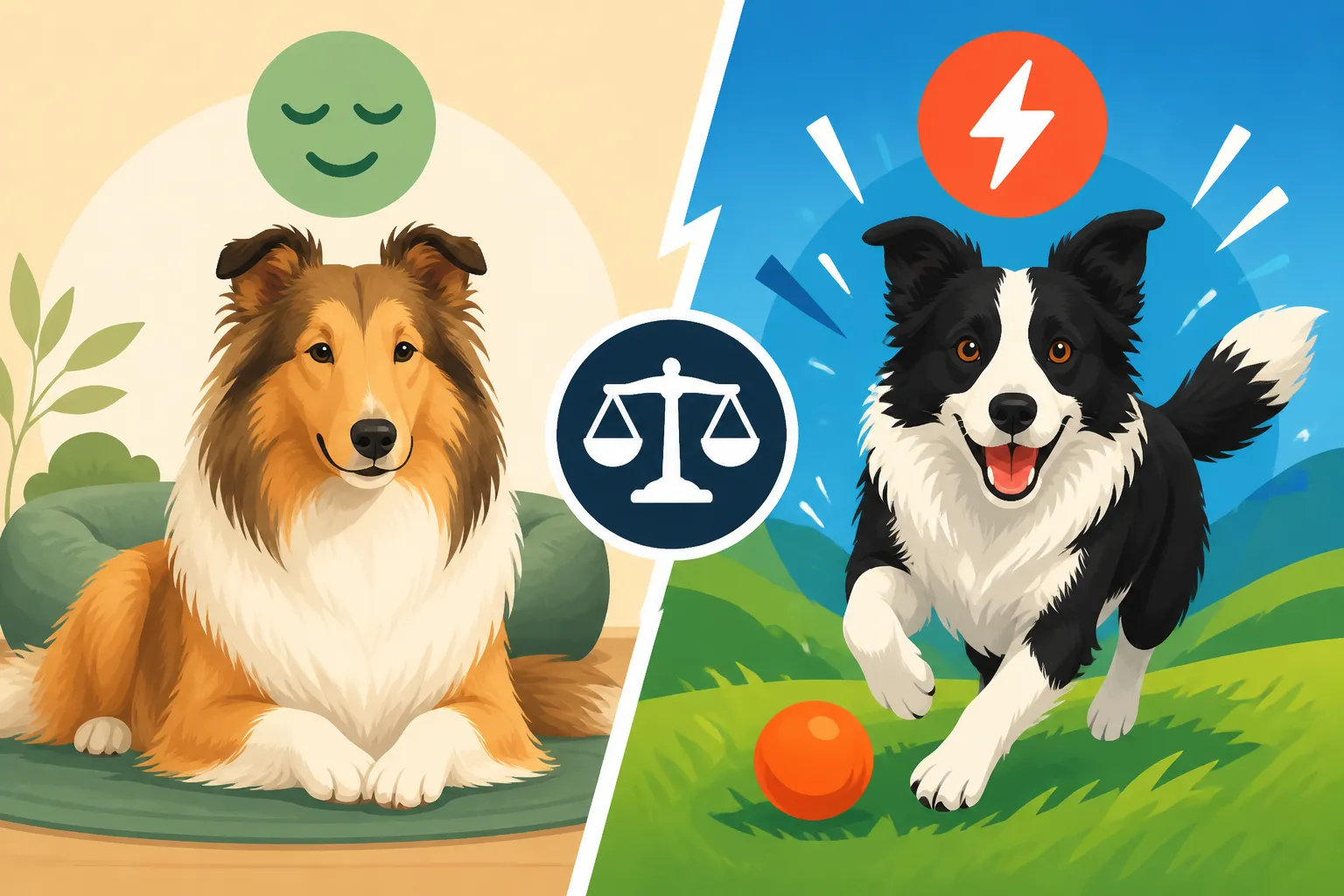
A Collie is calmer because their inherent drives are less demanding, their need for constant high-intensity stimulation is lower, and their emotional responses tend to be more measured and less prone to frantic escalation when their needs are met. They are observant and thoughtful, enjoying mental engagement but not requiring a "job" in the same relentless way.
However, "calm" does not mean "inactive." A Collie still needs Forty Five Minutes a Day, and Half of It in Its Head when it comes to exercise and mental stimulation. They still need consistent training, socialization, and a loving environment to thrive. If neglected, they can certainly develop issues like excessive barking or restlessness, but these are often less extreme than the destructive or obsessive behaviors a frustrated Border Collie might display.
Ultimately, if you're looking for an intelligent, devoted companion who enjoys being part of family life without the perpetual, high-octane demands of a Border Collie, the Collie is likely the calmer choice for you. They offer a wonderful balance of activity, intelligence, and a serene presence that makes them truly special members of the family.
Disclaimer
This article is for general informational purposes only and does not constitute professional advice. Laws, prices and regulations vary by location and change over time. Consult a qualified professional for guidance on your specific situation.