Whether a Collie Is Patient With Visiting Children
It’s a scenario many Collie owners dread: the doorbell rings, and suddenly, a flurry of unfamiliar children bursts into your home, all squealing with excitement and making a beeline for your beautiful, gentle dog. You adore your Collie, and you know they're generally good-natured, but the unpredictable energy of visiting kids can be a real wildcard. This guide will delve deep into the Collie's natural disposition towards children, specifically those they don't know well, offering realistic insights and actionable strategies to ensure peaceful and safe interactions for everyone involved.
Understanding the Collie Temperament Around Children
Collies are magnificent dogs, renowned for their striking beauty, intelligence, and often, a gentle, devoted nature. However, it's a common misconception that all Collies are automatically "Lassie" – endlessly patient and inherently perfect with every child they meet. While many are wonderful family dogs, their specific breed traits and individual personalities play a huge role in how they handle the dynamic, often chaotic, presence of visiting children.
Natural Instincts and Socialization
To truly understand a Collie’s reaction to children, we have to go back to their roots. Collies were bred as herding dogs, primarily for sheep in the Scottish Highlands. This means they possess a strong instinct to gather, control, and sometimes, "manage" moving objects – and yes, that often includes running, squealing children. You might notice your Collie subtly trying to circle a group of kids, or even giving a gentle nudge with their nose if a child strays too far from the "flock" in their eyes. This isn't aggression; it's instinct. It’s their way of keeping everyone together and safe, but it can be misinterpreted or, worse, escalate if not managed correctly.
Beyond their herding drive, Collies are also deeply intelligent and, crucially, quite sensitive. They thrive on routine and harmony, and sudden loud noises, quick movements, or unfamiliar hands reaching for them can be startling. This is where early and consistent socialization becomes absolutely paramount. A Collie puppy that is exposed to a wide variety of sights, sounds, people (including well-behaved children of different ages), and experiences from a young age is much more likely to develop into an adult dog with a balanced temperament. If your Collie was not adequately socialized as a puppy, they might develop shyness, fear, or even become reactive when faced with the novel energy of visiting children. Think about it: if the only children your Collie has ever met are your own calm, older kids, a group of rambunctious toddlers might feel like an alien invasion. This initial period, often covered in resources like The First Year With a Collie Puppy and Where to Socialize a Collie Puppy, lays the groundwork for all future interactions.
Collie Sensitivity and Patience Levels
One of the defining characteristics of the Collie breed is their sensitivity. They are often described as having a keen awareness of their owner's mood and household atmosphere. This sensitivity means they generally do not respond well to harsh corrections, loud voices, or unpredictable environments. While this makes them wonderfully attuned companions, it also means they might have a lower tolerance for the boisterous, often unpredictable, behavior of young children. A child who runs up screaming, tries to pull a tail, or attempts a sudden, tight hug could easily overwhelm a sensitive Collie. They might not react aggressively, but their patience can quickly wear thin.
Every Collie is an individual, of course. Some might be incredibly stoic, allowing themselves to be climbed on (though this should always be discouraged and supervised, no matter the dog's temperament!). Others might be quite reserved, preferring to observe from a distance. Generally speaking, Collies are not a breed that revels in rough-and-tumble play with humans in the same way some other breeds might. They appreciate gentle interaction, a calm approach, and respect for their personal space. Many Collies will simply remove themselves from a situation they find uncomfortable, perhaps retreating to another room or seeking out their owner for reassurance. This is a subtle but clear sign that their patience is being tested. Understanding Whether a Collie Is Sensitive to Household Tension can help you recognize these cues. Your Collie can often read your mood, as discussed in How a Collie Reads Its Owner's Mood, so if you’re stressed about visiting kids, your dog will pick up on that too.
Scenarios with Visiting Children and How Collies React
When children who don't live in the home come to visit, the dynamic changes considerably. They don't know your dog's routines, their boundaries, or your expectations for interaction. It's a prime recipe for potential misunderstandings, and knowing how your Collie might react in various situations is key to preventing any issues.
The Energetic Child vs. the Reserved Collie
Imagine this: a five-year-old cousin, fueled by sugar and excitement, bursts through the door, spots your Collie, and immediately launches into a run, shrieking, "Puppy! Puppy!" The child then attempts to throw their arms around your dog's neck. For a sensitive Collie, this can be incredibly alarming. Their herding instinct might kick in, causing them to circle the child, or they might simply try to get away, potentially knocking the child over in the process. Some Collies might even issue a low growl or a sharp bark – not out of malice, but as a clear "please stop, you're scaring me" signal. These are often known as warning barks and are an important part of canine communication, which you can learn more about in Why a Collie Barks. If pushed further, an overwhelmed Collie might resort to a quick snap or a nip, especially if the child is grabbing at them. While these are usually "air snaps" or inhibited nips designed to create distance rather than cause harm, any teeth-on-skin contact is unacceptable and can be frightening for both child and dog. It’s crucial to understand that a Collie who nips is not a "bad" dog; they are a dog whose boundaries have been ignored or not adequately protected. This is particularly relevant when considering Whether a Collie Nips a Child Who Runs.
Another common scenario involves children who don't understand canine body language. They might approach a resting Collie, try to take a toy, or lean over them. A Collie who is trying to sleep or chew a bone doesn't appreciate being disturbed. Their instinct might be to guard their space or resource, even if they're usually gentle. The suddenness of a child's approach, their high-pitched voices, and their often unpredictable movements can trigger a stress response in even the most placid Collie. It's not that the Collie dislikes children; it's that they don't understand the rules of polite dog-human interaction that adults might inherently know.
Managing Interactions: Preparation and Supervision
The key to successful visits with children lies in proactive management and unwavering supervision. You cannot simply hope for the best. Before any visiting children arrive, take steps to prepare your Collie. A good long walk or a vigorous play session can help burn off excess energy, making your dog calmer and more settled when guests arrive. It’s also wise to ensure your Collie has had a potty break, so they aren't restless due to an unmet need.
Once children are present, supervision is non-negotiable. Never, ever leave your Collie unattended with visiting children, even for "just a minute." This applies to children of all ages, but especially toddlers and preschoolers, who lack the cognitive ability to understand a dog's boundaries. You, as the dog owner, are responsible for facilitating positive interactions and intervening before any issues arise. This often means physically separating the dog and children when your attention needs to be elsewhere. Resources like Whether a Collie Should Be Supervised With Toddlers offer deeper guidance here.
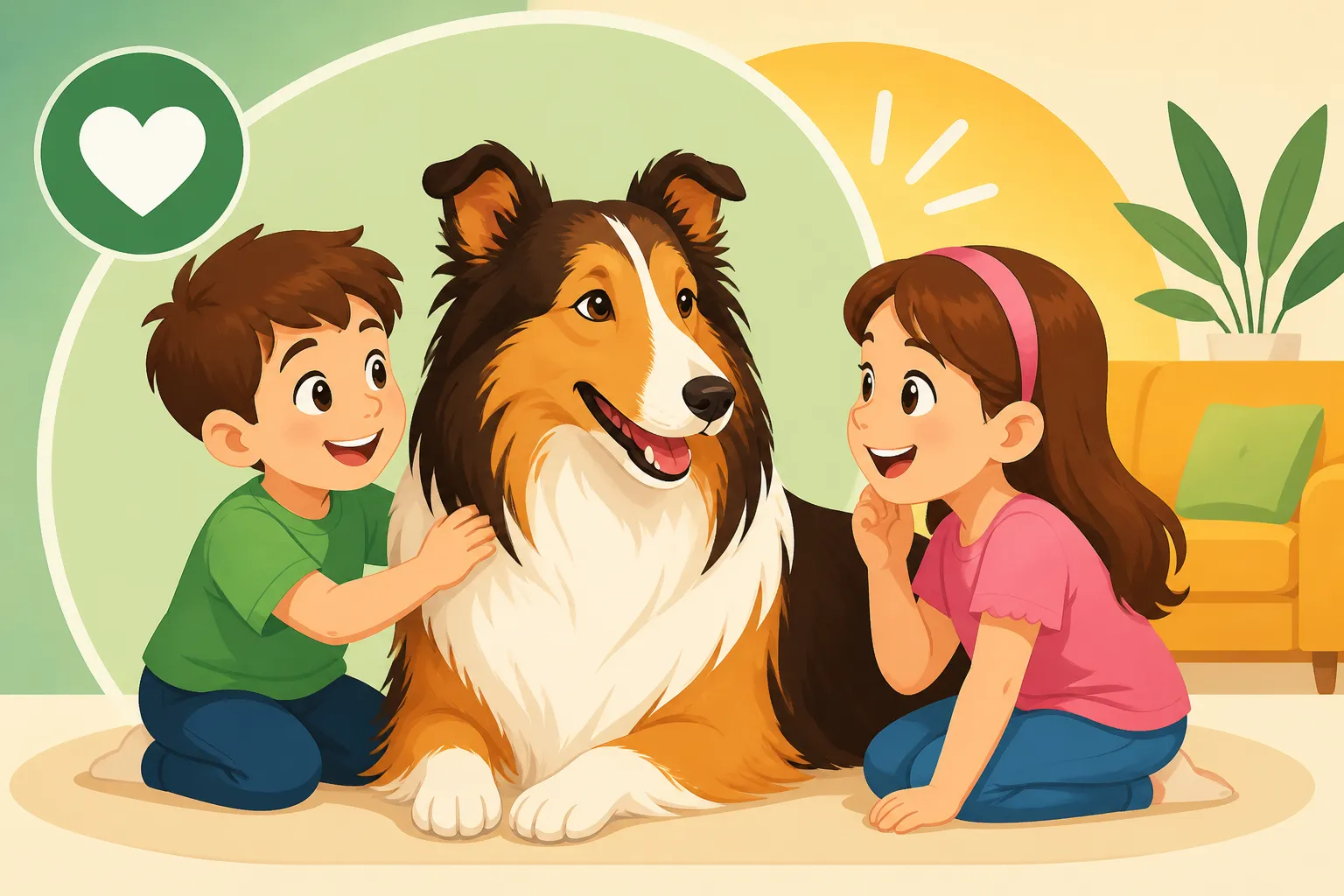
It's also essential to educate the visiting children (and their parents!) on appropriate ways to interact with your Collie. Teach them the "tree" rule (stand still and be quiet if the dog jumps or bothers them) and the "petting zoo" rule (only pet if the dog approaches you, and always gently on the shoulders or chest, avoiding the top of the head or tail). Show them how to offer a flat hand for sniffing, rather than reaching straight for the head. If the children are older, you can explain that your Collie prefers a calm approach and might not appreciate being chased or having toys snatched. A good trick is to have the children toss a treat away from the dog instead of directly to them, creating positive associations without forcing close contact.
| Child Behavior | Potential Collie Reaction | Owner Intervention Strategy |
|---|---|---|
| Running, squealing, sudden moves | Herding, retreating, barking, fear | Leash management, "place" command, separation, teaching children calm approaches |
| Reaching for face, tail, ears | Head turn, flinching, growl, snap | Immediate physical separation, redirect child's hand to appropriate petting area, teach "gentle" |
| Grabbing toys, food, bed | Resource guarding, growl, snap | Teach "leave it," provide designated safe space for dog's items, manage children's access |
| Ignoring dog's signs of discomfort | Increased stress, retreat, escalation | Remove dog from situation, educate child on dog body language, provide dog a safe retreat |
| Too much attention, no breaks | Overwhelm, frustration, retreat | Mandate quiet time for dog, ensure children give dog space, rotate dog in/out of social area |
Training and Management Strategies for Success
The good news is that with the right approach, many Collies can learn to be wonderfully tolerant and even affectionate with visiting children. It's all about proactive training, creating a structured environment, and consistent management. You are your Collie's advocate and teacher in these situations.
Establishing Clear Boundaries and Safe Spaces
One of the most powerful tools you have is to create clear boundaries and designated safe spaces for your Collie. This means a place where your dog can retreat to, undisturbed, whenever they feel overwhelmed or simply need a break. This could be their crate, a cozy bed in a quiet room, or even a section of the house blocked off by baby gates. The rule should be absolute: when the dog is in their safe space, no children (or adults, for that matter) are allowed to approach or bother them. This teaches your Collie that they have an escape route and a sanctuary, reducing their anxiety about being trapped in an uncomfortable situation.
Teaching your Collie a solid "place" command can be incredibly useful. This involves training them to go to a specific mat or bed and stay there until released. When visiting children arrive, you can direct your Collie to their "place" with a special chew toy or Kong filled with peanut butter, allowing them to observe the activity from a distance without being directly involved. This helps them learn that children's visits don't necessarily mean intrusive interactions. For this, tools like durable chew toys (easily found on Amazon) are essential. Puppy training programs, like those offered by BAXTER & Bella, often emphasize these foundational commands, which are incredibly helpful for managing interactions with visitors. Having reliable behavior on cue is half the battle won. Ensuring your Collie has a predictable routine, even when guests are present, can greatly reduce their stress, as highlighted in Whether a Collie Needs a Predictable Routine.
Proactive Training and Desensitization
Beyond safe spaces, proactive training and desensitization are vital. Begin by teaching your Collie basic obedience commands such as "sit," "stay," "down," and "come" with unwavering reliability. These commands become your tools for managing their behavior when children are present. For instance, if a child starts to run, you can call your Collie to you and ask for a "down" or "sit," breaking their herding impulse before it gains momentum. For further insight into managing herding instincts, consider reading Whether a Collie Can Be Taught to Stop Herding.
Desensitization involves gradually exposing your Collie to the sights and sounds associated with children in a controlled, positive way. If your dog is startled by sudden loud noises, play recordings of children laughing or screaming at a low volume, gradually increasing it while simultaneously giving your Collie treats and praise for remaining calm. Practice having adults simulate child-like movements, such as running, skipping, or crawling, always rewarding your Collie for relaxed behavior. You can also teach your Collie to lie calmly for handling, which is useful when children (under strict supervision) might offer a gentle pat. This kind of patience and calm acceptance during handling is often instilled from puppyhood, as discussed in How to Teach a Collie Puppy to Lie Still for Grooming. Remember, the goal is to create positive associations, so always pair the presence of children or child-like stimuli with high-value rewards.
Equipment and Tools for Safety
Having the right equipment on hand can make a world of difference in managing interactions safely. A well-fitting harness and leash are indispensable for managing your Collie when children are around. This allows you to have gentle, direct control over your dog's movements without relying on their verbal responses alone. If your Collie is known to be overly enthusiastic or a bit shy, keeping them on a leash during the initial stages of a visit can give you peace of mind and allow for immediate intervention.
Crates or ex-pens are also invaluable for creating those safe spaces we discussed earlier. They offer a secure, comfortable den where your Collie can retreat and relax away from the hubbub. Durable chew toys, puzzle feeders, or long-lasting chews can be fantastic distractions, keeping your Collie happily occupied while children are playing nearby. You can find a wide variety of these items on Amazon, from sturdy crates to engaging puzzle toys that will keep your Collie’s mind stimulated. These tools aren't meant to punish your dog, but rather to set them up for success and ensure the safety and comfort of everyone in your home. Remember that even the most patient Collie can have limits, and it's your job to manage the environment to prevent them from ever reaching that point. Even if a Collie is generally Whether a Collie Is Gentle With Babies, it doesn't mean they should be left unsupervised with tiny humans.
Disclaimer
This article is for general informational purposes only and does not constitute professional advice. Laws, prices and regulations vary by location and change over time. Consult a qualified professional for guidance on your specific situation.