Whether a Raised Bowl Suits a Collie
Many Collie owners wrestle with the best way to feed their beloved companions, especially when considering the comfort of a tall dog or trying to ease digestion. It’s natural to think that raising a food bowl off the floor would make eating more comfortable for a lanky, long-necked breed, or perhaps even prevent those worrisome digestive issues. However, the science behind raised bowls, particularly for deep-chested breeds like our Collies, isn't as straightforward as you might think, and in some cases, it might even introduce risks rather than reducing them. This guide will help you navigate the common misconceptions and current understanding of feeding Collies, ensuring you make the most informed decisions for their health and well-being.
The Apparent Comfort of Raised Bowls for Collies
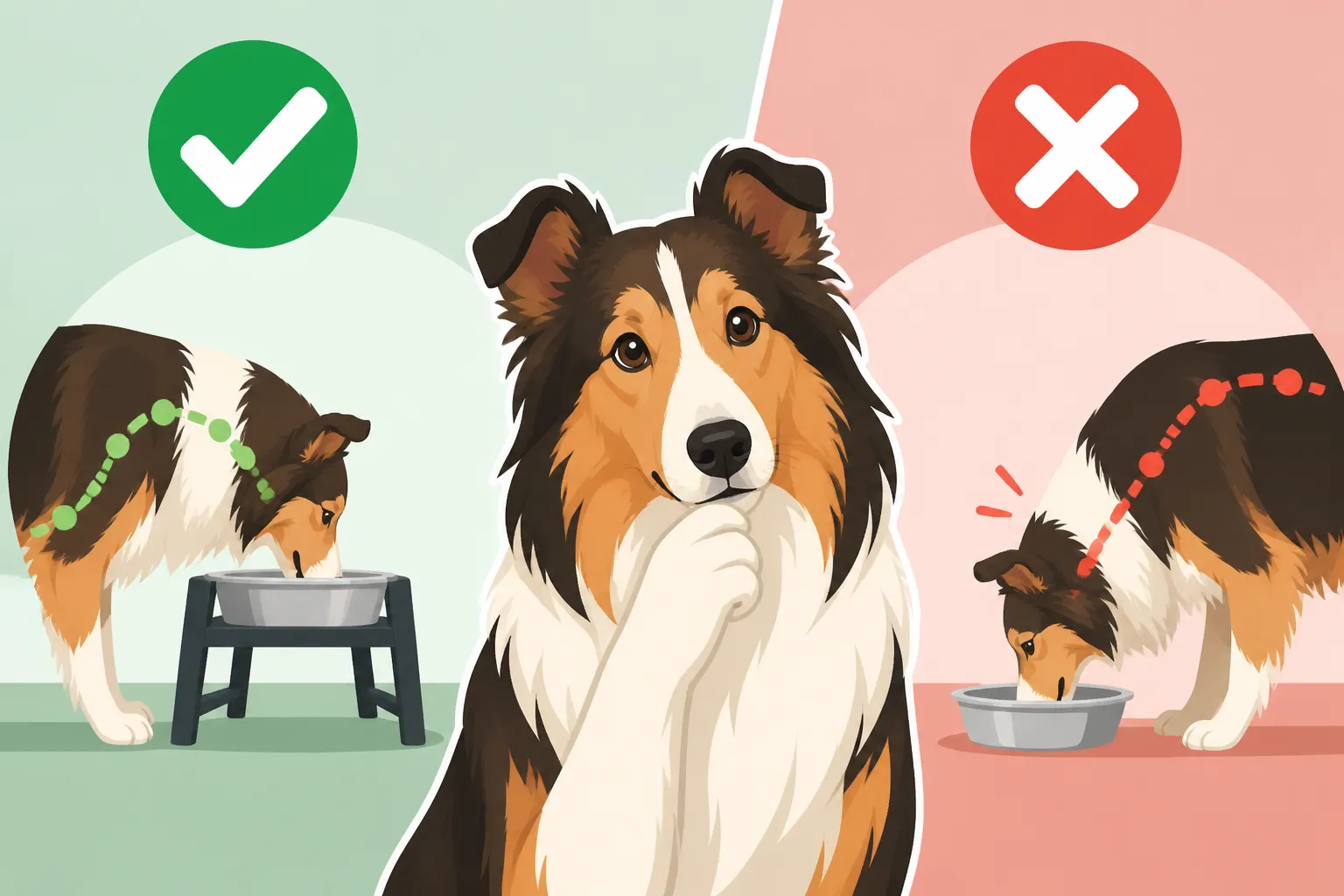
It’s completely understandable why many Collie owners are drawn to raised feeding bowls. Our Collies are graceful, often tall dogs with elegant long necks, and watching them bend their beautiful heads all the way to the floor for every meal can look a bit… uncomfortable. It just seems logical that bringing the food up to a more natural height would alleviate strain on their neck and joints, especially as they get older.
Easing Joint and Neck Strain
For an older Collie, or one that's dealing with conditions like arthritis or hip dysplasia, bending down can genuinely be painful. Imagine trying to get down on your hands and knees multiple times a day if your joints ached. It's no different for our canine friends. A raised bowl appears to offer a simple solution, allowing them to eat in a more upright, relaxed posture. This can be particularly appealing if your Collie already shows Signs a Collie Has Hip Dysplasia or is at an age where you're actively thinking about Caring for a Collie Past Nine. The idea is to make their mealtime a serene, pain-free experience, not another chore that adds to their discomfort.
Perceived Benefits for Digestion
Beyond physical comfort, there's also the long-held belief that eating from a raised position aids digestion. The theory here is that gravity assists the food down the esophagus more smoothly, preventing gulping of air and reducing regurgitation. Owners might observe their Collie eating more calmly from a raised bowl, or perhaps they've read anecdotal accounts of improved digestion. It's a persuasive thought: if food gets to the stomach with less effort, surely it's better for the whole digestive process, right? We want our Collies to be able to digest their meals efficiently and comfortably, avoiding any upset tummies or struggles.
The Bloat Risk: Why Raised Bowls Are Controversial
This is where things get really tricky and, frankly, a bit counter-intuitive. For years, veterinarians and dog owners alike recommended raised bowls to prevent bloat, a terrifying condition known as Gastric Dilatation-Volvulus (GDV). The logic was that dogs would swallow less air if they didn't have to bend down. However, scientific research has turned this long-standing advice on its head.
Understanding Gastric Dilatation-Volvulus (Bloat)
Bloat is one of the most frightening emergencies a deep-chested dog owner can face. In simple terms, it's when a dog's stomach fills with gas, food, or fluid (dilatation) and then twists (volvulus), cutting off blood flow and trapping everything inside. It can progress incredibly rapidly, and without immediate veterinary intervention, it's often fatal. Collies, with their elegant, deep chests, are unfortunately among the breeds considered at higher risk. If you want to know more about this, I've written extensively on Bloat in a Deep Chested Collie and Why a Collie's Chest Shape Raises Bloat Risk. The signs can be subtle at first, so knowing Signs a Collie Is Bloating is absolutely critical.
The Surprising Research Findings
What’s truly confounding is that studies, particularly a large-scale one conducted by Purdue University, actually found an increased risk of bloat in large and giant breed dogs, including Collies, when they ate from raised bowls. This contradicted decades of conventional wisdom and left many owners scratching their heads. The exact mechanisms aren't fully understood, but some theories suggest that raised bowls might encourage faster eating, or that the angle might somehow affect how air enters the stomach. It's a stark reminder that sometimes what seems logical isn't always what the data supports. This discovery was a real game-changer in the veterinary community and for concerned owners everywhere.
Weighing Comfort Against Risk
So, here's the dilemma: you want your senior Collie to eat comfortably, but you're also desperately trying to avoid the nightmare of bloat. It feels like you're being asked to choose between two important aspects of their well-being. This is a conversation you absolutely need to have with your veterinarian, especially one familiar with the specific health risks of Collies. They can help you assess your individual dog's risk factors for bloat versus their need for joint comfort, and together you can devise a feeding strategy that prioritizes their overall health. There's no one-size-fits-all answer, and what works for one Collie might not be the best for another.
Practical Feeding Strategies and Alternatives for Collies
Given the complexity surrounding raised bowls, many Collie owners are left wondering what the best approach really is. The good news is there are several practical strategies you can implement to promote healthy eating habits and potentially reduce bloat risk, without necessarily resorting to raised bowls.
Slowing Down Speedy Eaters
One of the biggest culprits in bloat development is thought to be rapid eating, leading to excessive air intake. If your Collie inhales their food in mere seconds, this is definitely an area to address. Slow feeder bowls, which have ridges or obstacles, force your dog to eat around them, significantly extending mealtime. You can find a huge variety of these on sites like Chewy or Amazon. Another simple trick is to spread their meal across a wide baking sheet or a snuffle mat, making them "hunt" for each piece of kibble. This makes eating a more engaging mental exercise, too, which is a bonus!
Smaller, More Frequent Meals
Instead of one large meal a day, consider breaking your Collie's daily food allowance into two or three smaller meals. This can prevent the stomach from getting overly distended at any one time, which is a factor in bloat. For example, if your Collie typically eats 3 cups of food in the evening, try giving 1.5 cups in the morning and 1.5 cups in the evening. There's good information on this in Whether a Collie's Meals Should Be Split. This approach can also help regulate blood sugar and keep energy levels more even throughout the day.
Rest Before and After Meals
Activity immediately before or after eating is also considered a risk factor for bloat. It's advisable to allow at least an hour of calm rest both before and after your Collie eats. This means no vigorous play, running, or stressful situations. A gentle stroll might be okay, but intense exercise should be avoided. Let their digestive system do its work without added physical stress. The details in Whether a Collie Should Rest After Eating are definitely worth checking out.
Food Quality and Consistency
While not directly related to the method of feeding, the quality and type of food you offer can impact overall digestive health. Some theories suggest that certain food ingredients or textures might be implicated in bloat, though research is ongoing. Generally, feeding a high-quality diet appropriate for large breeds, with good protein sources and digestible carbohydrates, is a solid foundation. Companies like Ollie, for instance, focus on fresh, balanced nutrition that supports digestive well-being. Consistency in diet can also be beneficial, as sudden changes can sometimes upset a sensitive Collie tummy. If your Collie is truly a 'hoover' at meal times, you might find our article Whether a Collie Bolts Its Food useful.
Hydration and Water Bowls
Ensure your Collie always has access to fresh, clean water, but don't let them gulp enormous amounts immediately after eating a large meal or after strenuous exercise. If your Collie tends to drink excessively, you might offer smaller amounts of water more frequently, or use a slow-water bowl designed to reduce rapid intake.
Comprehensive Care: Beyond the Bowl
Thinking about your Collie's health and well-being goes far beyond just the food bowl. It's about a holistic approach to their daily life, ensuring everything from their diet to their environment supports their long-term health.
Monitoring Weight and Overall Health
Even with all that beautiful coat, it’s crucial to keep a close eye on your Collie's weight. An overweight dog can face increased health risks across the board, including joint issues and potentially other complications. Regular vet check-ups are vital, not just for vaccinations but for a comprehensive health assessment. Your vet can provide guidance on ideal body condition and nutrition tailored to your Collie's age, activity level, and any specific health concerns. Knowing What a Collie Eats in a Month is only part of the puzzle; how that food impacts their body is equally important.
The Role of a Balanced Diet
Choosing the right food is paramount. Collies, especially as puppies, benefit from formulas designed for large breeds to support healthy growth rates and bone development. As adults, their nutritional needs shift. Many owners wonder Whether a Collie Needs a Large Breed Formula, and for good reason—these foods are formulated to provide appropriate calorie levels and nutrient balances to prevent rapid growth in puppies, and maintain a healthy weight and joint health in adults. Look for reputable brands that conduct feeding trials and have veterinary nutritionists on staff.
Managing Stress and Anxiety
Believe it or not, a dog's emotional state can play a role in their physical health, including digestion. A stressed or anxious Collie might be more prone to certain issues. Providing a stable, predictable routine, plenty of mental stimulation, and a calm environment can contribute significantly to their overall well-being. If your Collie shows signs of stress around meal times, addressing that anxiety might be just as important as the type of bowl you use. Sometimes, even the presence of other pets can cause a Collie to rush their food, so quiet, separate feeding areas might be beneficial.
Ultimately, the decision regarding a raised bowl for your Collie should be made in consultation with your veterinarian, taking into account your dog's specific health history, age, and individual risk factors for bloat and orthopedic issues. What we want most is for our loyal companions to enjoy every meal safely and comfortably throughout their lives.
| Feature | Floor Bowl | Raised Bowl | Slow Feeder Bowl |
|---|---|---|---|
| Bloat Risk | Lower risk (studies suggest) | Potentially increased risk (studies suggest) | Indirectly lower by reducing speed |
| Joint/Neck Comfort | Requires bending, potentially uncomfortable | May offer comfort for older/arthritic dogs | Comfort depends on height and design |
| Eating Speed | Can encourage fast eating | Can encourage fast eating | Significantly slows eating |
| Air Intake | Variable | Variable, potentially higher | Potentially reduced due to slower eating |
| Cost | Generally inexpensive | Can be more expensive | Mid-range, depending on design |
| Cleaning | Easy to clean | Easy to clean | More intricate designs can be harder to clean |
| Recommendation | Often recommended for bloat prevention | Discuss with vet due to bloat concerns | Excellent for gulping eaters |
Disclaimer
This article is for general informational purposes only and does not constitute professional advice. Laws, prices and regulations vary by location and change over time. Consult a qualified professional for guidance on your specific situation.