The Collie Against the Border Collie and the Sheltie
It's incredibly common for people to look at a beautiful, long-nosed dog with a flowing coat and think "Collie!" or "Lassie dog!", only to discover later that there's a whole world of distinct herding breeds with unique needs and personalities. This confusion often leads to mismatched expectations and even frustration for new owners. If you're pondering whether a graceful Collie, an intelligent Border Collie, or a charming Shetland Sheepdog is the right fit for your home, you're in the right place. This guide will walk you through the nuances that set these three wonderful breeds apart, helping you understand their individual histories, temperaments, and daily requirements so you can make an informed decision and welcome the perfect canine companion into your life.
Historical Roots and Original Purpose: From Scottish Hills to Global Recognition
Understanding a breed's history is like looking at its blueprint; it tells you why they are the way they are. Collies, Border Collies, and Shetland Sheepdogs all hail from the British Isles and share a heritage rooted in herding. However, their specific roles and the environments they worked in shaped them into distinctly different dogs, each with its own set of characteristics that are still very much present today.
The Collie's Gentle Origins
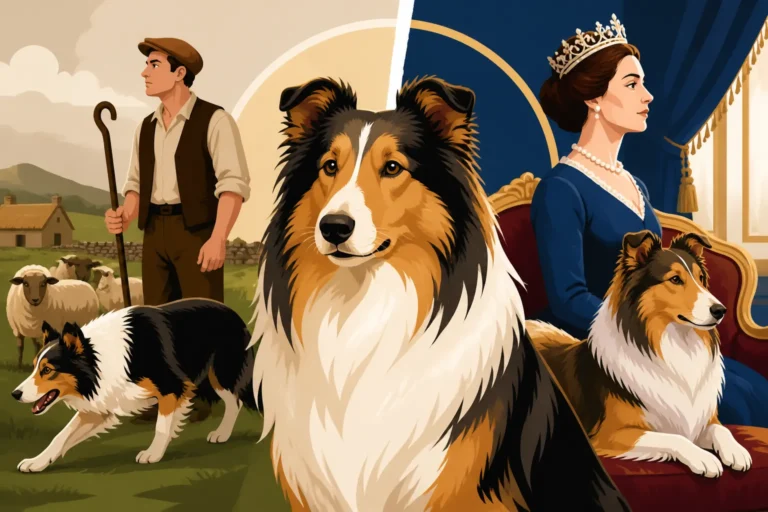
The Collie, often referred to as the "Rough Collie" or "Smooth Collie," originated in Scotland and Northern England. While they were undoubtedly working dogs, their role was often that of a general farm dog, tending sheep but also acting as guardians and companions to the shepherds. They needed to be intelligent enough to follow commands and manage flocks, but also possessed a gentle demeanor suitable for spending long periods with their human families. This dual role meant they weren't required to have the intense, single-minded focus of some other herding breeds.
Their beauty and aristocratic bearing caught the eye of Queen Victoria in the mid-19th century, particularly during her visits to Balmoral Castle. This royal endorsement catapulted the Collie from a humble working dog to a fashionable companion and show dog. This shift in focus led to selective breeding that emphasized their elegant appearance and amiable temperament, rather than solely their working prowess. The result is a dog that is intelligent, sensitive, and eager to please, but often without the high-octane drive of a dedicated working herder. They are often described as having a noble and watchful, yet calm, presence.
The Border Collie's Intense Calling
In stark contrast to the Collie's more generalized role, the Border Collie was purpose-bred for one thing and one thing only: herding sheep with unparalleled precision and intensity. Originating from the Anglo-Scottish border region (hence "Border"), these dogs were developed by shepherds who needed an efficient, tireless worker capable of controlling flocks in vast, rugged terrain. They honed the breed's famous "eye" – that hypnotic stare that can move a flock with minimal physical intervention – and their incredible agility and problem-solving skills.
Every aspect of the Border Collie's development was geared towards creating the ultimate sheepdog. Their intelligence isn't just about learning commands; it's about critical thinking, anticipating livestock movements, and adapting to complex situations. This intense drive, while magnificent in a working environment, means a Border Collie needs a "job" to do, whether it's herding, agility, flyball, or advanced obedience. Without sufficient mental and physical stimulation, they can become bored, destructive, and even neurotic, a common pitfall for owners who underestimate their needs. The saying "a tired Border Collie is a good Border Collie" truly applies here.
The Sheltie's Miniature Herding Role
The Shetland Sheepdog, or "Sheltie," comes from the remote Shetland Islands, a harsh, windswept archipelago off the coast of Scotland. Much like the Shetland Pony and Shetland Sheep, the Sheltie is a smaller, hardier version of a larger mainland breed, adapted to the sparse resources and tough conditions of the islands. While they bear a striking resemblance to a miniature Rough Collie, they are a distinct breed with their own history. Their ancestors were small herding dogs, used to guard crofts and herd the diminutive Shetland sheep, which required less brute force and more nimble maneuvering.
These small dogs were vital to the crofters, acting as all-around farmhands, alarm systems, and companions. They needed to be intelligent, agile, and alert, with a keen sense of observation. While they possess herding instincts, they typically lack the intense "eye" and relentless drive of a Border Collie. Instead, their temperament leans more towards being highly intelligent, sensitive, and extremely devoted to their families, often with a tendency to be reserved with strangers. Their history as farm protectors also instilled in them a propensity for barking, a trait that continues to be a defining characteristic today.
Physical Characteristics: A Tale of Three Coats and Sizes
At a glance, these three breeds might seem similar, especially with their flowing coats and alert expressions. However, when you look closer, significant differences in size, build, coat type, and facial features emerge, each contributing to their unique appeal and care requirements.
Stature and Build: The Grandeur of the Collie
The Collie is the largest of the three, commanding a graceful and dignified presence. A typical Rough Collie stands around 22 to 26 inches at the shoulder and weighs between 50 and 75 pounds. They possess a sturdy, athletic build that is often hidden beneath their abundant coat, allowing for both endurance and agility. The Smooth Collie shares the exact same build, just without the impressive outer coat. They have a deep chest and a long, powerful neck, giving them an elegant silhouette. Their gait is effortless and ground-covering, indicative of a dog bred to cover long distances with ease.
The overall impression of a Collie is one of refined strength and gentle power. Their bodies are well-proportioned, neither overly stocky nor too delicate. They carry themselves with an air of confidence and intelligence, qualities that contributed to their rise in popularity as companion animals. This size means they need a home with enough space to stretch out and move around comfortably, though they are often surprisingly adaptable to smaller spaces if their exercise needs are met.
Coats and Colors: More Than Just Hair
The most obvious difference often lies in their coats. The Rough Collie is famous for its magnificent, long, dense double coat, featuring a profuse mane and frill around the neck, feathering on the legs and tail, and a dense undercoat. This opulent coat requires regular maintenance, as any Collie owner will tell you! A Collie's Coat Is the Bill That Arrives Every Eight Weeks might sound dramatic, but it hints at the dedication needed for proper grooming. Smooth Collies have a much shorter, dense coat that lies flat to the body, making grooming significantly less time-consuming. Both varieties come in four primary colors: sable and white (the classic Lassie color), tricolor (black, white, and tan), blue merle, and the less common white (predominantly white with sable, tricolor, or blue merle markings).
Border Collies typically have a medium-length double coat, which can be rough (longer, feathered) or smooth (shorter, denser). While their coats are substantial, they usually aren't as profusely feathered as a Rough Collie's, reflecting their need for practicality in the field rather than sheer aesthetics. Their most common color is black and white, but they also come in sable, blue merle, tricolor, red, and other variations. The Sheltie, on the other hand, boasts a luxuriant double coat that is similar in texture and length to a Rough Collie's but on a much smaller scale. They have a rich mane and frill, feathering, and a dense undercoat, requiring similar grooming efforts to a Rough Collie. Shelties share the same color patterns as Collies: sable, tricolor, blue merle, and bi-black (black and white).
| Feature | Rough Collie | Border Collie | Shetland Sheepdog (Sheltie) |
|---|---|---|---|
| Size (Height) | 22-26 inches | 18-22 inches | 13-16 inches |
| Size (Weight) | 50-75 lbs | 30-55 lbs | 15-25 lbs |
| Coat Type | Long, dense double coat (Rough) / Short, dense double coat (Smooth) | Medium-length double coat (Rough or Smooth) | Long, dense double coat |
| Common Colors | Sable & White, Tricolor, Blue Merle, White | Black & White (most common), Sable, Blue Merle, Tricolor, Red | Sable & White, Tricolor, Blue Merle, Bi-Black |
| Grooming Needs | High (Rough), Low (Smooth) | Moderate | High |
| Energy Level | Moderate to moderately high | Very high | Moderately high |
| Herding Drive | Moderate (more general farm dog) | Extremely high (intense focus, "eye") | Moderate (alert, tends to nip at heels) |
| Temperament | Gentle, dignified, sensitive, devoted | Intelligent, intense, driven, eager to work | Intelligent, sensitive, devoted, vocal, reserved with strangers |
| Barking Tendency | Moderate (alert bark, can be taught quiet) | Moderate (alert bark, can be frustrated) | High (alert bark, warning, excitement) |
Facial Features and Expression: Distinguishing Looks
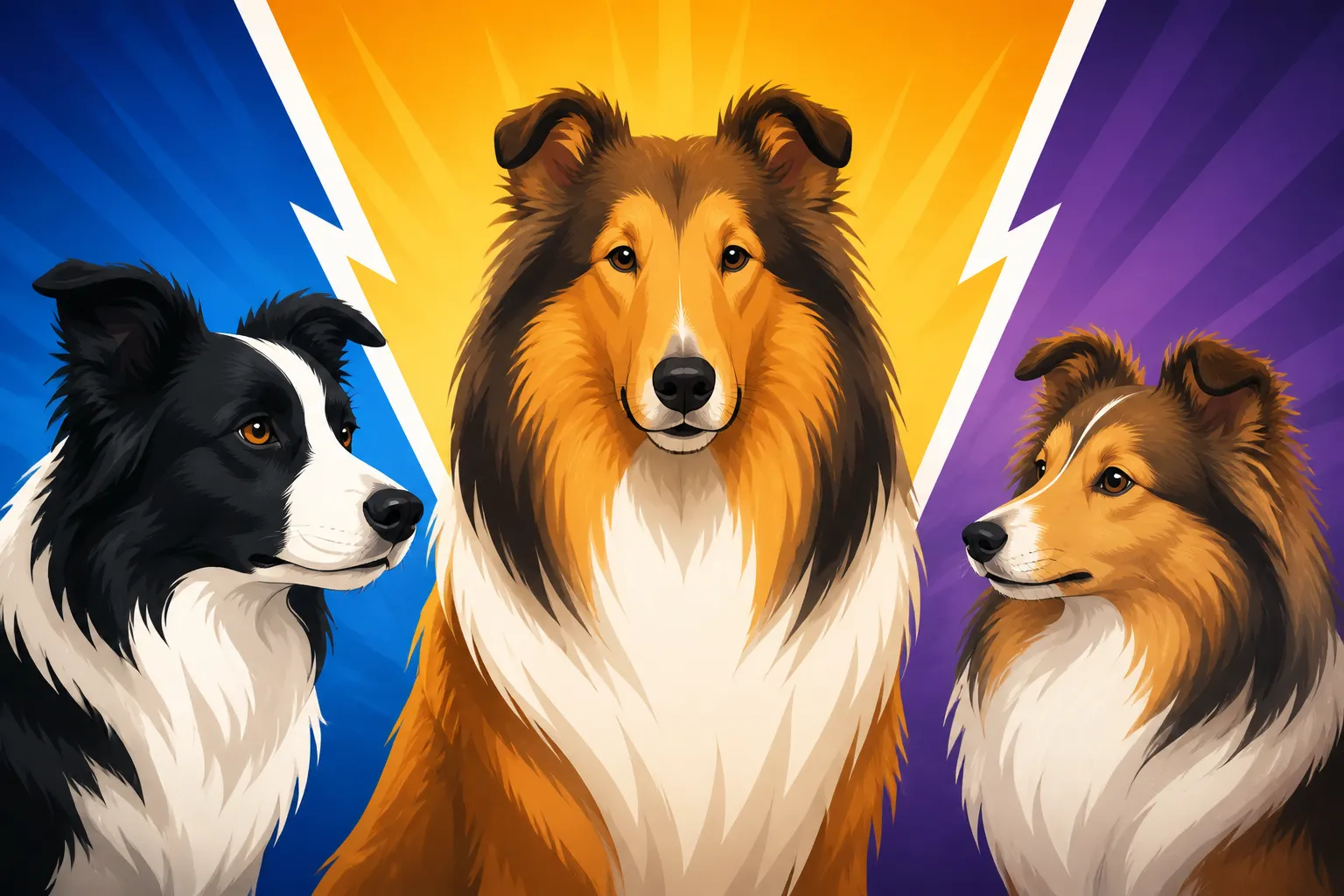
While all three breeds possess the characteristic long muzzle and intelligent, almond-shaped eyes common to many herding dogs, subtle differences create distinct expressions. The Collie has a refined head, often described as having a "chiseled" look, with a gentle stop and a long, somewhat narrow muzzle. Their eyes are usually dark and almond-shaped, set to convey an intelligent, gentle, and sometimes melancholic expression that has endeared them to many. Their ears are typically tipped, contributing to their soft, approachable look.
Border Collies have a slightly broader skull and muzzle, often giving them a more rugged, less refined appearance than the Collie. Their eyes are frequently dark, but can also be blue or amber, especially in merle patterns. Their expression is often described as intense, intelligent, and focused, reflecting their tireless drive. Their ears can be erect, semi-erect, or completely dropped, adding to the variety in their looks. Shelties, on the other hand, are often called "miniature Collies" for good reason; they share many facial features with their larger cousins, including the elegant head, almond eyes, and tipped ears. However, everything is scaled down, giving them a perpetually youthful, charming, and alert expression. Their intelligent eyes are always scanning their surroundings, reflecting their watchful nature.
Temperament and Personality: From Calm Companion to Intense Worker
The true core of any dog breed lies in its temperament. While genetics provide a blueprint, individual personality and upbringing play a significant role. However, understanding the general tendencies of Collies, Border Collies, and Shelties is crucial for predicting how they might fit into your family life.
The Collie's Serene Nature
Collies are renowned for their gentle, dignified, and devoted nature. They bond intensely with their families and thrive on companionship, often following their humans from room to room. Why a Collie Follows You From Room to Room explores this deep connection, highlighting their desire to be involved in household activities. They are typically good with children, often showing a patient and protective instinct. However, their sensitivity means they do not respond well to harsh training methods or loud, chaotic environments. They prefer a calm, consistent home.
While they are intelligent and capable of learning many commands, they aren't typically driven by an overwhelming urge to work in the same way a Border Collie is. They are content with being valued family members, enjoying walks, playtime, and quiet time beside their humans. They tend to be polite, if reserved, with strangers and usually get along well with other pets. Their alert nature means they will bark to announce visitors or unusual occurrences, but they are not generally incessant barkers if their needs are met.
The Border Collie's Focused Drive
Border Collies are often described as canine Einsteins – incredibly intelligent, intensely focused, and brimming with energy. They possess an insatiable desire to work and excel, making them champions in dog sports like agility, obedience, and, of course, herding. Their "eye" is a powerful tool, allowing them to control livestock with a mere gaze, and this intensity translates into other aspects of their personality. They are incredibly loyal and devoted to their families, but their devotion often comes with a need for a strong, consistent leader who can provide direction and challenge their brilliant minds.
The biggest challenge with a Border Collie's temperament is managing their high drive. If not given an outlet, this energy and intelligence can manifest as destructive behaviors, obsessive tendencies, or anxiety. They need more than just physical exercise; they need mental engagement every single day. They are not content to be couch potatoes and can be quite demanding companions. While they can be good with respectful children and other animals, their herding instincts might lead them to "manage" younger children or pets by nipping at heels, requiring careful supervision and training from an early age.
The Sheltie's Lively Spirit
Shetland Sheepdogs pack a lot of personality into their small frames. They are highly intelligent, agile, and possess a lively, sensitive nature. Like Collies, they are deeply devoted to their families and thrive on companionship, forming strong bonds. However, they tend to be more reserved, even timid, with strangers, often preferring to observe from a distance rather than greeting enthusiastically. Early and consistent socialization is key to helping a Sheltie become more confident and outgoing.
Shelties are excellent watchdogs, known for their vocal nature. Their alert barking can be a blessing for security but a challenge for neighbors if not managed through training. They are quick learners and excel in various dog sports, including agility and obedience, enjoying the mental and physical challenge. While they have herding instincts, they typically aren't as intense as a Border Collie, though they might still try to "herd" children or other pets playfully. Their energy is moderately high, meaning they need regular exercise and mental engagement, but perhaps not to the relentless degree of a Border Collie.
Exercise Needs and Mental Stimulation: More Than Just a Walk
All dogs need exercise, but the type and amount vary wildly between breeds. When considering a Collie, Border Collie, or Sheltie, it's vital to assess your lifestyle and how much time you can realistically commit to their physical and mental well-being. Getting this wrong is a common reason why dogs end up in shelters.
Collie: Active, But Not Demanding
While Collies are athletic dogs, their exercise needs are generally moderate. A good, brisk walk or two each day, totaling perhaps 45 minutes to an hour, combined with some playtime in a securely fenced yard, is usually sufficient to keep them happy and healthy. Forty Five Minutes a Day, and Half of It in Its Head accurately captures their need for both physical activity and mental engagement. They enjoy exploring new smells on walks and playing fetch, but they are also quite content to settle down and relax with their family once their energy has been expended.
Collies don't typically require a "job" in the intense sense that a Border Collie does. Their mental stimulation can come from training sessions, puzzle toys (you can find a great selection on Chewy), or even just being involved in household activities. They are keen observers and enjoy having a purpose, even if that purpose is just being the family's watchful companion. They aren't prone to pacing or destructive behaviors if slightly under-exercised occasionally, unlike their more driven counterparts, making them more forgiving for owners with varying schedules.
Border Collie: A Veritable Dynamo
If you're considering a Border Collie, prepare for an active lifestyle. These dogs are working machines, bred for endurance, speed, and tireless dedication. They require a significant amount of strenuous exercise, often two hours or more daily, ideally involving intense activities like running, hiking, or off-leash play in a safe, open area. More importantly, their brilliant minds need constant challenges. Merely physical exercise isn't enough; a bored Border Collie will invent its own "job," which might involve herding your children, chasing shadows, or redecorating your furniture.
Agility, flyball, competitive obedience, or even actual herding are excellent outlets for their boundless energy and intelligence. If you cannot provide a consistent, high-level of physical and mental stimulation, a Border Collie is likely not the right breed for you. They thrive in homes where they have a dedicated "person" who engages them in complex tasks and activities. This isn't just a suggestion; it's a fundamental requirement for a happy, well-adjusted Border Collie.
Sheltie: Compact Energy
Shetland Sheepdogs have a moderately high energy level, similar to a larger, more active toy breed. They need daily exercise, typically consisting of one or two good walks and plenty of playtime. Despite their size, they are athletic and agile, enjoying activities like fetch, exploring, and dog sports. They thrive on having a purpose and excel in agility, obedience, and rally, which provide both physical exertion and mental stimulation.
Like Collies, Shelties are intelligent and respond well to training, which helps channel their mental energy. Puzzle toys and interactive games are fantastic for keeping their minds sharp. While they might not need the sheer volume of exercise a Border Collie demands, they are definitely not content to be sedentary. An under-exercised or under-stimulated Sheltie is likely to become bored and potentially vocal, expressing their frustration through excessive barking or other unwanted behaviors. They appreciate a consistent routine that includes opportunities for both physical activity and mental engagement.
Training and Intelligence: A Spectrum of Drive and Sensitivity
Training is a journey you embark on with your dog, and each of these breeds approaches it with different innate drives and sensitivities. Understanding these differences can help you tailor your approach for the most successful and rewarding experience.
Collie: Sensitive and Eager to Please
Collies are highly intelligent and eager to please, making them relatively easy to train with the right methods. They are known for their sensitivity, however, and respond best to positive reinforcement, gentle guidance, and consistency. Harsh corrections or yelling will cause a Collie to shut down, become fearful, or lose trust in their handler. Harsh Handling Breaks a Collie and It Does Not Come Back emphasizes this crucial aspect of their training. They thrive on praise, treats, and affection, and excel in obedience, rally, and even therapy work.
Because of their intelligence and desire to be part of the family, Collies pick up on routines and cues quickly. They are often intuitive, seemingly understanding what you want before you even ask. Early socialization and puppy classes are important to build their confidence and ensure they are well-adjusted. While they may not have the lightning-fast reflexes of a Border Collie, their willingness to learn and gentle nature make them wonderful partners in training, often leading to a dog that is a joy to live with.
Border Collie: A Mind That Needs Work
Border Collies are legendary for their intelligence, often ranking among the smartest dog breeds. This brilliance, however, comes with a caveat: their minds need to be engaged. Training a Border Collie is not just about teaching commands; it's about channeling their innate drive, problem-solving abilities, and intensity. They learn at an astonishing rate, often grasping new concepts in just a few repetitions. This means you need to be constantly a step ahead, devising new challenges and activities to keep them stimulated.
Positive reinforcement is highly effective, as is clear, consistent communication. However, a Border Collie's intense focus can sometimes border on obsessive, and they can become frustrated if they don't understand what's expected of them. They excel in advanced obedience, agility, flyball, and any activity that challenges them mentally and physically. Owners must be prepared to invest significant time daily in training and structured activities to prevent boredom-induced behaviors. They are not a breed for the faint of heart or those who prefer a more laid-back approach to dog ownership.
Sheltie: Intelligent and Quick to Learn
Shetland Sheepdogs are also incredibly intelligent and highly trainable. They are quick to learn new commands and tricks, often picking them up with enthusiasm. Like Collies, they are sensitive and respond best to positive reinforcement and gentle, consistent training methods. They thrive on praise and enjoy the mental challenge that training provides. Their intelligence, combined with their desire to please, makes them excellent candidates for obedience, agility, and rally.
However, Shelties can sometimes be a bit headstrong or have a mischievous streak, so consistency is key. Their vocal nature means that "quiet" commands should be introduced early and practiced often. Early socialization is particularly important for Shelties to help them overcome their natural tendency to be reserved or shy with strangers. Engaging them in various activities and exposing them to different environments from a young age will help them grow into confident, well-rounded companions. They often enjoy puzzle toys and interactive games, which you can find readily available on Chewy, that challenge their intellect and keep them entertained.
Grooming Requirements: The Long and Short of It
The glorious coats of Collies and Shelties are undeniably beautiful, but they come with grooming responsibilities. Even the shorter-coated varieties have specific needs. Understanding these commitments is vital before bringing one of these breeds into your home.
The Rough Collie's Magnificent Mane
The Rough Collie's long, dense double coat is truly magnificent, but it demands consistent attention. Owners should be prepared for regular brushing, ideally several times a week, to prevent mats and tangles, especially in areas like behind the ears, under the legs, and the "petticoat" (the long hair around their hindquarters). Mane, Frill and Petticoat: the Parts of a Collie That Mat is a must-read for anyone considering this breed. During their biannual "coat blow" (when they shed their entire undercoat), daily brushing is often necessary to manage the sheer volume of loose hair.
Bathing a Rough Collie requires thoroughness to ensure the dense coat is completely clean and rinsed, followed by an even more thorough drying process to prevent skin issues. Many owners opt for professional grooming every 6-8 weeks, especially during shedding season, to maintain the coat's health and appearance. While time-consuming, the reward is a stunningly beautiful dog. It's crucial to remember that Collies should never be shaved, as it can damage their coat, interfere with their natural temperature regulation, and often results in the coat growing back incorrectly.
The Smooth Collie, Sheltie, and Border Collie Coats
The Smooth Collie is, thankfully, much less demanding in the grooming department. Their short, dense coat requires minimal brushing, perhaps once a week, to remove loose hair and keep it healthy. They still shed, of course, especially during seasonal changes, but the amount of hair is significantly more manageable than their rough-coated counterparts.
Shetland Sheepdogs, despite their smaller size, have grooming needs very similar to Rough Collies. Their long, dense double coat requires regular brushing, several times a week, to prevent mats and keep it looking its best. They also experience seasonal coat blows, during which daily brushing is essential. Special attention should be paid to the same mat-prone areas as the Rough Collie. While smaller, their coat is just as thick and needs the same level of care to remain healthy.
Border Collies generally have medium-length double coats, which can be rough (feathered) or smooth. Their grooming needs are moderate. Weekly brushing is usually sufficient to prevent tangles and remove loose hair, with more frequent brushing during shedding seasons. Their coats are designed for practicality, not extreme ornamentation, so while they require attention, it's typically less intense than a Rough Collie or Sheltie. Investing in good grooming tools, like those found on Chewy, will make the process easier for all these breeds.
Shedding Seasons: What to Expect
All three breeds are double-coated and will shed. The amount and frequency, however, differ. Rough Collies and Shelties are known for their spectacular biannual "coat blows," where they shed copious amounts of undercoat over a period of several weeks. During these times, you might feel like you're living in a fur factory! Regular, thorough brushing is the only way to keep it somewhat contained. Outside of these periods, they shed moderately year-round.
Smooth Collies shed less dramatically than Rough Collies or Shelties, but they still have a dense undercoat that will come out during seasonal changes. Border Collies also shed year-round, with heavier periods twice a year. While the total volume of hair might be less than a Rough Collie, their shedding can still be significant. For any of these breeds, consistent vacuuming and a good deshedding tool will become your best friends. The Three Weeks Twice a Year When a Collie Buries Your House is a humorous but accurate depiction of the challenge of shedding.
Health Considerations: Shared Heritage, Divergent Risks
Like all purebred dogs, Collies, Border Collies, and Shelties are prone to certain genetic health conditions. Responsible breeders will screen their dogs for these issues, but potential owners should be aware of the common concerns in each breed.
Shared Genetic Vulnerabilities
Due to their shared herding heritage, all three breeds can be susceptible to some common genetic health issues. One of the most significant is the MDR1 mutation (Multidrug Resistance 1 gene defect). This genetic anomaly affects the P-glycoprotein, a protein responsible for pumping certain drugs and toxins out of the brain. Dogs with the MDR1 mutation can have severe, even fatal, reactions to common medications like ivermectin (a common dewormer), loperamide (Imodium), and certain chemotherapy drugs. The Drug List That Can Kill a Collie is a vital resource for any owner of these breeds.
Another shared concern, particularly prevalent in Collies and Shelties, is Collie Eye Anomaly (CEA). This inherited eye disease affects the choroid, an important tissue layer under the retina. While most cases are mild and do not significantly impact vision, severe cases can lead to retinal detachment and blindness. Reputable breeders screen for both MDR1 and CEA, and DNA testing is available. Owners of these breeds should always inform their vet about their dog's breed-specific sensitivities.
Breed-Specific Health Concerns
Beyond these shared issues, each breed has its own list of specific health concerns. Collies, for instance, can be prone to bloat (Gastric Dilatation-Volvulus), especially due to their deep-cheested conformation. Epilepsy is another concern in the breed, manifesting as seizures that typically begin between 6 months and 5 years of age. Epilepsy in the Collie provides further insight into this condition. Dermatological issues like Dermatomyositis (DMS), an inflammatory disease affecting skin and muscle, also occur in Collies, with specific genetic markers now available for risk assessment.
Border Collies, while generally a robust breed, can be prone to hip and elbow dysplasia, as well as certain eye conditions like Progressive Retinal Atrophy (PRA) and neuronal ceroid lipofuscinosis (NCL). Their high-drive nature can also sometimes lead to obsessive-compulsive behaviors if not properly managed, which, while not a physical ailment, can significantly impact their quality of life. Shelties, despite their small size, can also be affected by hip dysplasia, patellar luxation, and certain blood clotting disorders like Von Willebrand's Disease. Like Collies, they can also experience epilepsy.
Proactive Health Management
For any of these breeds, proactive health management is key. This includes choosing a reputable breeder who performs all recommended genetic health screenings and provides health guarantees. Understanding your dog's lineage and genetic predispositions is crucial. Regular veterinary check-ups, a balanced diet (many good options available on Chewy), and appropriate exercise contribute significantly to their overall health.
For MDR1-affected dogs, keeping a list of contraindicated drugs handy and ensuring your vet is aware of their status is paramount. For breeds prone to bloat, feeding multiple small meals a day and avoiding strenuous exercise immediately after eating can help. Investing in pet insurance is also a wise consideration, as it can help mitigate the costs associated with treating unexpected illnesses or injuries. Insuring a Collie Against Inherited Disease delves deeper into the financial aspects of breed-specific health care. Staying informed and working closely with your veterinarian are your best tools for ensuring a long, healthy life for your Collie, Border Collie, or Sheltie.
Suitability for Different Lifestyles: Finding Your Perfect Match
Choosing a dog isn't just about falling in love with a cute face; it's about finding a companion whose needs and personality align with your lifestyle. Collies, Border Collies, and Shelties, despite their shared herding heritage, offer very different experiences to their owners.
Family Life and Children
The Collie is often celebrated as an excellent family dog. Their gentle, patient, and protective nature makes them generally wonderful companions for children of all ages. They tend to be tolerant of the typical hustle and bustle of family life and often form deep bonds with all family members. They are observant and can be watchful over children, making them comforting presences in a home. However, their sensitivity means they need a calm, consistent environment and respectful interactions from children. They are not dogs that tolerate roughhousing or incessant teasing well.
Border Collies can be good with children, but they require significant supervision and training. Their strong herding instincts often manifest as nipping at heels or trying to "round up" children, which can be frightening or painful for younger kids. They need older, respectful children who understand how to interact with a high-drive dog and who might even be involved in their training and exercise. A Border Collie needs a job, and if that job isn't provided, they might invent their own, often to the family's detriment.
Shetland Sheepdogs are generally good family dogs, especially with older, respectful children. Like Collies, they are devoted to their families and can be patient. However, their tendency towards shyness with strangers and their vocal nature means early socialization is key. They might try to herd younger children, similar to Border Collies, though usually with less intensity. Their smaller size makes them a more manageable presence in homes with very young children, but their barking can be a challenge in quieter households.
Apartment Living vs. Spacious Homes
For apartment dwellers, the Smooth Collie or Sheltie might be a more suitable choice than a Rough Collie or Border Collie. A Smooth Collie, with its lower grooming needs and moderate exercise requirements, can adapt to apartment living if given sufficient daily walks and mental stimulation. They are often quite content to be indoors, close to their people. Shelties, being smaller, are also often adaptable to apartments, provided their barking tendency is managed through training and they receive adequate exercise and mental engagement. Their compact size makes them less likely to accidentally knock things over or take up too much space.
Rough Collies, while adaptable, do have a substantial coat and benefit from a bit more space, especially a securely fenced yard for romping. They are certainly not outdoor-only dogs, preferring to be inside with their families, but the extra room can be appreciated. Border Collies, however, are generally not ideal for apartment living. Their intense exercise needs and high mental drive often lead to frustration and destructive behaviors in confined spaces. They truly thrive in homes with large, securely fenced yards and owners who are dedicated to providing them with expansive physical and mental outlets. A small yard is often simply not enough for a Border Collie.
First-Time Owners and Experience Levels
For many first-time dog owners or those looking for a relatively easy-going, yet intelligent, companion, the Collie (both Rough and Smooth) is often a wonderful choice. Their gentle temperament, eagerness to please, and moderate exercise needs make them forgiving and adaptable. They are intelligent enough to learn quickly but don't demand constant, intense stimulation. They thrive on companionship and clear, positive reinforcement.
The Shetland Sheepdog can also be a good choice for first-time owners who are prepared for their grooming needs and potential vocalizations. They are intelligent and loving, but their initial shyness with strangers and tendency to bark can be challenging for those not prepared to address it with consistent training and socialization.
The Border Collie, however, is generally not recommended for first-time dog owners unless they are fully committed to a high-energy, high-drive breed and have a clear plan for providing extensive physical and mental stimulation. They are incredibly rewarding dogs for experienced owners who understand and embrace their working dog nature, but they can quickly overwhelm an unprepared owner. Their intelligence and drive require a knowledgeable hand to guide them, and without it, they can develop behavioral issues that are difficult to manage. Understanding the commitment required for each of these magnificent breeds is the first step towards a happy and harmonious life together.
Disclaimer
This article is for general informational purposes only and does not constitute professional advice. Laws, prices and regulations vary by location and change over time. Consult a qualified professional for guidance on your specific situation.