Whether the Collie Is a National Symbol Anywhere
A collie may feel like the perfect emblem of Scotland: a graceful herding dog tied to pastoral landscapes and made famous around the world by Lassie. But affection and symbolism are not the same as official status. This guide explains whether the collie is formally a national symbol, what it represents culturally, and why the distinction matters.
Is the collie an official national symbol
There is no widely recognized official designation naming the collie as a national animal or national dog of Scotland, the United Kingdom, or another country. The breed has a strong Scottish identity and broad cultural recognition, but that is different from being formally adopted as a national symbol by a government or a country’s official institutions.
The wording can be confusing because people sometimes call the collie “Scotland’s national dog” in an informal or affectionate sense. That phrase captures the breed’s associations, but it should not be mistaken for proof of an official title. National symbols may be established by law, government action, or long-standing convention, and those categories are not interchangeable.
What counts as a national symbol
A national symbol is something a country adopts or widely recognizes as representing its identity. A flag or coat of arms is usually an obvious example. Other symbols may include a national animal, flower, bird, or emblem. Some have a clear official designation; others are better described as traditional or popular symbols.
A dog can be deeply associated with a place without being an official national symbol. A breed may have originated there, worked alongside local communities, and become a familiar image in books, films, or tourism. Those connections can make people feel that the breed “belongs” to the nation, even if no formal designation exists.
It helps to ask what someone means when they say “national dog.” They might mean a breed officially declared by a government, a dog strongly associated with a country’s history, or simply a breed people commonly think of when they picture that country. Those are three different claims. In the collie’s case, the cultural association is clear; the formal title is not.
Scotland’s national identity and the collie
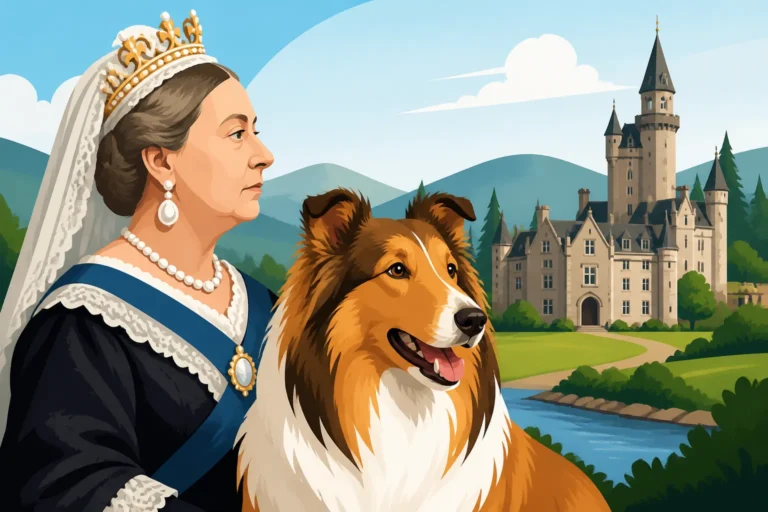
The collie’s connection to Scotland is rooted in its history as a working herding dog. Long before the breed became a familiar show-ring and household dog, collies were valued for work connected to livestock and rural life. That history gives the breed a natural place in stories about Scottish countryside and farming traditions. For more background, see The Collie Was a Scottish Droving Dog Before It Was a Show Dog.
Scotland also has a commonly recognized national animal: the unicorn. Its presence in Scottish heraldic tradition can surprise people who expect a real animal, and it offers a useful comparison. A country can have an animal that is widely recognized as a national symbol while also having beloved local breeds that are not officially designated in the same way.
| Claim about the collie | What it means | How to describe it accurately |
|---|---|---|
| The collie is a Scottish breed | The breed has historic and cultural links to Scotland | A breed with Scottish roots |
| The collie is Scotland’s national dog | This may be used informally, but does not establish official status | An affectionate or popular description |
| The collie is an official national symbol | This implies formal adoption or recognized institutional status | Not a widely established official designation |
| The collie represents Scotland in popular culture | People associate it with Scottish landscapes and herding heritage | A cultural symbol for many people |
Why people associate collies with Scotland
The collie’s Scottish identity is not made up simply because people admire its appearance. The breed’s history, name, and traditional work all contribute to the association. At the same time, the modern collie is not only a Scottish cultural image: it became an international companion and media icon, which broadened the way people recognize it.
From working dog to familiar breed
The collie’s historic role helps explain why it feels connected to Scotland. A herding dog is shaped by the needs of the people and animals it works with. In the collie’s story, that means a capable dog associated with rural households, livestock, and the landscapes where those relationships developed.
Over time, the breed’s public image changed. Collies became known not only for work but also for their appearance, temperament, and presence in shows and family life. That change did not erase their working history; it added new layers to it. The breed could be seen as both a practical farm dog and an elegant companion.
The word “collie” itself is part of the breed’s history, although its exact linguistic origin is often discussed rather than reduced to one simple explanation. If you are curious about the name, Where the Word Collie Comes From explores that question. The broader point is that the breed’s identity developed over time, rather than arriving fully formed as a national emblem.
A breed identity is not the same as a country’s emblem
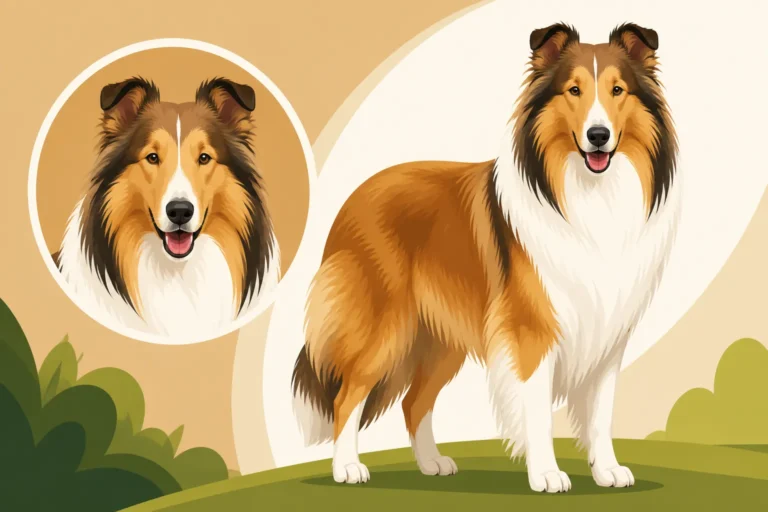
Even within the breed, there is more than one familiar appearance. Rough and Smooth Collies are two varieties of the same breed, with different coat types. Their shared history and temperament help maintain a common identity, but their appearance can shape how people recognize them. Rough and Smooth Are Two Varieties of One Collie explains that distinction, while The Four Colors a Collie Comes In covers the breed’s familiar color patterns.
This matters when discussing national symbolism because people often build a mental picture from one striking image: a long-coated sable collie on a hillside, for example. A real breed is broader than any one portrait. It includes dogs with different coats, colors, personalities, and roles in family life.
A national symbol is also usually intended to stand for a broader community or institution. A breed’s origins can be an important part of its story, but they do not automatically make the breed an official representative of a nation. The collie’s Scottish associations are real; the leap from those associations to formal national status is the part that needs care.
How Lassie made the collie famous around the world
For many people, the collie is not just a Scottish herding breed. It is Lassie: brave, clever, loyal, and always ready to find a way home. That fictional character brought the breed to audiences far beyond Scotland and helped turn the collie into a widely recognized cultural icon.
A storybook dog becomes a global image
Lassie’s influence is one reason people may describe the collie as a symbol, even when they are not talking about an official national emblem. Films, books, and television made the collie familiar to audiences who might never have seen one working livestock or living in a Scottish rural community.
That kind of fame can make a breed seem like a national representative. Viewers connect the dog’s appearance and personality with a larger story about loyalty, courage, family, and home. Those associations are emotionally powerful, but they come from popular culture rather than a formal government designation.
The role of Lassie also created expectations that a real collie would be unusually perceptive, endlessly patient, and able to solve every household crisis. In real life, collies are individual dogs with their own needs and limits. If the character shaped your idea of the breed, A Dog Named Pal Played Lassie and Changed the Breed Forever offers helpful context, and Whether People Expect a Collie to Be Lassie looks at the expectations that can follow the breed.
Cultural symbols can cross borders
Lassie did not remain a Scottish image. The character became part of international popular culture, so people in many countries came to recognize the collie without knowing much about the breed’s Scottish history. The dog’s symbolic associations expanded: it could suggest Scotland to one person, childhood television to another, and dependable family life to someone else.
This is a good example of how cultural recognition differs from national status. A symbol can be meaningful across borders without belonging officially to any nation. A collie in a film may evoke Scotland through the breed’s heritage, but the film itself is a global cultural product, not an official declaration that the collie represents Scotland.
The same distinction applies to other cultural icons. A character, sports mascot, or beloved animal may become a powerful shorthand for a place or community. That recognition can be sincere and long-lasting without being written into law or adopted by a national institution.
How to describe the collie’s status accurately
If you are writing about the breed, answering a child’s question, or settling a friendly debate, the most accurate approach is to separate its history from its official status. You can recognize the collie as a Scottish breed and a cultural icon without calling it an officially appointed national dog.
A clear way to answer the question
A concise, careful answer would be: “The collie is strongly associated with Scotland and is often treated as a cultural symbol, but it is not widely recognized as an officially designated national dog.” That wording respects the breed’s heritage while avoiding a claim that implies formal status.
If someone says, “But I’ve heard it called Scotland’s national dog,” you do not need to dismiss the phrase. It may be an informal description, or a way of expressing how strongly people identify the breed with Scotland. The useful follow-up is to ask whether they mean “popularly associated with Scotland” or “officially designated by a national authority.”
You can also make the context explicit. In a tourism brochure, a collie might be used as a recognizable image of Scottish rural life. In a history article, it makes sense to discuss the breed’s working roots. In a formal list of national emblems, it would be better not to include the collie unless the list identifies a recognized official source for that designation.
Appreciating the breed beyond the symbol
A national-symbol question can be a fun introduction to collies, but it says little about what living with one involves. A dog’s real needs matter more than its public image: grooming, exercise, training, health care, and the time it spends with its family. The Household a Collie Was Built For offers a broader look at the kind of home and daily life that can suit the breed.
That distinction is especially useful if Lassie or a Scottish connection has made you consider getting a collie. A prospective owner may need to think through coat care, nutrition, and everyday supplies rather than choosing a dog based on an image alone. A retailer such as Chewy may be one place to compare routine items, but the right choices depend on the individual dog and advice from its veterinary team.
For coat maintenance, it is worth learning what brushing actually involves before bringing home a Rough Collie. A Smooth Collie has a shorter coat, but still needs regular care and attention. Chewy may help a new owner browse grooming tools, while a breeder, groomer, or veterinarian can help identify what is appropriate for a particular dog. The cultural image is only the beginning of understanding the breed.
The same is true of food and other recurring needs. Products available through Chewy or another retailer should be chosen to suit the dog’s age, health, and routine, not simply because a famous collie made the breed appealing. A thoughtful decision starts with the dog in front of you: its temperament, care needs, and fit with your household.
Disclaimer
This article is for general informational purposes only and does not constitute professional advice. Laws, prices and regulations vary by location and change over time. Consult a qualified professional for guidance on your specific situation.