Whether Colobomas Are Worse Than Choroidal Hypoplasia in a Collie
One of the most heart-wrenching concerns for any Collie owner is the health of their dog's eyes. When you hear terms like "Collie Eye Anomaly" (CEA), "choroidal hypoplasia," and "coloboma," it's natural to feel overwhelmed and anxious, wondering which condition poses a greater threat to your beloved companion's vision. This guide will meticulously break down these two key components of CEA, explaining their individual impacts and helping you understand their relative severity so you can better advocate for your Collie's eye health.
Decoding Collie Eye Anomaly: Choroidal Hypoplasia and Colobomas
Collie Eye Anomaly (CEA) isn't a single condition but rather a collection of inherited eye defects that primarily affect Collies and related breeds. It’s a bit like a spectrum, with some dogs showing very mild signs and others having significant visual impairment. At its core, CEA involves issues with the choroid, the layer of blood vessels and connective tissue that supplies oxygen and nutrients to the retina. The two most commonly discussed components, and often the most concerning for owners, are choroidal hypoplasia and colobomas. Understanding each individually is the first step to grasping their combined impact. For a deeper dive, it's worth exploring What Collie Eye Anomaly Does to the Back of the Eye.
What is Choroidal Hypoplasia (CH)?
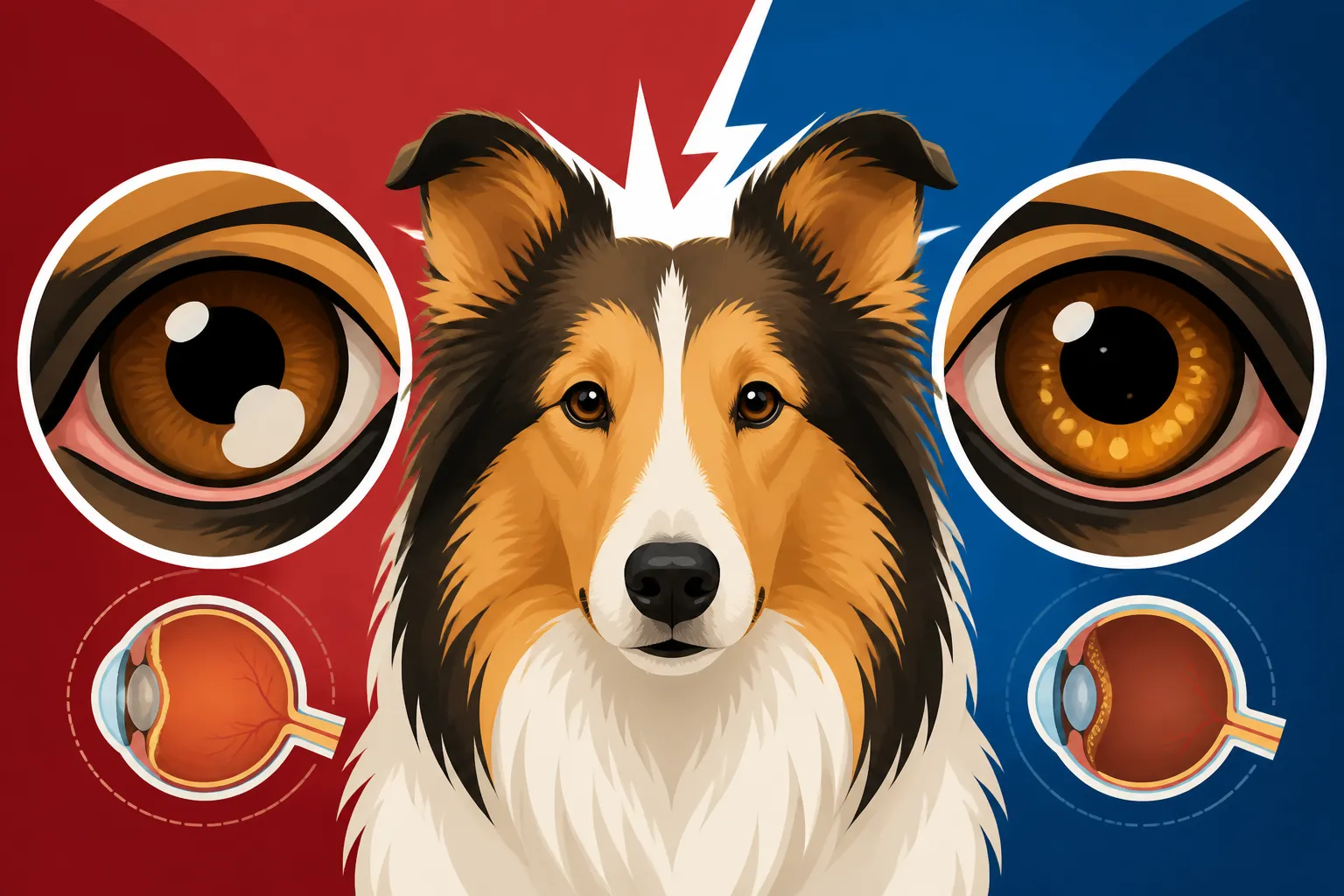
Choroidal hypoplasia, or CH, is generally considered the mildest form of CEA, but don't let "mildest" lead you to believe it's insignificant. In essence, CH means there's an abnormal development of the choroid, the critical vascular layer beneath the retina. Instead of a thick, richly vascularized choroid, dogs with CH have a thinner, underdeveloped one, often with visible blood vessels because the underlying sclera (the white of the eye) shows through more easily.
Most Collies affected solely with CH will have normal vision throughout their lives. You wouldn't notice anything amiss in their day-to-day activities, and they wouldn't bump into furniture or struggle to catch a ball. The condition is non-progressive, meaning it doesn't get worse over time, which offers a great deal of relief to many owners. However, it's crucial to remember that while CH itself might not directly cause blindness, it's an indicator of the presence of the CEA gene. This is why a thorough eye exam by a veterinary ophthalmologist is so vital, especially for puppies, to determine the full extent of their CEA. This initial screening is usually done when they are young, which is Why a Collie Puppy Is Eye Checked at Five to Seven Weeks.
What is a Collie Eye Coloboma?
Now, let's talk about colobomas, which tend to be the more visually impactful and concerning aspect of CEA. A coloboma is essentially a "hole" or a defect in one of the structures of the eye. In Collies with CEA, these colobomas most commonly occur in the optic disc, where the optic nerve exits the eye and connects to the brain. Imagine a tiny crater right where all the vital visual information is supposed to pass through.
These defects can vary significantly in size and location. A small coloboma might have little to no effect on vision, essentially just a minor anomaly. However, larger colobomas can be quite serious. They can be so deep that they affect the sclera and even protrude outward, almost like a small balloon. The larger and deeper the coloboma, the more likely it is to interfere with the integrity of the optic nerve and the retina. This can lead to blind spots, distorted vision, or in severe cases, even retinal detachment. It’s a much more immediate and potentially devastating issue than choroidal hypoplasia alone.
Comparing the Severity: CH vs. Colobomas
When we pit choroidal hypoplasia against colobomas in terms of severity, the general consensus among veterinary ophthalmologists and Collie enthusiasts leans heavily towards colobomas being the more serious concern. While CH is a clear indicator of CEA, its direct impact on a Collie's functional vision is usually minimal to non-existent. Colobomas, on the other hand, carry a much higher risk of significant vision impairment and secondary complications that can severely affect your dog's quality of life.
Understanding the Spectrum of Severity
It’s not always an "either/or" situation; many Collies with CEA might exhibit both choroidal hypoplasia and colobomas, or various degrees of each. The severity isn't just about presence or absence, but also about the extent. For example, a Collie could have widespread but mild CH across the choroid, which is less concerning than a single, very large and deep optic disc coloboma.
Think of it like this:
- Mild Choroidal Hypoplasia (CH): The choroid is a bit thinner than it should be. Most dogs will have excellent vision. It's often only detectable by a specialist during an eye exam. Whether a Mildly Affected Collie Goes Blind due to CH alone is highly unlikely.
- Severe Choroidal Hypoplasia (CH): Still primarily a visual diagnosis, indicating a more significant underdevelopment of the choroid, but still usually compatible with normal vision.
- Small Coloboma: A minor indentation or defect, potentially causing a small blind spot that the dog easily compensates for. Many dogs live full, active lives without owners ever noticing a problem.
- Large, Deep Coloboma: This is where the real worry begins. A significant defect in the optic disc can compromise the structure of the eye, lead to fluid accumulation behind the retina, and increase the risk of retinal detachment. A dog with such a coloboma will likely have noticeable vision loss in that eye.
The critical takeaway is that while CH points to the underlying genetic predisposition for CEA, it's the coloboma (especially larger ones) that often dictates the prognosis for a Collie's functional vision and long-term eye health.
Potential Complications and Long-term Outlook
The biggest difference in long-term outlook stems directly from the potential complications associated with each condition. For Collies with only choroidal hypoplasia, the outlook is almost universally excellent. There are generally no secondary complications, and their eyes remain stable throughout their lives. It's a diagnosis that usually brings relief rather than dread.
However, the presence of a coloboma introduces a whole new set of potential problems. The most severe and feared complication is retinal detachment. Because a coloboma creates a structural weakness, the retina, which is like the film in a camera, can easily pull away from the underlying choroid and sclera. This can happen spontaneously, often without warning, and can lead to sudden and complete blindness in the affected eye.
Other potential issues with significant colobomas include:
- Intraocular Hemorrhage: Bleeding within the eye due to fragile blood vessels around the defect.
- Secondary Glaucoma: Though less common, the structural anomalies can sometimes contribute to problems with fluid drainage, leading to increased eye pressure.
- Progressive Vision Loss: Even without a full detachment, the compromised structure can lead to gradual deterioration of vision.
The risk of these complications depends heavily on the size and exact location of the coloboma. A small, peripheral coloboma might never cause an issue, but a large, deep coloboma at the optic nerve head can be a ticking time bomb. This is why ongoing monitoring, even after an initial diagnosis, is so important for Collies with colobomas. Owners should be aware of the signs of retinal detachment, such as sudden blindness, dilated pupils, or a visible change in the eye. You may want to read Whether a Collie's Retina Can Detach Later for more specific information on this serious complication.
How Diagnosis Guides Prognosis
The accurate diagnosis of CEA components is solely the domain of a board-certified veterinary ophthalmologist. They use specialized equipment, like an indirect ophthalmoscope, to examine the back of the eye, specifically the choroid, retina, and optic disc. The examination is typically performed on puppies between five and seven weeks of age, before the tapetum (a reflective layer behind the retina) fully develops, which can obscure some early signs of CEA.
During this crucial puppy eye exam, the ophthalmologist will grade the severity of any choroidal hypoplasia and carefully look for colobomas. Their findings will directly influence the prognosis and management recommendations.
Here's a simplified look at how the diagnosis might inform the prognosis:
| CEA Component Diagnosed | Typical Visual Impact | Potential Complications | Long-term Outlook |
|---|---|---|---|
| Choroidal Hypoplasia Only | Usually none | Extremely rare | Excellent |
| Small Coloboma | Minor blind spots | Low risk of detachment | Good to excellent |
| Large, Deep Coloboma | Significant vision loss | High risk of detachment, hemorrhage | Guarded, requires monitoring |
| CH + Small Coloboma | Minor blind spots | Low risk of detachment | Good to excellent |
| CH + Large, Deep Coloboma | Significant vision loss | High risk of detachment, hemorrhage | Guarded, requires monitoring |
If your Collie puppy is diagnosed with a significant coloboma, your ophthalmologist will discuss the potential risks, what signs to watch for, and how often follow-up exams are recommended. While there's no cure for the structural defect, understanding the prognosis allows you to prepare and provide the best care. This initial investment in What a Collie Puppy Eye Exam Costs can provide invaluable peace of mind and crucial information for your dog's future.
Living with a Collie Affected by CEA
Bringing a Collie with CEA, especially one with a coloboma, into your home isn't a sentence for a difficult life for either of you. Many Collies with eye anomalies thrive, living full and happy lives. The key is understanding their condition, managing their environment, and staying proactive with their care. It’s about adapting and ensuring their world is as safe and enriching as possible.
Managing Daily Life with Eye Impairment
If your Collie has significant vision impairment due to a coloboma or even eventual retinal detachment, you'll find that dogs are incredibly adaptable. They rely heavily on their other senses, particularly smell and hearing. You can help them navigate their world more easily with a few simple adjustments:
- Maintain a Consistent Environment: Try not to rearrange furniture frequently. Your Collie will memorize the layout of your home. If you must move things, guide them around the new arrangement several times.
- Verbal Cues: Use verbal cues to help them navigate. "Step up," "watch out," "this way," can be incredibly helpful.
- Scent Markers: Some owners use essential oils (safely applied, diluted, and in appropriate areas, never directly on the dog) or different textured mats to mark doorways or hazards.
- Safe Outdoor Spaces: Ensure your yard is securely fenced. Supervise them closely on walks, especially in unfamiliar areas. Consider a long leash or a harness with a handle for better control.
- Socialization and Confidence: Continue to socialize your Collie. Even with impaired vision, they need to interact with the world. Positive experiences will build their confidence. For an in-depth understanding of how blind dogs adjust, take a look at How a Blind Collie Learns a House.
Remember, a dog’s world isn't as visually dominant as a human's. They will adapt, and your patience and consistency will be their greatest asset.
The Role of Regular Vet Checks
For any Collie diagnosed with CEA, especially those with colobomas, regular veterinary checks are absolutely non-negotiable. While the choroidal hypoplasia component itself is non-progressive, colobomas carry the risk of secondary complications that can develop over time.
Your veterinary ophthalmologist will likely recommend follow-up exams based on the severity of the coloboma. These appointments are crucial for:
- Monitoring for Retinal Detachment: The ophthalmologist will carefully examine the retina for any signs of lifting or detachment. Early detection can sometimes lead to intervention, though unfortunately, complete detachments often occur suddenly.
- Checking for Other Complications: They will also assess for signs of hemorrhage, glaucoma, or other changes that might indicate worsening eye health.
- Assessing Vision Changes: While you’ll be monitoring your dog daily, a professional can objectively assess subtle changes in vision that you might miss.
These regular check-ups, while an added commitment, are your best defense against unexpected declines in your Collie's vision and can provide you with peace of mind.
Financial Considerations and Insurance
Let's be realistic: managing a dog with a chronic health condition, even one that's generally stable, can have financial implications. The initial puppy eye exam, while relatively inexpensive, is just the start. If your Collie has a significant coloboma, the cost of specialized ophthalmology visits, potential diagnostic tests, and any emergency treatments for complications like retinal detachment can quickly add up.
Many Collie owners wisely consider pet insurance. A good policy can provide a safety net for unexpected vet bills. However, it's vital to choose wisely. Most pet insurance policies consider genetic conditions like CEA to be "pre-existing conditions" if diagnosed before enrollment or during a waiting period. This means that if your Collie is diagnosed with CEA as a puppy, subsequent treatments for that condition (including complications like retinal detachment linked to a coloboma) might not be covered if you enroll after the diagnosis.
This highlights the importance of:
- Early Enrollment: Insuring your Collie puppy as young as possible, ideally before any genetic conditions are diagnosed, gives you the best chance of coverage. Whether Insuring a Collie Puppy Early Is Cheaper is often the case.
- Understanding Policy Terms: Read the fine print! Ask specific questions about genetic conditions, congenital conditions, and how pre-existing conditions are handled. Providers like Healthy Paws are known for their comprehensive coverage, but policies vary greatly. Always check if Whether a Collie's Eye Anomaly Counts as Pre Existing with any potential insurer.
- Budgeting for Co-pays and Deductibles: Even with insurance, you'll still have out-of-pocket expenses. What Insuring a Collie Costs Monthly will be a factor, so budgeting for premiums, deductibles, and co-pays is essential.
Ultimately, whether you rely on pet insurance or build a robust emergency fund, being prepared for potential costs associated with CEA is part of being a responsible Collie owner. Knowing Whether Pet Insurance Is Worth It on a Collie for you comes down to your risk tolerance and financial planning.
Disclaimer
The information provided in this article is for general educational purposes only and should not be considered a substitute for professional veterinary advice. Always consult with a qualified veterinarian or a board-certified veterinary ophthalmologist for any health concerns or before making any decisions related to your Collie's health and treatment.