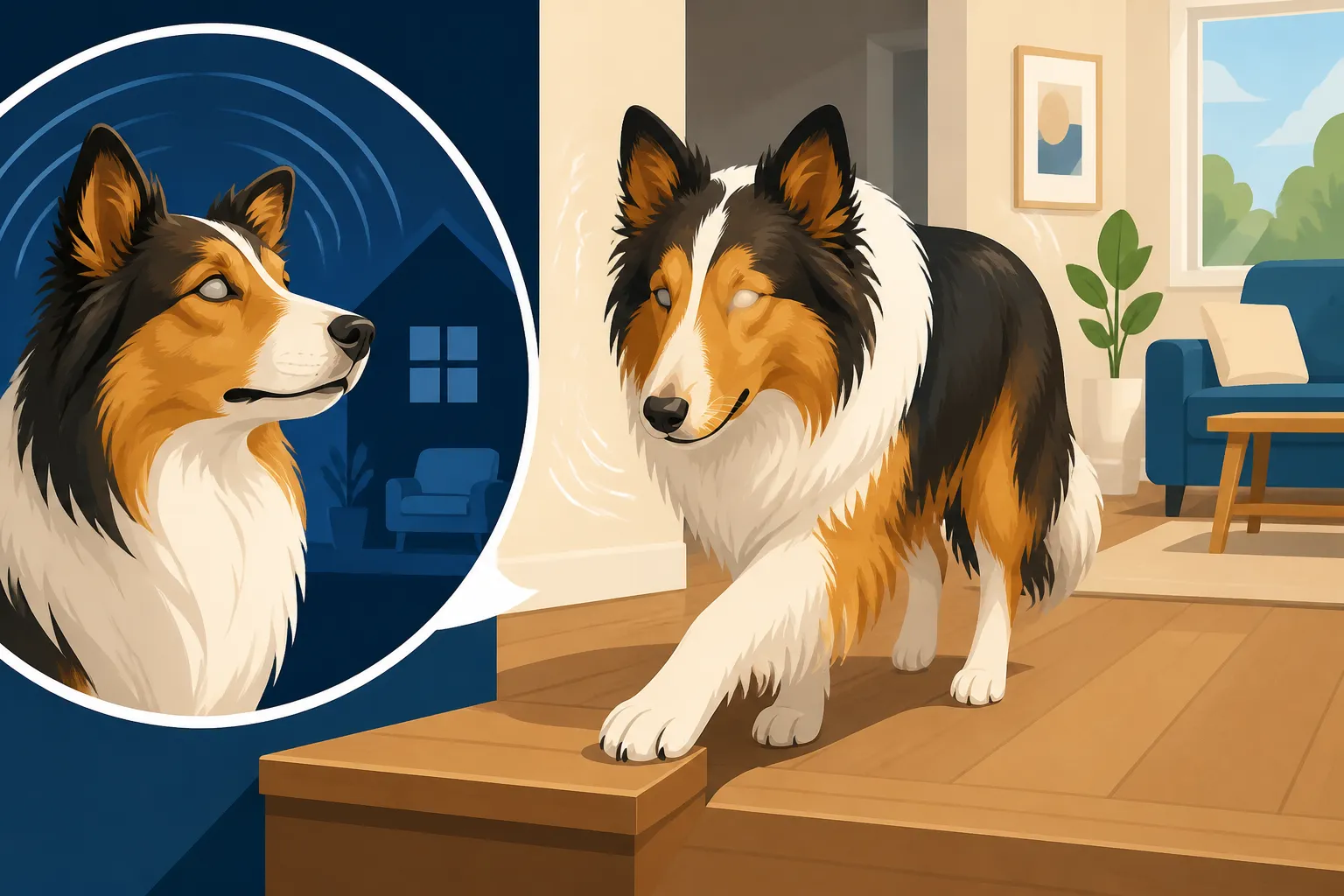
How a Blind Collie Learns a House
Bringing home a Collie who is blind, or watching your beloved companion gradually lose their sight, can be utterly heartbreaking and overwhelming. Many owners feel a wave of panic, wondering how their dog will ever navigate the world, avoid injuries, or simply enjoy life again. This comprehensive guide is here to walk you through the practical, empathetic steps to help your blind Collie not just cope, but truly thrive, confidently learning and loving every corner of their home.
Navigating the New Reality: Understanding Your Blind Collie's World
When a Collie loses its sight, whether suddenly or over time, it's a huge adjustment for both dog and owner. The initial shock can be profound, and it’s natural to feel a deep sense of worry about their future. However, Collies are incredibly resilient and adaptable creatures, far more so than we often give them credit for. Their world isn't solely defined by sight, and with your help, they can build a rich and full life.
How Collies Adapt to Vision Loss
Collies, like many dogs, possess a remarkable capacity to compensate for lost senses by sharpening their others. While vision loss is significant, it doesn't mean their world shrinks into nothingness. Instead, their senses of smell, hearing, and touch become their primary navigation tools. They learn to interpret subtle air currents, the vibrations of footsteps, and the distinct scents of every object and person in their environment. It’s like their brain is rewiring itself to process incoming information differently, creating a detailed mental map based on these heightened senses. This is why consistency in their environment becomes absolutely paramount. They rely on these familiar patterns and scents to create a sense of security and predictability.
For some Collies, vision loss might be a slow, progressive process, giving them more time to adapt gradually. This might be due to conditions like What Collie Eye Anomaly Does to the Back of the Eye worsening, or age-related degeneration. For others, it can be sudden due to trauma or certain illnesses. Regardless of the cause or speed, your Collie will look to you for reassurance and guidance. Your calm demeanor and consistent efforts will be the biggest anchors in their adapting world.
What Senses a Blind Collie Relies On Heavily
Imagine navigating your home with your eyes closed. You'd instinctively reach out, listen for familiar sounds, and pick up on distinct smells – coffee brewing, laundry detergent, your favorite candle. This is the world your blind Collie experiences.
Firstly, their sense of smell becomes incredibly powerful. Every piece of furniture, every doorway, every corner has a unique scent signature. They can track your movements by your scent, differentiate between family members, and even 'smell' changes in the environment, like an open window or a new piece of furniture. You can leverage this by using consistent scents around the house to mark important areas, although subtlety is key here – you don't want to overwhelm them.
Secondly, their hearing becomes acutely tuned. They will pick up on subtle echoes, the different sounds of various floor surfaces, and your voice. Your voice, in particular, becomes a beacon. Consistent verbal cues, calming tones, and cheerful encouragement will guide them more effectively than physical manipulation. They learn to gauge distances and obstacles by sound reflection, almost like a natural form of sonar.
Lastly, their sense of touch through their whiskers and paws provides crucial information. Their whiskers are incredibly sensitive, detecting changes in air currents and acting like feelers to prevent bumping into objects. Their paws tell them about different textures and elevations on the floor, indicating transitions from carpet to tile, or a step up to a rug. Recognizing these cues will help you understand how your Collie is gathering information about their surroundings.
Creating a Sanctuary: Essential Home Modifications for Safety and Comfort
The most immediate and impactful way to help your blind Collie is to create a safe, consistent, and predictable home environment. This isn't about baby-proofing indefinitely, but about setting up a space where they can move with confidence and minimal risk of injury. A stable environment reduces stress and allows their other senses to build a reliable mental map.
Maintaining a Consistent Home Layout
This is arguably the most crucial step. Once your Collie starts to build their mental map of the house, any changes can be disorienting and frightening. For at least the first few months, and ideally permanently, try to keep furniture, dog beds, food and water bowls, and other significant objects in the exact same place.
Think about the routes your Collie takes most often – from their bed to the water bowl, from the living room to the back door, or to their favorite sunny spot. These routes need to remain clear and consistent. If you must move something, do it slowly and gradually, guiding your Collie around the new obstruction several times using treats and verbal cues. A temporary obstacle like a laundry basket on the floor can be a huge hurdle for a blind dog, so be mindful of everyday clutter. Remember that Whether a Collie Needs a Predictable Routine isn't just about daily schedule, but also about the stability of their physical space.
Safety Measures and Obstacle Avoidance
Safety is paramount to prevent bumps, falls, and injuries. This can range from simple tweaks to more significant considerations, especially if you have a very active or playful Collie.
- Corners and Edges: Sharp corners of tables, chairs, or hearths can be dangerous. Consider purchasing corner guards (the kind used for toddlers) or using strategically placed soft blankets or cushions to pad them. If your Collie is particularly rambunctious, consider rearranging furniture to create wider, open pathways.
- Stairs: Stairs are a major concern. If you have stairs, installing baby gates at the top and bottom is a non-negotiable safety measure. You'll need to teach your Collie to navigate stairs very carefully, one step at a time, always on a leash, and with consistent verbal cues. Some owners choose to block off stairs entirely or only allow access under strict supervision.
- Trip Hazards: Remove anything that could be a trip hazard for your Collie – loose rugs, electrical cords, children's toys, shoes. Keep floors as clear as possible. Small area rugs can also be a challenge if they shift easily or curl up at the edges.
- Water and Food Bowls: Place these in a consistent, easily accessible spot, perhaps on a mat that provides a distinct textural cue. Consider non-spill bowls to minimize mess and further disorientation.
- Outdoor Spaces: If your Collie has access to a yard, ensure it's fully fenced and any potential hazards like garden tools, sharp edges, or toxic plants are removed or blocked off. Supervise outdoor time closely, especially initially.
Designating Safe Zones and Rest Areas
Just like us, a blind Collie needs a place where they can feel completely safe, relaxed, and undisturbed. This "safe zone" might be their crate, a particular dog bed in a quiet corner, or a specific room.
- Crate Training: If your Collie is already crate trained, this is a fantastic tool. Their crate is their familiar den, a place where they know they won't bump into anything or be startled. Keep it in a consistent location and always open when they might want to use it.
- Bed Placement: Place their main bed in a quiet, low-traffic area where they can sleep soundly without being accidentally stepped on or tripped over. Having a few smaller beds or mats around the house in predictable spots can also give them options for resting comfortably.
- Gate Usage: Use baby gates to section off areas of the house if certain rooms are too cluttered or dangerous, or if you need to limit their roaming for safety. This helps simplify their "map" and reduces anxiety. A well-placed gate can turn a potentially overwhelming space into a manageable one.
| Home Modification Item | Purpose & Benefit | Important Considerations |
|---|---|---|
| Clear Pathways | Prevents bumping into objects, builds confidence. | Ensure high-traffic routes are free of clutter; test by walking with eyes closed. |
| Furniture Stability | Prevents items from shifting, maintaining the mental map. | Secure wobbly furniture; consider padding sharp corners with child-safety bumpers. |
| Stair Gates | Essential for preventing falls down stairs. | Use sturdy gates at top and bottom; ensure they are always closed. |
| Textural Cues | Helps differentiate areas (e.g., rug for water bowl). | Use distinct, non-slip mats; avoid too many small, shifting rugs. |
| Scent Markers | Can identify important areas (e.g., doorway, bed). | Use consistent, subtle scents (e.g., essential oil dabbed on a low-traffic item); avoid overwhelming. |
| Safe Rest Zones | Provides a secure, undisturbed place to relax. | Consistent location for bed/crate; away from high-traffic noise. |
Building a Map in Their Mind: Training and Communication Strategies
Once the physical environment is safe, the next step is to actively teach your Collie how to navigate it using their enhanced senses. This requires patience, consistency, and a shift in how you communicate. Remember, your Collie is highly intelligent, and A Collie Reads a Room Better Than It Reads a Command, but with vision loss, those subtle visual cues are gone. Your voice and touch become paramount.
Verbal Cues and Sound Guidance
Your voice will become your Collie's most important guide. Start developing a clear, consistent set of verbal cues that indicate direction, obstacles, or safety.
- Directional Cues: Words like "left," "right," "straight," "wait," and "step up" or "step down" can be incredibly useful. Practice these cues repeatedly, starting in a safe, open space. For example, when approaching a corner, say "left" a few steps before the turn, and gently guide them with a leash. Reward heavily when they respond correctly.
- Obstacle Warnings: Simple words like "watch," "stop," or "careful" can alert them to an upcoming obstruction. You can pair these with a slight tap on their shoulder or a gentle pull on a harness to reinforce the meaning. Imagine them walking towards a chair leg; a timely "watch!" can prompt them to pause and sniff.
- Sound Markers: Some owners use subtle sound markers. A jingle of keys at a doorway, or a specific sound at the food bowl, can help your Collie orient themselves. Just be careful not to overdo it, as constant noise can be disorienting.
- Praise and Reassurance: Your tone of voice is crucial. Keep it calm, reassuring, and cheerful. Constant praise when they navigate successfully reinforces good behavior and builds confidence. A worried or tense tone from you will only increase their anxiety.
Leash Handling and Harness Usage
Even in a familiar house, a leash and harness can be invaluable training tools, especially initially or when introducing new spaces. A harness is often preferred over a collar as it provides better control and reduces pressure on the neck.
- Gentle Guidance: Use the leash for gentle guidance, not pulling. Allow your Collie to sniff and explore, only intervening when they are about to bump into something or need a directional cue. The goal is for them to learn to trust the leash as an extension of your guidance.
- "Follow Me" Training: Teach a "follow me" cue where your Collie learns to stay close to your leg. This is incredibly helpful for navigating busy areas or moving through doorways. Reward them for staying in position, using treats or verbal praise.
- Familiar Routes: Walk the same routes repeatedly on a leash within the house, using your verbal cues. This repetition helps them build that mental map. Start in one room, then expand to adjacent rooms, gradually increasing their territory as their confidence grows.
Building Confidence and Overcoming Fear
A blind Collie's biggest hurdle isn't necessarily the lack of sight, but the fear of the unknown or bumping into things. Building their confidence is essential.
- "Praise for Progress": Celebrate every small victory. Did they walk from their bed to the water bowl without assistance? Huge praise! Did they navigate around a chair? More praise and a treat! Positive reinforcement is key to making them feel brave and capable.
- Mental Stimulation: While physical exercise is still important (within safe limits), mental stimulation is equally crucial. What Motivates a Collie often involves problem-solving. Puzzle toys, scent games (hiding treats for them to find by smell), and interactive play can keep their minds engaged and prevent boredom, which can lead to anxiety. Consider teaching them new tricks that don't rely on sight, like "touch" (to your hand) or "spin."
- Enlarged Social Circle: Make sure your Collie still gets plenty of positive social interaction. Family members should use consistent vocal cues and approach them gently, announcing their presence before touching to avoid startling them. If introducing new people, explain their blindness and advise gentle, verbal greetings.
- Outdoor Adventures: Don't let blindness confine them indoors. Supervised walks in familiar, safe outdoor spaces are vital for mental and physical health. Stick to the same routes initially. Consider a long-line leash in a secure, open area to let them explore more freely under your watchful eye.
Beyond Sight: Enriching Your Blind Collie's Life with Joy and Purpose
A blind Collie can still live a incredibly happy and fulfilling life. It’s all about adapting their activities to suit their other heightened senses and ensuring they feel loved, secure, and purposeful. Don't fall into the trap of pitying them; instead, empower them.
Adapting Playtime and Exercise Routines
Your Collie still needs physical and mental exercise. Their blindness just means you need to be a little more creative and safety-conscious. How Much Exercise a Collie Needs Daily doesn't change just because they can't see!
- Scent Games: These are fantastic! Hide treats around the house and encourage your Collie to "find it" using their nose. Start with easy hides and gradually increase the difficulty. This taps into their natural instincts and is mentally stimulating.
- Sound Toys: Toys that crinkle, squeak, or have bells inside are excellent. Roll them a short distance and encourage your Collie to follow the sound. Always ensure the play area is safe and clear of obstacles.
- Consistent Walking Routes: Stick to familiar, safe walking paths. Let them sniff and explore the environment. Describe what you're encountering to them – "We're by the big oak tree now," or "Hear the birds singing?" This keeps them engaged with their surroundings.
- Interactive Play: Tug-of-war or gentle fetch with a noisy ball are great ways to engage them directly. Make sure you're consistent with where you throw the ball (e.g., always straight ahead a short distance) and use a verbal cue to signal the throw.
- Consider a Halo Harness: Brands like Muffin's Halo or Blind Dog Halo provide a protective ring that goes around your dog's head, bumping into obstacles before their face does. This can be a game-changer for building confidence, especially for Collies who are prone to bumping their head or nose.
Maintaining Grooming and Healthcare
Regular grooming and veterinary care remain essential for a blind Collie, perhaps even more so. Early detection of any health issues is crucial, as a blind dog cannot easily show signs of discomfort or pain if it’s focused on navigating.
- Consistent Grooming Routine: A blind Collie still needs their coat maintained. Four Tools and Twenty Minutes: Brushing a Rough Collie is a good guide. Maintain a consistent grooming schedule and location. The routine will be comforting, and the physical contact reassuring. Be gentle and talk to them throughout the process.
- Regular Vet Check-ups: Don't skip these. Your vet can monitor their overall health, check for other age-related issues (such as Whether an Old Collie Loses Its Hearing which can compound navigation challenges), and help manage any underlying causes of blindness or secondary issues. Discuss any changes in behavior or navigation with your vet.
- Identifying Pain: Whether a Collie Hides Pain is a common concern for any Collie owner. With a blind Collie, it can be even harder to spot subtle signs of discomfort, as they might be less active or more withdrawn due to their blindness rather than pain. Be extra vigilant for changes in appetite, gait, or temperament.
- Pet Insurance: Having pet insurance, like a policy from Healthy Paws, can be incredibly beneficial. If your Collie's blindness is due to a sudden illness or accident, or if secondary issues arise, the veterinary costs can quickly add up. A good insurance plan can help alleviate the financial burden, ensuring you can always provide the best care without stressing over bills. It's an investment in their continued health and your peace of mind.
Emotional Support and Quality of Life
Your emotional support is paramount. Your Collie senses your mood and relies on your calm, confident leadership.
- Patience is Key: There will be good days and bad days. Some days they'll navigate like a pro, others they might be more tentative. Be patient, don't get frustrated, and always offer reassurance.
- Verbal Descriptions: Talk to your Collie. Describe what's happening around them. "The mailman is at the door, but it's okay," or "We're going outside now." This helps them understand their environment and feel included.
- Physical Touch: Gentle, reassuring strokes and cuddles can provide immense comfort. Collies are very affectionate, and physical contact strengthens your bond.
- Maintain Social Connections: Continue to introduce them to trusted friends and family in a controlled way. Let people know your Collie is blind and to approach gently and speak before touching. Social interaction is vital for their mental well-being.
- Allow Them to Be Dogs: While safety is a priority, don't overprotect them to the point of stifling their joy. Let them play, explore, and be a Collie. They may move a little slower or differently, but their spirit remains. Remember Whether a Blind Collie Copes Well is largely dependent on your proactive support and their continued sense of purpose and belonging.
Bringing up a blind Collie or adapting to their vision loss is a journey, not a destination. It requires dedication, but the rewards are immeasurable. Witnessing their resilience and the deepening of your bond through this challenge is truly special. They will continue to bring immense joy, and with your help, their house will truly become their confident, happy home.
Disclaimer
The information provided in this article is for general informational purposes only and is not a substitute for professional veterinary advice. Always consult with a qualified veterinarian regarding your Collie's specific health condition and treatment options, especially concerning vision loss, medical conditions, or adapting to blindness. Every dog is unique, and individualized care plans are essential.