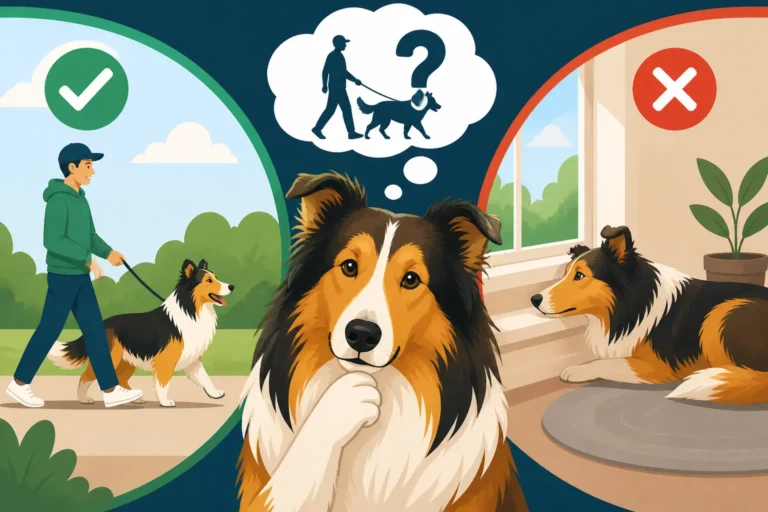
The Bark Is the Trait Collie Owners Underestimate
One of the most surprising realities for new Collie owners is often the sheer volume of sound that can come from such an otherwise gentle, dignified dog. Many people envision the quiet, almost telepathic companion of film and television, only to find themselves living with a dog whose vocal cords are definitely in working order. This guide is here to shed light on why Collies bark, what their different barks might mean, and how to lovingly manage this natural but sometimes overwhelming trait.
The Collie's Deeply Ingrained Vocal Nature
Let's get one thing straight: Collies are herding dogs, and herding dogs use their voices. They don't just use them for big, dramatic moments like in the movies; they use them to communicate, to control, to alert, and sometimes, simply to express themselves. To expect a Collie to be a silent sentinel is like expecting a fish to walk – it goes against their very nature, bred into them over centuries of working alongside humans. Understanding this fundamental truth is the first step toward building a harmonious relationship with your vocal companion.
The Herding Dog's Voice as a Tool
Imagine a vast, open field in the Scottish Highlands. A shepherd needs to move a flock of stubborn sheep across rough terrain, often in poor visibility. How do they do it? With the help of their Collie, whose keen intelligence and powerful voice are essential tools. The Collie uses barks, yips, and growls to guide, correct, and gather the flock. It's not about aggression; it's about exerting influence from a distance, a way to say, "Move along!" or "Stay there!" without having to physically intercept every single animal. This inherent drive to manage and direct the environment with sound is deeply embedded in their DNA.
When your Collie barks at the mail carrier, the neighborhood cat, or even the leaves blowing across the yard, they're often tapping into this ancient instinct. They perceive something moving or changing in their "flock" (your household, your yard, your street) and feel compelled to alert you and try to manage the situation. They aren't trying to be naughty; they're trying to do their job, the job their ancestors perfected. This is why positive, patient training methods are crucial. Harsh Handling Breaks a Collie and It Does Not Come Back is a truth to remember; these sensitive souls respond best to guidance, not punishment.
Alerting and Protecting the "Flock"
Beyond just herding, Collies have a strong instinct to alert their human family to anything they perceive as unusual or potentially threatening. Think of them as your fluffy, four-legged alarm system. A faint rustle in the bushes, a squirrel on the fence, a person walking past the house—all these can trigger an alert bark. They want you to know what's happening, and they want to make sure you're safe. This protective instinct is a wonderful trait, making them excellent watchdogs, but it can also be a source of frustration if not properly managed.
This is particularly true for Collies living in more suburban or urban environments where there's a constant stream of novel stimuli. What might seem like "nothing" to you (a car door closing down the street, a distant siren) is a significant event to your Collie, worthy of a vocal announcement. They feel it's their responsibility to inform you, and perhaps to deter whatever unknown entity is approaching. This diligence is charming, but it highlights why understanding and managing their vocal tendencies is so important for peaceful coexistence.
Deciphering Your Collie's Different Barks
It's easy to dismiss all barking as "just barking," but if you listen closely, you'll start to notice that your Collie has a whole vocabulary of vocalizations. Just like human language, different tones, pitches, and durations convey different messages. Learning to interpret these can help you respond more effectively and sometimes even preempt a barking session. It's about tuning into their communication and becoming a better listener.
The Alert Bark: "Something's Out There!"
This is perhaps the most common Collie bark. It's often sharp, repetitive, and carries a sense of urgency. You'll hear it when the doorbell rings, someone walks past the window, or a delivery truck pulls up. Your Collie is essentially saying, "Hey! Look! There's something new or different, and I want to make sure you know about it and that it's okay." It's their watchdog instinct kicking in, letting you know the boundaries of your territory have been breached or approached.
Often, this bark is accompanied by a rigid posture, ears perked, and intense focus on the source of the perceived intrusion. They might run to the window, or stand by the door, trying to see what's happening. The good news is that this bark usually ceases once the perceived "threat" has passed, or once you acknowledge it. A calm, "Thank you, I see it," from you can often be enough to reassure your Collie that you've got it handled, allowing them to relax.
The Demand Bark: "I Want Attention/Food/Play!"
This bark is usually more insistent, often lower in pitch, and can involve a whiny undertone. It's the bark your Collie uses when they want something from you: to be let out, to be fed, to play fetch, or simply to be petted. They've learned that barking gets your attention, and sometimes, even inadvertently, gets them what they want. It’s a classic case of operant conditioning, where they repeat a behavior that has yielded a reward in the past.
You might notice your Collie standing by their leash, nudging their toy, or staring pointedly at their food bowl while issuing these barks. It can escalate in intensity if ignored, sometimes accompanied by pawing or nuzzling. The key to managing demand barking is to never reward it. Instead, wait for a moment of silence, then reward that. If they bark for a walk, wait for them to be quiet for a few seconds, then calmly pick up the leash. Consistency is absolutely vital here. If you give in even once, you reinforce the behavior.
The Boredom/Frustration Bark: "I Have Nothing to Do!"
Collies are intelligent dogs, and they thrive on mental and physical stimulation. A bored Collie is often a vocal Collie. This bark can vary—sometimes it's a mournful, drawn-out sound, other times it's a repetitive, monotonous bark aimed at nothing in particular. They're just expressing their dissatisfaction with the current state of affairs, feeling understimulated and restless. This type of barking is a common reason Why Collies Are Surrendered to rescues.
This barking often occurs when a Collie is left alone for long periods without adequate exercise or engagement. They might pace, look listless, or engage in other undesirable behaviors like chewing inappropriate items. Puzzle toys, interactive games, and regular training sessions can help immensely. For example, a slow feeder bowl from Amazon can turn mealtime into a mental exercise, keeping their minds busy for a longer stretch. Regular, enriching walks that allow for sniffing and exploration are also vital. How Much Exercise a Collie Needs Daily and Whether a Collie Needs a Job to Be Content are great articles to read if you suspect boredom is behind your Collie's vocal outbursts.
The Play Bark: "Let's Have Fun!"
This is usually a lighter, more excited bark, often accompanied by playful body language: a wagging tail, a bouncy gait, and a "play bow" (front end down, rear end up). Your Collie might use this bark to invite you or another dog to play, or during a particularly exciting game of fetch or tug. It's an expression of joy and enthusiasm, often paired with excited yips or happy panting.
This kind of barking is generally welcomed and harmless. It's a natural part of their communication during play. However, if play barking becomes excessively loud or persistent, especially during indoor play, you might need to teach a "calm down" cue to help them regulate their excitement. The goal isn't to stop their joy, but to help them understand when a quieter form of play is appropriate.
Common Triggers for Collie Barking and How to Mitigate Them
Understanding why your Collie barks is half the battle; the other half is understanding what specifically sets them off and then implementing strategies to manage those triggers. Since Collies are so sensitive and observant, many everyday occurrences can be prime barking opportunities. Identifying these patterns is key.
The Dreaded Doorbell and Mail Carrier
Ah, the classic trigger! For many Collies, the sound of the doorbell or the sight of the mail carrier is like a personal challenge. This often falls into the "alert bark" category, but with an added layer of territoriality. Your Collie feels responsible for announcing and possibly driving off the intruder, even if it's just Brenda from the post office dropping off a package. This can be one of the most persistent and frustrating forms of barking, especially if it happens multiple times a day.
To address this, you need a multi-pronged approach. First, manage the environment. Can you use frosted film on lower window panes so they can't see the mail carrier approaching? Or a baby gate to keep them in a back room during delivery times? Second, classical conditioning can work wonders. Every time the doorbell rings, immediately give your Collie a high-value treat before they start barking. The goal is to change their emotional response from "intruder!" to "treat time!" Gradually, they'll associate the doorbell with something good, rather than something to bark at. Practice with recordings of doorbells, too. Whether a Collie Barks at the Doorbell is a good read for more specific tips.
Other Dogs and Animals Outside
Many Collies are prone to "fence-line barking" or barking at other dogs they see on walks. This can stem from a mix of alert barking, territoriality, frustration (if they can't get to the other dog), or even excitement. Seeing another dog walk past the yard, or encountering one on leash, can be a huge trigger. This is particularly common if your Collie feels confined or is under-socialized, leading to reactive displays.
For outdoor barking at other dogs, management is critical. Avoid routes where you know you'll encounter triggers, or cross the street far in advance. Create a visual barrier for your yard's fence. During walks, if you see another dog, immediately engage your Collie with a treat and praise before they react. Keep their focus on you. If the barking is particularly intense or seems aggressive, consulting with a certified professional dog trainer is a wise step. They can help with desensitization and counter-conditioning protocols.
Boredom and Lack of Mental Stimulation
As mentioned earlier, a bored Collie is a noisy Collie. If your dog isn't getting enough physical exercise or, more importantly, enough mental engagement, they will find ways to entertain themselves, and often that involves barking. This isn't just about walks; it's about giving their intelligent minds something to do. Forty Five Minutes a Day, and Half of It in Its Head really hits home how important mental work is for this breed.
Look for signs of boredom: pacing, destructive chewing, excessive licking, or incessant barking at nothing in particular. To combat this, introduce puzzle toys, engage in short training sessions throughout the day, play interactive games like hide-and-seek, or explore scent work. BAXTER & Bella, for example, offers online puppy programs that emphasize early enrichment and positive training methods which can be incredibly helpful for keeping intelligent breeds like Collies mentally stimulated from a young age, preventing boredom-related barking from even starting. Rotating toys and activities keeps things fresh and exciting.
Strategies for Managing Excessive Barking Indoors
Living with a vocal Collie doesn't mean your home has to sound like a kennel. There are many effective, positive reinforcement-based strategies you can implement to reduce indoor barking and create a calmer environment for everyone. Consistency is truly the golden rule here; every member of the household needs to be on the same page.
Environmental Management and Visual Barriers
Sometimes the simplest solutions are the most effective. Many Collies bark at things they see outside windows or hear through thin walls. If your Collie is constantly alerting to passersby, cars, or squirrels, remove the visual trigger. Close the blinds or curtains, especially in rooms where they spend a lot of time alone. You can even use temporary frosted window film on lower panes if you still want light but need to block the view.
Consider white noise machines, readily available on Amazon, or playing classical music when you're out. These can help muffle external sounds that might trigger your Collie's alert barks, creating a more peaceful auditory environment. For some Collies, simply not seeing what's happening outside can dramatically reduce their need to vocalize. Think about where your Collie rests or hangs out during the day; if it's a prime barking spot, can you encourage them to settle in a quieter, less stimulating area of the house?
Teaching a "Quiet" Cue
This is probably one of the most useful commands you can teach a vocal Collie. The goal is not to stop them from ever barking (which is unrealistic and unfair), but to teach them to stop barking on command. It gives you a tool to communicate with them and regain control. Whether a Collie Can Be Taught a Quiet Cue explains the process well.
Here's a basic approach:
- Trigger a bark: Have someone knock on the door, or simulate a trigger your Collie usually barks at.
- Let them bark a few times: You don't want to reinforce silence before they bark.
- Interrupt the barking: Say "Quiet" in a firm, calm voice. Immediately, before they can bark again, offer a high-value treat right to their nose. They'll stop barking to sniff and take the treat.
- Reward the silence: As they eat the treat, praise them with a calm "Good quiet!"
- Repeat: Practice this many, many times in short sessions. Gradually increase the duration of silence required before the treat is given. Eventually, they'll learn that "Quiet" means "stop barking for a treat." Remember, timing is everything!
Providing Ample Mental and Physical Stimulation
A tired Collie (both mentally and physically) is often a quiet Collie. Ensuring your dog gets enough exercise is crucial, but for a breed as intelligent as the Collie, mental exercise is just as important, if not more so, for managing barking. A walk around the block is good, but a "sniffari" walk where they can explore scents is even better for mental enrichment.
Incorporate regular training sessions, even just 10-15 minutes a day, working on basic obedience or fun tricks. Use puzzle toys that dispense kibble or treats, engaging their problem-solving skills. Agility, rally obedience, or even just teaching them to "find it" with hidden treats around the house can be incredibly fulfilling. A mentally stimulated Collie is less likely to resort to barking out of sheer boredom or excess energy. Think of it as preventative medicine for vocal outbursts. Whether Puzzle Feeders Tire a Collie delves into how effective these tools can be.
Addressing Outdoor Barking Challenges
Outdoor barking presents a unique set of challenges because the triggers are often outside your direct control, and neighbor relations can quickly become strained. It requires a thoughtful and proactive approach to ensure your Collie is happy and your community remains peaceful.
Fence-Line Barking and Visual Obstructions
If your Collie has access to a yard, fence-line barking can be a major issue. This occurs when your dog barks at anything moving beyond the fence: people, other dogs, cars, or even birds. It's usually a combination of territoriality and alert barking, often exacerbated by frustration because they can't physically interact with the stimulus.
Installing visual barriers along the fence is often the first step. This could be privacy screening, taller shrubs, or even a solid privacy fence. The idea is to remove the visual trigger entirely. If they can't see it, they're less likely to bark at it. For those moments when they do see something before you've managed the view, call them inside immediately. Reward them for coming when called, thereby rewarding moving away from the trigger. Never leave a bark-prone Collie unsupervised in the yard for extended periods, especially if fence-line barking is a known issue.
Managing Environmental Triggers on Walks
Walks should be enjoyable for both you and your Collie, not a constant battle against barking at other dogs, people, or vehicles. If your Collie is reactive on leash, barking and lunging, this behavior often stems from fear, frustration, or over-excitement, not aggression. Whether a Collie Is Dog Reactive on Leash is a good article to review if this is your struggle.
The key here is managing exposure and positive reinforcement. If you see a trigger approaching (another dog, a person on a bike), proactively get your Collie's attention before they notice the trigger. Use a high-value treat to redirect their focus to you. Create distance by crossing the street or turning down a different path. The goal is to keep your Collie under their barking threshold, gradually decreasing the distance to triggers over time while still rewarding calm behavior. This process, called desensitization and counter-conditioning, takes patience but is highly effective. Remember, punishing reactive barking only makes your Collie more anxious and reactive.
The Role of Regular Exercise in Reducing Outdoor Barking
It might seem obvious, but adequate physical exercise can significantly reduce outdoor barking stemming from pent-up energy. A Collie who has had a good, stimulating walk or play session is less likely to have the energy or inclination to bark incessantly in the yard. However, for a breed like the Collie, simply letting them out in the yard isn't enough. They need purposeful exercise.
This means walks where they can sniff and explore, games of fetch, or even off-leash play in a safe, enclosed area. How Far a Collie Can Hike can give you an idea of the kind of endurance they possess. A daily routine that includes both physical exertion and mental engagement will make a huge difference. When your Collie's needs are met, they are far more likely to be calm and quiet, even when left in the yard for a short period. If you find your Collie barks While You Are Out, ensure their exercise needs are thoroughly met before you leave.
When Barking Becomes a Bigger Problem
While some level of barking is natural for a Collie, there are times when it escalates into something more concerning. If barking becomes incessant, seemingly purposeless, or is accompanied by other distress signals, it's time to dig a little deeper.
Barking Driven by Anxiety or Fear
Collies are sensitive dogs, and anxiety can manifest in many ways, including excessive barking. Separation anxiety, fear of specific noises (like thunderstorms or fireworks), or general nervousness can all lead to constant vocalization. This isn't your Collie being "bad"; it's a plea for help, a sign that they are genuinely distressed. Whether a Collie Gets Separation Anxiety is a common concern for many owners.
Signs of anxiety-related barking often include:
- Barking only when left alone.
- Pacing, drooling, or destructive behavior alongside barking.
- Barking accompanied by whining, trembling, or hiding.
- Incessant barking that seems to have no clear external trigger.
If you suspect anxiety is the root cause, it's crucial to consult with your veterinarian first to rule out any underlying medical conditions. Then, a certified professional dog behaviorist can help you develop a comprehensive behavior modification plan. This might involve counter-conditioning, desensitization, management strategies, and in some cases, medication to help your Collie cope while behavior training is underway.
Compulsive Barking and Medical Considerations
In rare cases, barking can become a compulsive behavior, where the dog barks almost non-stop, even in the absence of any obvious trigger, and seems unable to stop. This is often an extreme form of attention-seeking or a displacement behavior due to chronic stress or boredom. It's a distressing situation for both the dog and the owner.
Additionally, certain medical conditions can sometimes lead to increased vocalization. Pain, hearing loss (making them startle more easily), cognitive dysfunction in older dogs, or other health issues can cause a dog to bark more. This is why a vet check is always the first step when you notice a sudden, inexplicable change in your Collie's barking habits. Caring for a Collie Past Nine often involves monitoring for changes in behavior, including vocalization. A clean bill of health from the vet means you can then focus purely on behavior modification with a professional trainer.
Seeking Professional Guidance
If you've tried all the common strategies and your Collie's barking remains excessive, disruptive, or is causing significant stress, please don't hesitate to seek professional help. This isn't a sign of failure; it's a sign of a responsible owner committed to their dog's well-being and their own peace of mind.
Look for a certified professional dog trainer or a veterinary behaviorist who uses positive, force-free training methods. Avoid anyone who advocates for punishment-based tools like shock collars, as these can severely damage your sensitive Collie's trust and often exacerbate anxiety, leading to more problems. Why an Electric Collar Is Wrong for a Collie and Why a Prong Collar Is Wrong for a Collie are important resources. A good professional will assess your dog, observe the barking, identify triggers, and create a tailored plan for you to follow. They can provide invaluable guidance and support to help you and your Collie navigate these challenges effectively.
Living Harmoniously with a Vocal Collie
Ultimately, living with a Collie means embracing their vocal nature to some extent. The goal isn't to silence them completely, but to manage their barking so it's not excessive or disruptive. It's about finding a balance and understanding your dog's needs.
Routine, Consistency, and Predictability
Collies thrive on routine and predictability. A consistent schedule for feeding, walks, training, and playtime can significantly reduce anxiety and, in turn, reduce stress-related barking. When a dog knows what to expect, they feel more secure. This means consistent expectations for barking too: everyone in the household should respond to barking in the same way, every time. If one person ignores demand barking while another gives in, your Collie will be confused and the behavior will be harder to extinguish.
A predictable environment also helps with emotional regulation. If your Collie's day is a chaotic mix of unknown events, their alert system might be constantly on high alert. However, with a clear schedule, they learn when to expect stimulation and when to settle down. This sense of security can be incredibly calming for a sensitive breed like the Collie. Whether a Collie Needs a Predictable Routine is not just about convenience for you, it's essential for their emotional well-being.
Enrichment, Engagement, and Understanding Your Dog
Beyond basic needs, rich daily enrichment is key. This includes not just physical exercise but activities that engage their intelligent minds. Think about the variety of experiences you offer your Collie: different walking routes, new puzzle toys, short training sessions that teach fun tricks, or even just sitting together and observing the world calmly.
The table below offers a quick guide to common Collie barks and strategies for addressing them:
| Bark Type | Common Triggers | Possible Meaning | Management Strategy |
|---|---|---|---|
| Alert Bark | Doorbell, mail, people/dogs outside | "Something's new/there! Look!" | Environmental management (blinds), "Quiet" cue, treat for silence |
| Demand Bark | Owner ignoring, empty bowl, toy drop | "I want something! Give it to me!" | Ignore until silent, reward quiet, teach polite requests |
| Boredom Bark | Left alone, no activity, understimulated | "I have nothing to do! I'm restless!" | Increased physical/mental exercise, puzzle toys, training |
| Frustration Bark | Cannot reach trigger, leash reactivity | "I want to get to that/do that, but I can't!" | Manage distance to trigger, redirect focus, desensitize |
| Play Bark | Play with humans/dogs, excitement | "This is fun! Let's play!" | Generally acceptable; teach "calm down" if excessive indoors |
| Anxiety Bark | Left alone, loud noises, new environment | "I'm scared/distressed/uncomfortable!" | Vet consult, behaviorist, counter-conditioning, management |
Understanding that barking is a natural form of communication for your Collie allows you to approach it with empathy rather than frustration. Rather than trying to "stop" the barking, focus on teaching them when it's appropriate to bark and when it's time to be quiet. This nuanced approach respects their breed instincts while also integrating them into a peaceful human home. A truly balanced life for a Collie means a life where their voice is heard, but also understood and respectfully guided. How Long a Collie Remembers a Bad Session is a stark reminder of their sensitivity and why positive, patient methods are always superior.
Disclaimer
This article is for general informational purposes only and does not constitute professional advice. Laws, prices and regulations vary by location and change over time. Consult a qualified professional for guidance on your specific situation.