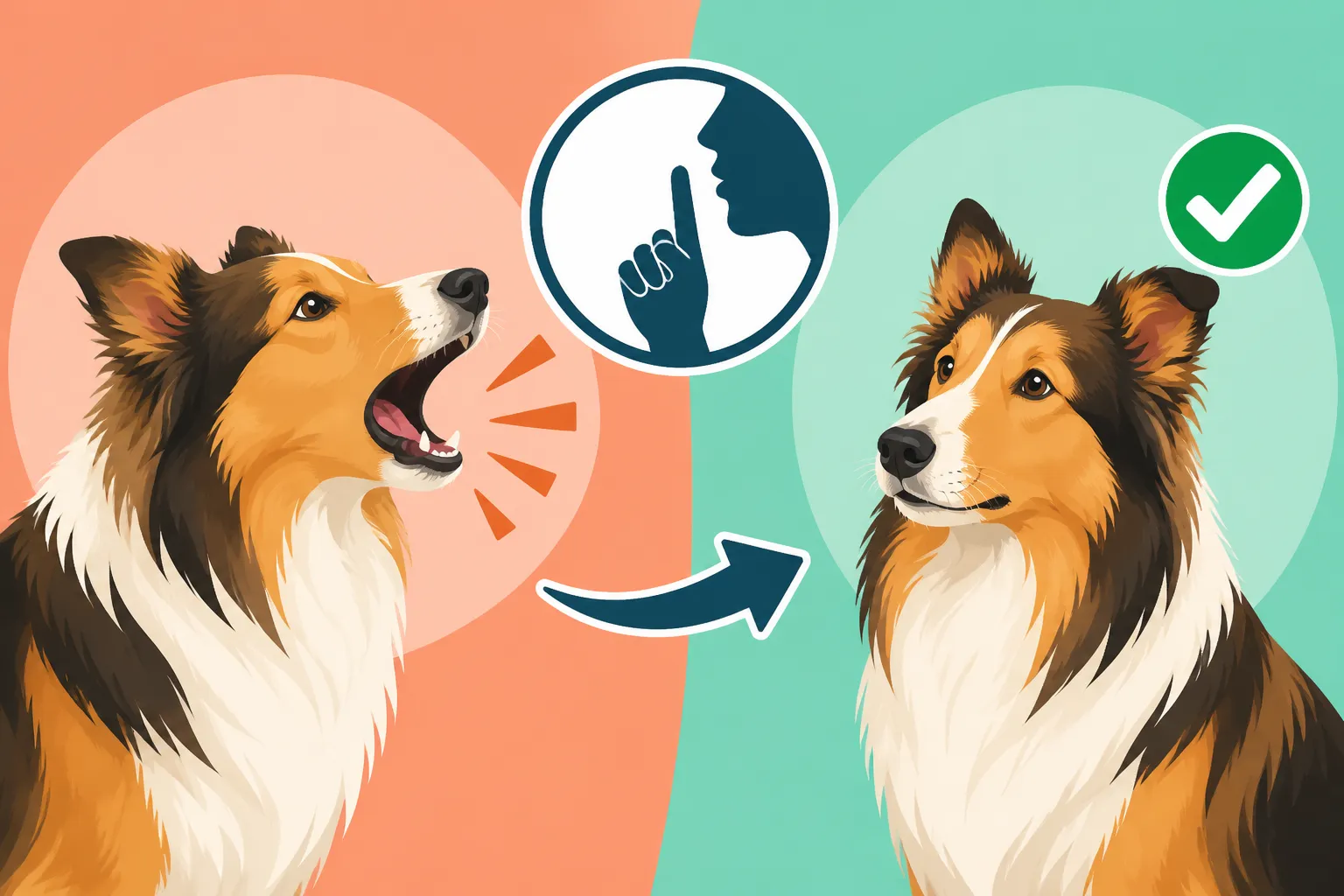
Whether a Collie Can Be Taught a Quiet Cue
It can be incredibly frustrating when your sweet-natured Collie transforms into a barking machine, seemingly at everything, and you feel powerless to quiet them. We love their voices, but sometimes, enough is enough, especially when neighbors or your own peace and quiet are at stake. This guide will walk you through the compassionate, effective steps to teach your beloved Collie a "quiet" cue, helping both of you communicate better and bring a little more serenity to your home.
Understanding Your Collie's Bark: Why They Talk So Much
Before we even begin talking about teaching a "quiet" cue, it’s absolutely essential to understand why your Collie is barking in the first place. These aren't just random noises; they are expressions, deeply rooted in their history and instincts. Trying to stop a behavior without understanding its root cause is like trying to fix a leaky faucet by just painting over the wet spot – it won't work in the long run.
The Herding Dog's Voice: Instinct and Alerting
Collies, at their core, are herding dogs, bred for centuries to work closely with humans and livestock. Part of their job on the Scottish hills was to communicate. They used their voices to gather sheep, to alert the shepherd to predators or strays, and to generally make their presence known. This isn't just a quirky trait; it's a fundamental part of their genetic makeup. They were selected for their vigilance and their ability to vocalize when something was amiss or when they needed to direct movement.
In a modern home environment, these strong instincts don't just disappear. Instead of alerting to a stray lamb, they might alert to the mail carrier, a squirrel in the yard, a leaf blowing past the window, or even just a particularly interesting cloud. Their perception of "something amiss" is often much broader than ours. This is why many Collie owners often say their dogs "talk" a lot or are incredibly observant of everything happening around them. It's a deeply ingrained trait, and understanding this helps us approach their barking with empathy rather than frustration. You might want to explore The Bark Is the Trait Collie Owners Underestimate for a deeper dive into this.
Common Reasons for Collie Barking
While the instinct to vocalize is strong, specific situations trigger different types of barking. Pinpointing the type of barking your Collie is doing helps you tailor your training approach.
- Alert Barking: This is probably the most common type for Collies. They hear a noise, see something move, or sense a change, and they feel it's their duty to let you know. The doorbell ringing, someone walking past the house, or another dog barking down the street can all trigger this. It's their warning system, and it often comes with a rigid body posture, ears perked, and intense focus.
- Attention-Seeking Barking: Collies are incredibly smart and quickly learn patterns. If barking consistently leads to you looking at them, talking to them (even if it's "Quiet!"), or giving them a treat, they will learn that barking is an effective way to get your attention. This can become a self-reinforcing cycle, where the more you react, the more they bark.
- Boredom or Frustration Barking: A Collie that isn't getting enough mental stimulation or physical exercise can become frustrated. Imagine being a brilliant problem-solver with nothing to do all day! This frustration often manifests as barking. They might bark at toys they can't reach, at you when you're busy, or just generally at nothing in particular out of sheer ennui. For more on this, you might find What a Collie Does With an Empty Afternoon helpful.
- Anxiety or Fear Barking: Some Collies are more sensitive than others, and loud noises like thunderstorms, fireworks, or even unfamiliar guests can trigger fear or anxiety, leading to barking. This barking often sounds more frantic or whiny, and might be accompanied by other stress signals like pacing, panting, or hiding. If your Collie is particularly sensitive to noises, reading Whether a Collie Is Afraid of Thunderstorms could offer more insights.
- Excitement Barking: During intense play, when you arrive home, or when they anticipate something exciting like a walk or meal, Collies can get over-aroused and express it through barking. This is usually high-pitched and accompanied by bouncy, wiggly body language. While often charming in small doses, it can quickly become overwhelming.
Understanding these distinctions helps you not only identify why your Collie is barking but also allows you to be more patient and effective in your training. Remember, barking is normal for a Collie; excessive or uncontrolled barking is what we aim to address. Why a Collie Barks provides further context on the various triggers for their vocalizations.
Building the Foundation: Basic Communication and Trust
Before you can effectively teach a "quiet" cue, you need a solid foundation of trust and communication with your Collie. These are sensitive dogs, and a relationship built on mutual respect and positive reinforcement will yield far better and longer-lasting results than any attempt to suppress their natural behaviors through fear or punishment.
Positive Reinforcement: The Collie's Learning Style
Collies are renowned for their intelligence, but they are also incredibly sensitive. A harsh word, a loud noise, or a sudden, startling correction can often do more harm than good, potentially making them shut down, become fearful, or even more anxious. Harsh Handling Breaks a Collie and It Does Not Come Back speaks volumes about this aspect of their temperament. Instead, positive reinforcement is your most powerful tool. This means rewarding the behaviors you want to see, rather than punishing the ones you don't.
Think about it from your Collie's perspective: if they're trying to alert you to something they perceive as important, and you yell at them, they might become confused or even more stressed. They don't understand that your "Quiet!" is a command; they just know you're upset. By contrast, if you teach them that stopping their bark brings them a reward, they'll be far more willing to learn and cooperate. High-value treats (small pieces of cooked chicken, cheese, or specialized training treats) are excellent motivators, especially in the initial stages. A strong bond, built on positive interactions and clear, consistent communication, creates a dog who wants to work with you.
Managing the Environment to Reduce Unwanted Barking
While we're working on the "quiet" cue, it's also crucial to manage your Collie's environment to reduce the opportunities for unwanted barking. This isn't about avoidance; it's about setting them up for success and gradually introducing challenges.
First, identify your Collie's primary barking triggers. Does the window overlooking the street cause a frenzy every time a car goes by? Is the sound of children playing next door enough to set them off? Once you know the triggers, consider ways to minimize their impact, at least initially. This could mean closing curtains or blinds, playing white noise or calming music, or even using a privacy film on windows if visual stimuli are the main issue. The goal isn't to prevent them from ever seeing or hearing these things, but to reduce the intensity of the trigger while you're actively training.
Second, ensure your Collie is getting adequate physical and mental stimulation. A bored Collie is often a noisy Collie. These dogs need more than just a quick walk around the block. They thrive on activities that engage their minds, such as puzzle feeders, scent work, or short, engaging training sessions throughout the day. Consider investing in a variety of interactive toys from Amazon to keep them occupied. A good half-hour of active play or a brisk walk, coupled with some brain games, can significantly reduce barking stemming from boredom or pent-up energy. Remember, Whether Forty Five Minutes a Day Is Really Enough for a Collie is a good question to ponder for their daily needs. Many Collies benefit greatly from a few rounds with a Snuffle Mat or a KONG wobbler filled with treats, which provides excellent mental enrichment.
Introducing the "Quiet" Cue: Step-by-Step Training
Once you've established a foundation of positive communication and managed your Collie's environment to some degree, you're ready to teach the "quiet" cue. This process relies heavily on timing and consistency, so make sure you're prepared with treats and patience.
The Initial Setup: Creating a Controlled Scenario
For successful learning, you want to start in a controlled, low-distraction environment. Your living room, when it's quiet and no one else is around, is ideal. Have a pocket full of high-value treats – something your Collie absolutely loves, like small pieces of chicken, cheese, or even liverwurst. These treats should be reserved only for "quiet" training, at least initially, to make them extra special and impactful.
It’s often helpful to first teach your Collie to bark on cue before teaching them to be quiet. This might sound counterintuitive, but it gives you control over the start and stop of the barking. If your Collie is naturally quiet, you can use a trigger to initiate barking. However, for most Collies, getting them to bark isn't the problem, so you can jump straight to teaching quiet by waiting for natural barking to occur. The key is that you need a period of barking to work with.
The "Bark and Quiet" Method
This method is highly effective because it capitalizes on your Collie's natural vocalizations.
- Trigger the Bark: Find something that reliably makes your Collie bark. This could be you knocking on a door, ringing the doorbell (even if it's just a sound effect on your phone), or having a family member walk past an exterior window. Let them bark a few times – two or three barks are usually sufficient. The goal isn't to let them get into a full-blown frenzy, but just enough to be vocal.
- Introduce the Treat: While they are still barking, hold a high-value treat right up to their nose. Most dogs will stop barking, even for a moment, to sniff or take the treat. The instant they stop barking, even for a split second, say "Quiet!" in a calm, clear voice, and immediately give them the treat.
- Repeat and Refine: Repeat this process many, many times. The more repetitions you get, the faster your Collie will associate the verbal cue "Quiet!" with the action of stopping barking and receiving a reward. At first, you might need to hold the treat closer, or for longer, to get them to pause. As they start to understand, gradually move the treat further away, eventually just giving the verbal cue "Quiet!" and waiting for the silence before rewarding. You are effectively marking the absence of barking.
- Practice Short Intervals: Don't expect long periods of silence initially. Reward even a brief moment of quiet. As they get better, gradually extend the duration of silence you expect before giving the treat. For instance, after saying "Quiet!", count to two seconds of silence, then reward. Then three, and so on.
The beauty of this method is that it teaches them to choose to be quiet because it's rewarding, rather than being forced into silence.
Generalizing the Cue to Different Situations
Once your Collie is consistently responding to "Quiet!" in your controlled indoor environment, it's time to generalize the cue. This means practicing in different locations and with different types of triggers.
Start by introducing slightly more distracting elements. Perhaps practice in a room with a window, but with the curtains still partially drawn. Then, try with the curtains open, rewarding generously for success. Move to practicing with outdoor noises that typically trigger them, but at a reduced volume or distance initially. For example, if the mail carrier is a big trigger, start by practicing "quiet" when a different, less exciting person walks by.
Gradually increase the intensity and variety of the triggers. Practice in the yard, on a leash walk, or even when guests arrive (briefly, in a controlled manner). The more contexts you practice in, the more your Collie will understand that "Quiet!" means to stop barking, regardless of the situation. Always remember to use high-value treats and keep sessions short and positive. Your consistency will be key here; ensure everyone in the household uses the cue the same way.
Troubleshooting and Advanced Scenarios: When "Quiet" Isn't Enough
Even with dedicated training, there might be times when your Collie's barking seems to persist, or the "quiet" cue doesn't quite work as reliably as you'd hoped. This is where a little troubleshooting and understanding advanced scenarios come in handy. It's not a failure in training, but an opportunity to dig deeper into the root causes or refine your approach.
When the Barking Persists: Identifying Underlying Issues
If your Collie continues to bark excessively despite consistent "quiet" cue training, it’s worth considering if there are underlying issues contributing to the behavior. Sometimes, what looks like a training problem is actually a symptom of something else.
First, rule out any health concerns. A dog in pain, experiencing cognitive decline (especially older Collies), or even with impaired hearing might bark more. A sudden increase in barking, particularly if it seems disoriented or different from their usual barks, warrants a vet visit. For older Collies, consider Whether an Old Collie Loses Its Hearing as a potential factor. They might be barking because they're startled by things they can't quite pinpoint, or they might be expressing discomfort.
Second, revisit potential behavioral issues like separation anxiety. Collies are companion dogs who form strong bonds, and some can struggle with being left alone. If the barking primarily occurs when you're absent or preparing to leave, it could be anxiety-related, in which case teaching a "quiet" cue alone won't solve the core problem. Whether a Collie Gets Separation Anxiety delves into this common challenge. Such cases often require a holistic approach, including desensitization, counter-conditioning, and sometimes even professional behavioral intervention.
Finally, honestly reassess your Collie's daily routine for physical and mental stimulation. Are they truly getting enough? Collies are smart and active; a lack of engaging activities can lead to pent-up energy and boredom, which often manifests as barking. Ensure they have access to interactive toys, regular training sessions, and opportunities to sniff and explore. Sometimes, simply adjusting their schedule or adding a new brain game can make a huge difference. How to Build Confidence in a Nervous Collie also provides valuable perspective on how overall well-being impacts behavior.
Managing Intense Barking Episodes
There will be times when your Collie gets incredibly worked up and the "quiet" cue seems to vanish from their vocabulary. In these moments, it's vital to avoid accidentally reinforcing the barking while also managing the situation effectively.
Whatever you do, try not to yell at them. Yelling can inadvertently sound like you're barking along with them, or it can escalate their arousal or fear. It rarely works to quiet them down and often makes things worse. Instead, focus on redirection. A "find it" game, where you toss a handful of treats on the floor for them to sniff out, can be a great way to break their focus and engage their natural foraging instincts. This physical act of searching can be surprisingly calming.
Another useful technique is using a "place" command. If your Collie knows how to go to their mat or bed and stay there, you can use this as a management tool during high-arousal situations. Direct them to their "place" and reward them for settling. This gives them a designated, safe space to calm down and gives you a moment of quiet. If you're consistently struggling with very intense barking, consider seeking guidance from a certified professional dog trainer or behaviorist. Resources like BAXTER & Bella offer virtual training programs that can provide personalized support for these kinds of challenges.
Tools and Resources for Persistent Barking
Sometimes, a little extra help or specialized advice is needed. Don't feel ashamed to explore tools and resources that can aid your training journey.
For situations where barking is severe or resistant to conventional training, professional guidance is invaluable. A certified professional dog trainer can observe your Collie's behavior, help pinpoint specific triggers, and develop a tailored training plan. They can also teach you advanced techniques and help manage your expectations realistically. Organizations like the Association of Professional Dog Trainers (APDT) can help you find qualified professionals in your area.
For certain anxiety-related barking, your veterinarian might recommend calming aids. These could include pheromone diffusers, calming supplements, or, in more severe cases, prescription medication. These are typically used in conjunction with behavioral modification and are not standalone solutions. Products for noise sensitivity or anxiety are available from major retailers like Amazon.
Environmental management tools can also be very useful. Doorbell covers or signs can prevent unwanted rings. White noise machines or classical music can help mask external sounds that trigger barking. For window barkers, visual barriers like privacy film or even strategically placed furniture can reduce the visual stimuli that set them off. Remember, the goal is always to address the underlying cause and train a replacement behavior, not just to suppress the barking with quick fixes.
Consistency is Key: Reinforcing the Behavior Over Time
Teaching a "quiet" cue isn't a one-and-done deal. It's an ongoing process that requires patience, consistency, and a realistic understanding of your Collie's natural inclinations. These are vocal dogs, and while we can teach them to moderate their expressions, we'll never truly silence them entirely. The goal is polite communication, not absolute quiet.
Family Consistency and Patience
The single biggest factor in the long-term success of teaching a "quiet" cue is consistency across all members of your household. If one person uses the cue correctly and rewards silence, but another family member yells at the dog when they bark, your Collie will be utterly confused. They won't understand what behavior is expected of them. Before you even start training, gather everyone who interacts with your Collie and agree on the exact cue ("Quiet!"), the method of delivery (calm voice), and the reward system.
Patience is equally crucial. You're working against deeply ingrained instincts, and learning takes time, especially for a behavior that requires a dog not to do something. There will be setbacks, days when it feels like your Collie has forgotten everything, and moments when you feel frustrated. Take a deep breath, remind yourself of your Collie's lineage and their job, and approach each session with a calm, positive attitude. Celebrate every small victory – a shorter bark, a quicker response, a longer moment of silence. These small successes build up to lasting change.
Avoiding Accidental Reinforcement
One of the trickiest parts of managing barking is avoiding accidental reinforcement. It's so easy to inadvertently reward the very behavior you're trying to stop. For example, if your Collie barks at you for attention, and you respond by looking at them, talking to them (even scolding), or pushing them away, you're still giving them attention. To your Collie, any attention is often good attention.
The key is to ignore the barking when it's for attention, but never ignore the moment they become quiet. As soon as there's a break in the barking, even a tiny pause, that's the moment to give your "Quiet!" cue and reward. If you consistently wait for silence before acknowledging them, they'll quickly learn that quiet gets them what they want (your attention, a treat, a throw of the toy), while barking does not. This is a subtle but powerful shift in your interaction. Also, try to avoid repeatedly shouting "Quiet!" at them during a barking fit; to a dog, that can sound like you're just joining in the ruckus.
Lifelong Management for a Talkative Breed
Remember, a Collie will always have a voice. They were bred for it, and it's part of their charm and intelligence. The goal of teaching a "quiet" cue isn't to create a completely silent dog, but rather one who understands when to be quiet on command and can moderate their vocalizations. You're aiming for controlled communication, not complete suppression. For example, Whether a Collie Barks More Than a Sheltie is a common question, and generally, Collies are known to be quite vocal.
This means lifelong management. Continue to practice the "quiet" cue regularly, even when your Collie is behaving well. Incorporate it into your daily routines. Reward them for being quietly observant, even without a cue. For example, if they're calmly watching a squirrel from the window without barking, acknowledge and reward that quiet behavior.
Understand that there will always be situations where their instincts take over, or they might have an off day. Be prepared to gently guide them back to quiet, rather than becoming frustrated. With consistent, positive reinforcement, you can teach your Collie to be a thoughtful communicator, understanding when it's appropriate to "speak" and when to enjoy the peaceful silence. You might even find that some aspects of Whether a Collie Can Be Taught to Stop Herding inform your approach to managing their vocalizations, as both are deeply rooted instincts.
| Type of Barking | Potential Triggers | Training Focus | Management Strategies |
|---|---|---|---|
| Alert Barking | Doorbell, mail carrier, passersby, other dogs, wildlife | "Quiet" cue, desensitization to triggers, "Look at That" game | Block views, white noise, manage access to windows/doors |
| Attention Seeking | Owner busy, wanting play, food, or affection | "Quiet" cue, ignore barking, reward calm quiet, "settle" cue | Ensure adequate stimulation, structured attention times |
| Boredom/Frustration | Lack of mental/physical exercise, ignored toys | "Quiet" cue, redirection to appropriate activities | Daily walks, puzzle feeders, training, interactive toys |
| Anxiety/Fear | Loud noises (thunder), new people/places, separation | "Quiet" cue (if possible), counter-conditioning, desensitization | Safe space, calming aids, professional help, controlled introductions |
| Excitement Barking | Greetings, play, anticipation of events | "Quiet" cue, "sit for greeting," calm training, redirect energy | Teach calm greetings, pre-empt excitement with a task |
Disclaimer
This article is for general informational purposes only and does not constitute professional advice. Laws, prices and regulations vary by location and change over time. Consult a qualified professional for guidance on your specific situation.