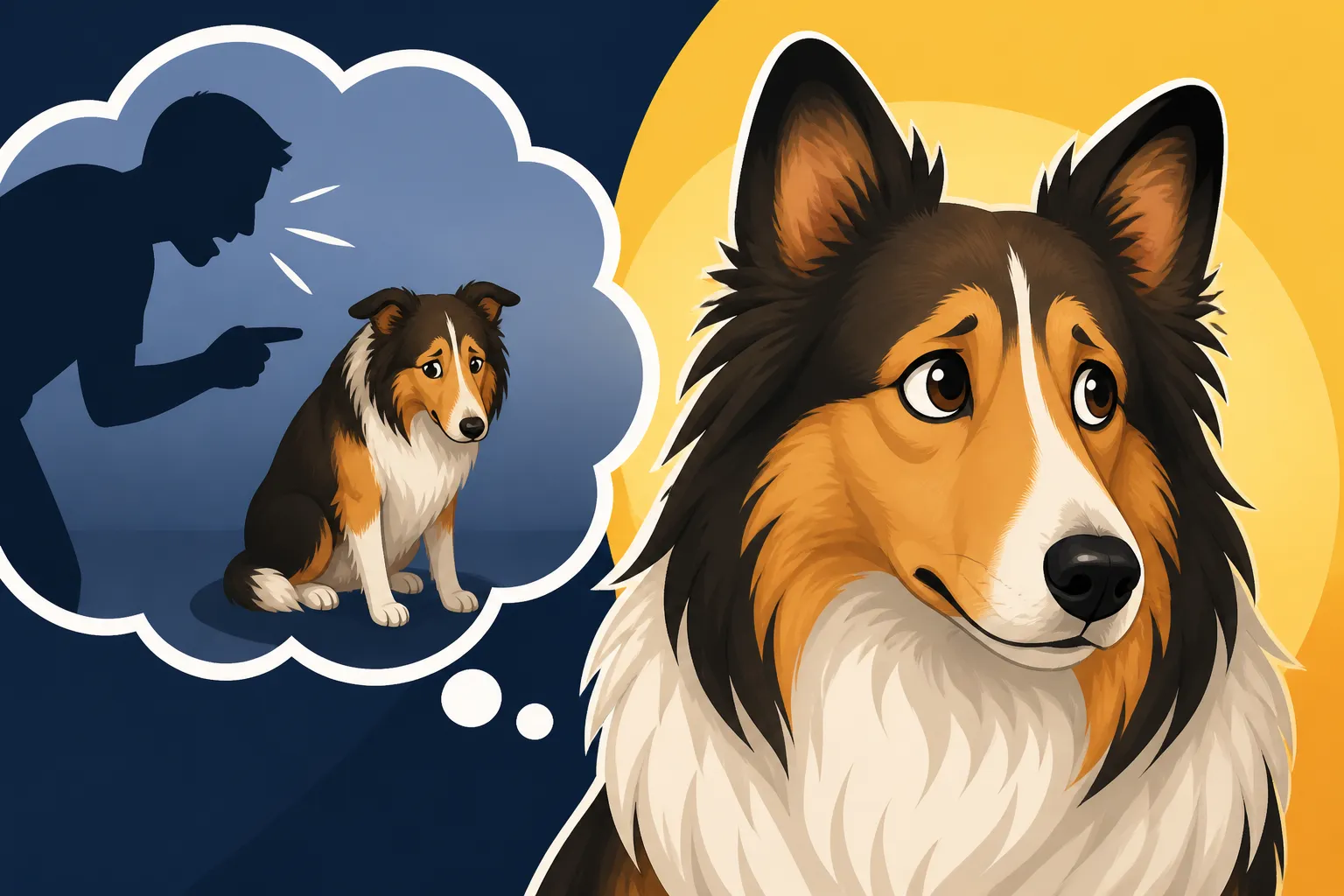
How Long a Collie Remembers a Bad Session
It's a fear every Collie owner has gnawing at the back of their mind: that one ill-timed correction, one moment of frustration, or one genuinely confusing training session might somehow "break" your sensitive dog, leaving a lasting scar. You worry about undoing all your hard work and damaging that precious bond. This guide is here to shed light on how Collies process and remember these experiences, and crucially, how to navigate the inevitable bumps in the road to maintain a happy, trusting relationship.
Collie Memory and Learning Style
Collies are renowned for their intelligence, but perhaps even more so for their sensitivity and keen observational skills. They aren't just memorizing commands; they're absorbing the entire context, including your tone, body language, and the emotional atmosphere of the training environment. This makes them incredibly astute partners, but also particularly vulnerable to negative experiences.
The Collie's Sensitive Nature
Anyone who has lived with a Collie knows they are incredibly attuned to human emotions and subtle cues. They often seem to read your mind, anticipating your next move before you even make it. This high level of perceptiveness, a hallmark of their herding lineage, means they pick up on everything – your irritation, your impatience, or your anxiety. When a training session goes sour, it's not just the failed command they remember; it's the tension in your voice, the stiffness in your posture, or the sudden loss of your usually calm demeanor. They internalize these human reactions deeply, sometimes more so than the actual task itself. It's this innate sensitivity that makes them prone to shutting down or becoming wary if they feel misunderstood or unfairly treated.
We often talk about how A Collie Reads a Room Better Than It Reads a Command, and this is exactly why a "bad session" can have such an impact. They're processing the entire social dynamic, not just the mechanics of 'sit' or 'stay.' This means a harsh word or an unfair correction can resonate far more strongly than it might with a less sensitive breed, potentially eroding trust and dampening their eagerness to participate.
Associative Learning and Emotional Resonance
Collies are masters of associative learning. This means they connect events, places, people, and emotions. If a training session becomes consistently unpleasant, your Collie won't just forget the specific mistake they made; they'll associate the act of training, the location of training, or even you (as the trainer) with negative feelings. Think of it like this: if every time you go to the dentist, it's a painful experience, you start dreading the drive there, the waiting room, and even the smell of the office, long before you even sit in the chair.
For a Collie, a "bad session" can create similar powerful, negative associations. If you constantly pull on their leash during walks because they're lunging at squirrels, they might start to associate the leash itself with discomfort and your frustration, rather than just the squirrel-chasing behavior. This is why positive reinforcement is so critical for Collies; it builds up a bank of good associations, making them enthusiastic learners who genuinely enjoy spending time working with you. What Motivates a Collie often comes down to praise, connection, and gentle guidance, far more than correction.
Long-Term Versus Short-Term Memory
While a Collie's working memory (short-term) is vital for understanding new commands or sequences, their long-term memory is where the true impact of good and bad experiences lies. They won't necessarily remember the exact sequence of events from a single frustrating session a year down the line, but they will retain the emotional fallout and the learned associations. A dog might not recall the specific day you got angry when they chewed the couch, but they might develop an underlying anxiety about being left alone or a reluctance to engage in play if that anger was paired with negative consequences.
Repeated "bad sessions," characterized by harshness, confusion, or fear, can create deep-seated behavioral issues that are very challenging to undo. A Collie might develop a persistent reluctance to learn new things, a fear of specific training tools, or even a general distrust of strangers if those negative experiences involved other people. Conversely, consistent positive experiences build resilience and a strong foundation of trust, allowing them to bounce back much more quickly from a rare misunderstanding.
What Constitutes a "Bad" Training Session for a Collie?
It's easy to imagine a "bad session" as overt abuse, but for a Collie, it's often much more subtle. Their sensitive nature means that what might be a minor correction for one breed could be deeply upsetting or confusing for a Collie. Understanding these nuances is key to preventing lasting damage.
Harsh Corrections and Aversives
For a Collie, harsh handling isn't just physically uncomfortable; it's a betrayal of trust. Yelling, leash corrections, alpha rolls, or using tools like prong collars or shock collars can have devastating effects. Harsh Handling Breaks a Collie and It Does Not Come Back is not an exaggeration; it’s a statement of fact for this breed. They are soft dogs, bred to work with people, not to be dominated. When they experience pain, fear, or overwhelming force from their primary caregiver, it can shatter their confidence and their willingness to engage.
Instead of learning what not to do, they learn to avoid the situation entirely, or worse, to fear you. Imagine trying to learn a complex task while someone is constantly shouting at you or jabbing you. You wouldn't learn effectively; you'd just want to escape. A Collie often reacts similarly, becoming evasive, shutting down, or even developing defensive behaviors like growling or snapping if pushed too far. These deep negative associations are incredibly difficult to reverse and often manifest as chronic anxiety or fear-based aggression.
Confusion and Frustration
Sometimes, it's not about being harsh, but simply being unclear. If a Collie doesn't understand what you're asking, and you keep repeating the command, or worse, get frustrated, that confusion itself can be a "bad session." Collies thrive on clear communication and predictable routines. When cues are inconsistent, or expectations are unclear, they become anxious. They want to please you, but if they don't know how to please you, they experience immense stress.
Picture trying to assemble a piece of furniture with instructions written in a language you don't understand. Now imagine someone getting increasingly angry at you for not doing it right. You'd likely feel frustrated, defeated, and eventually, resentful. A Collie in a confusing training session feels something similar. They might try harder initially, then become hesitant, slow to respond, or even offer a flurry of unrelated behaviors in a desperate attempt to guess what you want. This mental overload can be exhausting for them and build negative feelings towards the training process. This is particularly true for puppies. Thinking about The First Year With a Collie Puppy, clarity and consistency are far more important than speed or complexity of learning.
Overwhelm and Over-Correction
Even well-intentioned training can go wrong if it's too long, too intense, or involves too many corrections. A Collie, especially a young one, has a limited attention span. Pushing them past that point, or continuing a session when they're clearly tired, distracted, or making repeated mistakes, quickly turns into an overwhelming experience. If every tiny error is met with a correction, they learn to be afraid of making mistakes, which stifles their natural eagerness to try.
A continuous stream of "no," "eh-eh," or "wrong" without sufficient guidance or positive reinforcement for correct attempts can be just as damaging as outright harshness. The Collie perceives this as a constant stream of failure, leading to a loss of confidence. They might start to offer fewer behaviors, become hesitant, or even avoid eye contact, which are all signs of a dog that feels defeated. Instead, we should always strive for success and reward every small step in the right direction, ending on a positive note whenever possible.
Strategies to Repair a Damaged Training Relationship
So, you've had a few "bad sessions," and you can see the change in your Collie's demeanor. Perhaps they're reluctant to engage, or they seem less confident. The good news is that while Collies remember negative associations, they are also incredibly forgiving and deeply desire connection. Repairing the relationship is possible, but it requires patience, consistency, and a significant shift in your approach.
Rebuilding Trust Through Positive Reinforcement
The cornerstone of repairing any damaged training relationship with a Collie is a return to pure, unadulterated positive reinforcement. This means putting aside any aversive tools or methods entirely. Focus exclusively on rewarding the behaviors you want to see, ignoring (or redirecting) the behaviors you don't. Every interaction should be an opportunity to build positive associations. This might mean starting completely from scratch with very simple, low-pressure exercises where your Collie is guaranteed to succeed.
For example, if your Collie has become hesitant to approach you during recall training, go back to simply rewarding them for making eye contact, then for taking one step towards you, then two, and so on, building up the behavior slowly and joyfully. Use high-value treats and enthusiastic praise. Make yourself the source of all good things. You can find excellent quality training treats and puzzle toys on Amazon to help make these sessions extra rewarding. The goal is to reshape their emotional response to training from apprehension to anticipation. Show them that working with you is fun, safe, and always rewarding.
Changing the Environment and Routine
Sometimes, the negative association isn't just with the training method, but with the specific environment or routine. If all your "bad sessions" happened in the backyard, move your training to a new, neutral location – perhaps a quiet room in the house, a different part of the park, or even a friend's yard. A change of scenery can help break the old, negative associations and create a fresh start.
Consider altering the entire structure of your training. Instead of formal "training sessions," integrate short, fun learning opportunities throughout the day. A minute or two of practicing a known trick before dinner, a quick game of "find it" in the living room, or a reward for a calm sit while you're making coffee. The idea is to make learning a natural, enjoyable part of everyday life, rather than a separate, potentially stressful event. This also gives your Collie a sense of Whether a Collie Needs a Predictable Routine, which they thrive on, but ensuring that predictability is consistently positive.
Seeking Professional Guidance
If you're finding it difficult to repair the relationship on your own, or if your Collie's behavioral changes are significant (e.g., increased anxiety, aggression, or complete shutdown), don't hesitate to seek help from a qualified professional. Look for trainers who specialize in positive reinforcement and have experience with sensitive breeds like Collies. They can observe your interactions, identify subtle triggers you might be missing, and help you develop a tailored plan to rebuild trust and confidence.
A good trainer will focus on teaching you how to communicate effectively and kindly with your Collie, rather than simply "fixing" the dog. Organizations like BAXTER & Bella offer comprehensive online puppy and dog training programs built entirely on positive reinforcement. Such resources can be invaluable for structured guidance, especially if you're feeling overwhelmed or unsure how to proceed. Remember, asking for help isn't a sign of failure; it's a sign of a responsible and loving owner committed to their Collie's well-being.
Preventing Future Negative Associations
The best way to handle a "bad session" is to prevent it from happening in the first place. While perfection is impossible, understanding your Collie's needs and adopting proactive strategies can significantly reduce the likelihood of creating negative associations.
Reading Your Collie's Body Language
Collies are masters of communication, and they constantly signal their emotional state through their body language. Learning to "read" these signals is paramount to preventing stress and frustration during training. Look for signs of discomfort: lip licking, yawning (when not tired), averted gaze, a tucked tail, stiff posture, excessive panting, or a sudden disinterest in treats. These are all subtle indicators that your Collie is feeling stressed, confused, or overwhelmed.
If you observe these signs, it's time to pause, reassess, and simplify. Don't push through. End the session, take a break, or switch to an easy, fun activity your Collie loves. Understanding when your Collie needs a break or a change of pace is crucial for keeping training positive and productive. Remember, Whether a Collie Is Sensitive to Household Tension extends to the training ring or even your living room floor. Their awareness of your mood is constant.
Keeping Sessions Short and Positive
For Collies, quality always trumps quantity when it comes to training. Short, frequent sessions (5-10 minutes each) are far more effective than long, drawn-out ones. Collies learn best when they are mentally fresh and eager to engage. Ending a session on a high note – after a successful attempt and a big reward – leaves them feeling good about the experience and excited for the next one. Never wait until your Collie is bored, frustrated, or making mistakes to end a session.
Vary your training locations, incorporate play, and keep things novel to maintain interest. If you're struggling with a particular behavior, break it down into tiny, achievable steps. Reward each small approximation of the desired behavior. This builds confidence and minimizes the chance of your Collie feeling overwhelmed. Think of it as a series of small wins that build up to a grand victory, rather than one big, potentially frustrating, challenge. How Many Cues a Collie Can Learn is impressive, but only if they're taught joyfully.
Consistent and Clear Communication
Collies thrive on consistency and clear communication. Use the same cues for the same behaviors, and ensure all family members are on the same page with training methods and expectations. Inconsistency is a major source of confusion and can inadvertently create negative associations. If one person uses a harsh tone and another uses a gentle one for the same command, your Collie won't know what to expect and may become anxious.
Establish a clear communication system that your Collie understands. Use verbal cues, hand signals, and consistent body language. The more predictable and understandable you are, the more confident and willing your Collie will be to engage. Remember, you're building a language together, and like any language, clarity and consistency are essential for fluent communication. Whether Shouting at a Collie Sets Training Back is an important consideration here, as a calm, clear voice is always more effective.
Training Approaches for Collies: A Comparison
| Feature | Positive Reinforcement Approach | Aversive/Punishment-Based Approach |
|---|---|---|
| Collie's Perception | Fun, rewarding, builds confidence, strengthens bond | Scary, confusing, leads to avoidance, breaks trust |
| Learning Outcome | Enthusiastic engagement, understanding what to do, eager | Reluctance, understanding what not to do (often temporarily), fear |
| Memory Impact | Strong positive associations with training, trainer, and tasks | Strong negative associations, reluctance to engage, anxiety |
| Behavioral Change | Lasting, intrinsic desire to perform, resilience | Suppressed behavior (often temporarily), potential for new problem behaviors (fear, aggression) |
| Tools Used | Treats, praise, toys, clickers, long lines, puzzle feeders | Prong collars, shock collars, harsh verbal/physical corrections |
| Trainer Role | Guide, motivator, problem-solver, source of good things | Dominant, punisher, source of fear and discomfort |
Disclaimer
This article is for general informational purposes only and does not constitute professional advice. Laws, prices and regulations vary by location and change over time. Consult a qualified professional for guidance on your specific situation.