Whether a Collie Barks While You Are Out
That knot of worry in your stomach when you head out the door, wondering if your sweet, devoted Collie is going to spend the next few hours serenading the neighborhood with a symphony of barks, is a feeling many of us know all too well. It’s a common misconception that Collies are always quiet and reserved; the truth is, they can be quite vocal when left to their own devices, and it’s a problem that can strain neighborly relations and cause immense stress for both you and your beloved companion. This guide will walk you through understanding why your Collie might bark when you're away, how to accurately detect it, and most importantly, effective, empathetic strategies to address and reduce this behavior, bringing quiet confidence back to your home.
Understanding Why Your Collie Barks When You're Away
It’s easy to feel frustrated when you suspect your dog is barking nonstop while you’re gone, but to truly tackle the issue, we have to dig into the ‘why.’ Dogs don’t bark just to annoy us; there’s always a motivation behind the noise. For Collies, this can stem from a few core reasons, each requiring a slightly different approach.
Separation Anxiety Versus Boredom Barking
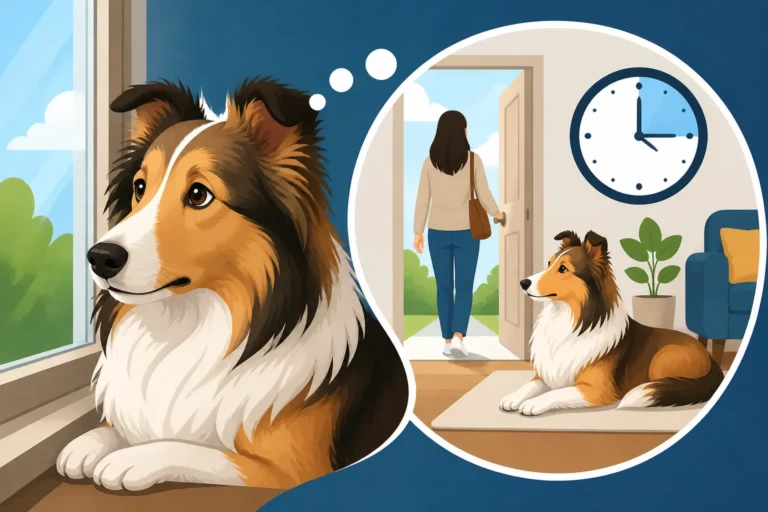
One of the most common reasons Collies (and many other breeds) bark when left alone is due to separation anxiety. This isn't just a dog missing you; it's a genuine panic response, a deep distress at being isolated. A Collie with separation anxiety might not just bark; they might also pace, drool excessively, try to escape, or even have accidents indoors, even if they're perfectly house-trained. This is an emotional issue, not a behavioral one born of spite or naughtiness, and it requires immense patience and a gentle, systematic approach. You'll often see these behaviors start almost immediately after you leave, and they can be persistent.
On the flip side, sometimes a Collie barks simply because they're bored. Collies are intelligent dogs, descended from working lines, and while they might not need a full-time herding job, their minds still crave stimulation. If they're left in a quiet house with nothing to do, no puzzle toys to engage with, no interesting smells, or no window to safely observe the world (without triggering alert barking), they can resort to barking as a self-soothing or attention-seeking mechanism. This type of barking might start later after you leave, perhaps after they've had a nap, or it might be intermittent, tied to specific times when something catches their attention. It's less about distress and more about a lack of mental engagement.
Understanding the distinction is crucial. Are they panicking because you're gone, or are they finding their own "entertainment" because you haven't provided enough? Observing other accompanying behaviors is key to figuring this out. If you suspect your Collie is displaying deep distress, it's vital to address the underlying anxiety, as simply trying to suppress the barking won't solve the core problem. Whether a Collie Gets Separation Anxiety offers a deeper dive into this challenging issue.
Environmental Triggers and Alert Barking
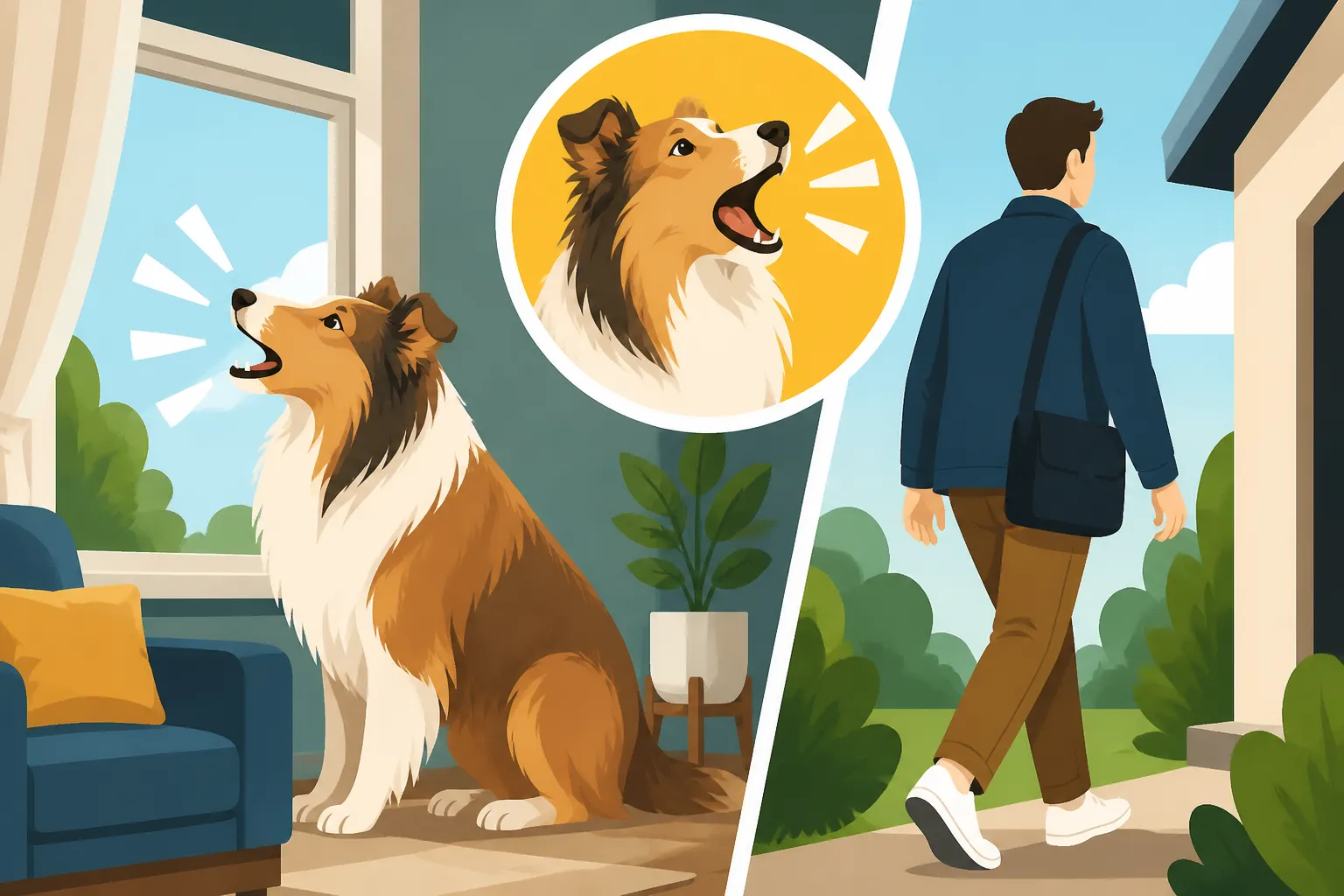
Collies are inherently alert dogs. They were bred to watch over flocks, which means being observant and vocalizing when something is amiss. This instinct doesn't disappear just because they're now guarding your sofa instead of sheep. If your Collie has access to windows or doors where they can see or hear the mail carrier, other dogs walking by, squirrels in the yard, or even just distant sounds, they might engage in alert barking. They're doing their job, telling you (or the empty house) that something is there.
This type of barking is often sharp, repetitive, and directed at a specific stimulus. It might start and stop as the "threat" appears and disappears. It’s not necessarily a sign of anxiety or boredom, but rather an innate response to their environment. For instance, my own Collie, Bonnie, could tell you the moment a delivery truck turned onto our street, long before I ever heard it. She'd stand at the window, giving a series of urgent 'woofs' as if reporting in.
While admirable in its intent, this kind of barking can be just as disruptive. Managing it often involves managing their access to these triggers. Sometimes, simply closing curtains or blocking off access to a particular window can make a significant difference. It's about reducing the opportunities for them to feel like they need to be on guard.
Breed Tendencies: The Collie's Vocal Nature
Let's be honest, Collies, beautiful and intelligent as they are, aren't exactly known for being silent monks. They are a vocal breed. Beyond alert barking, they can use their voices to express excitement, demand attention, or even just to have a chat. My neighbor's Collie, Mac, holds entire conversations with her every morning, complete with different tones and inflections. This inherent vocalness can manifest when they're left alone.
Some Collies might just like the sound of their own voice, or perhaps they're testing the boundaries. If they've learned that barking gets them attention when you're home, they might try it when you're away, hoping someone (or something) will respond. This isn't malicious, it's just a dog trying to communicate in the way that has sometimes proven effective. The key here is consistency in how you respond to barking when you are home, teaching them that quiet earns rewards. Why a Collie Barks delves deeper into the various forms of Collie vocalization.
Detecting the Invisible: How to Know If Your Collie is Barking
One of the biggest hurdles in addressing barking when you're out is knowing if it's actually happening, and if so, how often and why. Your Collie isn't going to send you a text message with a timestamped bark report! Luckily, technology and some good old-fashioned detective work can help you get to the bottom of it.
The Power of Home Monitoring
In this modern age, we have an incredible tool at our disposal: home security cameras. There are so many affordable options available now that connect right to your phone, allowing you to peek in on your furry friend from anywhere. Brands like Wyze, Arlo, or even a simple baby monitor often available on platforms like Amazon, can provide invaluable insight. Set one up in the room where your Collie spends most of their time when you’re out. The trick is to position it so you can see them clearly and, crucially, hear what’s happening.
I remember when I first got my camera; I thought my previous Collie, Duncan, was a quiet angel. Turns out, he was having full-blown barking fits every time the mail truck came by, and then settling down. Without that camera, I would have never known the extent of it. Watching him in real-time or reviewing recordings allowed me to pinpoint the exact triggers and the duration of the barking. Some cameras even offer two-way audio, which can be useful for interrupting a barking spree with a familiar voice, though this should be used cautiously as it can sometimes make separation anxiety worse by reinforcing that you can respond to their vocalizations.
Neighborly Intelligence
Sometimes, the simplest method is just to ask. Your neighbors are often the unwitting audience to your Collie's solo performances. A polite conversation with those living next door, across the street, or even below you if you live in an apartment, can provide a wealth of information. Explain that you're trying to address your dog's barking and would appreciate their honest feedback. Ask them for specific times or situations when they hear barking. Is it constant? Is it only when someone walks by? This information can be gold.
I recall a client who was mortified when her downstairs neighbor sent a polite but firm note about her Collie's incessant barking. Instead of getting defensive, she used it as an opportunity. She brought her neighbor a small thank-you gift for the feedback and installed a camera, confirming the problem. The neighbor then felt more invested in her efforts and became an ally, offering updates on quiet days and progress. Always approach this with humility and a willingness to solve the problem, rather than dismissing their concerns.
Interpreting the Clues
Beyond direct observation, there are other clues your Collie might leave that hint at barking behavior. For instance, if you come home and your dog is panting heavily and seems exhausted, especially after a period of being alone, it could indicate they’ve been very active, which can include prolonged barking. Look for worn-down paw pads, signs of drooling around their crate or bedding, or if they seem overly needy or clingy upon your return.
Sometimes, the absence of activity is a clue too. If they haven't touched their puzzle toy or their chew bone, it might suggest they were too preoccupied (or anxious) to engage with it. Compare their behavior on days you know they've been barking to days you suspect they've been calm. Over time, you'll start to recognize patterns. This detective work, combined with concrete evidence from a camera or neighbor, will give you a clear picture of what's happening. How Long a Collie Can Be Left Alone provides useful context on managing your Collie's time alone.
Practical Strategies to Silence the Solo Howl
Once you know why your Collie is barking and have confirmed it's happening, it's time to put a plan into action. This isn't about quick fixes but about consistent effort and understanding.
Enrichment and Mental Stimulation
For boredom barking, the solution often lies in mental and physical enrichment. A tired Collie is often a quiet Collie, but "tired" doesn't just mean physically exhausted; it also means mentally stimulated. Before you leave, ensure your Collie has had a good, brisk walk or a vigorous play session. Don't just let them out in the yard; actively engage them.
Then, before you step out, provide them with engaging activities that last. Puzzle feeders are fantastic for this, making them work for their meal or treats. There are many options on Amazon, from snuffle mats to more complex interactive toys. Filling a Kong with peanut butter (ensure it's xylitol-free!), yogurt, or wet food and freezing it can keep a Collie occupied for a surprisingly long time. Chew toys, particularly those designed for power chewers, can also be a good distraction. Remember, the goal is to redirect their energy and intelligence away from barking and towards a constructive, enjoyable activity. Whether a Collie Chews When Bored offers more ideas for channeling that energy.
| Barking Type | Primary Cause | Common Signs (When Alone) | Suggested Solutions |
|---|---|---|---|
| Separation Anxiety | Distress, panic, fear of isolation | Persistent, high-pitched barking/howling; pacing; destruction; house soiling; drooling | Desensitization, counter-conditioning, vet consult, medication (if severe), BAXTER & Bella online training |
| Boredom Barking | Lack of stimulation, under-exercised | Intermittent, often deep "woofs"; may intensify after a nap; less destruction focused on escape | Increased exercise, interactive toys, puzzle feeders, chews, dog walker |
| Alert Barking | Environmental triggers, guardian instinct | Sharp, rapid, directed barks; often at windows/doors; starts/stops with trigger | Block visual access, white noise, counter-conditioning to triggers |
| Attention-Seeking | Learned behavior, desire for interaction | Can vary; often stops if 'audience' disappears; sometimes accompanied by pawing/nudging | Ignore unwanted barking, reward quiet, teach 'quiet' cue |
Desensitization and Counter-Conditioning
If your Collie's barking is tied to separation anxiety or specific environmental triggers, desensitization and counter-conditioning are powerful tools. Desensitization means gradually exposing your dog to the trigger at such a low level that it doesn't provoke a fearful response. For separation anxiety, this means starting with extremely short departures – literally just stepping out the door for a second, then coming back in before your dog shows any signs of distress. Slowly, incrementally, you increase the duration.
Counter-conditioning involves changing your dog's emotional response to a trigger. If they bark at the mail carrier, for instance, you'd start associating the sound of the mail truck (or the sight of it from a distance) with something positive, like a high-value treat. Over time, the mail truck becomes a predictor of good things, not something to bark at. For an anxious Collie, this might involve pairing your departure cues (grabbing keys, putting on shoes) with a special, long-lasting treat they only get when you leave. The goal is to make these previously stressful events predict something pleasant. This takes a lot of time and patience, but it reaps huge rewards.
Consider resources like BAXTER & Bella, which often provide structured training programs that can guide you through these types of behavior modification techniques. Their step-by-step approach can be incredibly helpful when you're feeling overwhelmed. How to Build Confidence in a Nervous Collie also provides valuable insights for sensitive dogs.
Professional Help When You Need It
Sometimes, despite your best efforts, the barking persists, especially with severe separation anxiety. This is not a failure on your part. Some Collies need more than just home remedies, and that's perfectly okay. Consulting with a certified professional dog trainer or a veterinary behaviorist can be a game-changer. They have the expertise to accurately diagnose the root cause of the barking and create a tailored behavior modification plan specific to your Collie's needs.
A veterinary behaviorist, in particular, can assess whether medication might be appropriate to help reduce anxiety during the re-training process. This isn't a "cure-all" but can lower your dog's overall anxiety levels enough to make the training more effective. Remember, seeking professional help is a sign of a responsible, caring owner, not a sign of defeat. They can offer strategies you might never have considered and provide much-needed support.
Building a Quiet Canine: Prevention and Long-Term Solutions
Preventing barking problems from developing, or establishing long-term solutions for existing ones, requires consistency and understanding your Collie's needs from puppyhood onward.
Establishing a Solid Routine
Dogs thrive on routine, and Collies are no exception. A predictable schedule helps them understand what to expect throughout the day, which can significantly reduce anxiety. Feed them at the same times, walk them at the same times, and have a consistent departure and return routine. This doesn't mean you have to be rigid to the minute, but aim for general consistency.
Your departure routine, in particular, can be a major trigger for barking. Instead of making a big fuss when you leave or return, try to make it as low-key as possible. Don't shower your Collie with attention right before you walk out the door, and greet them calmly when you come back, waiting until they've settled before engaging in enthusiastic hellos. This teaches them that your comings and goings are not a huge deal, reducing the emotional spike associated with your absence.
Crate Training and Safe Spaces
For many Collies, a crate can become a den, a safe and comfortable space where they feel secure when left alone. When introduced properly, crate training can be an invaluable tool for managing barking. It provides a confined space where they can't get into trouble, chew inappropriate items, or stand at a window barking at every squirrel. The key is to make the crate a positive place, never using it for punishment.
Start by feeding meals in the crate, offering special treats only when they're inside, and gradually increasing the time they spend there. Cover the crate with a blanket to create a cozy, den-like atmosphere. You can even play calming music or use a white noise machine (available on Amazon) to block out external triggers. If your Collie views their crate as a safe haven, they're much less likely to feel anxious or bored enough to bark when you're away. Crate Training a Collie Puppy offers detailed steps on how to do this effectively.
Socialization and Confidence Building
A well-socialized Collie is generally a more confident Collie, and confidence can go a long way in preventing anxiety-driven behaviors like barking. Expose your Collie, especially when they're a puppy, to a wide variety of sights, sounds, people, and other dogs in a positive and controlled manner. The more comfortable they are with the world around them, the less likely they are to perceive everyday occurrences as threats that warrant barking.
Continue to build their confidence through positive reinforcement training, teaching them new cues, and engaging in activities they enjoy, such as What Herding Instinct Testing Costs a Collie Owner or rally. A dog that trusts their owner and feels secure in their environment is less likely to feel the need to bark excessively. Moreover, ensuring they get enough appropriate physical and mental exercise helps burn off excess energy that could otherwise manifest as problematic barking. Remember, a tired brain and body are often the best defense against a noisy house when you're away.
Disclaimer
This article is for general informational purposes only and does not constitute professional advice. Laws, prices and regulations vary by location and change over time. Consult a qualified professional for guidance on your specific situation.